The head-height rule in 5-a-side
 By the Find My Football Pitch team·
Updated ·
5 min read
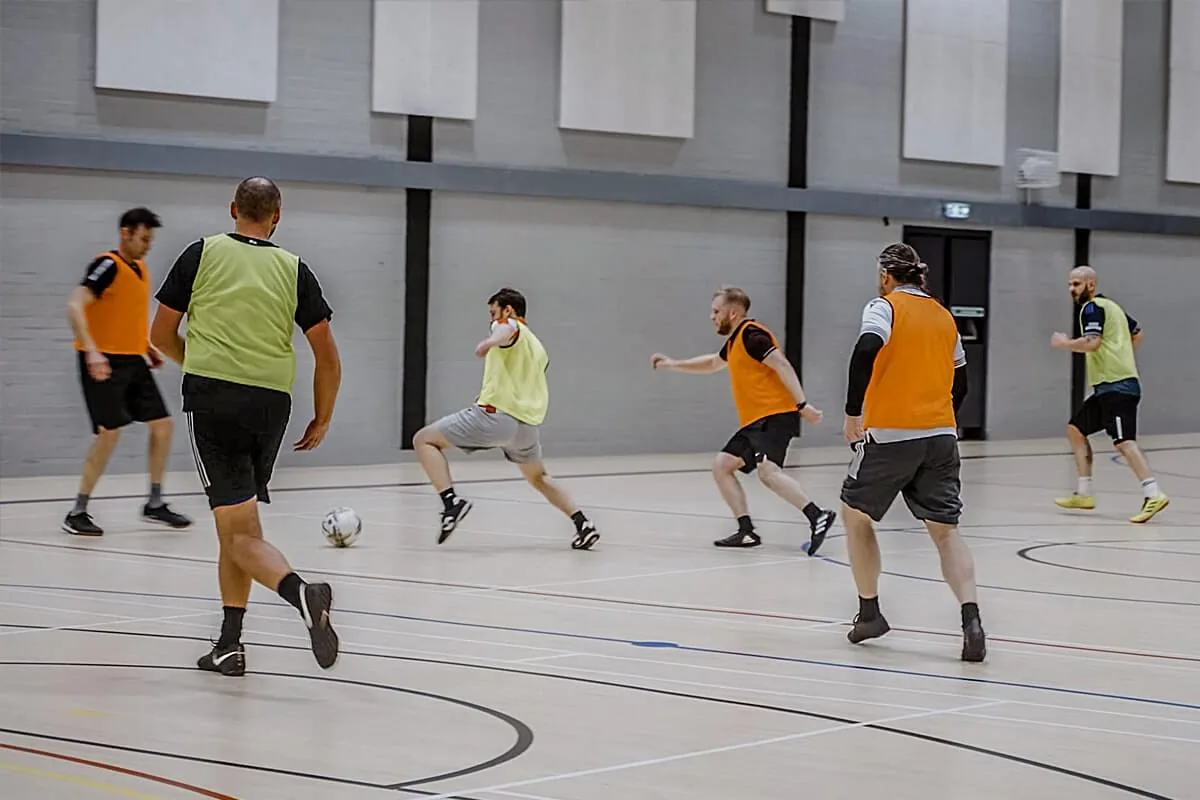
Turn up to a new 5-a-side league and someone will ask whether it is "head height". The rule is not in the official Laws of the Game. It belongs to the small-sided game, and each league sets its own version.
The short answer
The head-height rule says the ball must not be played above head height during a 5-a-side game. If it is, the other team gets a free kick from where the ball was kicked. Referees usually judge it against the tallest player on the pitch, and the whole ball has to go over that height. Most rulebooks let play go on if the ball goes high off the goalkeeper, the posts or the walls. Not every league uses the rule: it is common indoors and in older cage centres, and many outdoor leagues now allow high balls.
What the rule says
In a head-height league, you cannot play the ball above head height. That covers lofted passes, chips, clearances and shots that rise over the players. It applies to everyone, and in many leagues the goalkeeper too when throwing or kicking the ball out.
The rule is about where the ball goes, not how you play it. Heading the ball is normally allowed, as long as the header itself does not send the ball over head height.
Why 5-a-side has a head-height rule
The rule comes from indoor football in sports halls and low-roofed sheds. A high ball there hits the lights or the roof, and on a small pitch it is also a quick way to hurt someone. Keeping the ball low means:
- Safer games. Fewer balls smashed into faces from close range on a crowded pitch.
- More football. Teams pass along the ground instead of hoofing it from one end to the other.
- Protection for the building. Lights, nets and ceilings last longer.
Futsal deals with the same problem differently. It uses a smaller, heavier ball with a low bounce, and the laws have no head-height limit. If the ball hits the ceiling, play restarts with a kick-in to the other team. Our guide to futsal vs 5-a-side covers the other differences.
How referees judge head height
There is no fixed measurement. Most leagues leave it to the referee, and the referee's call is final. The common tests are:
- The tallest player on the pitch. Leisure Leagues, one of the biggest UK operators, rules that the infringement happens when the whole ball passes above the tallest player.
- The crossbar. Some leagues use the height of the goal instead. Five-a-side goals are often about 1.2 metres high, so this is a much stricter test.
- A marked line. A few indoor centres paint a line or hang a net to show the limit.
Because it is a judgement call, the same high ball may be given one week and waved on the next. Ask the referee before kick-off which test they use.
The usual exceptions
Most head-height rulebooks let play continue if the ball goes over head height:
- off the goalkeeper, for example from a save tipped over
- off the goalposts or crossbar
- off fixed equipment such as the walls, boards or nets, often at the referee's discretion
Some leagues also forgive a deflection off a defender's block. Others only forgive keeper saves and the woodwork. A deliberate chip or lofted pass is always penalised.

The Football Yard
Nottingham · Indoor 5-a-side
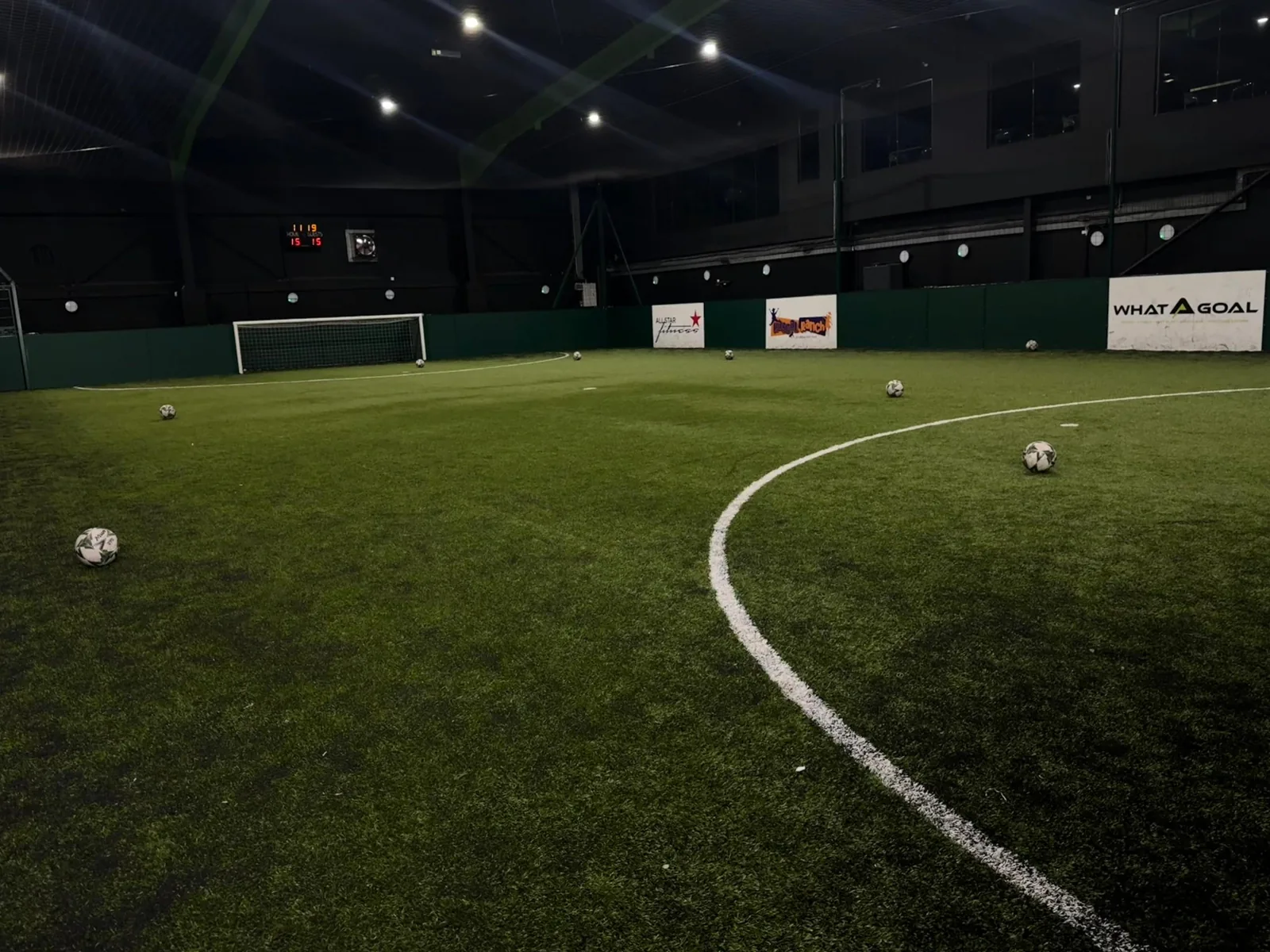
What A Goal
Leicester · Indoor pitches

Powerleague Fairlop
London · Netted outdoor cage
The free kick
A high ball is usually punished with a free kick to the other team, taken from where the ball was played, not where it came down. Whether it is direct or indirect depends on the league. Leisure Leagues give a direct free kick. Some leagues give an indirect one. Opponents normally have to stand a few metres back, and the free kick itself must stay below head height.
If a high ball goes straight into the net, the goal does not count. The other team takes the free kick instead.
Leagues that use it and leagues that do not
The head-height rule was standard in UK 5-a-side for decades. It is now less universal:
- Indoor leagues in sports halls and indoor 3G centres almost always keep it.
- Outdoor cage leagues on 3G vary. Many commercial operators now let the ball go over head height in outdoor games, because there is no roof or lighting rig to hit.
- Casual bookings have no referee, so the group agrees its own rules before kick-off.
- Indoor soccer in Australia, New Zealand and Canada uses netted courts where high balls rebound off the netting, and rules vary by centre.
Even inside one company, the rules can differ between indoor and outdoor leagues. Read your league's rules page, or ask the organiser, before your first game.
Playing under the rule
- Pass along the ground. It sounds obvious, but the rule rewards teams that keep the ball moving at ankle height.
- Strike through the middle of the ball. Leaning back sends shots high. Keep your body over the ball.
- Use the walls. Where play off the boards is allowed, a pass off the side wall gets round a defender without lifting it.
- Goalkeepers roll it out. A long throw or a kick from the hands is the most common way to give away a free kick.
The rule is one of several that set 5-a-side apart. See 5-a-side rules for the goalkeeper's area, slide tackles and rolling substitutes.
Cities with the most 5-a-side pitches in our directory:
FAQ
What is head height in 5-a-side?
Usually the height of the tallest player on the pitch, as judged by the referee. Some leagues use the crossbar instead, so ask before you play.
Can you head the ball in 5-a-side?
Yes, in most leagues. The header just must not send the ball over head height.
Is it a free kick if the keeper saves the ball over head height?
Not in most leagues. Saves, rebounds off the posts and often bounces off the walls are allowed to go high.
Is there a head-height rule in futsal?
No. Futsal has no head-height limit. If the ball hits the ceiling, the other team gets a kick-in.