5-a-side rules
 By the Find My Football Pitch team·
Updated ·
4 min read

5-a-side has no single rulebook. Every league operator and venue writes its own, and they differ on head height, goalkeepers and restarts. The core is the same almost everywhere, though, and this guide sets it out along with the house rules you are most likely to meet.
The short answer
Each team has five players including a goalkeeper, with rolling substitutes. There is no offside. Most leagues ban slide tackles, keep outfield players out of the goalkeeper's area and stop the keeper leaving it, and many give a free kick if the ball goes above head height or the kickboards. The keeper usually restarts by rolling or throwing the ball out underarm. Games last 20 to 40 minutes. Fouls give free kicks with defenders a couple of metres back, and many leagues use a sin bin instead of yellow cards.
The basics
- Players. Five a side, one of them a goalkeeper. Squads usually carry two or three substitutes.
- Substitutions. Rolling and unlimited. Some leagues let you swap any time from the side, others only when the ball is dead. Players who come off can go back on.
- No offside. Goal-hanging is legal, though in a small game it rarely pays off for long.
- Match length. Set by the league. In our directory, Leisure Leagues games at Yardley Fives in Birmingham and Wonford in Exeter last 30 minutes, while those at Long Road in Cambridge and Exwick in Exeter last 40. Casual bookings are usually an hour, played however you like.
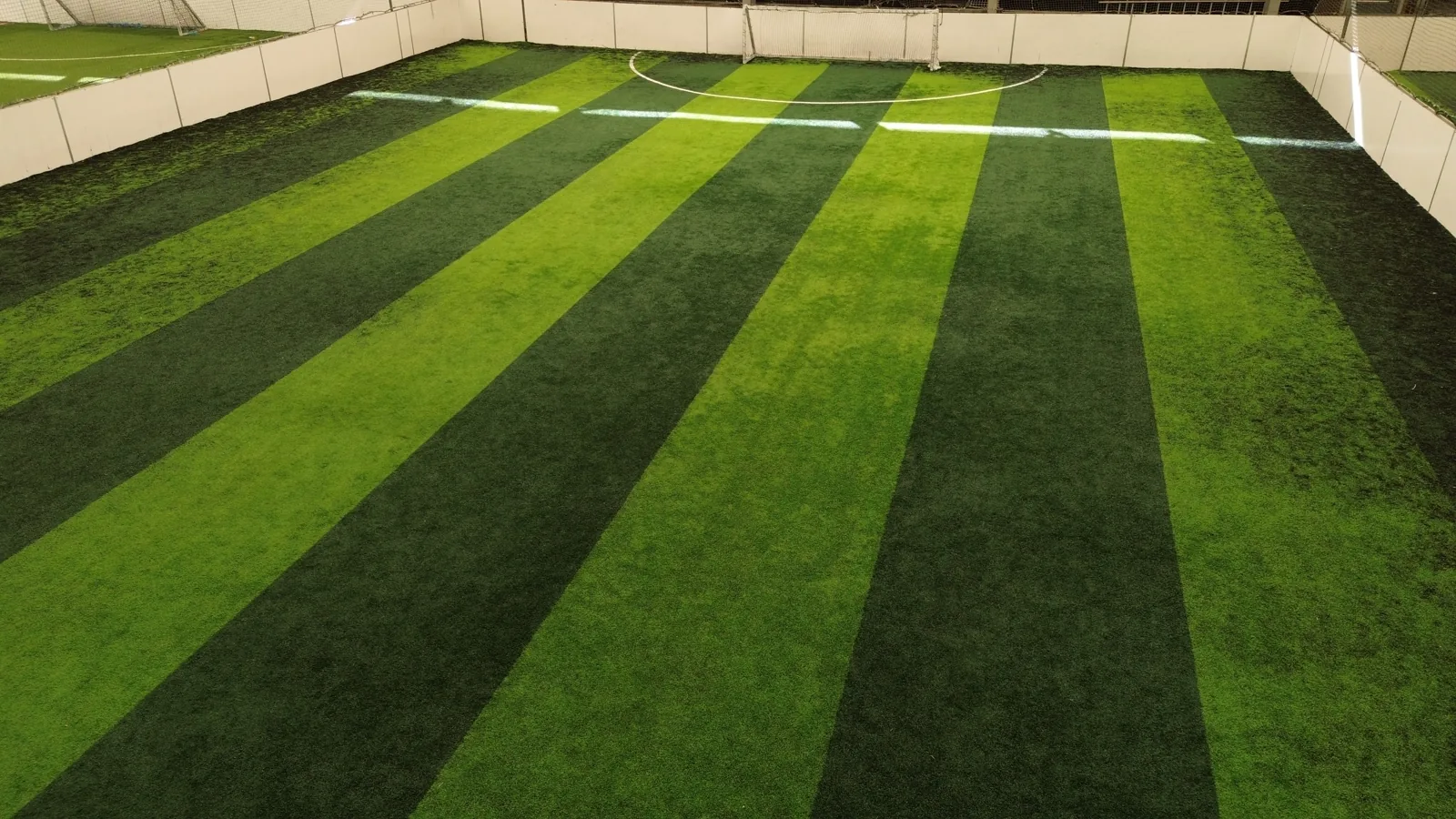
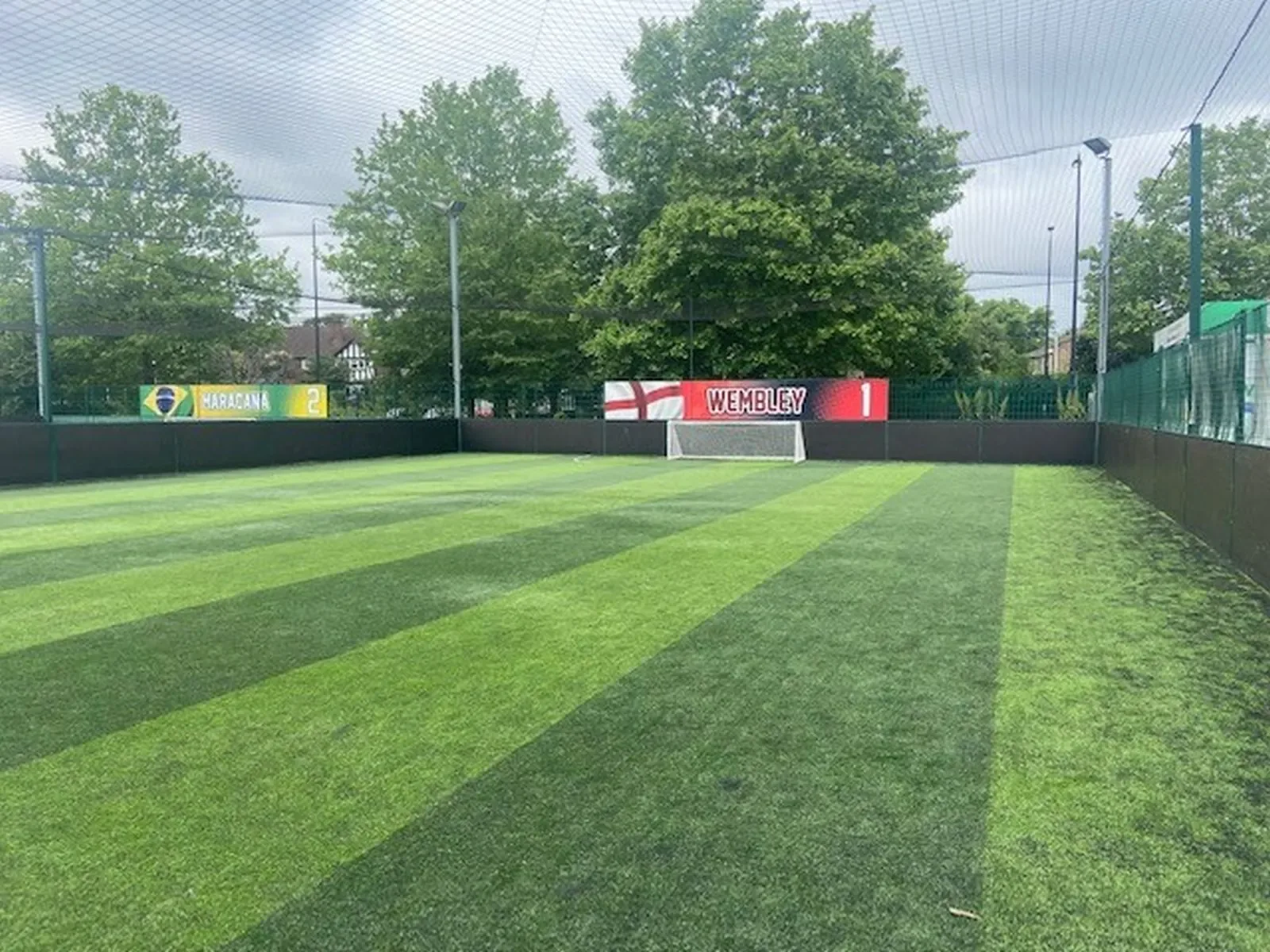
- Pitch. Commonly somewhere between 25 and 40 m long and 15 to 25 m wide, often enclosed by boards or a cage. See 5-a-side pitch size.
- Ball. A size 5 outdoors. Some indoor games use a size 4 low-bounce ball.
The goalkeeper area
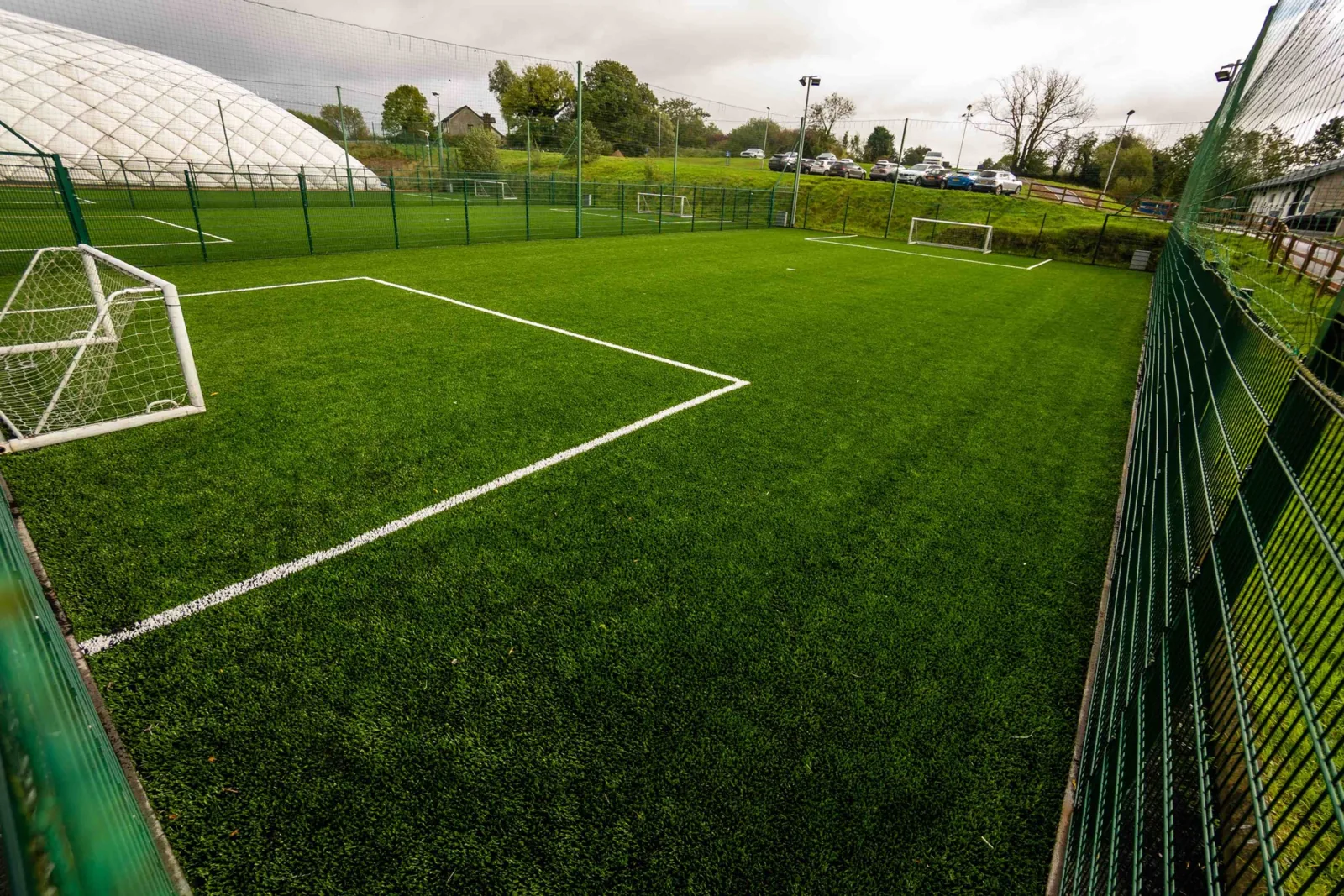
The semicircle or D in front of each goal is the defining 5-a-side rule. Most leagues apply some version of it:
- Outfield players stay out. An attacker who enters the area usually gives away a free kick. A defender who enters it to play the ball or block usually concedes a penalty.
- The goalkeeper stays in. Leaving the area to play the ball is often a penalty too. Momentum carrying the keeper out after a save is not normally punished.
- Handling. The keeper can handle the ball inside the area. Many leagues stop them picking up a back pass from a teammate.
The point is to stop teams parking players in front of goal on a pitch where the goal is small and the area tiny. Some casual games and some leagues drop the rule completely, so check before kick-off.
Head height and heading
This is the rule that varies most.
- Head-height rule. Many leagues give an indirect free kick when the ball goes above head height. Gôl Centres uses the height of the kickboards instead and bans heading in 5-a-side. Rebounds off the post, bar, boards or goalkeeper do not count.
- No height limit. Other leagues let the ball go any height. Leisure Leagues has said its games allow the ball over head height.
Our guide to the head height rule covers the variations and how referees judge it.
Tackles, fouls and the sin bin
- No slide tackles. Almost every league bans them, usually as a direct free kick and often a sin bin as well.
- Normal fouls. Kicking, tripping, pushing, holding and deliberate handball give a direct free kick, as in 11-a-side.
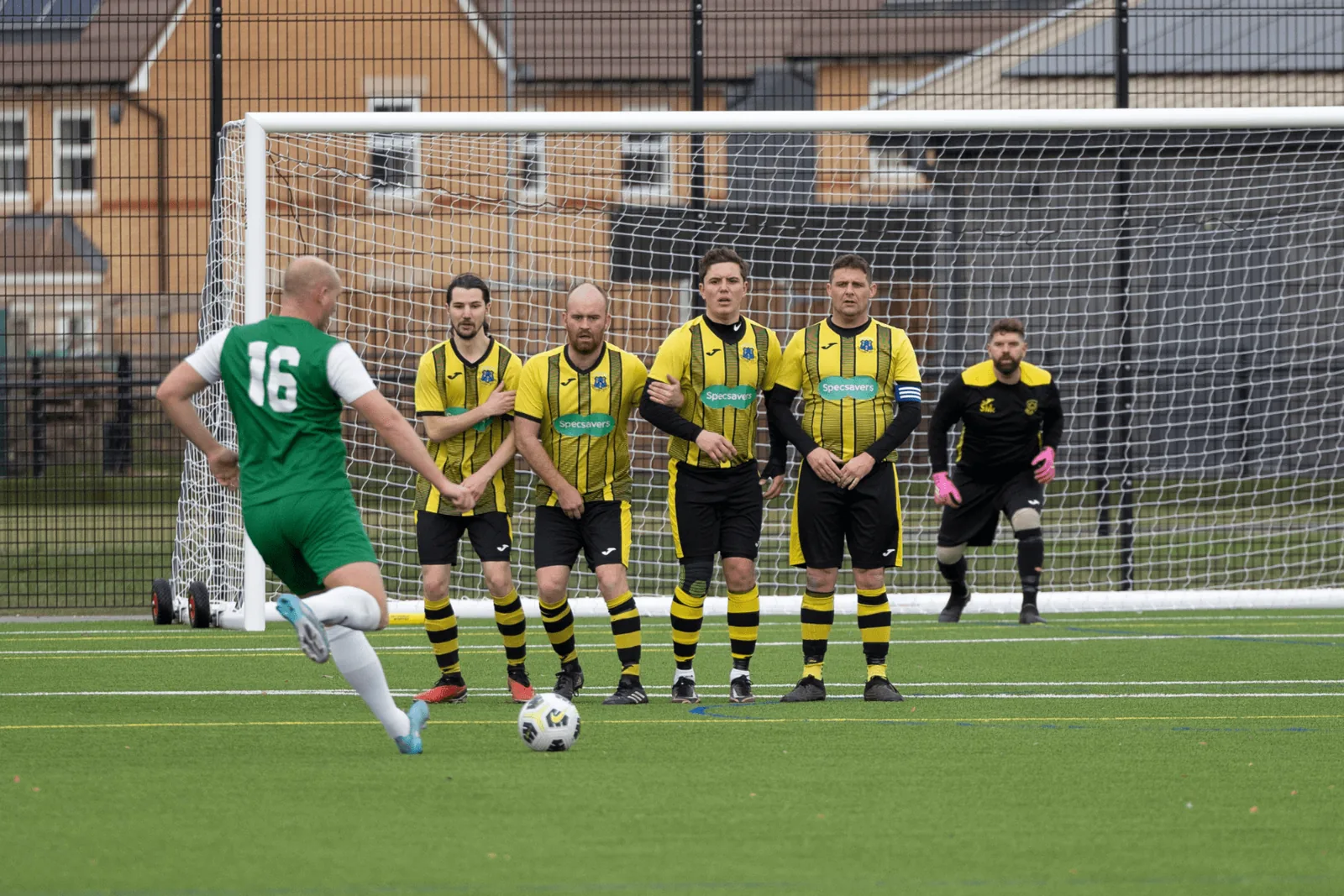
- Free kicks. Defenders stand back a set distance, often 2 to 3 m. There are no walls in the 11-a-side sense on a pitch this small.
- Sin bin. Many leagues have replaced yellow cards with a timed exclusion. At Gôl Centres it is a blue card and four minutes off; your team plays a player short.
- Penalties. Taken from a spot outside the area, often with a one-step run-up.
Shin pads are optional in some leagues and compulsory in others. See do you need shin pads for 5-a-side.
Restarts
On a caged pitch the ball rarely goes out. When it does, leagues use one of two systems:
- Kick-ins. The ball is placed on the line and kicked back in, instead of a throw-in. Corners are taken as normal.
- Goalkeeper restarts. The nearest goalkeeper puts the ball back into play, rolling or throwing it underarm. Gôl Centres uses this, with no corners or goal kicks.
Goalkeepers in most leagues must release the ball within a few seconds, cannot kick it out of their hands and must roll or throw it underarm. Many leagues stop the keeper throwing the ball over the halfway line in the air.
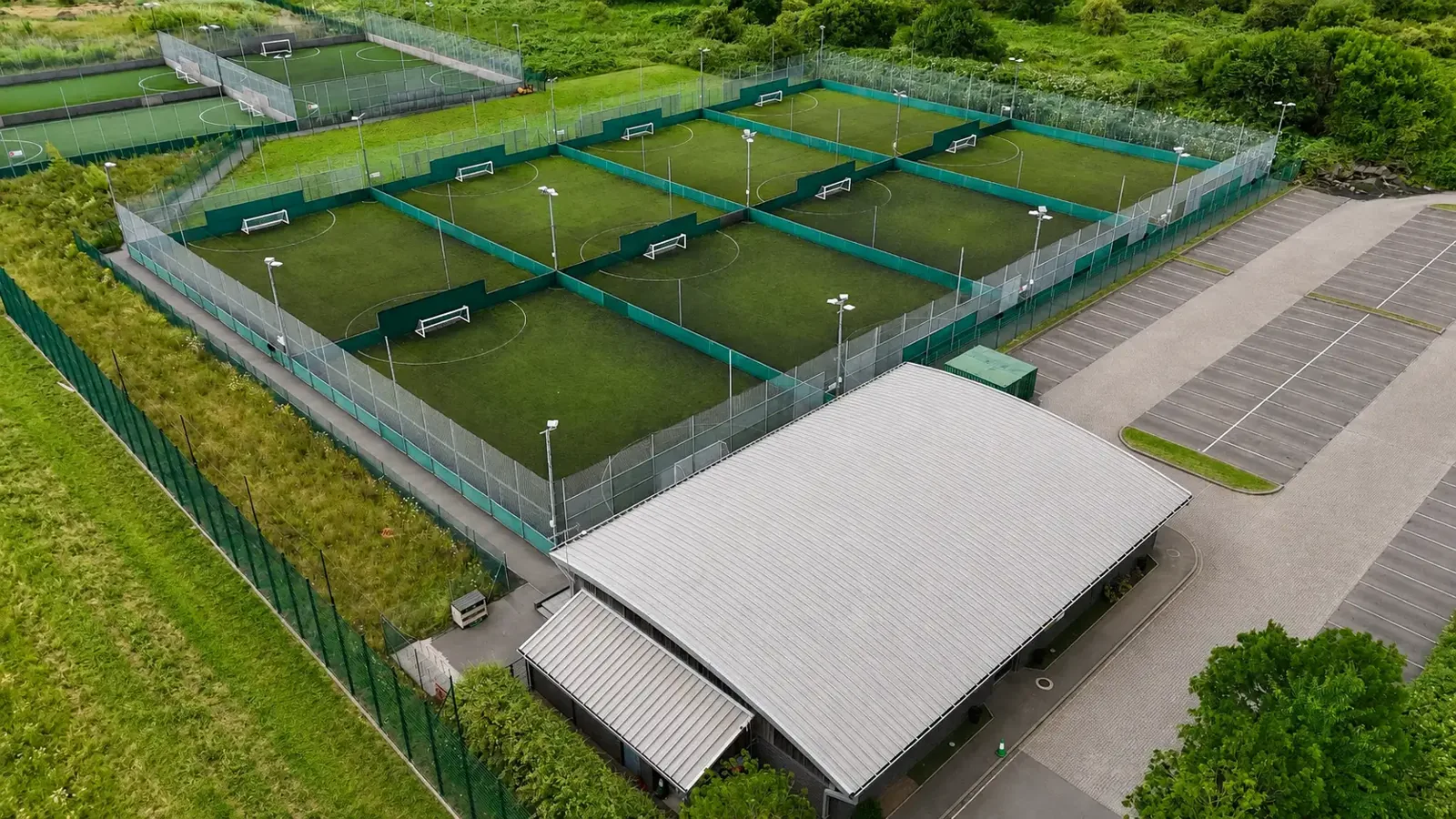
Gôl Centres Cardiff
Cardiff · Leagues £37 a match
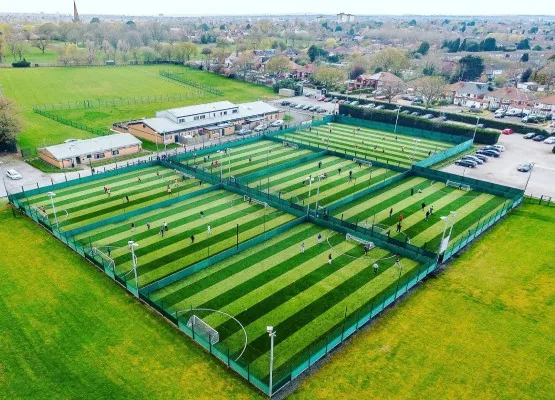
Leisure Leagues at Yardley Fives
Birmingham · 30-minute league games
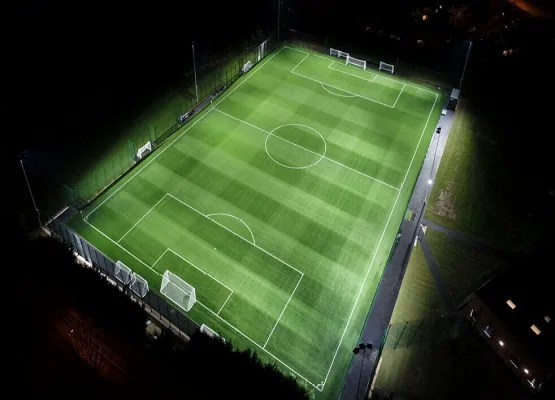
Leisure Leagues at Exwick Sports Hub
Exeter · 40-minute league games
House rules to check before you play
- Is there a head-height rule, and is heading allowed?
- Can the keeper leave the area, and can defenders enter it?
- Kick-ins or goalkeeper restarts?
- Can the keeper pick up a back pass?
- How long is the game, and is the clock stopped?
- What footwear is allowed? Screw-in studs are banned nearly everywhere.
Leagues publish their rules on their website. For a casual booking, agree them with the other team at the start. If you play 7-a-side or futsal too, read 7-a-side rules and futsal vs 5-a-side.
Cities in our directory with the most 5-a-side pitches:
FAQ
Is there offside in 5-a-side?
No. 5-a-side leagues in the UK, Ireland and Australia play without offside.
Can the goalkeeper leave the area in 5-a-side?
In most leagues no. Leaving the area to play the ball usually concedes a penalty. Casual games and some leagues allow it, so check.
Are slide tackles allowed in 5-a-side?
Almost never. Most leagues punish a slide tackle with a free kick and often a sin bin, because of the risk of injury on artificial grass.
How long is a 5-a-side game?
League games usually last 20 to 40 minutes, sometimes in two halves. Leisure Leagues venues in our directory run 30 or 40 minute matches.
Can you head the ball in 5-a-side?
Depends on the league. Some ban heading and play to a height limit; others allow it with no height limit.