How many players are on a football team?
 By the Find My Football Pitch team·
Updated ·
5 min read

The quick answer is eleven. The longer answer depends on whether you mean the players on the pitch, the names on the team sheet or the whole squad, and on which version of football you play on a Tuesday night.
The short answer
A football team has 11 players on the pitch: one goalkeeper and ten outfield players. That is set by Law 3 of the IFAB Laws of the Game. A match cannot start or carry on if either team has fewer than seven. In top senior competitions a team can use up to five substitutes, chosen from a bench of up to 15 named players, with the exact number set by the competition. Small-sided games use fewer: 5-a-side has five per team, 7-a-side has seven, and futsal has five.
Eleven players on the pitch
Law 3 of the Laws of the Game, written by the International Football Association Board (IFAB), says a match is played by two teams of no more than eleven players each, one of whom is the goalkeeper. Every league that plays full 11-a-side football, from the Premier League to a Sunday league on a council park, uses that number.
The laws do not say how the other ten should line up. That is the manager's choice. A 4-4-2 has four defenders, four midfielders and two forwards. A 4-3-3 swaps a midfielder for a forward. A 3-5-2 uses three centre-backs and two wing-backs. The numbers always add up to ten outfield players plus the keeper.
The goalkeeper is the only player allowed to handle the ball, and only inside their own penalty area. The keeper must wear colours that stand out from both teams and the referee.
The minimum number to play
Law 3 also sets a floor. A match cannot start, or continue, if either team has fewer than seven players. If a side has two players sent off and three more go off injured with no substitutes left, the referee abandons the game. What happens to the result then is up to the competition, not the laws.
In grassroots football this is the rule that matters most. If only eight of your team turn up on a Sunday morning, you can still play. If six turn up, you cannot, and most leagues treat that as a forfeit.
Substitutes and the bench
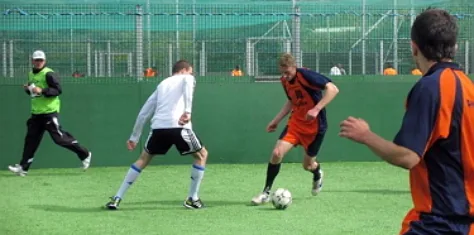
The number of substitutes is the area where rules differ most. Under Law 3:
- Top competitions. In first-team club football at the top level and senior international matches, a team may use up to five substitutes, in no more than three stoppages plus half-time. The competition sets how many can be named, from three up to a maximum of 15.
- Other official competitions. The competition sets the number, up to a maximum of five used per match.
- Return substitutions. Players who come off can return in youth, veterans', disability and grassroots football, if the competition allows it. This is common in junior and recreational leagues.
- Friendlies. Teams can agree a higher number of substitutes, as long as they tell the referee before kick-off. Without an agreement, each team can use up to six.
Some competitions also allow extra permanent concussion substitutes, which do not count towards the normal limit. The Premier League began a trial of them in 2021.
Each league sets its own bench size within those limits, so check your league handbook.
Squad sizes
A squad is the wider group a club can pick from over a season. Professional leagues cap this. The Premier League registers a squad of 25 players over the age of 21, of which no more than 17 can be non-homegrown. Players under 21 can be added on top without a limit.
At amateur level there is rarely a cap, but there is a practical number. An 11-a-side Sunday team needs about 16 to 18 registered players to field eleven every week once work, injuries and holidays take their toll.
Small-sided football and futsal
Most adults who play every week do not play 11-a-side. They play on smaller pitches with fewer players.
| Format | Players per team on the pitch | Usual squad | Substitutes |
|---|---|---|---|
| 11-a-side | 11, including a goalkeeper | 16 to 18 at amateur level | Set by the competition |
| 9-a-side (youth) | 9 | 12 to 14 | Usually rolling |
| 7-a-side | 7 | 9 to 10 | Usually rolling |
| 6-a-side | 6 | 8 | Usually rolling |
| 5-a-side | 5, including a goalkeeper | 7 to 8 | Usually rolling |
| Futsal | 5, including a goalkeeper | Up to 14 named | Up to 9, rolling |
Rolling substitutes are the norm in small-sided leagues. Players swap on and off as often as they like, usually only when play is in the other half. Rules on how many players can be named each night vary by league. Our guides to 5-a-side rules and 7-a-side rules cover the details.

Futsal is FIFA's official five-a-side game. Each team has five players including a goalkeeper, a squad of up to 14 can be named for a match, and up to nine substitutes can rotate in and out without limit. See futsal rules for more.
Youth football
Children play smaller formats so they touch the ball more. In England, the FA's youth pathway from the 2026-27 season moves from 3v3 at under-7 to 5v5 at under-8 and under-9, 7v7 at under-10 and under-11, then 9v9 at under-12 and under-13, before 11v11 from under-14. Other countries use similar ladders with slightly different ages. Read youth football pitch sizes for the pitch that goes with each format.
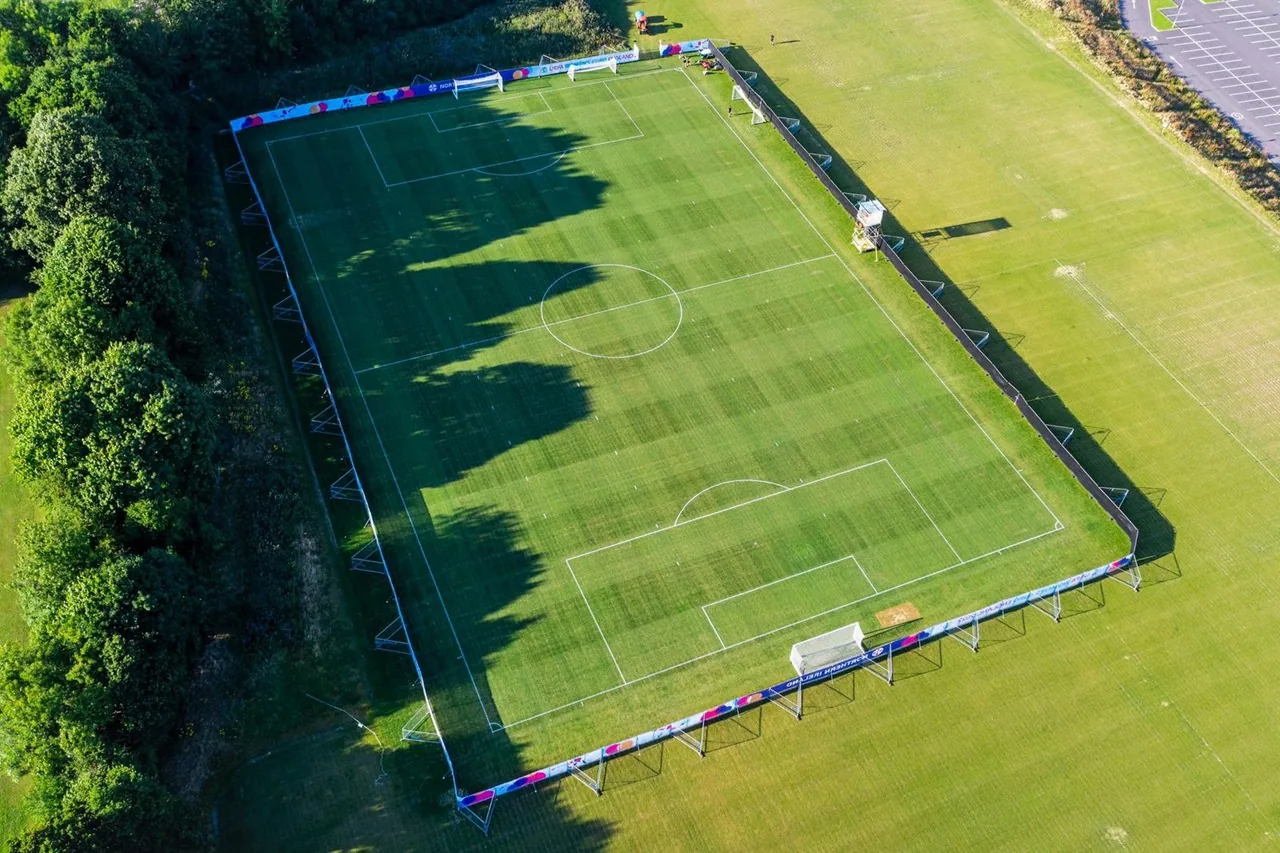
Stoneham Lane Football Complex
Southampton · Full-size 3G

Powerleague Fairlop
London · 5-a-side cages
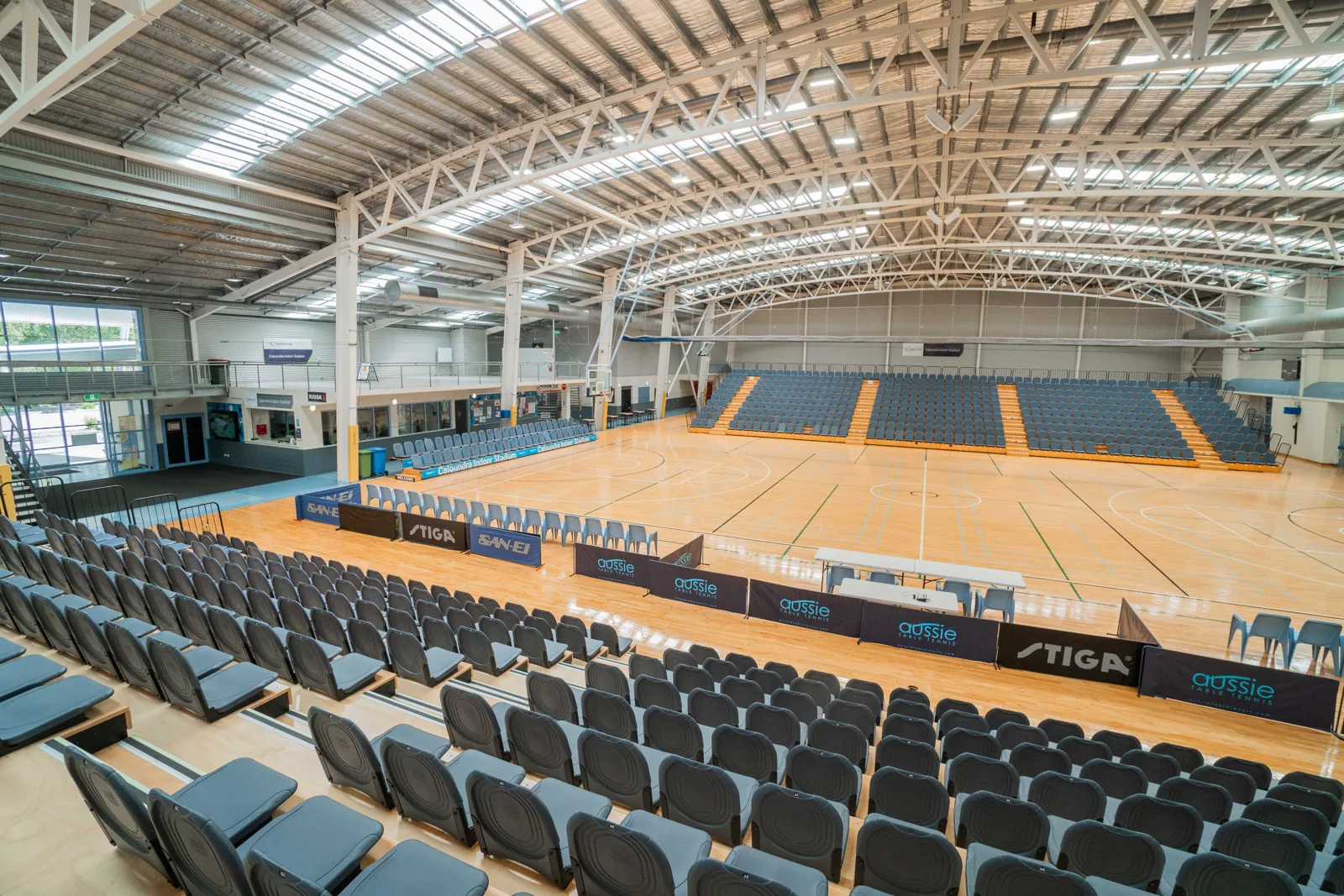
Caloundra Indoor Stadium
Sunshine Coast · Futsal courts
Other codes of football
"Football" means different games in different places, and they do not all use eleven:
- Soccer (association football): 11 per side.
- Gaelic football: 15 per side.
- Australian rules football: 18 per side on the field in the AFL.
- Rugby union: 15 per side. Rugby league: 13 per side.
- American and Canadian football: 11 and 12 players on the field respectively.
Cities with the most full-size pitches in our directory:
FAQ
How many players are on a football team including subs?
In top competitions, up to 11 starters plus as many as 15 named substitutes, though most leagues name fewer.
Can a football team play with 10 players?
Yes. A team can play on with fewer than eleven, for example after a red card. The game is only stopped if a team falls below seven players.
How many players are in a 5-a-side team?
Five on the pitch, one of them a goalkeeper. Most teams bring two or three extra players and use rolling substitutes.
Does a team have to have a goalkeeper?
Yes. Law 3 says one of the players must be the goalkeeper. Any outfield player can swap with the keeper if the referee is told first and the swap happens during a stoppage.