Indoor soccer vs futsal
 By the Find My Football Pitch team·
Updated ·
5 min read
In Australia, New Zealand and Canada, "indoor soccer" and "futsal" are often listed side by side on the same sports centre timetable. They are different games. One is a fast, rebound-off-the-nets social sport. The other is FIFA's official five-a-side game with its own laws.
The short answer
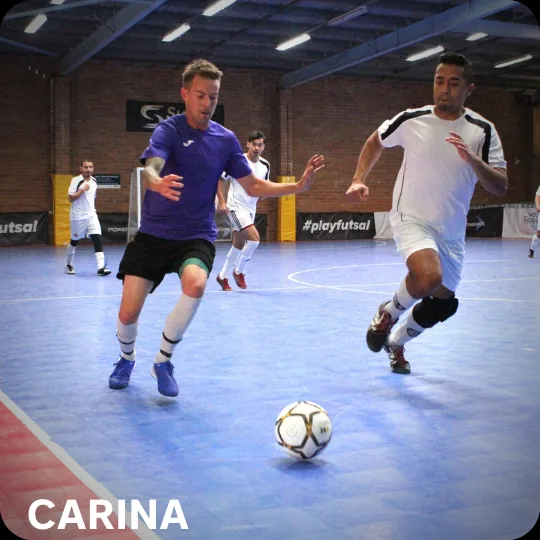
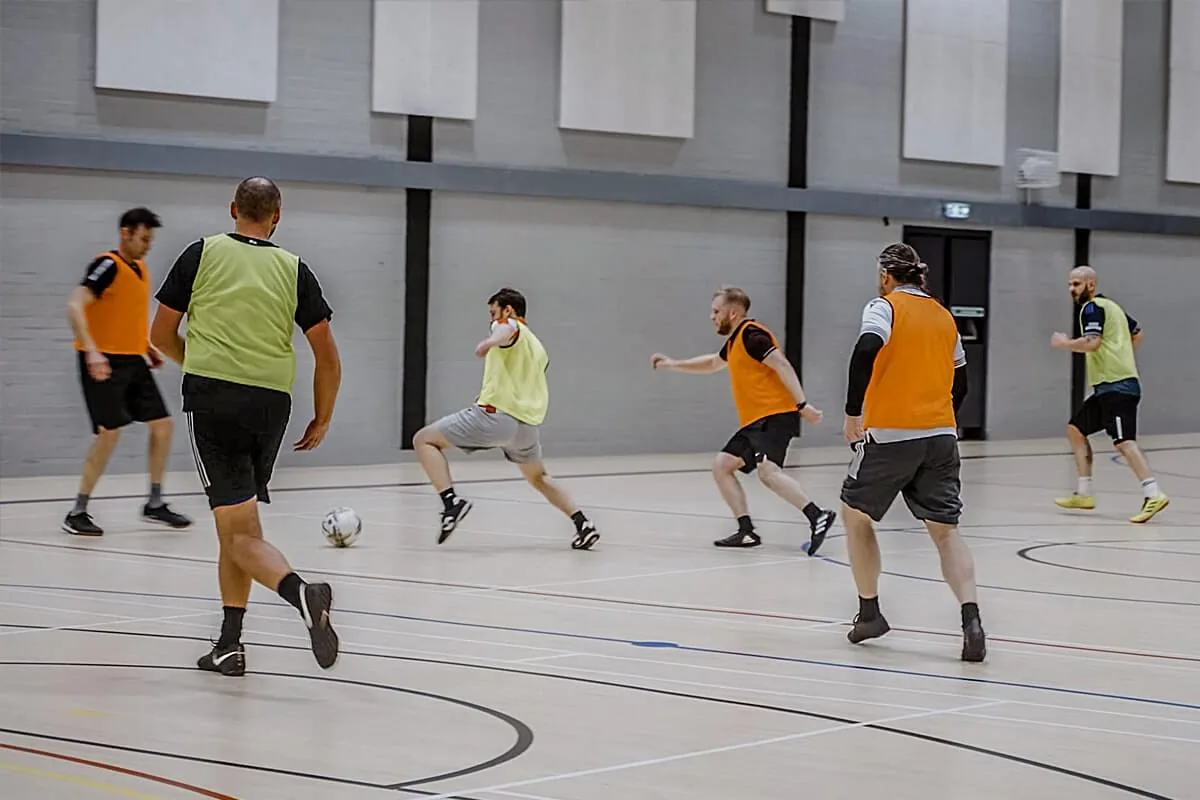
Indoor soccer is played inside a netted or walled court, usually on synthetic grass, and the ball stays in play when it hits the nets or walls. Teams are four to six a side and rules vary by centre. Futsal is played on a hard court with lines, not walls. It has five players a side, a smaller, heavier size 4 ball that bounces less, kick-ins when the ball goes out, and one set of FIFA laws used everywhere. Indoor soccer is mainly a social game. Futsal has clubs, national leagues and a World Cup.
The main differences
| Indoor soccer | Futsal | |
|---|---|---|
| Court | Enclosed by nets or walls | Open court marked with lines |
| Surface | Usually synthetic grass, sometimes a hard floor | Hard floor: timber, sprung or synthetic sports floor |
| Players per side | Usually 4 to 6, set by the centre | 5, including the goalkeeper |
| Ball | Normal size 5 or a centre's own ball | Size 4, low bounce |
| Ball out of play | Rarely; it rebounds off the nets | Kick-in from the touchline |
| Rules | Vary between centres | FIFA Futsal Laws of the Game |
| Footwear | Turf shoes on grass courts | Flat indoor shoes with non-marking soles |
| Who runs it | Private centres and some councils | Clubs, associations and centres |
What indoor soccer is
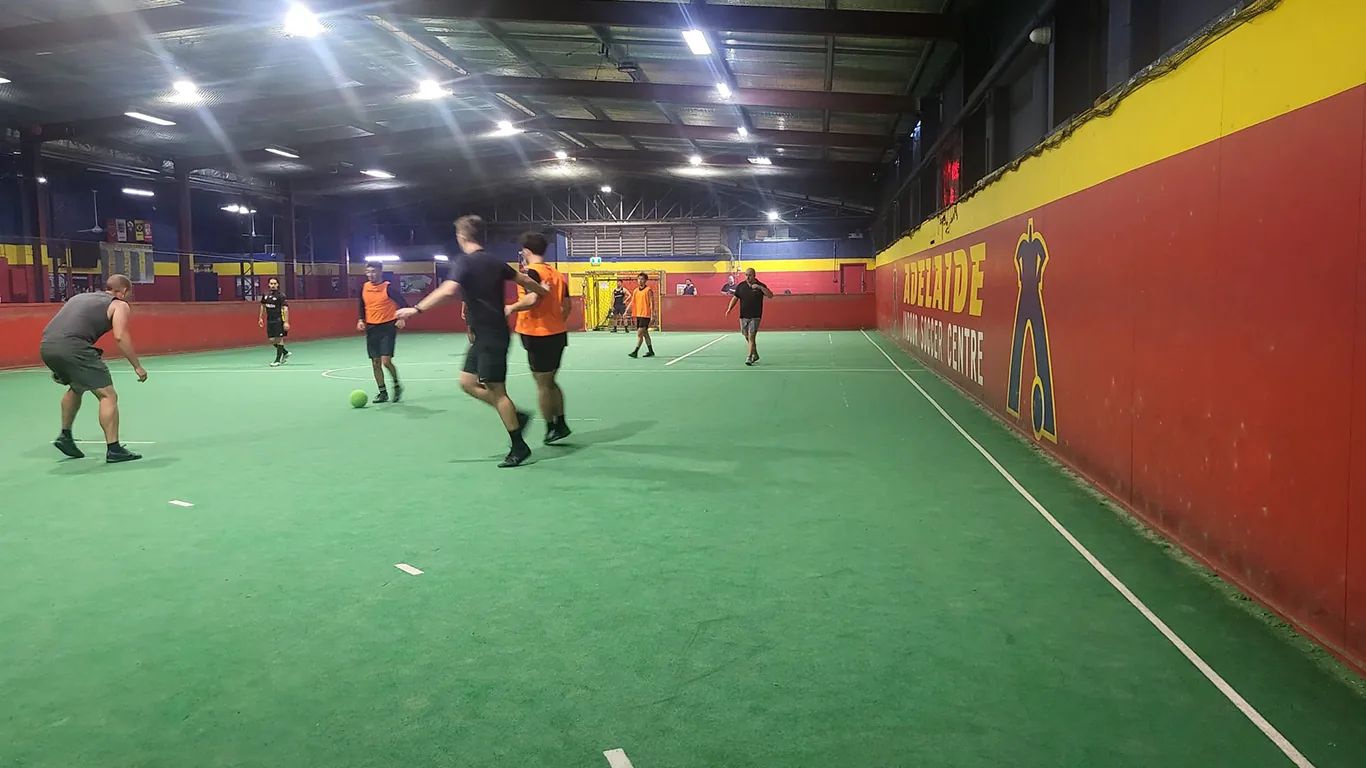
Indoor soccer, also called rebound soccer or indoor 5s, is played in a long court with netting on all sides and often across the roof. The netting keeps the ball in, so there are almost no throw-ins or corners. You play the ball off the side nets like a cushion in pool. Games are quick and non-stop.
Most courts in Australia have synthetic grass. Some centres have a hard floor and still call it indoor soccer. Teams are small: centres in our directory run adult 4-a-side, 5-a-side and 6-a-side competitions. Usual rules include a goalkeeper's area that outfield players cannot enter, no slide tackles and rolling substitutes, but every centre writes its own.
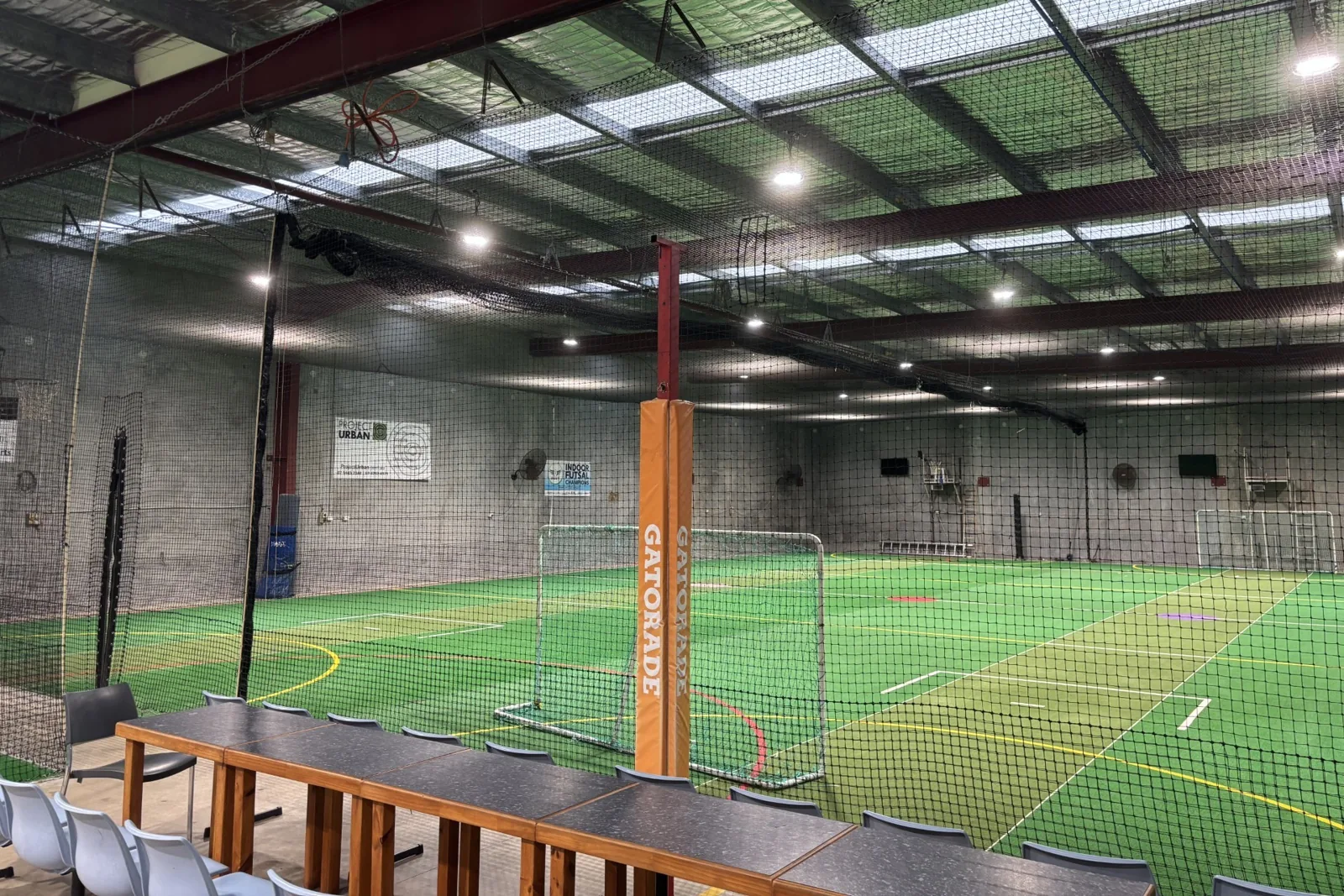
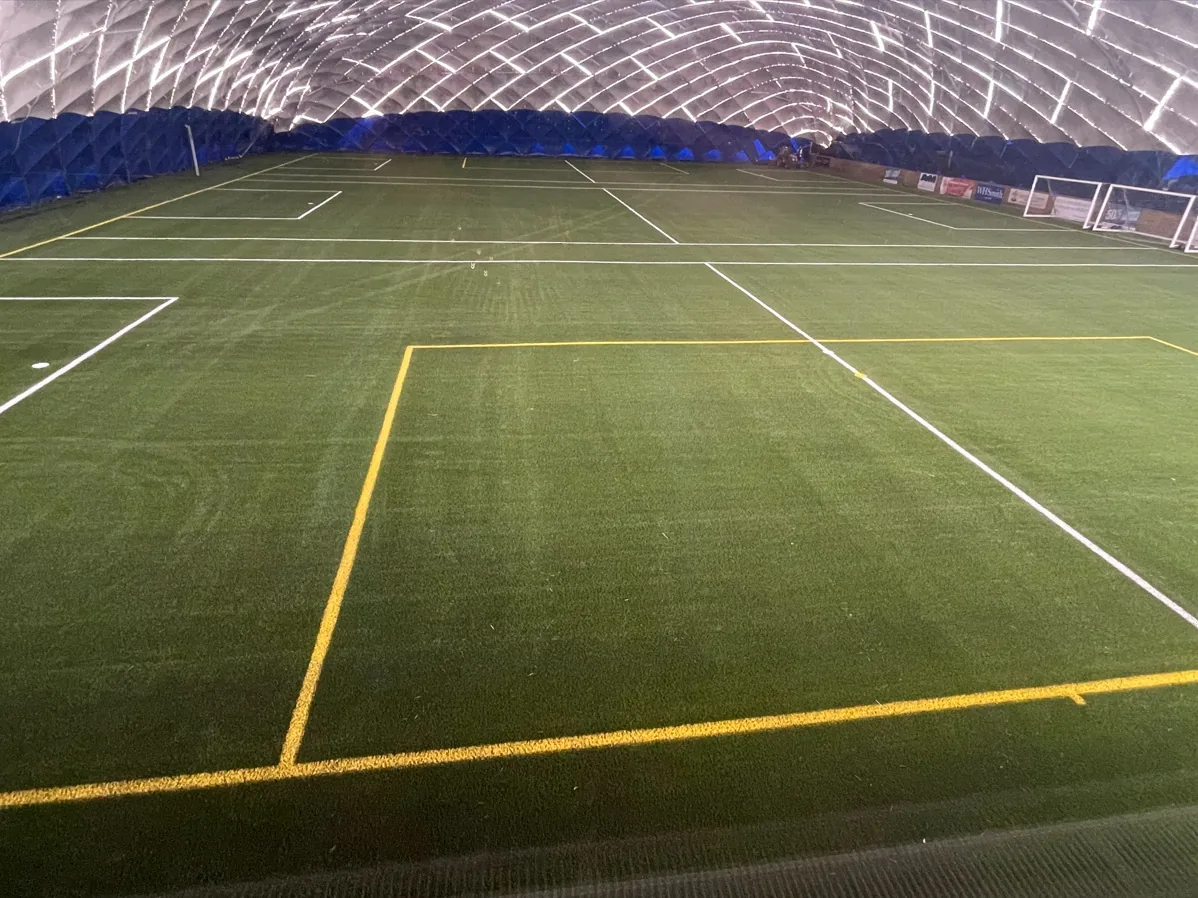
Canada and the United States have their own versions. Many Canadian winter leagues play on full-size or half-size turf fields inside domes and field houses, often 7-a-side, with no walls. Arena soccer, played inside boards like an ice hockey rink, is another branch. If your league is called "indoor soccer", ask whether there are boards and how many players are on each side.
What futsal is
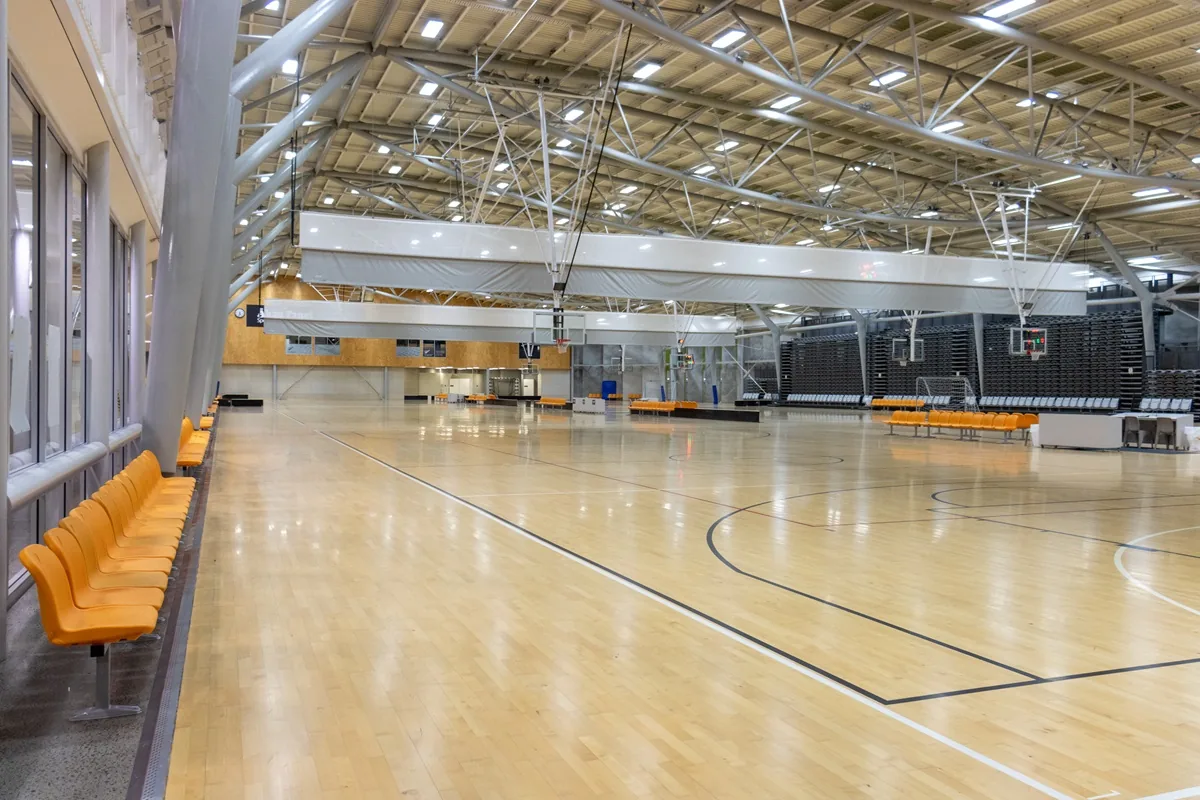
Futsal is FIFA's official indoor game. It has its own Laws of the Game, and the rules are the same in a Wellington school hall as at the Futsal World Cup. The main points:
- Court. Between 25 and 42 metres long and 16 and 25 metres wide, with lines instead of walls. International matches use 38 to 42 by 20 to 25 metres. Goals are 3 metres wide and 2 metres high.
- Ball. Size 4, heavier and with less bounce than an outdoor ball, so it stays on the floor.
- Restarts. Kick-ins instead of throw-ins, and the team taking a restart has four seconds to do it.
- Fouls. Fouls add up. From a team's sixth foul in a half, the other team gets a direct free kick with no wall.
- Time. Two halves of 20 minutes with a stopped clock, and one time-out per team per half.
- Substitutes. Unlimited rolling changes from up to nine substitutes.
Our guides to futsal rules and futsal court dimensions go into detail.
What the names mean in each country
- Australia and New Zealand. "Indoor soccer" almost always means the netted, synthetic grass game run by private centres. "Futsal" means the FIFA game, usually in council sports stadiums and school halls.
- Canada. "Indoor soccer" usually means football on turf inside a dome or field house in winter. Futsal is played in gym halls.
- UK and Ireland. People say "indoor football" or "indoor 5-a-side", usually on 3G inside a building or under an air dome. "Futsal" means the FIFA game in a sports hall.
Which one to play
Choose indoor soccer if you want a social game with friends, constant action, and a format where fitness and effort make up for skill. The walls forgive a bad pass.
Choose futsal if you want to improve your touch and passing, or play in an organised competition with referees working to one set of laws. The low-bounce ball and tight space reward close control. Many outdoor footballers play futsal in the off-season for this reason.
Either way, check your footwear. Studs are not allowed on hard courts. See futsal shoes for what to wear.
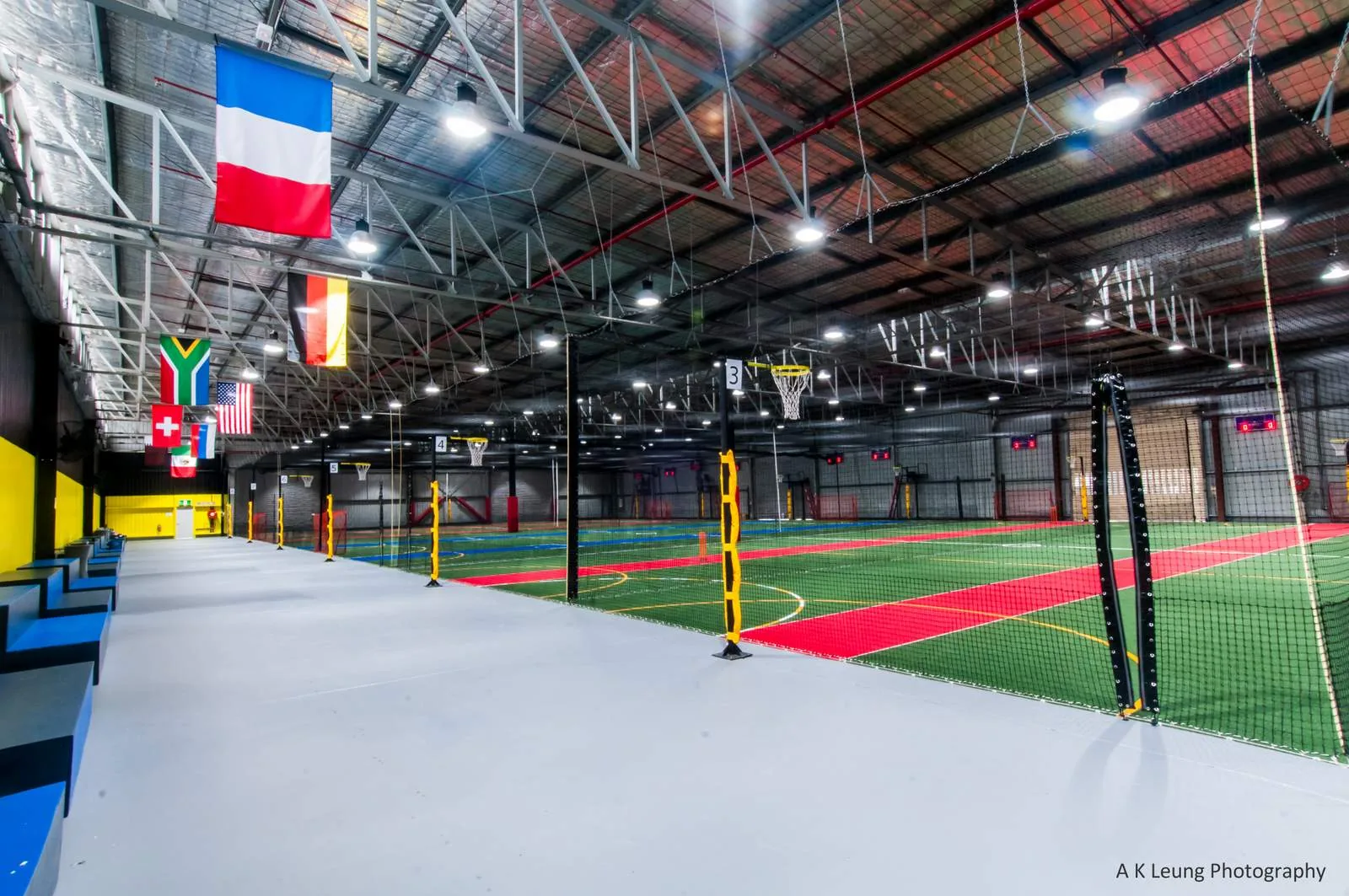
Brisbane City Indoor Sports
Brisbane · Netted indoor courts
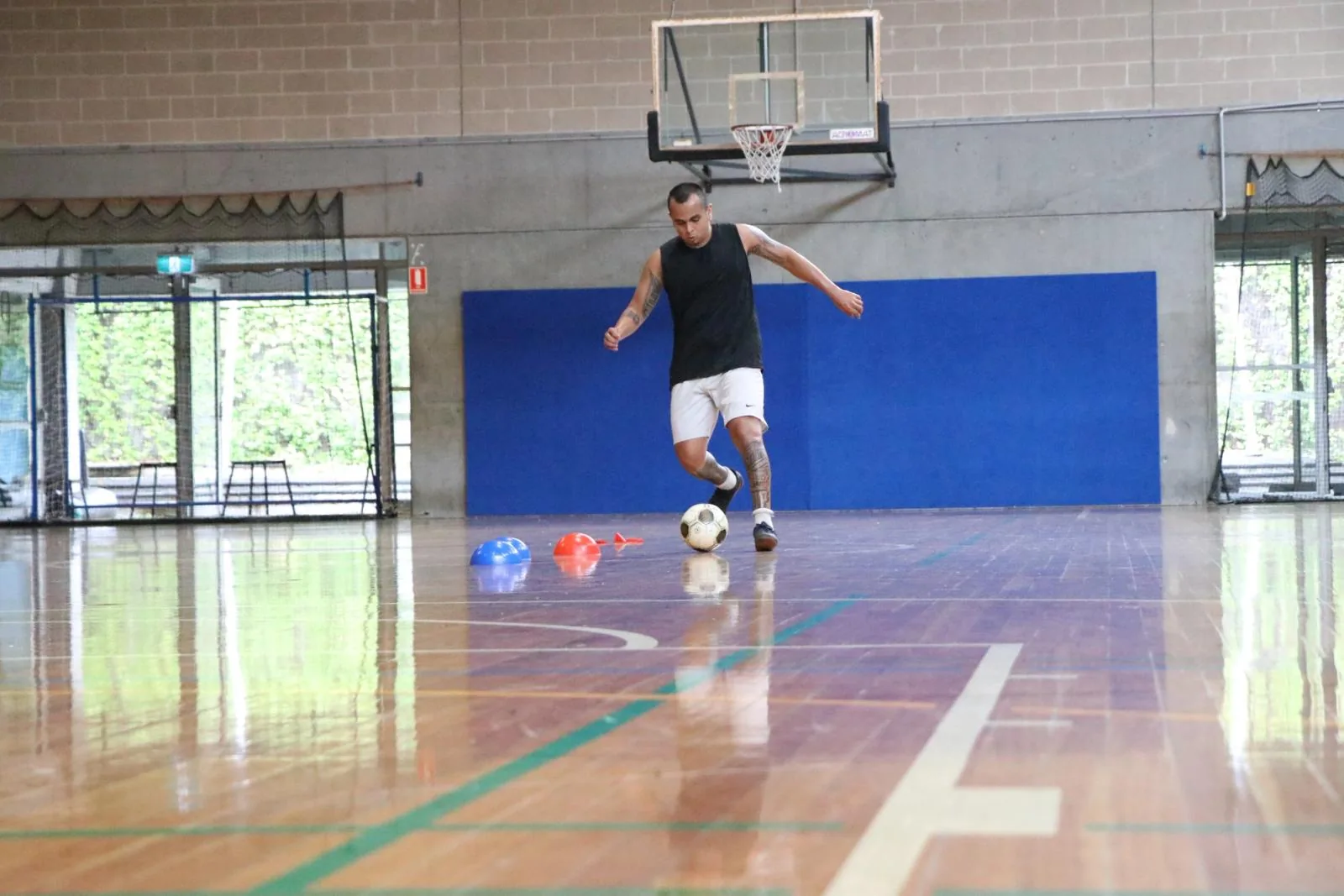
Cook + Phillip Park Indoor Sports Court
Sydney · Hardwood futsal court
The Swindome at Supermarine
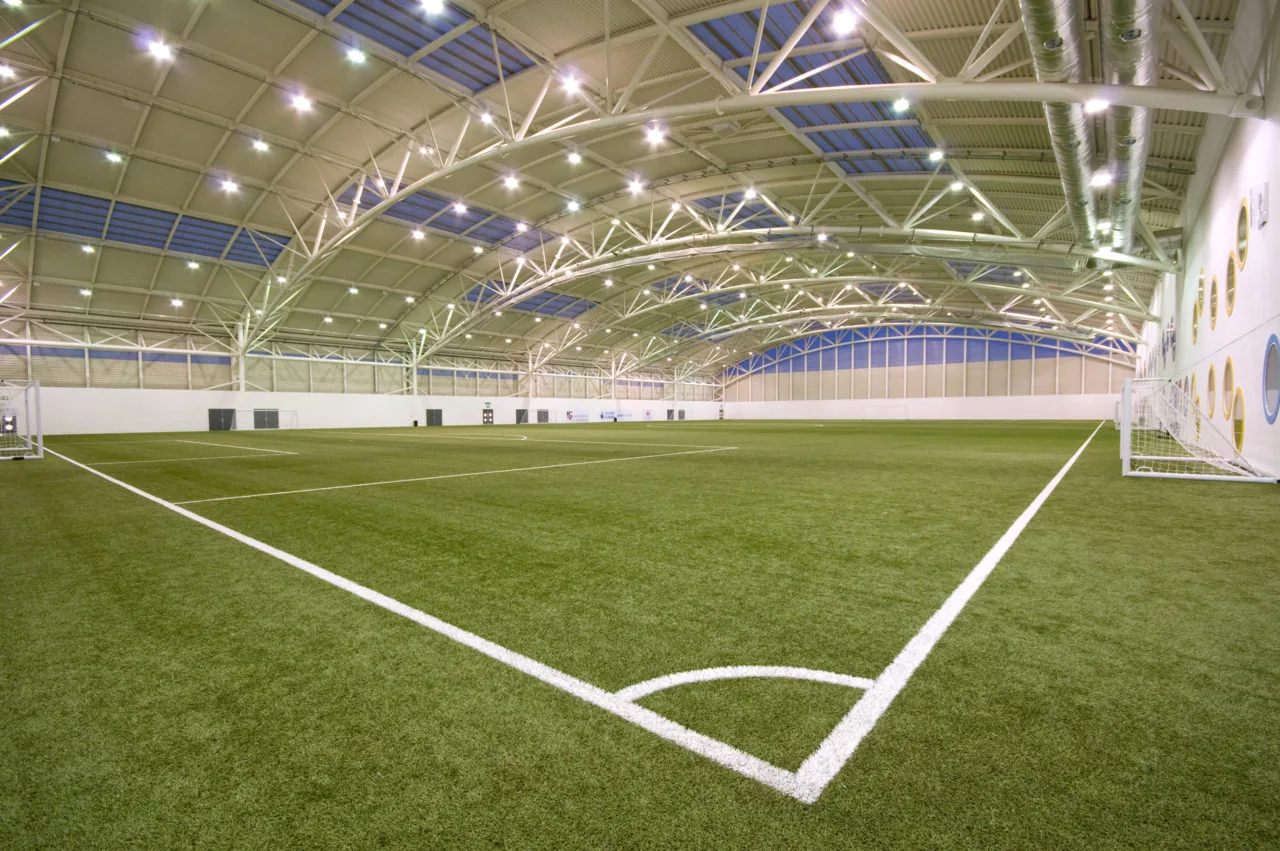
Swindon · Indoor 3G dome
What leagues cost
Most indoor soccer and futsal competitions charge per team per game, plus a registration fee each season. From the price lists of centres in our directory, in Australia in 2026:
- Adult indoor soccer games cost about A$65 to A$105 per team per game. A Melbourne centre charges A$100 a match for men's leagues, with a one-off A$125 registration.
- Social futsal ranges from about A$60 to A$105 per team per game, depending on the city and the time slot.
- Casual court hire for a game with friends is around A$50 to A$120 per court per hour in Sydney, with off-peak hours cheapest.
In New Zealand, social futsal and indoor football leagues are usually priced per season, which works out at roughly NZ$45 to NZ$80 per team per game. Split between seven or eight players, that is a cheap night out.
Cities with the most indoor football venues in our directory:
FAQ
Is indoor soccer the same as futsal?
No. Indoor soccer is played in a netted or walled court where the ball rebounds, with rules set by each centre. Futsal is FIFA's hard-court game with lines, kick-ins and a low-bounce size 4 ball.
How many players are on an indoor soccer team?
Usually four to six on the court, depending on the centre, with rolling substitutes. Most teams register seven to nine players.
What shoes do you wear for indoor soccer?
Turf shoes or flat trainers on synthetic grass courts, and flat non-marking indoor shoes on timber or sports floors. Studded boots are not allowed.
Is there offside in indoor soccer or futsal?
No. Neither game uses the offside rule.