Indoor and futsal shoes
 By the Find My Football Pitch team·
Updated ·
4 min read
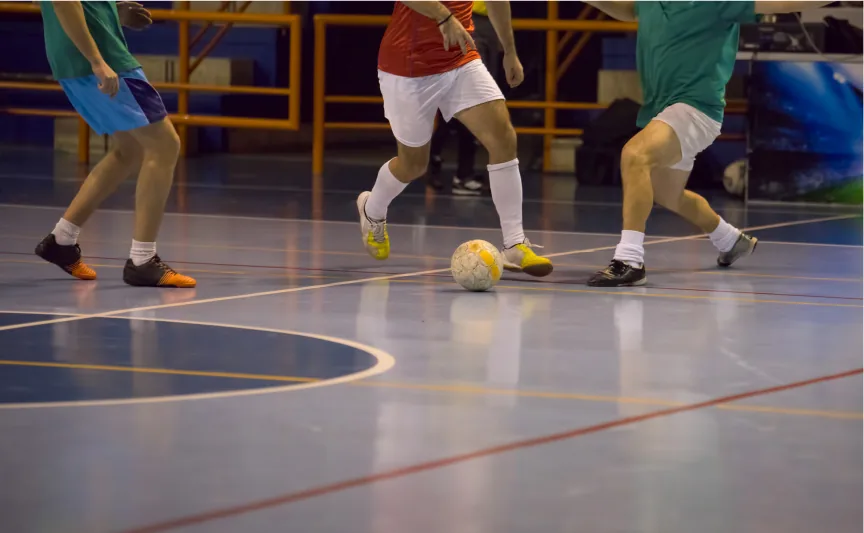
Futsal and indoor football are played on wooden or vinyl sports floors, and the shoe that works on grass or astro is the wrong one there. Here is what a futsal shoe is, why it matters, and what to buy if you play once a week.
The short answer
Futsal shoes, sold as indoor shoes or IC, have a flat, non-marking gum rubber sole, a low profile and a firm upper, often leather or suede at the toe for ball control. The flat rubber grips a sports hall floor the way studs grip grass. Sports halls ban studded boots and most ban black-soled shoes that leave marks. Running trainers are allowed but grip less, roll over more easily and wear through fast. If you play indoors every week, a pair of IC shoes is worth it.
What makes a futsal shoe
- Flat gum rubber sole. Gum rubber is soft and slightly tacky. On a clean wooden or vinyl floor it grips hard in every direction, so you can stop, turn and push off without slipping.
- Non-marking compound. Usually light brown or white. Sports halls refuse shoes that leave black scuffs, and the hall staff do check.
- Low to the floor. A thin midsole keeps your foot close to the ground. You feel the ball under your sole, which matters in futsal where you control the ball with the sole far more than in outdoor football.
- Reinforced toe and sides. Futsal involves toe pokes and lots of contact with the ball on the inside and outside of the foot. Suede or leather patches there last longer than mesh.
- Herringbone or pivot tread. Shallow grooves and a circle under the ball of the foot help the shoe twist without catching.
Why trainers and boots fall short
Boots are not an option. Moulded and screw-in studs damage sports floors and give no grip on a flat surface. No hall will let you on in them, and the Futsal Laws of the Game expect rubber-soled shoes.
Astro trainers (TF) are better than boots but their pimpled soles touch the floor at small points, so they grip less than a flat sole. On a dusty floor they skate.
Running trainers are what most people turn up in. They work, but:
- the thick, soft heel makes the shoe tilt when you cut sideways, which is how ankles roll;
- the high stack blunts your feel for the ball;
- mesh toes wear through quickly from toe pokes and dragging the foot;
- some running soles, especially black ones, mark the floor.
Basketball, badminton and squash shoes are closer. They have gum soles and lateral support, so they are a fair backup if you already own a pair. They are heavier and higher than a futsal shoe.
Indoor surfaces and what grips them
| Surface | Where you find it | Best shoe |
|---|---|---|
| Sprung wooden floor | Leisure centre and school sports halls, stadium courts | IC futsal shoe |
| Vinyl or polyurethane sports floor | Dedicated futsal halls, multi-sport courts | IC futsal shoe |
| Interlocking plastic tiles | Some indoor centres and outdoor futsal courts | IC shoe; TF also works |
| Indoor artificial grass | Indoor 5-a-side centres, domes | TF astro trainer or AG boot, not IC |
That last row catches people out. "Indoor football" at many centres is played on artificial grass under a roof, and flat IC soles slide on it. Check which floor your venue has before you buy. Our indoor football pitch guide explains the options and AG, FG, TF or IC compares every sole type.
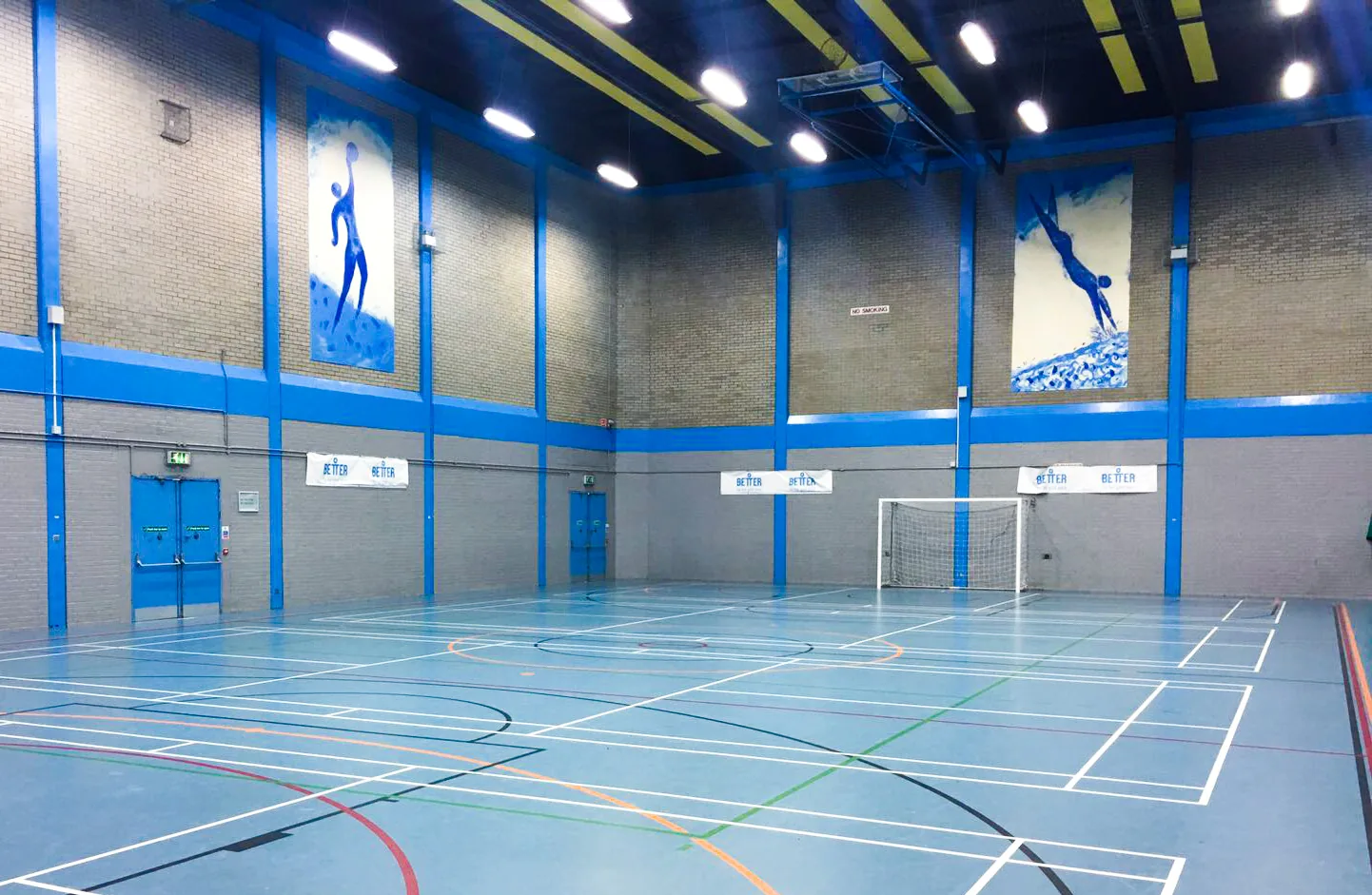
Shankill Leisure Centre
Belfast · Indoor futsal hall
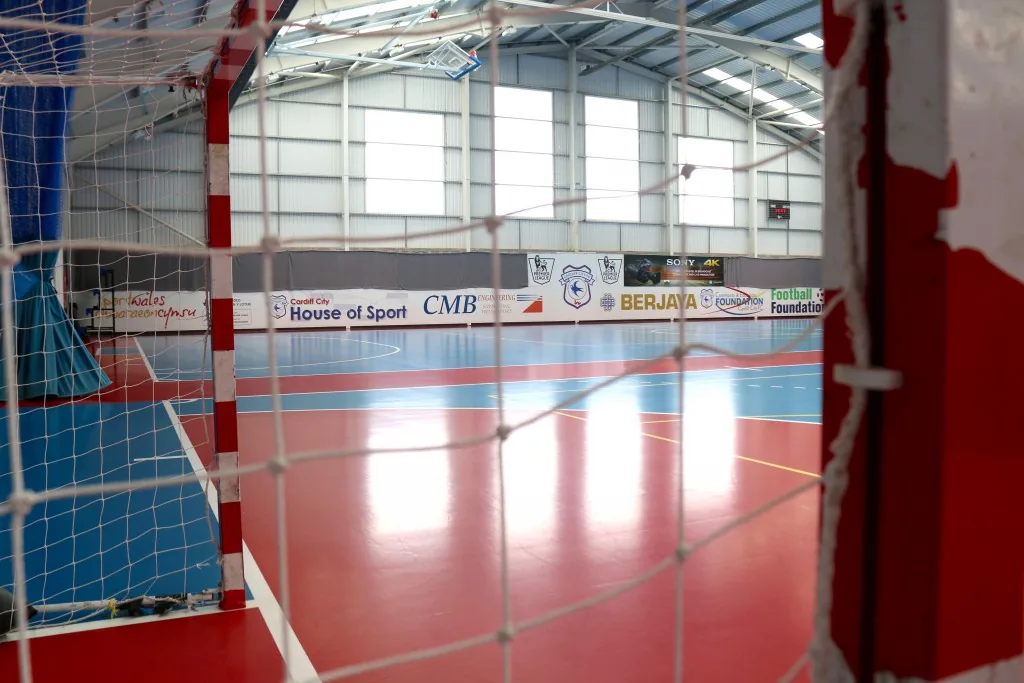
Cardiff City House of Sport (Leckwith)
Cardiff · Futsal hall
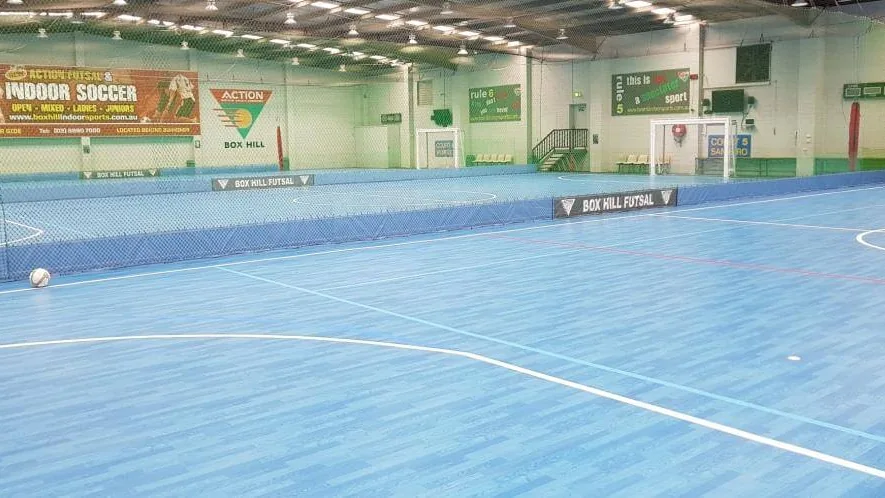
Box Hill Action Indoor Sports
Melbourne · Futsal courts
How to choose a pair
- Check the sole says IC or indoor. Look for a gum-coloured or white sole and a non-marking label.
- Pick the upper for how often you play. Suede or leather moulds to your foot and handles toe pokes. Synthetic uppers are lighter and cheaper but wear faster at the toe.
- Go for a snug fit. Your foot should not slide inside the shoe when you stop. Leave about a thumb's width at the toe, less than in a running shoe.
- Think about cushioning. Classic futsal shoes are very thin. If you are heavier or play on a hard floor, look for a model with a little more padding under the heel.
- Try them on a hard floor. Twist on the spot. The sole should grip but let you pivot without your knee taking the strain.
For outdoor small-sided games the same shoes are the wrong choice. Read can you play on astro in trainers for that.
Fit and care
- Keep the pair for indoors only. Grit from outside wears the gum rubber and spreads dust on the floor, which makes everyone slip.
- Wipe the soles before you play. Some players keep a damp towel by the bench; a quick wipe restores grip halfway through a session.
- Dry them at room temperature, not on a radiator, which hardens gum rubber.
- Replace them once the tread pattern under the ball of the foot is worn flat.
Cities in our directory with the most indoor football venues:
FAQ
Can I wear futsal shoes on astro?
You can, but the flat sole slides on artificial grass, especially on rubber crumb. Astro trainers (TF) or moulded boots grip much better outdoors.
Are futsal shoes the same as indoor football shoes?
Yes. Futsal shoe, indoor shoe and IC all describe the same flat gum rubber sole for sports hall floors.
Can I wear basketball shoes for futsal?
Yes, as long as the sole is non-marking. They grip well but are heavier and higher, so you lose some feel for the ball.
Do I need shin pads for futsal?
The Futsal Laws of the Game make shin guards compulsory, so leagues and referees usually insist. Casual hall bookings rarely check.