AG, FG, TF or IC: boot soles explained
 By the Find My Football Pitch team·
Updated ·
5 min read
Every football boot has a two-letter code on the box. It tells you what surface the soleplate was designed for, and picking the wrong one is the commonest reason boots feel wrong, wear out early or get you turned away at the gate.
The short answer
FG (firm ground) boots have moulded studs for natural grass in normal conditions. AG (artificial ground) boots have more, shorter, often hollow studs for 3G. TF (turf) shoes have a rubber sole covered in small pimples for astroturf and hard ground. IC (indoor court) shoes have a flat, non-marking sole for sports halls and futsal. SG (soft ground) boots have screw-in studs, often metal-tipped, for wet, muddy grass. MG (multi-ground) boots sit between FG and AG. If you play mostly 5-a-side on 3G, buy AG. If you play mostly on grass, buy FG.
The codes at a glance
| Code | Sole | Made for |
|---|---|---|
| FG | Moulded studs, conical or bladed | Dry or normal natural grass |
| AG | More, shorter studs, often hollow | 3G and 4G artificial grass |
| MG | Moulded studs designed for both | Grass and artificial grass |
| SG | Usually six screw-in studs | Wet, soft or muddy grass |
| HG | Many short studs in a harder plastic | Hard, dry grass and older artificial pitches |
| TF | Rubber sole with small pimples | Sand-based astroturf, short 3G, hard ground |
| IC | Flat, non-marking rubber | Sports halls, futsal courts, indoor floors |
Brands add their own suffixes, such as "FG/MG" on a boot meant for both grass and artificial grass, but the core letters are shared across Nike, adidas, Puma and the rest.
FG: firm ground
The standard football boot. FG soleplates have a dozen or so moulded plastic studs, round, conical or bladed. They grip well on a normal grass pitch and are light. FG is what most players picture when they think of a football boot.
On 3G, FG boots are allowed almost everywhere, but the longer studs can grip the infill more than you want, which some players feel in their knees. The plastic soleplate also wears faster on an abrasive artificial surface. See can you wear moulded studs on 3G.
AG: artificial ground
AG boots are built for 3G. The studs are shorter and there are more of them, many hollowed out. That spreads your weight, lets the boot rotate out of the rubber crumb more easily and stands up to the abrasion of artificial grass. The Sussex County FA's guide to footwear on its 3G pitch lists AG as recommended.
AG boots also work on firm, dry grass. On soft, wet grass the short studs do not grip enough.
TF: turf
Turf shoes, called astros or astro trainers in the UK, have a solid rubber outsole covered in small pimples. They are comfortable, cheap and grip well on sand-based astroturf, where studs skate. They also suit very hard grass and frozen pitches in winter.
On 3G they work in the dry, but the pimples do not reach down into the infill, so they slip when the pitch is wet. Some venues that ban flat trainers allow TF. See trainers on astro.
IC: indoor court
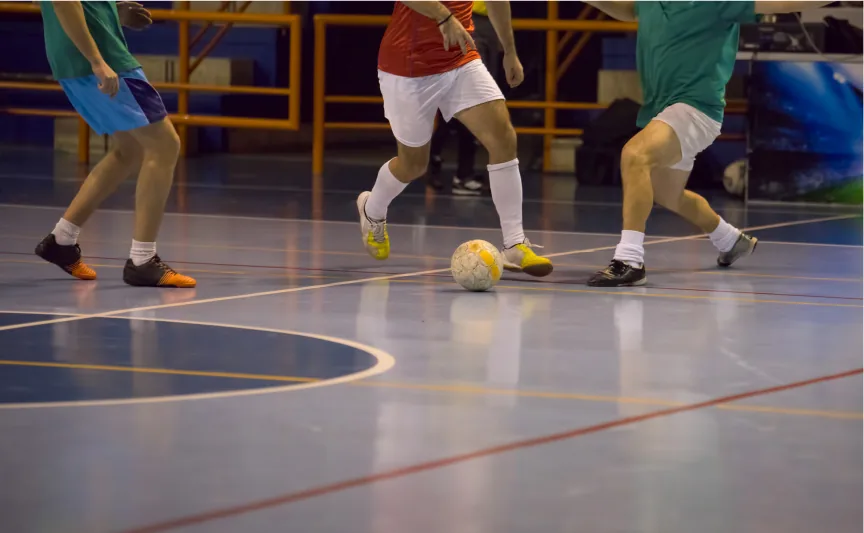
Indoor court shoes have a flat gum-rubber sole with flex grooves and a pivot circle under the ball of the foot. They grip a polished sports hall floor or a futsal court and do not leave marks. They are useless outdoors on grass and too slippery on 3G. Indoor 3G pitches are artificial grass, so you wear AG or TF there, not IC. For the court game, see futsal shoes.
SG, MG and HG
- SG (soft ground) boots have screw-in studs, usually six, often with metal or aluminium tips. They are for heavy, wet grass. SG-Pro or "mixed" soleplates combine screw-ins with moulded studs. SG boots are banned on most 3G pitches, because metal studs damage the carpet. See why metal studs are banned on artificial pitches.
- MG (multi-ground) soles are designed to cope with both grass and artificial grass. They suit players who switch between the two each week.
- HG (hard ground) boots, more common in Asia, use a harder plastic and many short studs for baked pitches and older artificial surfaces.
Which one to buy
- Weekly 5-a-side or 7-a-side on 3G: AG, or TF if your venue is sand-based astro.
- Sunday league or club football on grass: FG, with an SG pair for the muddiest months.
- A mix of grass and 3G: FG/MG or AG.
- Futsal or sports hall football: IC.
- Junior players who play everywhere: a pair of TF astros covers most surfaces and is kind to growing feet.
Check the venue before you buy. Rules differ. A few venues ban studs altogether, others require them. Our which boots for which pitch guide lists real examples.
FAQ
What is the difference between AG and FG boots?
FG boots have fewer, longer moulded studs made for natural grass. AG boots have more, shorter, often hollow studs made for 3G, which grip without locking in.
Can I wear FG boots on artificial grass?
Usually yes. FG moulded boots are allowed on almost all 3G pitches, though AG boots grip more evenly and the soleplate lasts longer.
Are TF and astro the same thing?
Yes. TF stands for turf, and in the UK these rubber-pimpled shoes are usually called astros or astro trainers.
Can I wear IC shoes outside?
Not well. The flat sole grips a smooth hall floor but slips on grass and 3G, and outdoor use wears it out fast.