Why metal studs are banned on artificial pitches
 By the Find My Football Pitch team·
Updated ·
4 min read
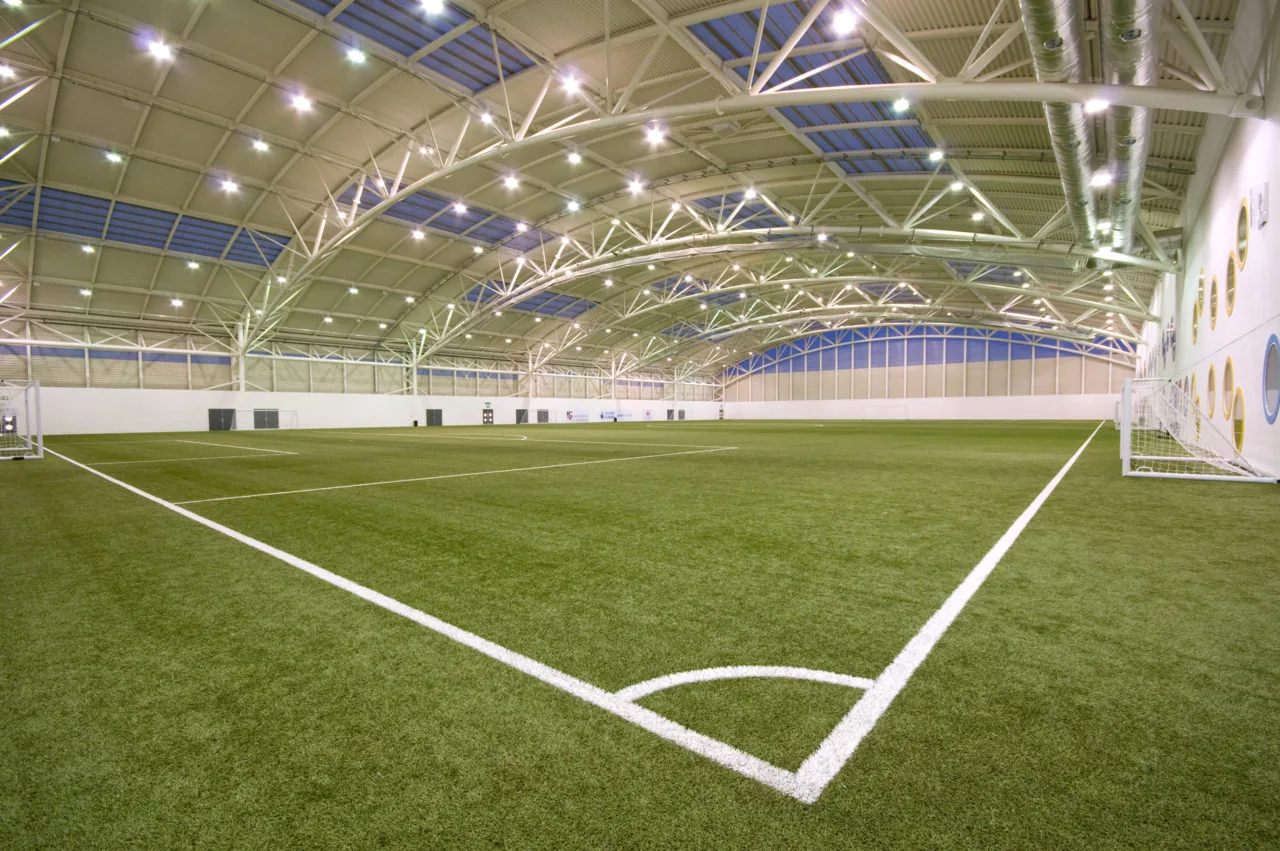
Bring screw-in boots with metal studs to a 3G or astroturf pitch and you will almost certainly be told to change. The ban is not a quirk of one venue. It protects an expensive surface, and the people you tackle.
The short answer
Metal studs are banned on most artificial pitches because they cut and tear the synthetic fibres, rip the seams and backing, and dig out the rubber and sand infill. That shortens the life of a surface that costs a great deal to replace. On sand-based astroturf they also give poor grip and can make you slip. And metal studs on a firm artificial surface make tackles and stamps more dangerous. The ban comes from venues and pitch owners, not the Laws of the Game, so the rules on each pitch's sign are what count.
What metal studs do to an artificial pitch
A 3G pitch is a carpet of long plastic fibres stitched into a backing, laid in rolls that are joined at seams, and filled with sand and rubber crumb. See how artificial pitches are built. Metal studs are hard, narrow and often worn down to sharp edges, and they do damage at each level:
- Fibres. Metal edges slice and split the fibres instead of pushing between them. Cut fibres lie flat and wear faster.
- Backing and seams. A stud that goes all the way through the infill can puncture the backing or catch a seam and lift it. Lifted seams are a trip hazard and expensive to fix.
- Infill. Long screw-in studs dig out rubber crumb and sand, leaving bare, hard patches in goalmouths and on the penalty spot.
A pitch owner budgets for the carpet to last a set number of years before replacement. Damage from banned footwear eats into that, and the cost ends up in hire prices. Our guide how long does a 3G pitch last has more on replacement.
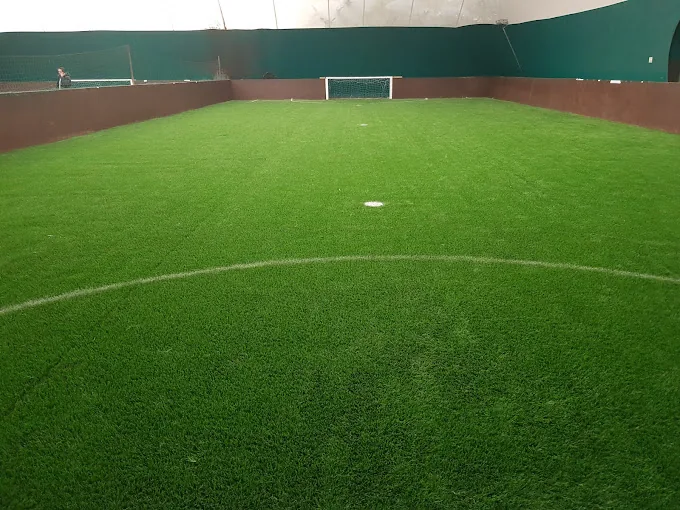
On sand-based astroturf
Older astro pitches have short fibres filled with sand and no rubber. Studs of any kind cannot sink in, so they skate on top and scrape the carpet. Many sand-based pitches ban studs altogether, not only metal ones. Coopers' Company and Coborn School in Upminster, for example, allows no studded boots on its astro.
The safety side
Metal studs are worn on grass because soft ground absorbs some of the force of a stud landing on someone. A 3G surface is firmer, and a sand-based astro firmer still. Venue footwear guides commonly give two safety reasons:
- Tackles and stamps. A metal stud on a firm surface lands harder on an opponent's foot or shin. In small-sided football, with players close together, that risk is higher.
- Grip. Long screw-ins either lock into 3G infill and twist your knee, or skate on astroturf and make you slip.
The Sussex County FA's footwear guide for its own 3G pitch lists SG and SG-Pro soleplates as forbidden because they "tear the surface", and warns that blades can cause injury.

County Sports Ground (Worcestershire FA)
Worcester · Plastic moulded studs only
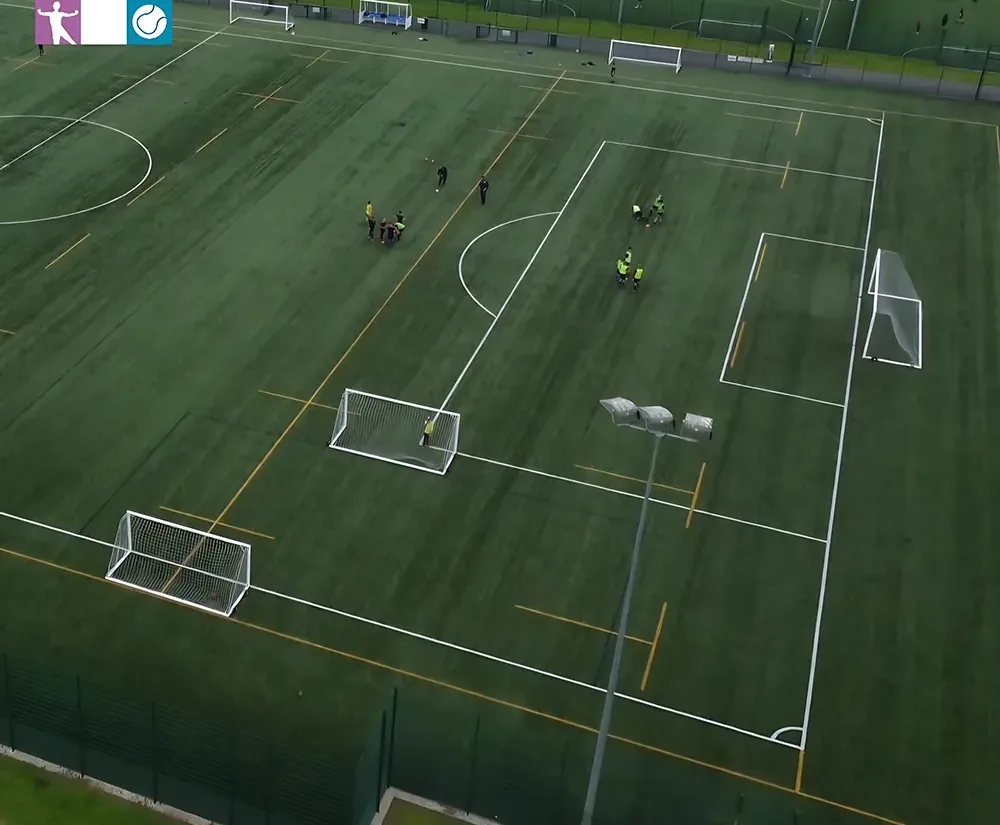
Queensferry Sports & Community Hub
Edinburgh · Studded footwear required

Zara Sports Centre
Bradford · Turf boots or trainers
Venue rules, not football law
The Laws of the Game do not ban metal studs. Law 4 says players must not wear anything dangerous, and referees can check studs before a match, but the type of stud is not specified. The ban on artificial pitches comes from the people who own and run them, and it is a condition of hire. Examples from our directory:
- Aberdeen Sports Village: metal studs not allowed on the indoor 3G.
- County Sports Ground, Worcester: only plastic moulded studs on the 3G.
- Colmers Farm, Birmingham: plastic moulded boots only.
- Writtle 4G court, Chelmsford: moulded or rubber studs only.
Staff can refuse to let you play, and in a league game the referee can stop you taking the field in boots the venue does not allow. A few venues are more relaxed. Stoneham Lane in Southampton lists screw-in studs among its permitted footwear, and some 3G pitches built for rugby too allow rugby studs that meet the British Standard BS 6366. If in doubt, ask before you travel.
Plastic screw-ins are still screw-ins. Some SG boots come with plastic or rubber-tipped screw-in studs. Many venues ban all screw-ins on 3G, whatever they are made of, because of their length and shape.
What to wear instead
- On 3G: AG boots, or FG boots with moulded studs. See can you wear moulded studs on 3G.
- On sand-based astroturf: TF astro trainers. See trainers on astro.
- On wet, muddy grass: this is where metal studs belong. Keep your SG boots for winter matches on grass.
Our which boots for which pitch guide has a full table, and AG, FG, TF or IC explains the codes on the box.
FAQ
Can you wear metal studs on 3G?
Almost never. Nearly all 3G and astroturf venues ban metal studs because they damage the surface. Wear AG or FG moulded boots instead.
Are metal studs illegal in football?
No. The Laws of the Game allow them as long as they are not dangerous. The ban on artificial pitches is a venue rule.
Can I wear screw-in studs on astro?
Usually not. Most venues ban screw-in studs on 3G and many ban all studs on sand-based astroturf. A few allow them, so check first.
What happens if I turn up in metal studs?
Staff will usually ask you to change or refuse to let you play. Keep a pair of astros or moulded boots in your bag.