How an artificial pitch is built
 By the Find My Football Pitch team·
Updated ·
5 min read
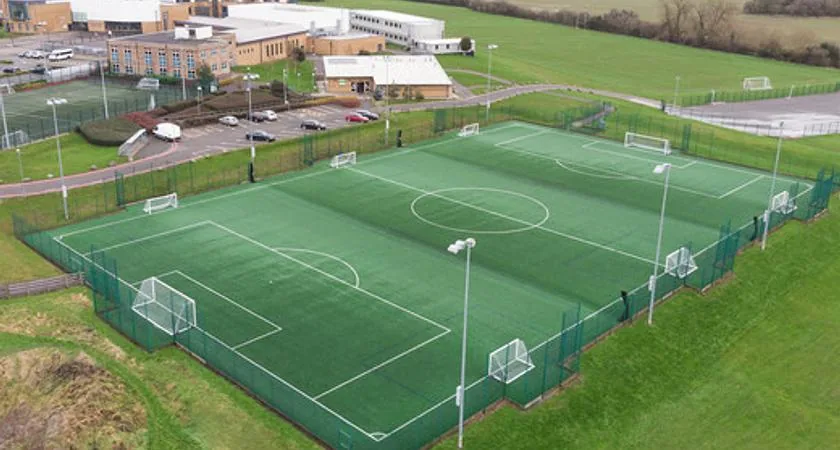
An artificial pitch looks like a green carpet laid on the ground. Underneath is a layered build closer to a road than a lawn, and most of the cost and most of the life of the pitch are in the parts you never see.
The short answer
An artificial pitch is built in layers. Contractors dig out the topsoil, lay drains, then build a stone sub-base and a level engineered base of finer stone or asphalt. Many pitches then get a shock pad for cushioning. The synthetic grass carpet is rolled out over it, joined at the seams and filled with sand and then rubber or another infill. Fencing, floodlights and paths complete it. A full-size 3G pitch usually takes a few months from groundworks to the first game, and the base under it is kept when a worn carpet is replaced.
The layers from the bottom up
Every system differs a little, but most outdoor football pitches follow the same order.
| Layer | What it is | What it does |
|---|---|---|
| Formation | The natural ground, stripped of topsoil and graded to falls | A stable, shaped bottom for everything else |
| Drainage | Perforated pipes in gravel-filled trenches, leading to an outfall or soakaway | Carries away rain that passes through the surface |
| Geotextile | A membrane sheet | Stops soil mixing into the stone |
| Sub-base | Compacted crushed stone, the thickest layer, sized to the ground conditions | Spreads loads and lets water through |
| Engineered base | Finer stone (unbound) or porous asphalt (bound), laid to tight levels | A flat, true surface for the carpet |
| Shock pad | Prefabricated foam or rubber panels, or rubber bound and laid in place. Not every pitch has one | Cushioning and consistent bounce |
| Carpet | Synthetic fibres tufted into a backing, in long rolls | The playing surface |
| Infill | Sand first, then rubber or another performance infill | Holds the carpet down, supports fibres, gives grip |
The base matters more than most people think. If it is not level, water pools in the dips and the carpet wears unevenly. If the drains fail, the whole pitch can stay wet for days. A good base lasts longer than the carpet, which the FA expects to need replacing after roughly seven to ten years. An existing shock pad can also be kept, but the FA says it must be tested by a FIFA-accredited lab first.
A shock pad is not universal. The FA's 3G design guide says most pitches built through its funding framework had a 60 mm pile on an engineered macadam base without a shock pad.
The carpet and infill
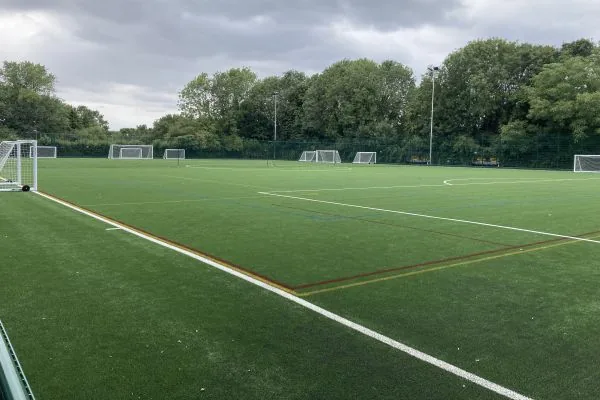
The carpet arrives in rolls the length of the pitch. Fitters lay them side by side and join them with seaming tape and glue on the underside. Lines are either tufted in during manufacture or cut in on site: a strip of green is cut out and a strip of white or yellow carpet is glued in its place. On a multi-use pitch you will see lines in several colours for different sports and pitch sizes.
On a community football 3G pitch the fibres are often around 60 mm tall, the length the FA's design guide describes as most common on pitches it has funded. They are filled in stages:
- Sand. Rounded silica sand is spread and brushed in first. It is heavy and holds the carpet flat without fixing it to the base.
- Performance infill. Rubber crumb or an alternative goes on top, brushed in over several passes until the right amount of fibre is left showing.
The rubber is what gives grip and cushioning. Our guide to the black bits on astroturf covers the types of infill and why some pitches are changing. A short-pile sand-filled pitch (2G) skips the rubber layer, which is why it plays harder. See 3G vs 4G for how the marketing names fit together.
Not glued down. On most outdoor pitches the carpet is held in place by its own weight and the weight of the infill, not by adhesive. Only the seams and the edges are fixed. This makes it possible to lift and replace a worn carpet without rebuilding the base.
Fences, lights and paths
The playing surface is only part of the job. A typical community pitch also needs:
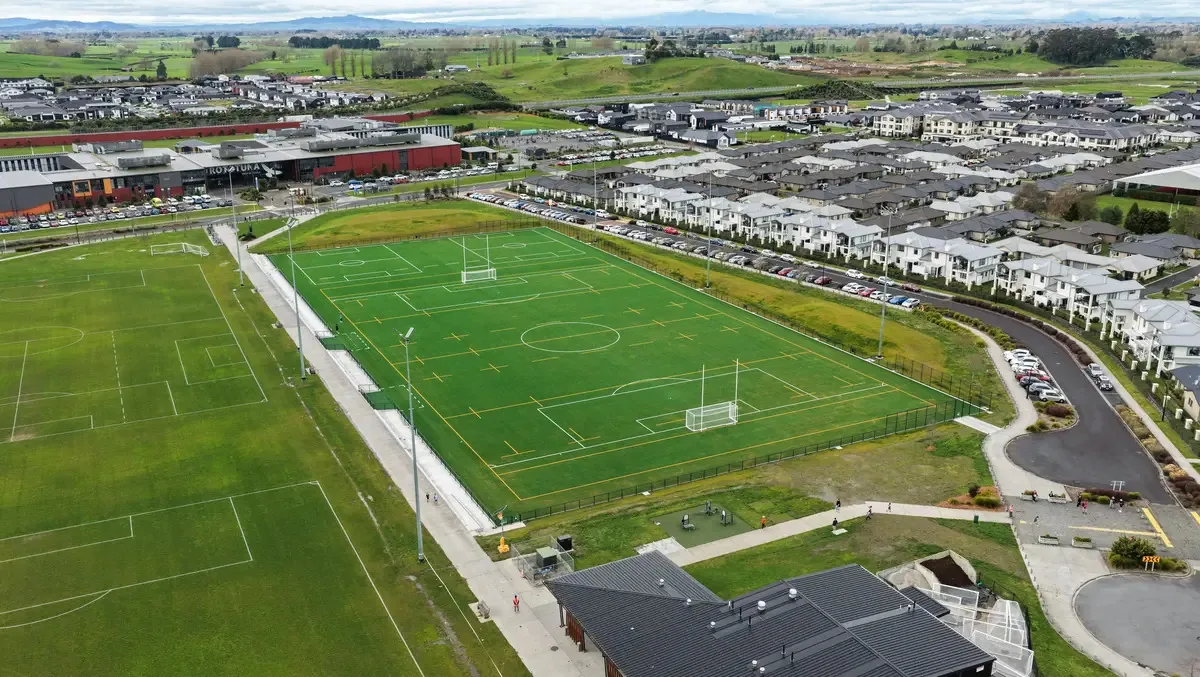
- Fencing of weldmesh panels, often around 4.5 m high, to keep balls in and stop people walking dogs or riding bikes across the turf.
- Kickboards at the bottom of the fence, which keep infill on the pitch.
- Floodlights on columns, which let the pitch be booked through winter evenings. Planning permission often limits their hours.
- Hardstanding around the pitch and a maintenance gate big enough for a tractor.
- Boot cleaning grids at the entrances.
How a build runs
A typical full-size project in the UK follows these steps:
- Site survey: levels, soil tests, drainage and any underground services.
- Planning permission, usually focused on floodlights, noise and drainage.
- Topsoil strip and earthworks to create the falls, which are very gentle so the pitch looks flat.
- Drains, then sub-base, then the engineered base, each checked for level.
- Fencing and floodlight foundations, often in parallel.
- Shock pad, carpet, seams and lines, then sand and rubber infill.
- Testing, then handover.
Weather drives the timetable. Earthworks in a wet winter can stall for weeks, and carpet adhesives need dry conditions. Many schools and councils plan builds over spring and summer so the pitch opens for the new season. For what all of this costs, see how much a 3G pitch costs to build.
Testing before it opens
A finished pitch is tested on site against a performance standard. Tests measure how the ball bounces and rolls, how much the surface absorbs impact, how much it lets your foot turn, and how level it is. In England, pitches used for affiliated matches go on the FA's register of football turf pitches, and they have to be retested every three years to stay on it. Pitches for higher levels of play can be certified under the FIFA Quality Programme.
Testing does not stop at handover. As the infill compacts and the fibres wear, the numbers drift. Regular brushing and topping up slow that down. Our guide to how long a 3G pitch lasts covers the life of the surface.
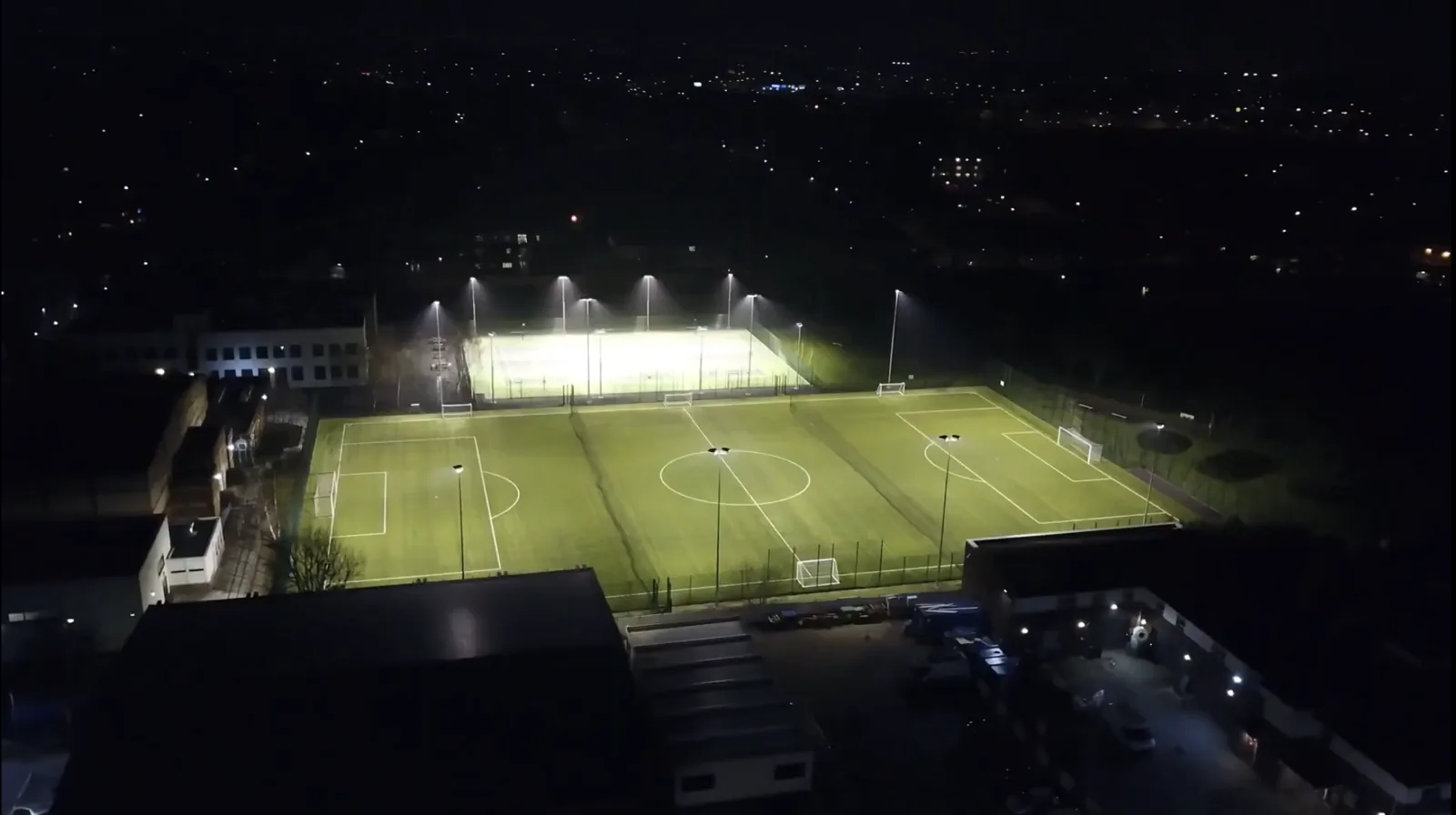
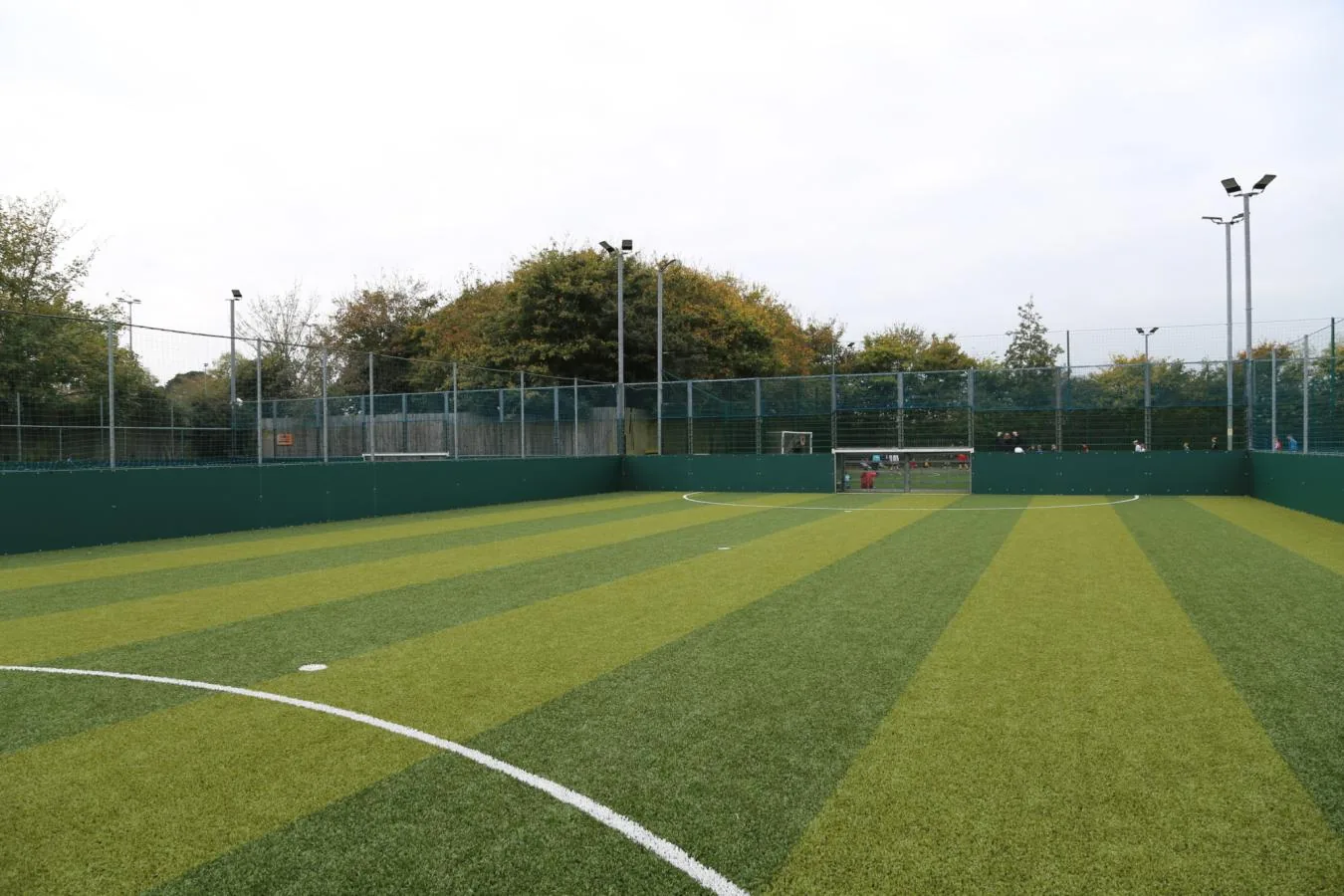
Hampton Sports & Fitness Centre
London · Floodlit 3G
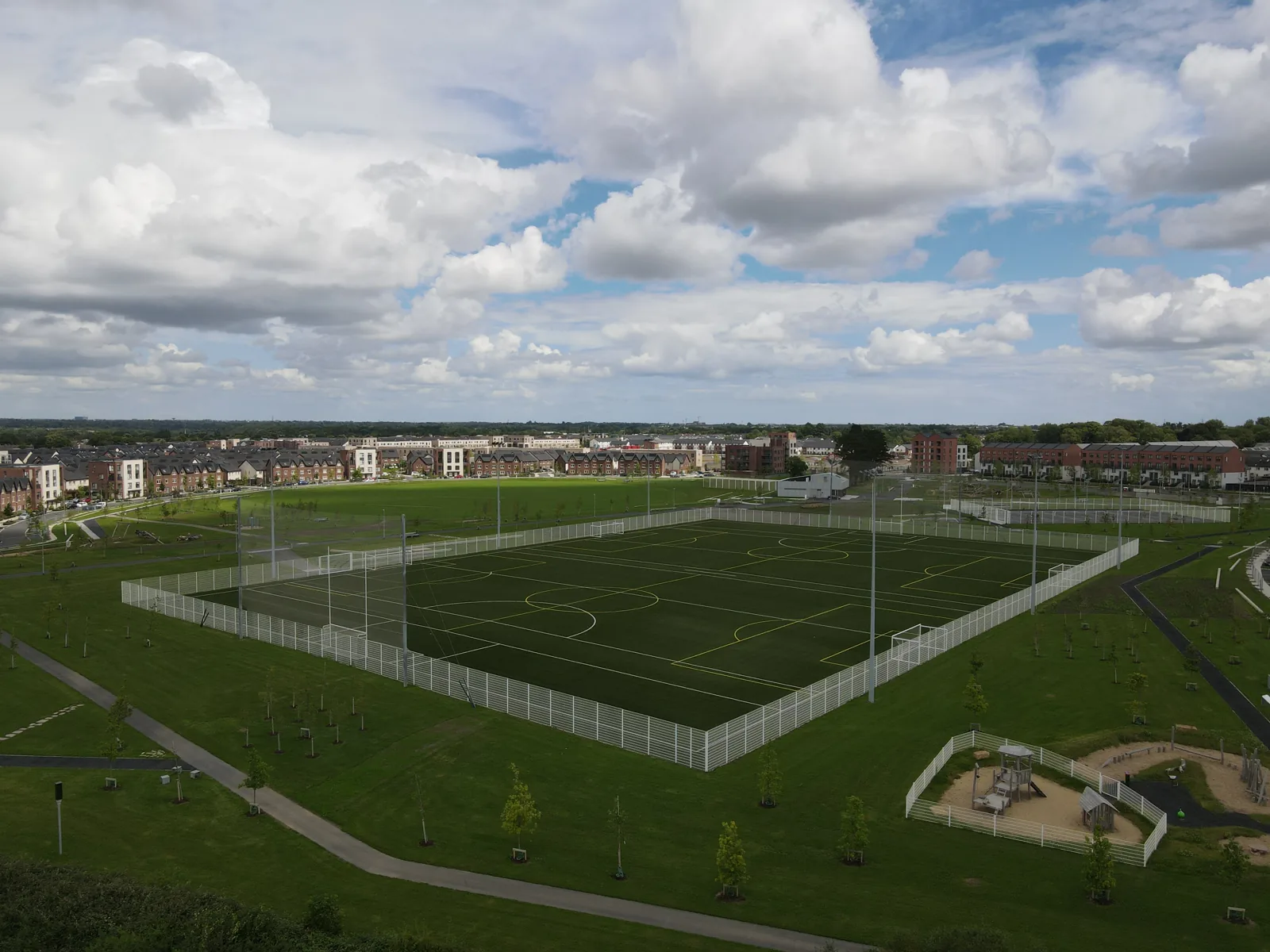
Airlie Park 3G Pitches
Dublin · Fenced 3G pitches
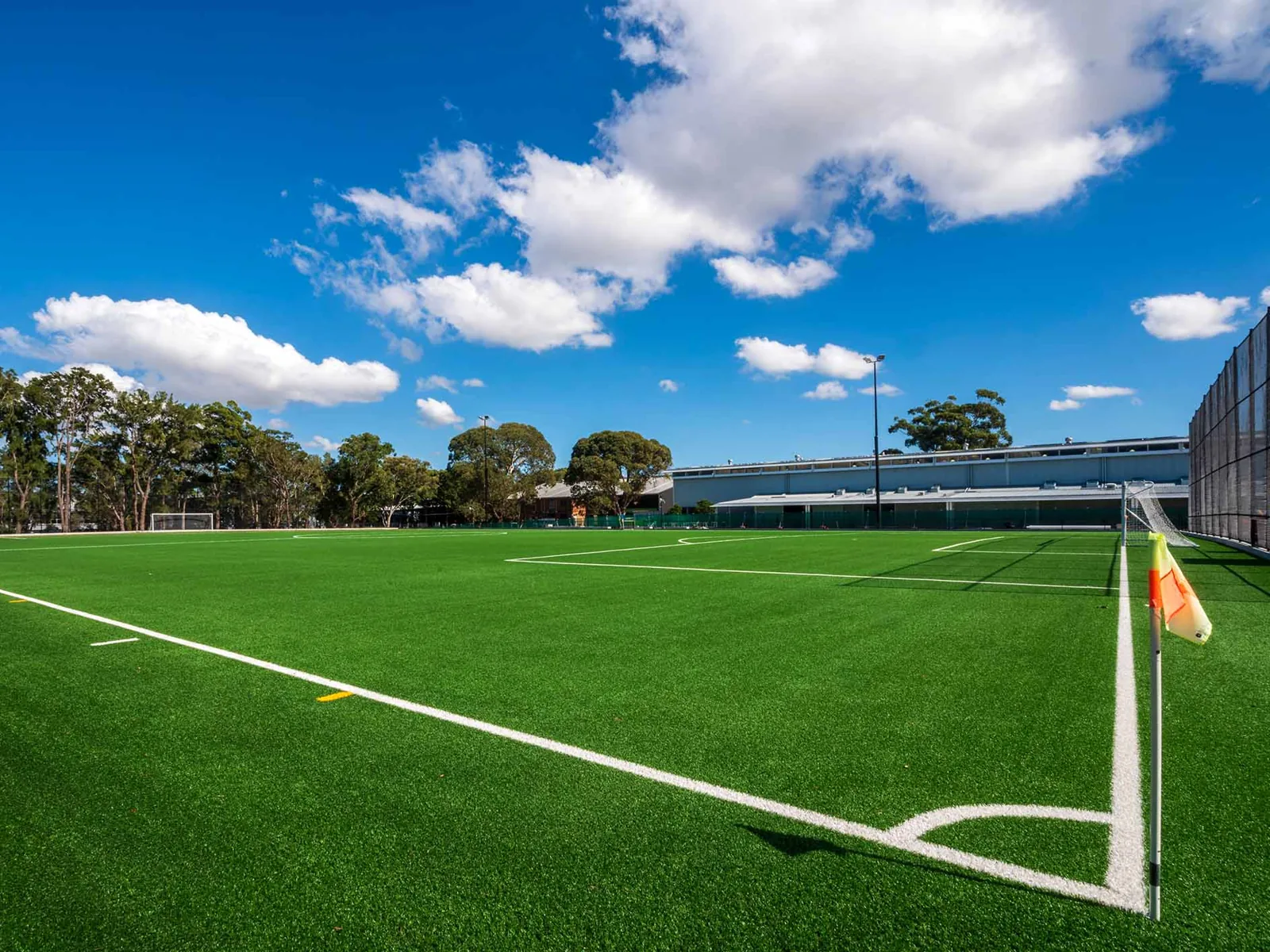
Perry Park Synthetic Sportsfield
Sydney · Long-pile synthetic
Cities with the most artificial grass pitches in our directory:
FAQ
What is under a 3G pitch?
Often a shock pad, then a level engineered base of fine stone or porous asphalt, then a deeper stone sub-base over drains and a geotextile membrane.
Is artificial grass glued down?
On most outdoor pitches only the seams and edges are glued. The weight of the sand and rubber infill holds the rest of the carpet in place.
What is a shock pad?
A layer of foam or bound rubber under the carpet that cushions impact and evens out bounce. It can be kept when the carpet is replaced, if it passes a test.
Can a 3G pitch be built on an old grass pitch?
Yes, that is common. The topsoil is stripped and the full drainage and stone base is built in its place.