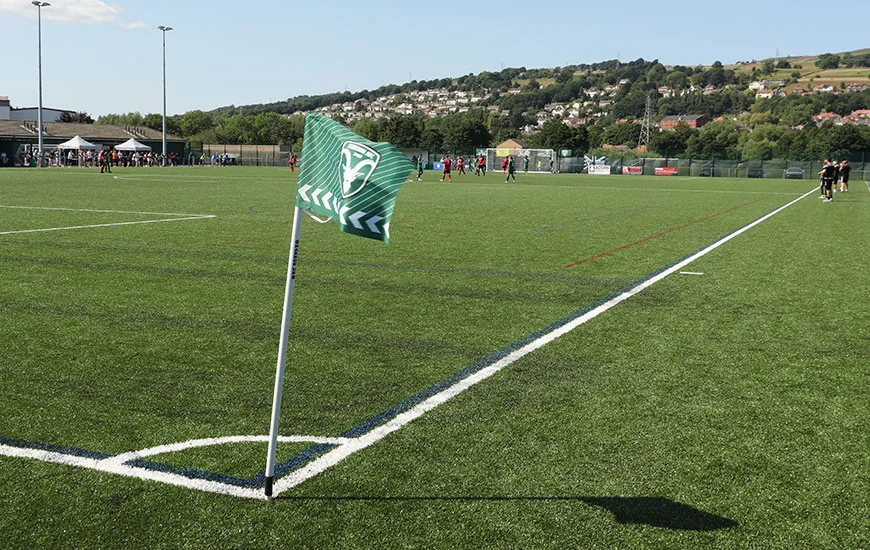
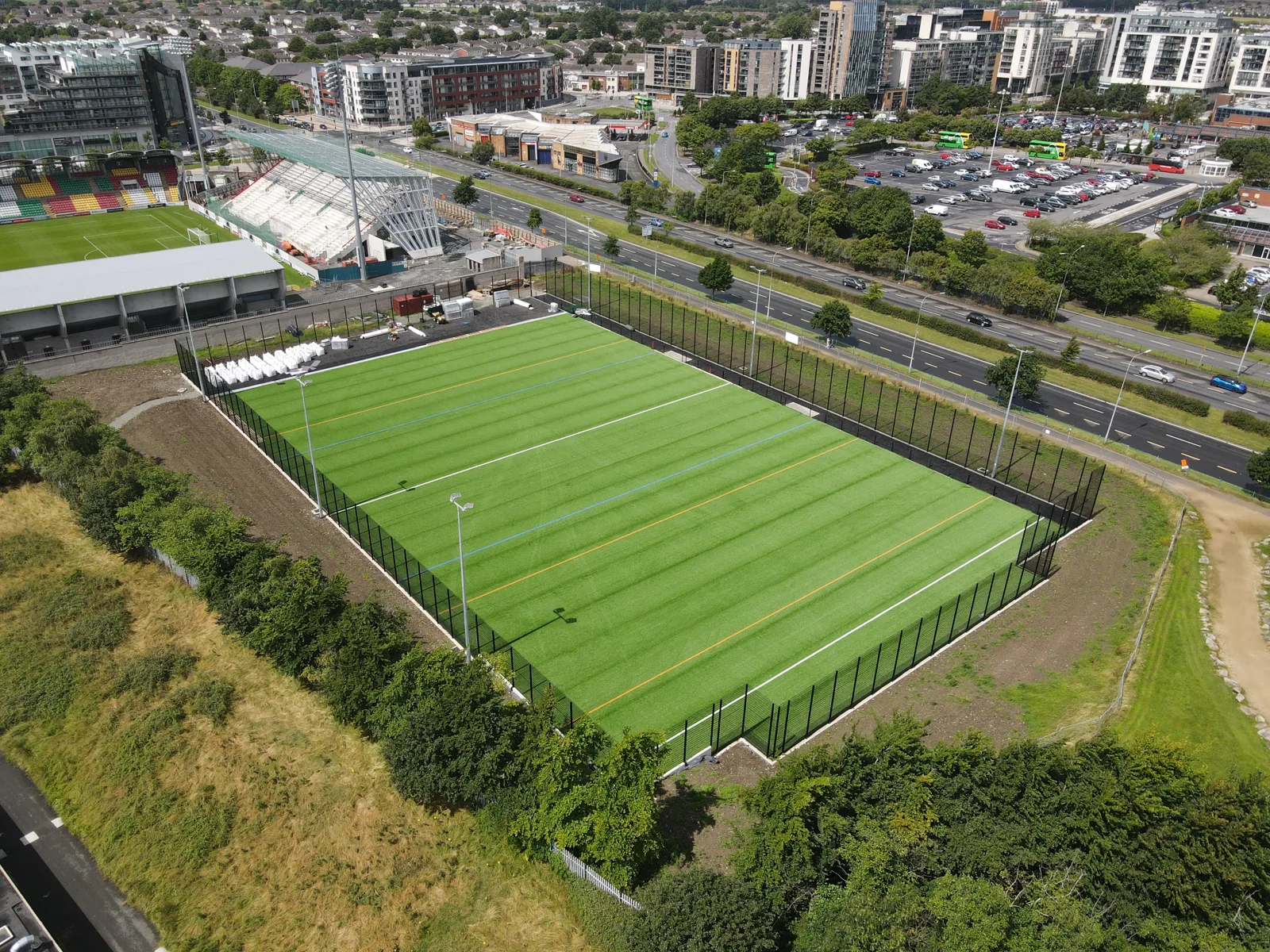
What are the black bits on astroturf?
 By the Find My Football Pitch team·
Updated ·
5 min read
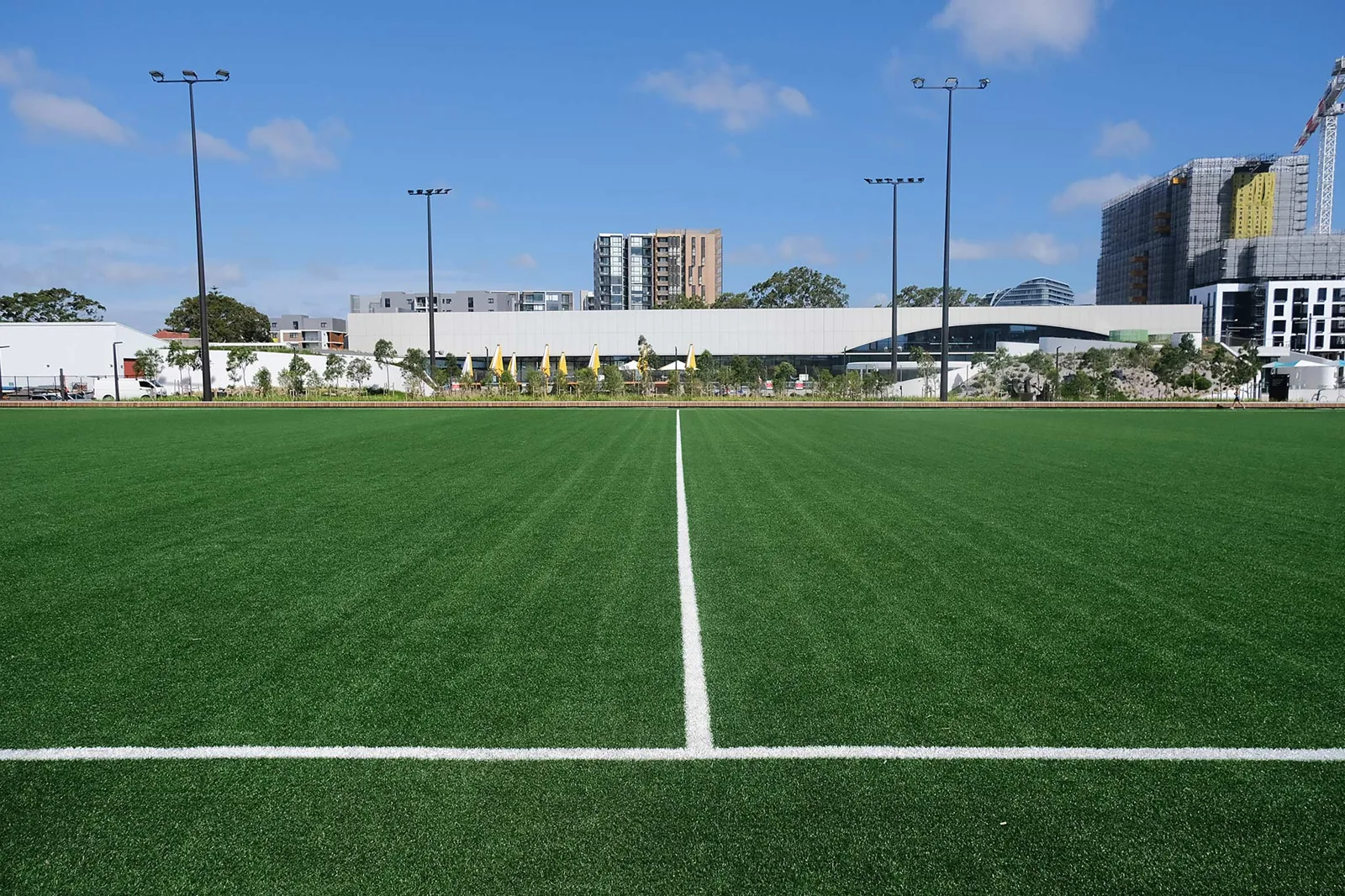
You get home from five-a-side and find small black pellets in your socks, your boots and somehow your bed. They come from the pitch, and they are there on purpose.
The short answer
The black bits on a 3G or "astroturf" pitch are rubber crumb, also called rubber infill. Most of it is SBR rubber granulated from old car and lorry tyres, in pieces of roughly 0.5 to 3 mm. It sits between the plastic grass fibres, on top of a layer of sand, and gives the pitch its bounce, grip and cushioning. Without it the fibres would lie flat and the surface would play hard and fast. Some newer pitches use green or brown granules made from other rubbers, cork or plant material instead.
What the black bits are
A third generation (3G) pitch is a carpet of long plastic fibres, often around 60 mm tall, stitched into a backing. The carpet is filled almost to the top with loose granules. The lower layer is sand, which weighs the carpet down and keeps it flat. The upper layer is rubber, and that is what you see and what sticks to you.
On most pitches in the UK and Ireland the rubber is SBR (styrene butadiene rubber). It comes from end-of-life tyres that are shredded, cleaned of steel and textile cord and then ground into crumb. That is why it is black and why a hot 3G pitch can smell faintly of rubber on a summer afternoon.
A full-size pitch holds many tonnes of it, which is why a pitch can look the same for years even though players carry some away every session. Groundstaff top it up from bags when the level drops.
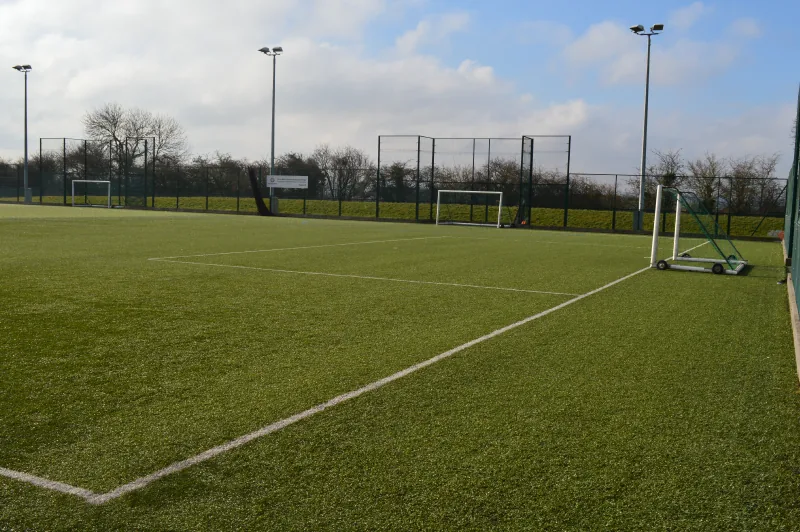
Why the pitch needs them
The fibres on their own would flatten under feet within weeks. The crumb props them up and does several other jobs:
- Cushioning. Rubber gives under your foot and when you fall, so the surface feels closer to firm grass than to a carpet on concrete.
- Ball roll and bounce. The depth and firmness of the infill control how fast the ball runs and how high it comes up. Pitches are tested for this against FIFA and FA standards.
- Grip. Studs sink into the infill and twist out of it, much like they do in soil. That is why 3G boots have short, numerous studs.
- Drainage. Water runs through the loose granules into the base, so a 3G pitch is playable after rain that would close a grass pitch.
Older sand-filled "astroturf" (2G) pitches have short fibres and no rubber at all. If the pitch you play on has no black bits, that is probably what it is. Our guide to what astroturf means explains the generations.
Other kinds of infill
Not every artificial pitch uses tyre rubber. Look closely and you may see one of these instead.
| Infill | What it looks like | Notes |
|---|---|---|
| SBR (recycled tyre) | Black, irregular granules | The cheapest and most common |
| Coated SBR | Green or brown granules, black inside | Tyre rubber with a coloured polymer coating |
| EPDM | Coloured, often green, uniform pieces | New rubber made for the purpose; costs more |
| TPE | Rounded, slightly glossy granules | A thermoplastic that can be recycled again |
| Organic (cork, coconut, olive stone) | Light brown chips | No plastic; needs more watering and topping up |
| No infill | Dense, curly fibres only | Newer non-filled carpets; still rare for football |
Wellington's council resurfaced Alex Moore Park in 2024 and the pitch now has organic infill. In the UK, SBR still makes up most of the crumb on community pitches.
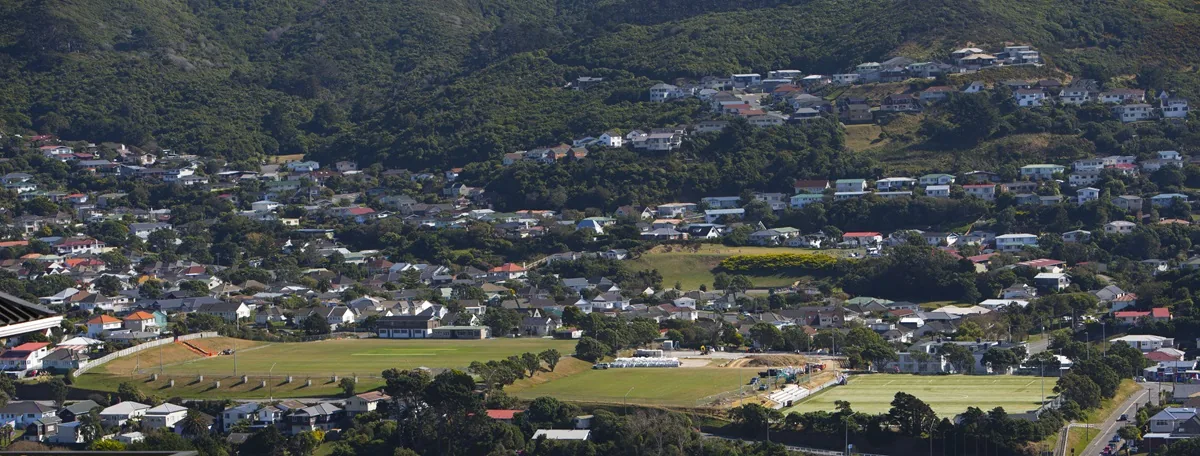
Alex Moore Park artificial turf
Wellington · Organic infill
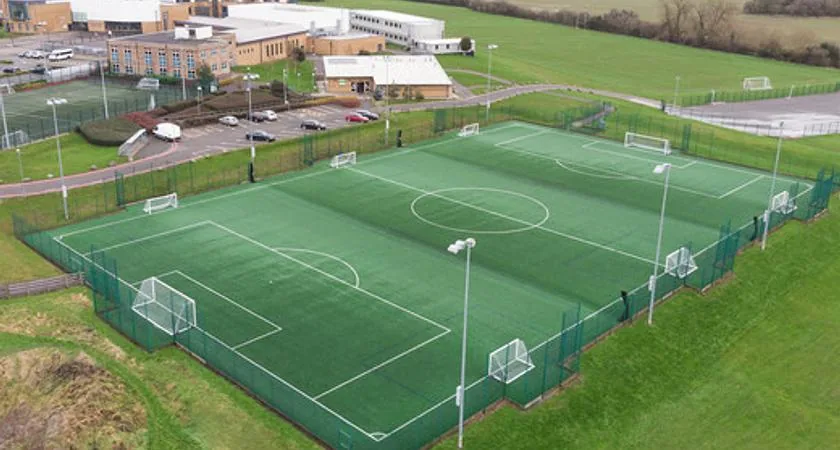
Judgemeadow Community College
Leicester · Mondo ecofil 3G
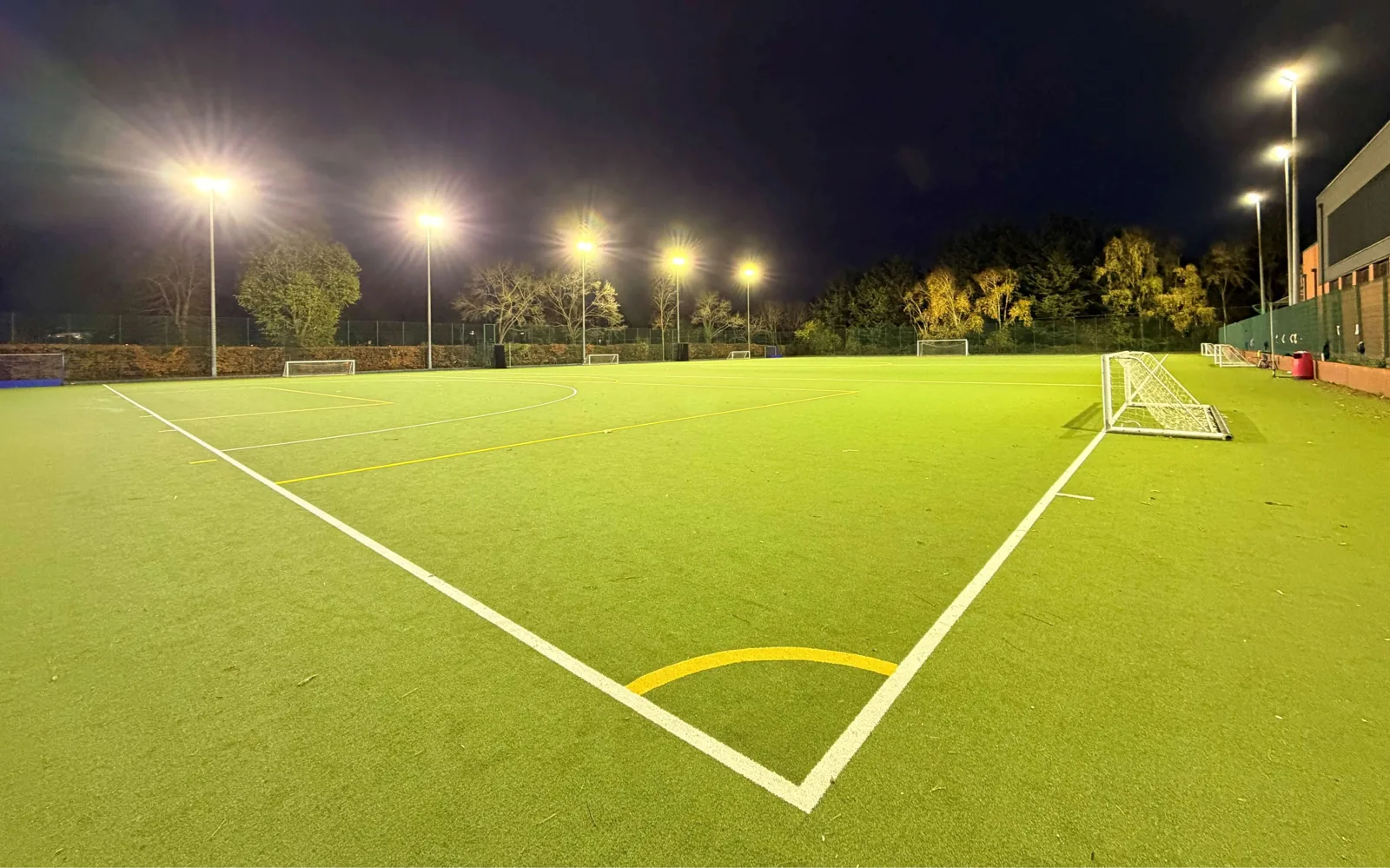
Shene Sports & Fitness Centre
London · Sand-dressed turf
Why they follow you home
Every time a stud pulls out of the surface it flicks a few granules up. They land in your boots, the tops of your socks, the turn-ups of your tracksuit and in your hair if you went to ground. A goalkeeper can take home a small handful after one session.
A few habits keep most of it at the pitch:
- Bang your boots together and tip them out before you leave the cage. Most centres have a boot brush or grate by the gate for this.
- Take your socks off and shake them outside, not in the car.
- Keep a separate bag for boots so the crumb does not spread through your kit.
- Wash muddy kit inside out and clear the washing machine filter now and then. Rubber crumb does not dissolve.
Crumb in a graze. Grazes from falling on 3G (turf burn) often have granules in them. Rinse them out under clean running water before covering the wound. Our guide to turf burn covers cleaning and healing.
Why some pitches are changing
Two things are pushing owners away from loose tyre crumb.
The first is pollution. Crumb washes into drains, gets carried off on boots and blows into hedges. In 2023 the EU adopted a restriction on intentionally added microplastics (Regulation 2023/2055) that ends the sale of polymer granular infill for synthetic sports pitches from 17 October 2031. Pitches already built can keep playing, but topping them up with rubber will get harder. Owners now fit taller kickboards, boot-cleaning stations and drain filters to keep the crumb in.
The second is health worry, mostly about the chemicals in tyre rubber. European and US reviews have so far found low risk to players, and the EU has capped the level of certain chemicals in the crumb since 2022. Our guide on whether rubber crumb is safe goes through the evidence.
So the next pitch built near you may have green or brown infill, or none. To your feet it will feel much the same.
Cities with the most artificial grass pitches in our directory:
FAQ
Are the black bits on astroturf made from tyres?
On most 3G pitches, yes. The usual infill is SBR rubber granulated from end-of-life car and lorry tyres. Some pitches use new rubber, thermoplastic or organic infill instead.
Why is there sand under the rubber crumb?
The sand is heavy, so it holds the carpet flat and stable. The rubber sits on top to add cushioning and grip.
Do grass pitches have black bits?
No. Natural grass pitches have no rubber. Some stadium hybrid pitches contain plastic fibres, but not loose crumb.
How do I get rubber crumb out of my car?
A vacuum with a narrow nozzle works best. Shaking boots and socks out at the pitch saves most of the job.