What is astroturf?
 By the Find My Football Pitch team·
Updated ·
4 min read
Astroturf is one of those brand names that became an everyday word, like hoover or biro. In Britain and Ireland people say astro for almost any artificial pitch, but they usually mean one particular kind. Knowing which one saves you turning up in the wrong boots.
The short answer
AstroTurf is a brand of artificial grass, first made in the United States in the 1960s and named after the Houston Astrodome. In everyday British and Irish use, astroturf or astro means any artificial pitch, and most often an older sand-filled or sand-dressed pitch with short fibres, built mainly for hockey. These play fast and hard and suit trainers or turf shoes. Modern football pitches with long fibres and rubber crumb are usually called 3G instead.
AstroTurf the brand
The product began as ChemGrass, developed by the American chemical company Monsanto in the 1960s. Its big moment came in 1966, when it was laid in the Houston Astrodome, an indoor baseball stadium where real grass would not grow under the roof. The product was renamed AstroTurf after the stadium.
That early turf was a short nylon carpet with no infill: the first generation, or 1G, of artificial grass. It was hard, fast and gave nasty burns. The AstroTurf brand still exists and now sells modern surfaces, including football turf, but the name is far better known than the company.
Astro as an everyday word
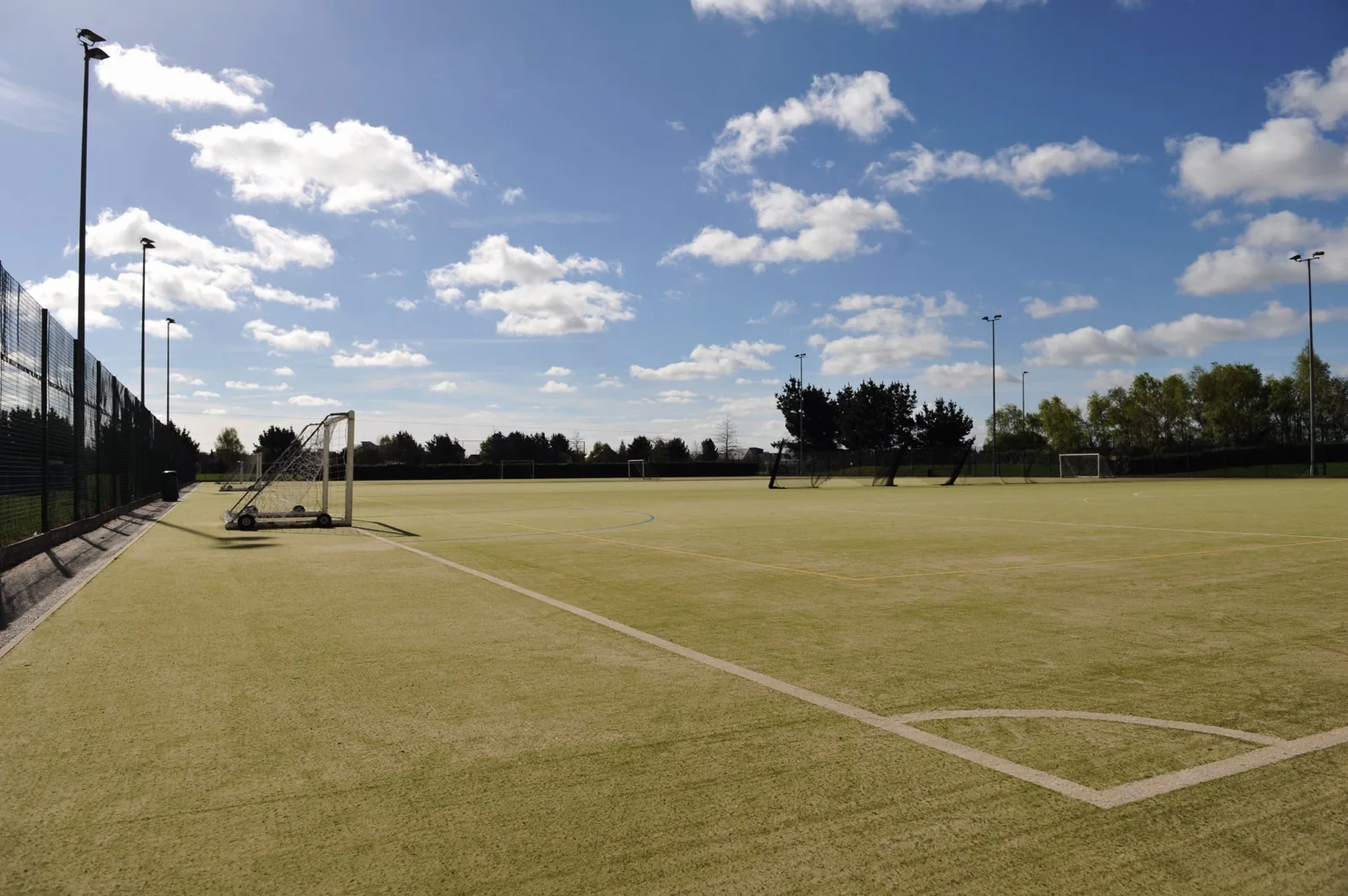
In the UK and Ireland, astro, astroturf and astro pitch are used for all sorts of artificial surfaces. "Fancy a game on the astro?" could mean a school hockey pitch, a 3G at a football centre or a carpet in a leisure-centre cage. In our own listings, venues describe pitches as astro, astroturf, all-weather, synthetic or artificial grass, often for quite different surfaces.
Elsewhere the words change:
- Australia and New Zealand: synthetic, synthetic turf or a synthetic field.
- Canada and the United States: turf, or a turf field. "Soccer on turf" usually means a 3G-type surface.
- Football clubs and governing bodies: artificial grass pitch, football turf or 3G.
Sand-based astro pitches
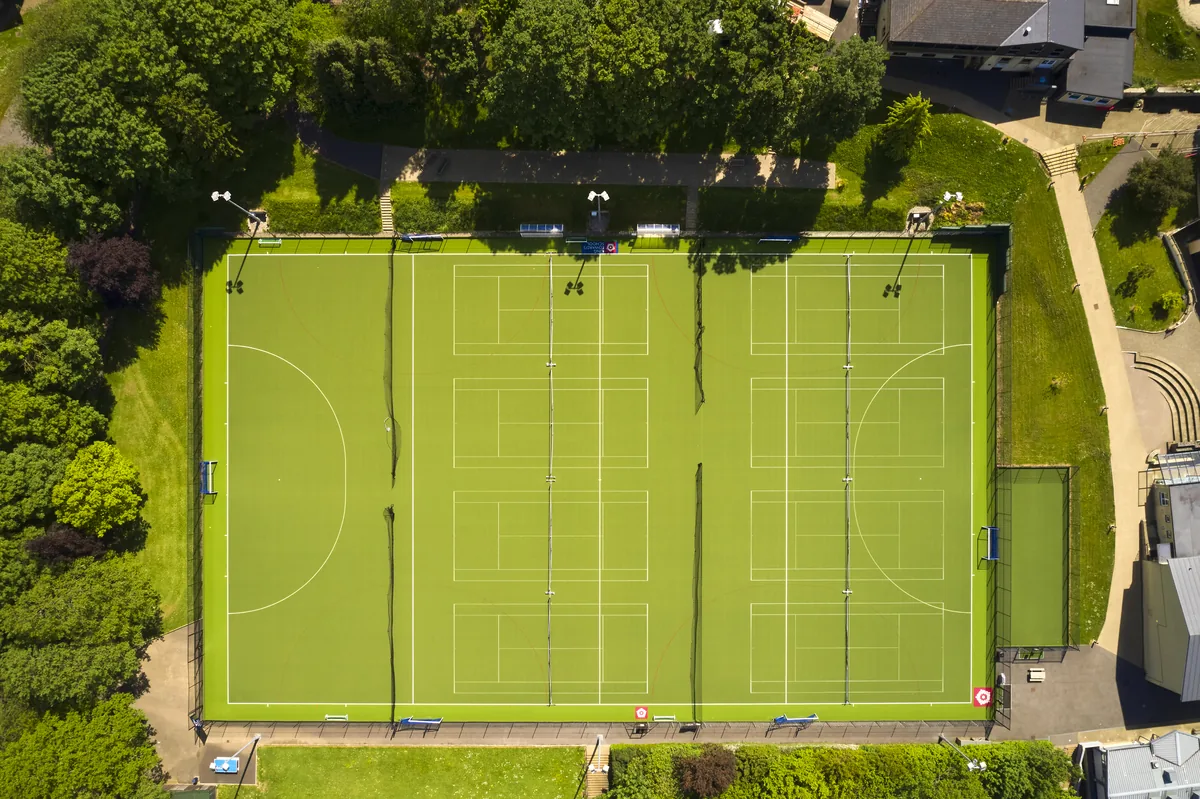
When British players say astro, they usually mean a 2G pitch. These were built in large numbers at schools and leisure centres from the 1980s onwards, mainly for hockey. There are two kinds:
- Sand-filled: short polypropylene fibres with sand filling almost to the top.
- Sand-dressed: denser, shorter fibres with a thinner layer of sand. Faster again, and used for higher-level hockey.
Water-based hockey pitches are a third kind. They have no sand and are soaked before play, and they are rarely let for football.
A sand-based astro has no rubber crumb. Run your hand across it and you get sand, not black granules. The fibres are much shorter than on a 3G, so the surface feels like a stiff, gritty carpet.
Astro vs 3G
| Sand-based astro (2G) | 3G | |
|---|---|---|
| Fibres | Short | Long, usually several centimetres |
| Infill | Sand only | Sand plus rubber crumb or similar |
| Ball roll | Fast, skids | Close to firm grass |
| Bounce | High | Closer to grass |
| Sliding | Painful burns | Possible, with some burn risk |
| Built for | Hockey | Football and rugby |
| Footwear | Trainers, turf shoes | AG boots, turf shoes |
Astro is still good for small-sided football if you adjust: keep the ball on the floor, stay on your feet and expect it to run. It is often cheaper to hire than 3G. For the full picture, see what a 3G pitch is and types of football pitches.
Burns are worse on sand. Wear long socks or sliders and avoid slide tackles on astro. If you do get a burn, clean it well and keep it covered. Our guide to turf burn covers treatment.
Astroturf in professional football
English league football had a short plastic-pitch era. Queens Park Rangers laid an artificial pitch at Loftus Road in 1981, and Luton Town, Oldham Athletic and Preston North End followed in the mid-1980s. Players and visiting managers complained about the bounce and the burns, and by the mid-1990s all of them had returned to grass.
Modern 3G is a very different surface, and it is common in non-league football and in some leagues abroad. Top professional clubs in England still play on grass or hybrid grass.
What to wear on astro
- Turf (TF) shoes with lots of small rubber studs: the best choice.
- Flat trainers: fine, though they slip a little in the wet.
- Moulded or metal studs: usually banned on sand-based pitches. They damage the carpet and give poor grip.
More detail in can you wear trainers on astro and metal studs on astro.
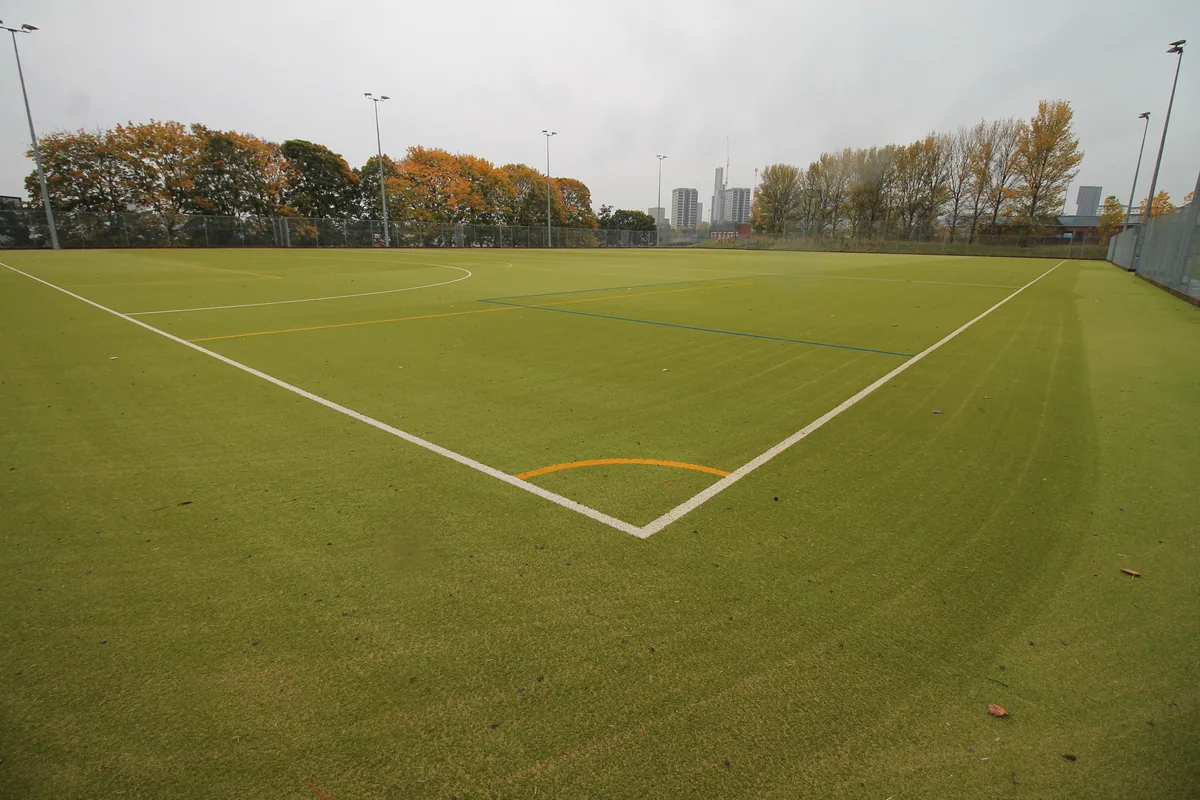
EDU @ Dixons Trinity Chapeltown Sports Centre
Leeds · 2G astro turf
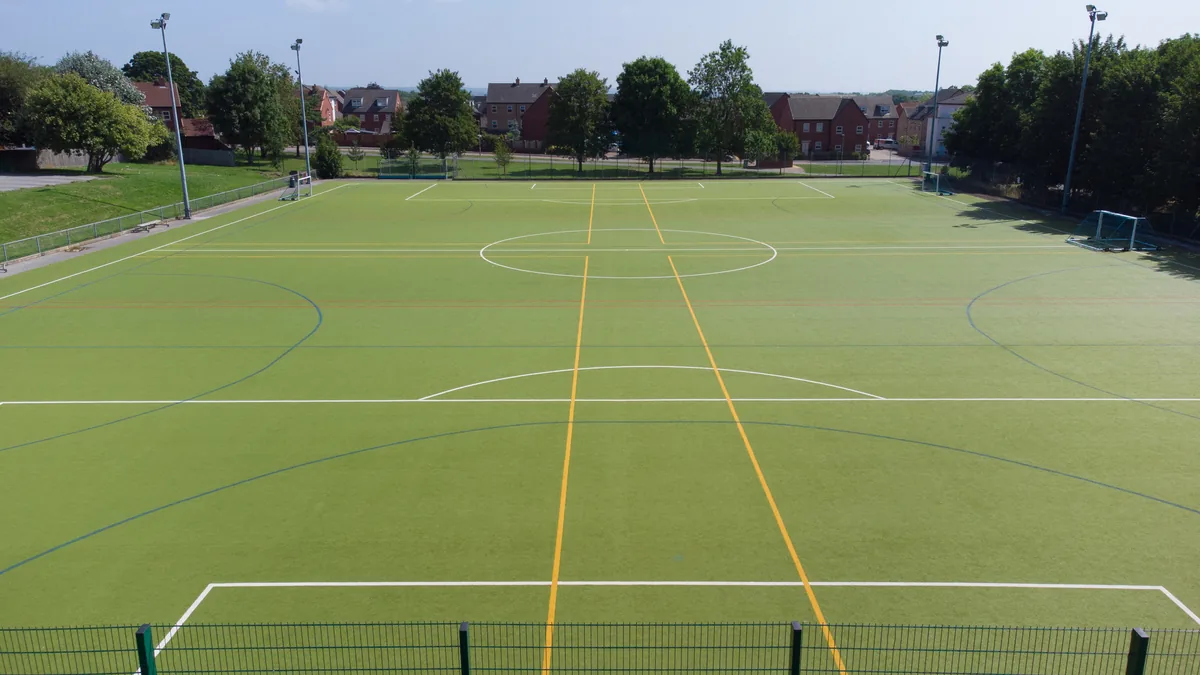
Rykneld Sports Centre
Derby · 2G astro
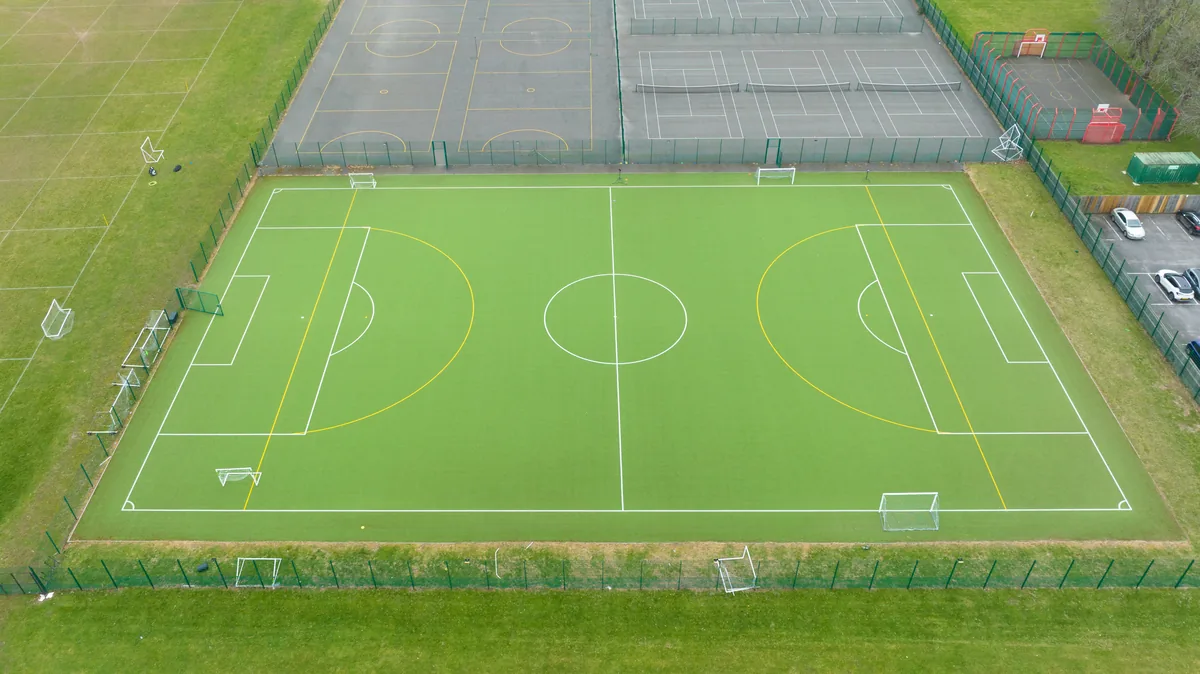
Avonbourne Academies astro pitch
Bournemouth · Astroturf pitch
Cities with the most artificial grass pitches in our directory:
FAQ
Is astroturf the same as artificial grass?
AstroTurf is a brand of artificial grass. In everyday use the word covers most artificial pitches, though in the UK it usually means an older sand-based pitch.
Is astro the same as 3G?
Usually not. Astro normally means a short-pile sand pitch, while 3G has long fibres with rubber crumb infill and plays more like grass.
Can you wear football boots on astro?
Studded boots are usually banned on sand-based astro. Wear turf shoes or trainers. On 3G, AG boots are the best choice.
Why is it called astroturf?
It was named after the Houston Astrodome, where the turf was installed in 1966 because real grass would not grow under the stadium roof.