Turf burn: treatment and prevention
 By the Find My Football Pitch team·
Updated ·
5 min read
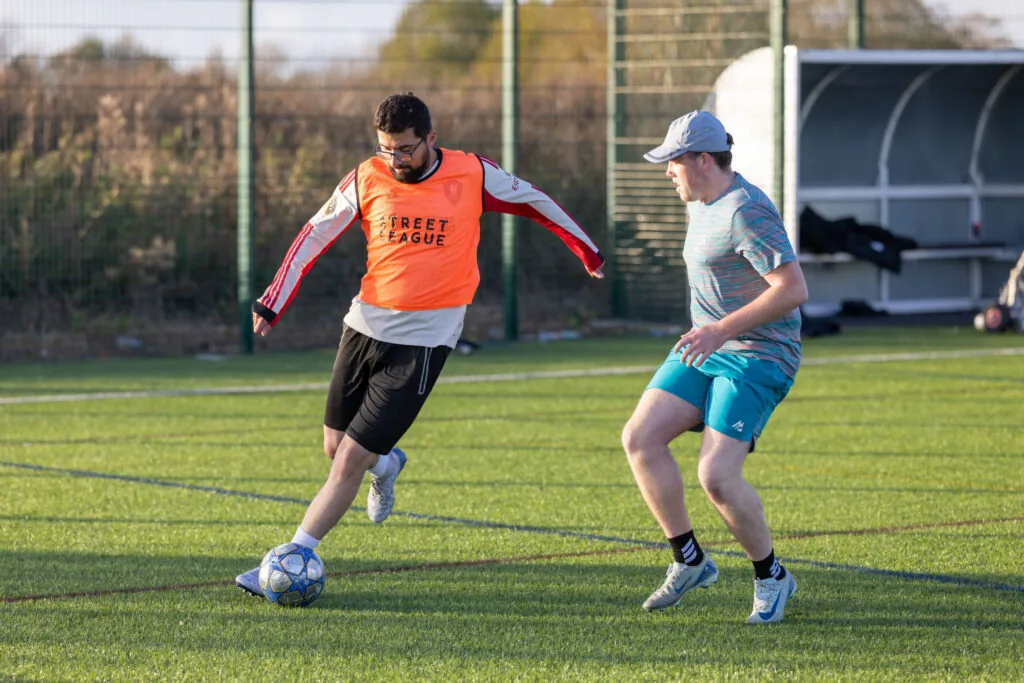
One slide on artificial grass can leave a raw, stinging patch on your knee or thigh that takes a week to heal. Turf burn is a graze, and it heals like one if you clean it properly. Here is how to treat it and how to stop it happening every week.
The short answer
Turf burn is a friction graze from sliding or falling on artificial grass. Rinse it under clean running water, wash out any rubber crumb or sand, pat it dry and cover it with a plaster or non-stick dressing. Keep it clean and covered until it closes. Get it checked by a GP or NHS 111 if it is still dirty after cleaning, or turns red, swollen, more painful or starts to leak pus. Long socks, sliding shorts and no slide tackles prevent most of it.
What turf burn is
When you slide on grass, the blades bend and the soil gives a little. Artificial grass fibres are plastic, and the infill underneath is rubber crumb or sand. Slide on that and the friction heats and scrapes away the top layers of skin. The result is a shallow, raw graze, often with tiny bits of infill pressed into it.
The usual places are the outside of the thigh, the knees, the shins, the elbows and the forearms, where you land in a slide tackle or a fall. Goalkeepers get it on their hips and forearms from diving. It stings most in the shower afterwards.
Sand-dressed and older, short-pile astro pitches tend to cause worse grazes than modern long-pile 3G. Read 3G vs 4G and what astroturf is if you are not sure what you play on.
How to treat turf burn
Most turf burns are minor and you can treat them yourself. The NHS advice for cuts and grazes applies:
- Stop any bleeding. Turf burn usually only oozes. Press gently with a clean cloth or gauze if it bleeds.
- Rinse it well. Hold it under clean running tap water or use bottled water or sterile wipes. Spend time on this: black rubber crumb and sand in the wound are the main infection risk.
- Get the infill out. Bits that do not rinse out can often be lifted with clean tweezers. Do not dig into the skin.
- Clean around it. Wash the skin around the graze with soap and water, then pat dry with a clean towel.
- Cover it. Use a plaster or a non-stick dressing large enough to cover the whole area. A non-stick pad stops the dressing tearing the new skin off when you change it.
- Keep it clean and dry. Change the dressing if it gets wet or dirty, and take it off after a few days once the wound has closed.
Paracetamol or ibuprofen can help if it is sore. Do not give aspirin to anyone under 16.
Pack a small kit. A bottle of water, a few non-stick dressings, tape and some sterile wipes in your football bag mean you can clean a graze straight after the game, before you sit in the car.
When to get medical help
The NHS says to ask for an urgent GP appointment or call 111 if:
- the wound has soil or other dirt in it, or is still dirty after you have cleaned it,
- it becomes swollen, red and more painful, or pus comes out of it,
- it is larger than about 5 cm, or
- you feel generally unwell or have a high temperature.
A dirty wound may also need a tetanus injection or antibiotics, so tell the GP or nurse when you last had a tetanus jab. Go to A&E or call 999 if you cannot stop the bleeding or the wound is very large or deep. The full advice is on the NHS cuts and grazes page. Outside the UK, contact your local GP, pharmacist or health line.
Healing and getting back on the pitch
A small, clean graze usually closes within a few days, and a large one takes longer. New pink skin forms from the edges inwards. It may itch, which is normal. Try not to pick the scab.
You can usually play again before it has fully healed, as long as you cover it well. Put a non-stick dressing on the graze, hold it in place with tape or a light bandage, and wear long socks, sliding shorts or leggings over it. A second slide on the same patch sets you back to day one.
Once it has healed, keep the new skin out of strong sun for a few weeks so it does not darken.
How to prevent turf burn
- Cover up. Long football socks over your shin pads protect your shins. Sliding shorts or compression leggings under your shorts protect your thighs. A long-sleeved base layer protects your elbows and forearms.
- Stay on your feet. Most 5-a-side rules ban slide tackles. Even in 11-a-side, slide on artificial grass only when you have to.
- Goalkeepers: padded keeper trousers or shorts with hip padding make diving on 3G far kinder.
- Pick the surface. If you get burned every week, look for a 3G pitch rather than sand-based astro.
Our guides to what to wear for 5-a-side and injuries on artificial grass have more on kit and other risks.
Astrobay
Galway · 4G pitch
Colin Glen Leisure
Belfast · Floodlit 5-a-side cage
BH Live Active, Pelhams
Bournemouth · Resurfaced 3G
Cities with the most artificial grass pitches in our directory:
FAQ
Should I leave turf burn open to the air?
Cover it. The NHS advice is to cover a graze with a plaster or dressing to help prevent infection, and to remove it after a few days once the wound has closed.
Can I play football with turf burn?
Usually yes, once it has stopped oozing, as long as you keep it covered with a dressing and long socks or sliding shorts. Another slide on the same patch will reopen it.
Why does turf burn sting so much?
The friction removes the top layer of skin and leaves nerve endings exposed. It stings most when water or soap touches it in the first day or two.
Is the black rubber in turf burn dangerous?
Treat it like any other dirt in a graze. The NHS advises getting a wound checked if it is still dirty after cleaning, so rinse every bit of infill out. Our guide to whether rubber crumb is safe covers the wider health questions.