Football pitches: everything you need to know
 By the Find My Football Pitch team·
Updated ·
7 min read
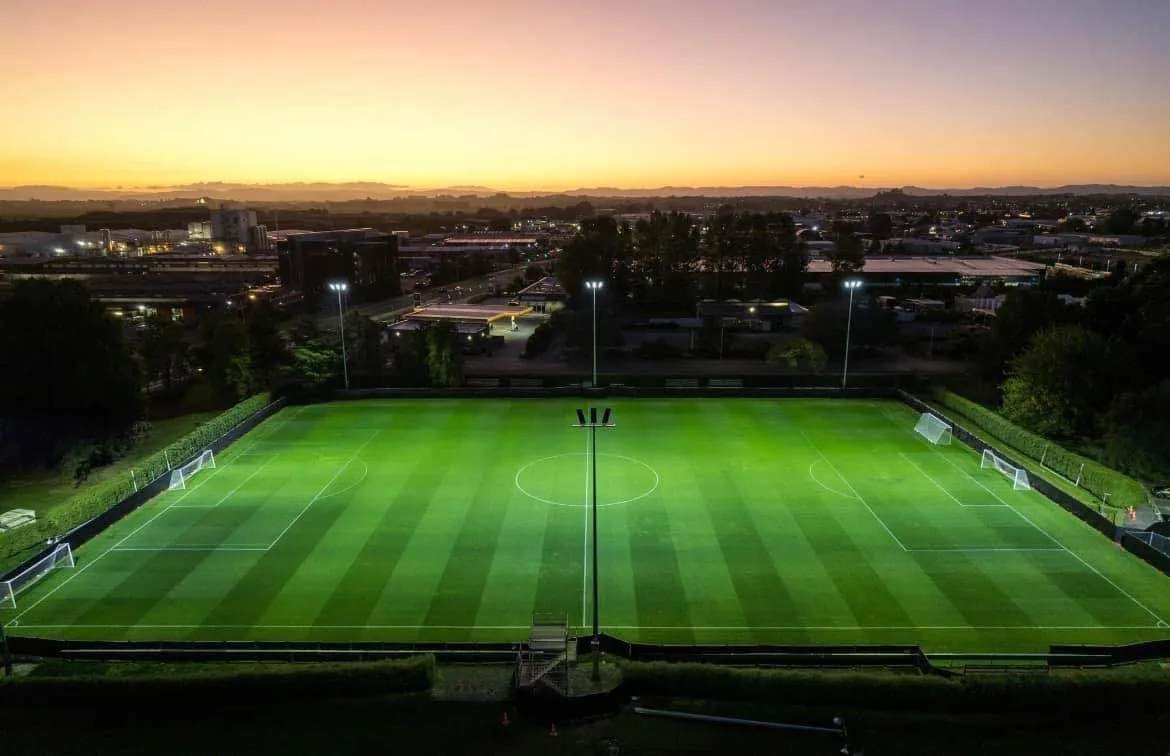
A football pitch looks simple: a green rectangle, some white lines and two goals. Behind it sit a set of rules on size and markings, a choice of surfaces, and a lot of practical detail that matters when you book one for your own game.
The short answer
A full-size football pitch is a rectangle between 90 and 120 metres long and 45 to 90 metres wide under the Laws of the Game. International matches use 100 to 110 m by 64 to 75 m, and most professional stadiums are close to 105 by 68 m. The goals are 7.32 m wide and 2.44 m high. Grassroots players also use smaller pitches for 5-a-side, 7-a-side and 9-a-side, on grass, 3G artificial turf or indoor courts.
How big a football pitch is
The size of the pitch is set by Law 1 of the Laws of the Game, written by the International Football Association Board (IFAB). The law gives a range, not one fixed size. The longer sides are the touchlines and the shorter ends are the goal lines. The pitch must be a rectangle, so the touchlines always have to be longer than the goal lines.
| Match type | Length (touchline) | Width (goal line) |
|---|---|---|
| Any 11-a-side match | 90 to 120 m (100 to 130 yd) | 45 to 90 m (50 to 100 yd) |
| International matches | 100 to 110 m (110 to 120 yd) | 64 to 75 m (70 to 80 yd) |
| Premier League and most big stadiums | 105 m | 68 m |
| FA recommendation, adult grassroots | 110 yd (about 100 m) | 70 yd (about 64 m) |
Competitions can pick any size inside those limits, which is why one ground can feel tight and another huge. A 105 by 68 m pitch covers about 7,140 square metres, roughly 1.76 acres. The smallest legal full-size pitch is close to one acre, the largest about 2.7.
The full numbers, with yards and metres side by side, are in football pitch dimensions. If you want the stadium figure, read how big a Premier League pitch is, and for comparisons in acres and football fields see how big is a football pitch. The reasons two grounds can differ by 15 metres are in why football pitches are different sizes.
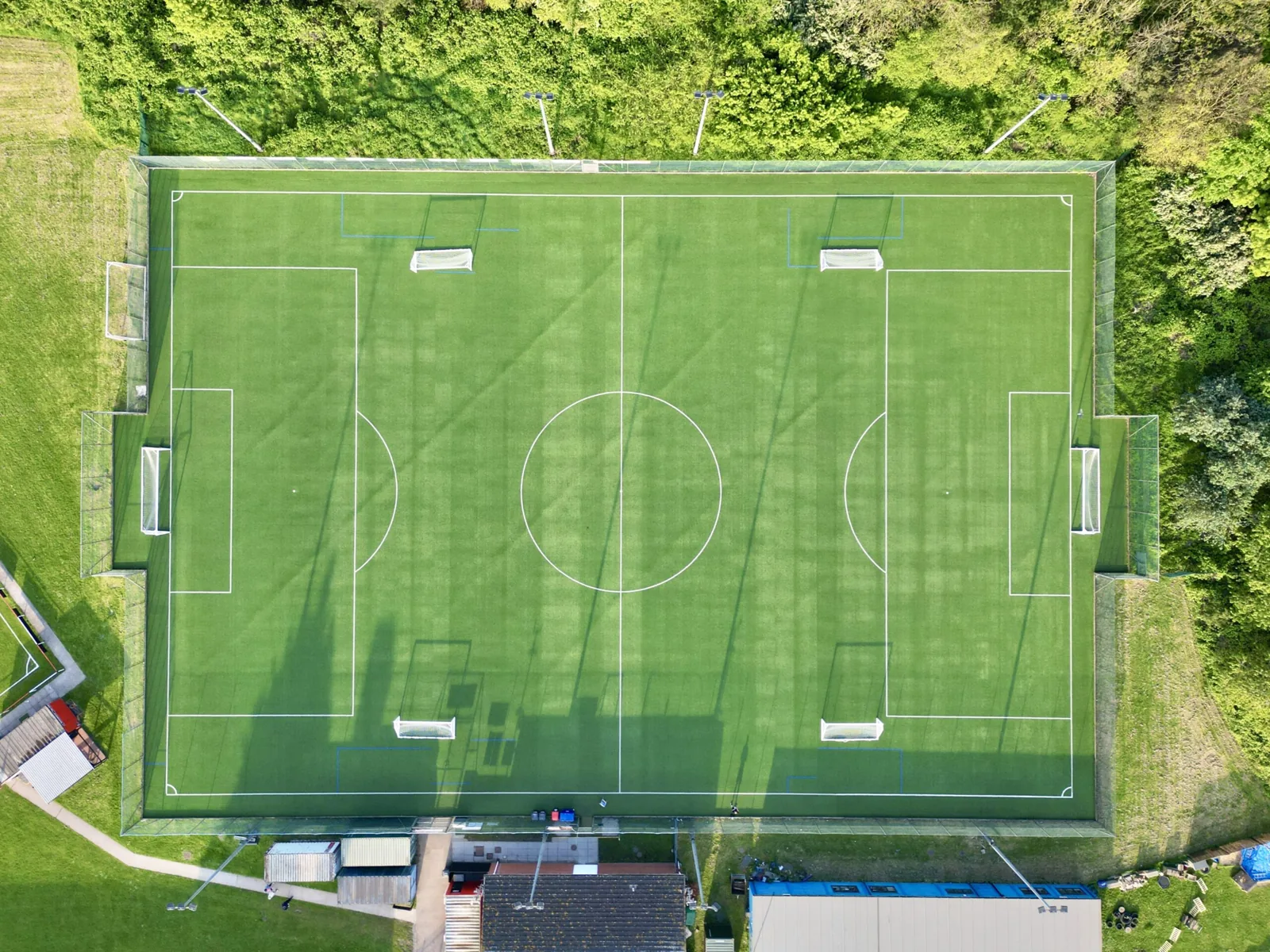
The lines and what they do
Every line on a pitch is the same width, no more than 12 cm. The lines belong to the areas they mark, so a ball on the line is still in play. It is only out when the whole ball has crossed the whole line.
- Halfway line and centre circle. The halfway line splits the pitch in two. The centre circle has a radius of 9.15 m (10 yards) and keeps opponents back at kick-off. See the centre circle and halfway line.
- Penalty area. The big box, 16.5 m (18 yards) from each goalpost and 16.5 m out into the pitch. The goalkeeper can handle the ball inside it, and a direct free kick offence by a defender inside it becomes a penalty.
- Goal area. The six-yard box, 5.5 m from each post and 5.5 m out. Goal kicks are taken from anywhere inside it.
- Penalty mark and arc. The spot is 11 m (12 yards) from the middle of the goal. The arc, or D, outside the box keeps other players 9.15 m from the ball at a penalty.
- Corner arcs. A quarter circle of 1 m radius at each corner, with a flagpost at least 1.5 m high.
The boxes and the spot are covered in detail in the penalty area, six-yard box and penalty spot, and the whole layout, including the coloured lines you see on shared 3G pitches, in football pitch markings explained.
Goals
A full-size goal is 7.32 m (8 yards) wide between the inside of the posts and 2.44 m (8 feet) from the ground to the bottom of the crossbar. Posts and crossbar are white, the same width and depth, and no more than 12 cm wide. Goals must be anchored securely, which is why portable goals on park and 3G pitches have weights or pegs at the back.
Smaller formats use smaller goals. The FA recommends 12 by 6 foot goals for 5v5 and 7v7 youth football, 16 by 7 foot for 9v9 and 21 by 7 foot for under-14s. Adult 5-a-side centres usually have low goals around 4 feet high. All the sizes are in football goal sizes for every format.
Pitches for every format
Most people who book a pitch never play on a full-size one. In the UK, evening football is mostly 5-a-side and 7-a-side on fenced artificial pitches, and youth football moves through smaller formats as children grow. The FA recommends these maximum sizes, without the safety run-off around the edge:
| Format | Age group | Pitch (yards) | Pitch (metres, approx.) | Goal (feet) |
|---|---|---|---|---|
| 5v5 | Under 8, Under 9 | 40 x 30 | 37 x 27 | 12 x 6 |
| 7v7 | Under 10, Under 11 | 60 x 40 | 55 x 37 | 12 x 6 |
| 9v9 | Under 12, Under 13 | 80 x 50 | 73 x 46 | 16 x 7 |
| 11v11 | Under 14 | 90 x 55 | 82 x 50 | 21 x 7 |
| 11v11 | Under 15, Under 16 | 100 x 60 | 91 x 55 | 24 x 8 |
| 11v11 | Under 17 to adult | 110 x 70 | 101 x 64 | 24 x 8 |
Adult small-sided pitches at commercial centres vary more. Many 5-a-side cages are around 30 by 20 m, smaller than the FA's youth 5v5 size. A full-size 3G pitch is often split into halves or thirds for 7-a-side and 9-a-side bookings.
For the format you play, see 5-a-side pitch size, 7-a-side pitch size, 9-a-side pitch size and youth football pitch sizes. Futsal has its own court and rules: futsal court dimensions.
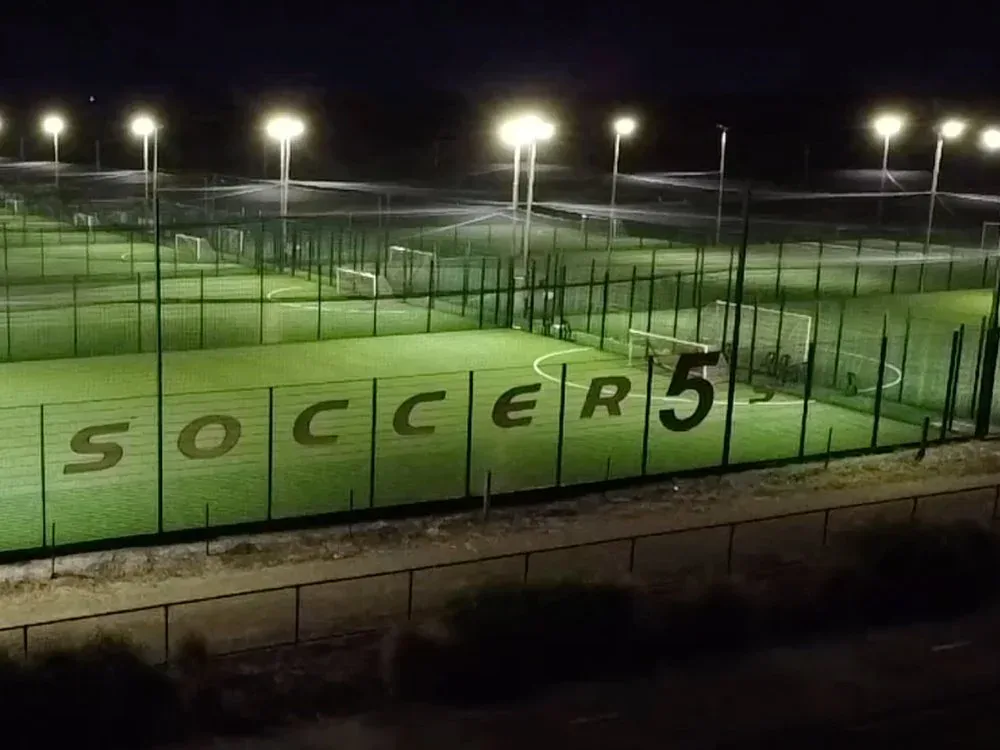
Grass, 3G and indoor surfaces
The surface changes how the ball rolls, which boots you wear and how often the pitch can be used.
- Natural grass. Still the surface for professional league football and most Sunday league pitches in parks. It is cheap to provide but wears out quickly, and councils often close grass pitches after heavy rain or frost.
- 3G artificial grass. Long synthetic fibres on a shock pad, filled with sand and rubber crumb. It plays close to grass, takes many hours of use a week and stays open in most weather. Read what a 3G pitch is and 3G vs 4G.
- Sand-based and sand-dressed astro. Short-pile carpet built mainly for hockey. Fine for casual football, but the ball runs fast and the surface is hard on skin.
- Indoor halls and courts. Sports hall floors, timber or vinyl, used for futsal and indoor 5-a-side. Some centres also have indoor 3G. See indoor football pitches.
Law 1 says an artificial surface must be green, and many competitions require it to meet a quality standard. The trade-offs are set out in artificial grass vs real grass, and the range of pitch types in types of football pitches.
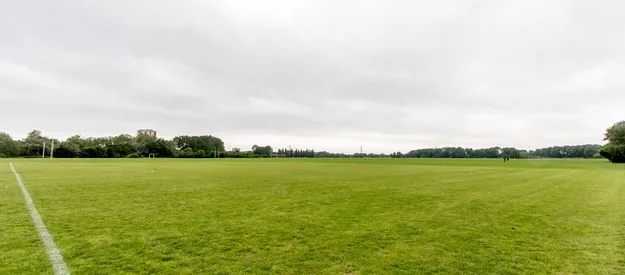
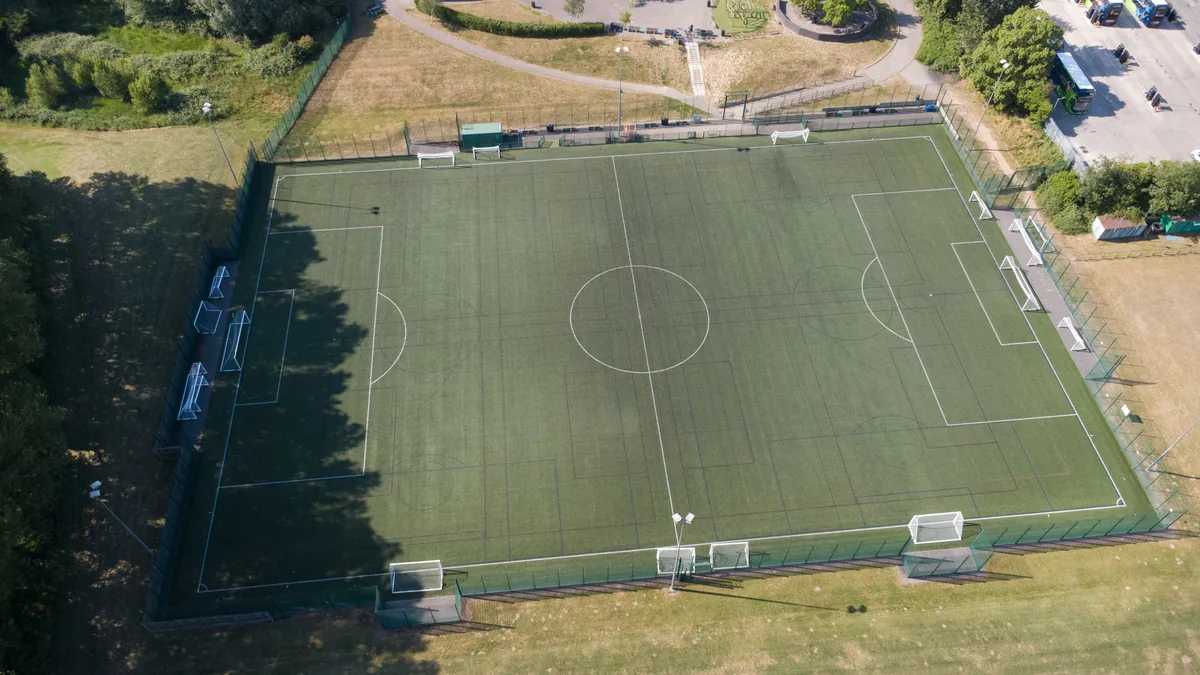
Hackney Marshes Centre
London · Grass pitches
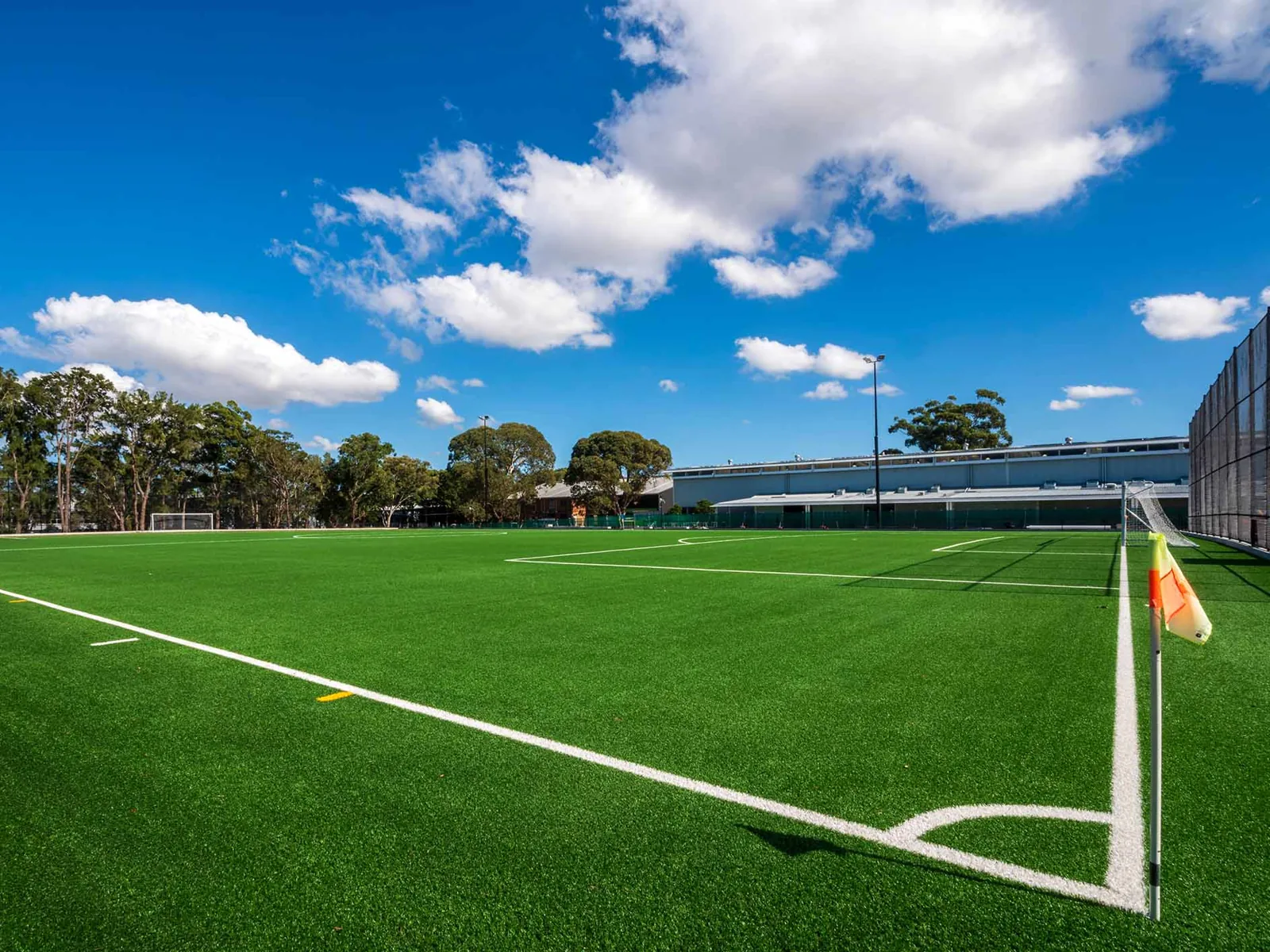
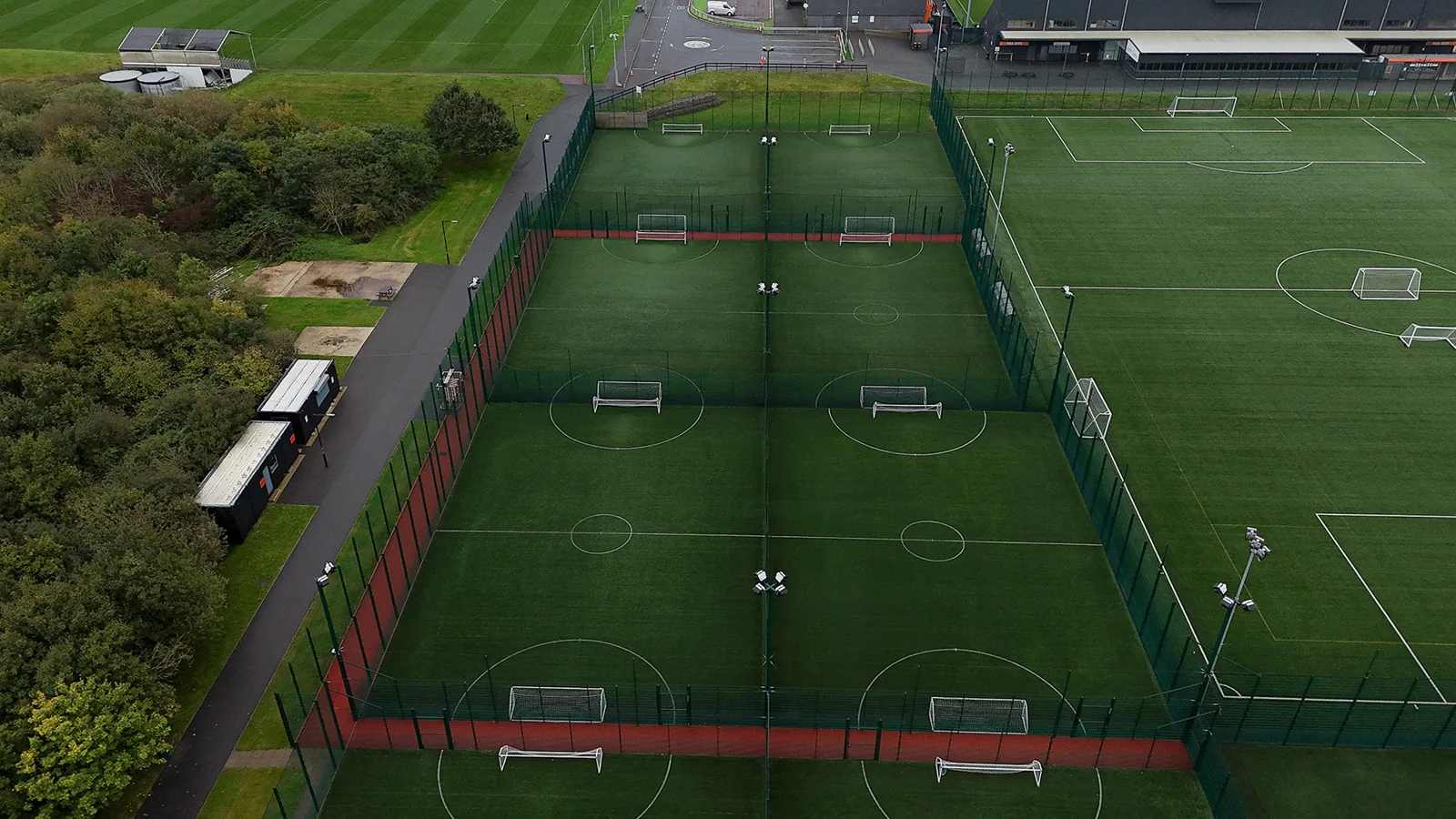
Perry Park Synthetic Sportsfield
Sydney · Long-pile synthetic
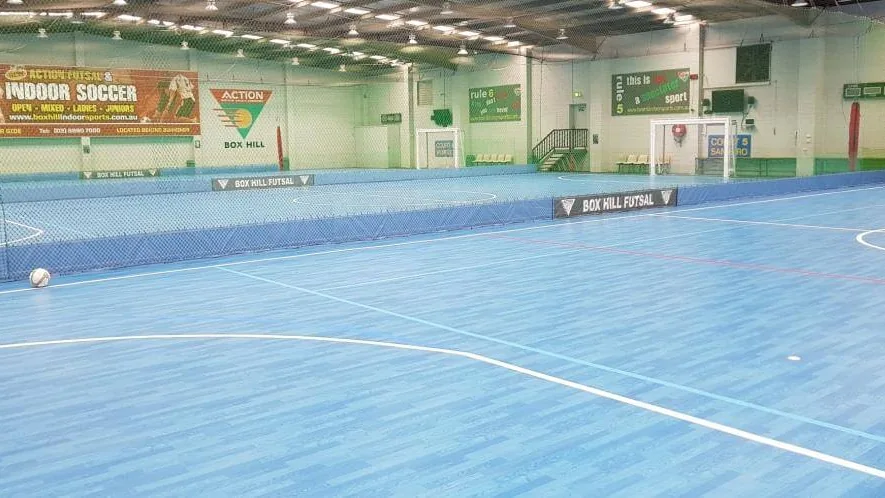
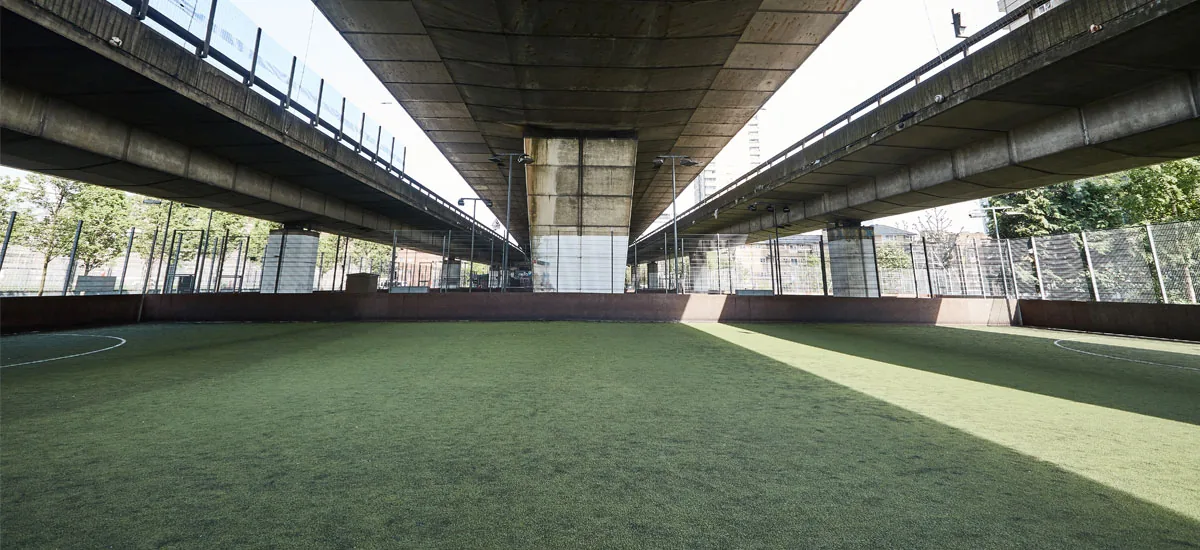
Box Hill Action Indoor Sports
Melbourne · Indoor futsal courts
Hiring a pitch
You can book pitches at council leisure centres, schools, sports clubs and commercial 5-a-side centres. Prices depend on format, surface and time of day. In the UK in 2026, the venues in our directory mostly charge somewhere around £25 to £55 an hour for a 5-a-side pitch, with evenings dearer than daytime. A full-size floodlit 3G pitch costs roughly £100 to £155 an hour at the venues that publish a price, and grass pitches for a Sunday league match are often cheaper than either.
Things to check before you book:
- The format the pitch is marked for, and whether you get the whole pitch or a third.
- The surface, so everyone brings the right boots. Our guide to boots for 3G covers which studs are allowed.
- Floodlights, for anything after about 4pm in a UK winter. See floodlit pitches.
- What is included: balls, bibs, goals, changing rooms and parking.
The step-by-step version is in how to book a football pitch, and price detail is in how much it costs to hire a football pitch.
Look at the slope. Old park pitches are rarely flat. A few metres of fall from one end to the other changes the game, and teams often choose ends at the toss with it in mind. Our guide to pitch slope explains how much is normal.
Pitch, field and park
In the UK and Ireland the playing area is a pitch. In the US and Canada it is a soccer field, and Australians and New Zealanders use both words, with ground or park for the whole venue. The Laws of the Game call it the field of play. The size rules are the same whatever you call it. Our page on football pitch vs soccer field covers the differences in wording and the few real differences in American youth formats.
Cities with the most full-size pitches in our directory:
FAQ
What is the standard size of a football pitch?
There is no single standard. The Laws allow 90 to 120 m by 45 to 90 m. Most professional stadiums use 105 by 68 m, and the FA recommends about 100 by 64 m for adult grassroots football.
How many acres is a football pitch?
A 105 by 68 m pitch is about 1.76 acres, or 0.71 hectares. Legal full-size pitches range from about one acre to about 2.7 acres.
How far is the penalty spot from the goal?
The penalty mark is 11 metres, or 12 yards, from the midpoint between the goalposts.
Do all pitches have to be green?
Artificial pitches must be green under Law 1. The Laws do not set a line colour, but lines must be clearly visible, and the FA asks for white lines on 11v11 pitches.
What surface are most 5-a-side pitches?
In the UK most outdoor 5-a-side pitches are 3G artificial grass with rubber crumb infill, fenced in and floodlit. Indoor centres use sports hall floors or indoor 3G.