Floodlit pitches: what to expect
 By the Find My Football Pitch team·
Updated ·
5 min read
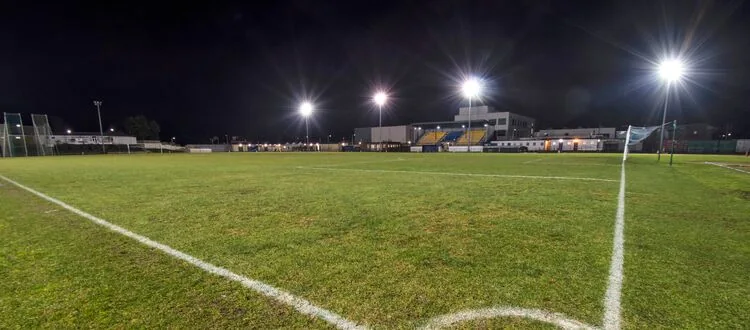
From October to March, most weeknight football in the UK and Ireland is played under lights. A floodlit pitch is what lets you book a 7pm game in December. Here is what to expect when you turn up: how bright it will be, what it costs, and the small things that catch out first-timers.
The short answer
A floodlit pitch has tall lighting columns, usually four to eight, so you can play after dark. Community pitches are lit to training or recreational levels, roughly 120 to 200 lux in FA guidance, which is plenty for 5-a-side and club training but far dimmer than a televised stadium. Lights are normally switched on by the venue for your booked slot. Some venues include them in the price, others charge extra after dark, and most stop by around 10pm.
What a floodlit pitch is
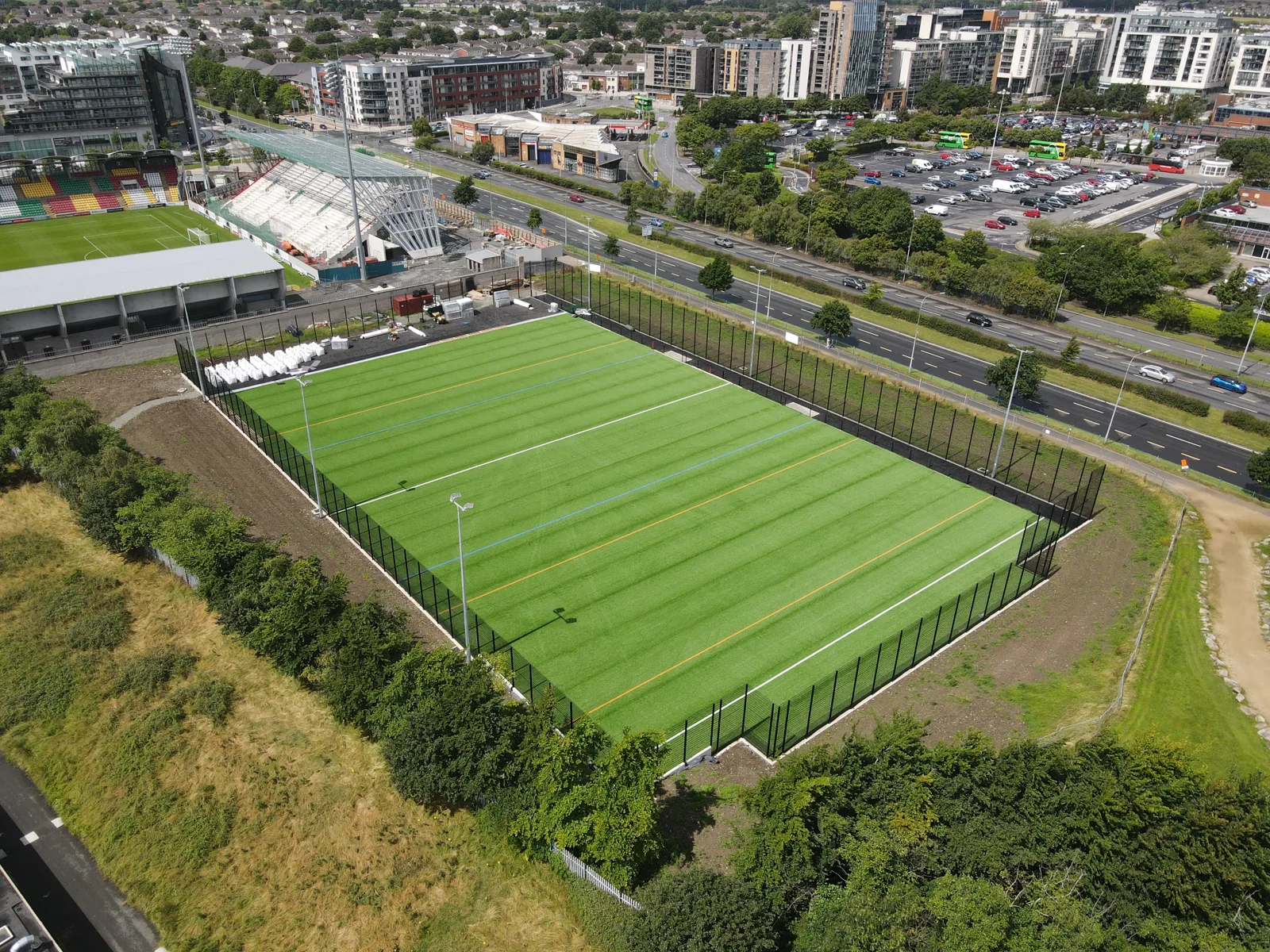
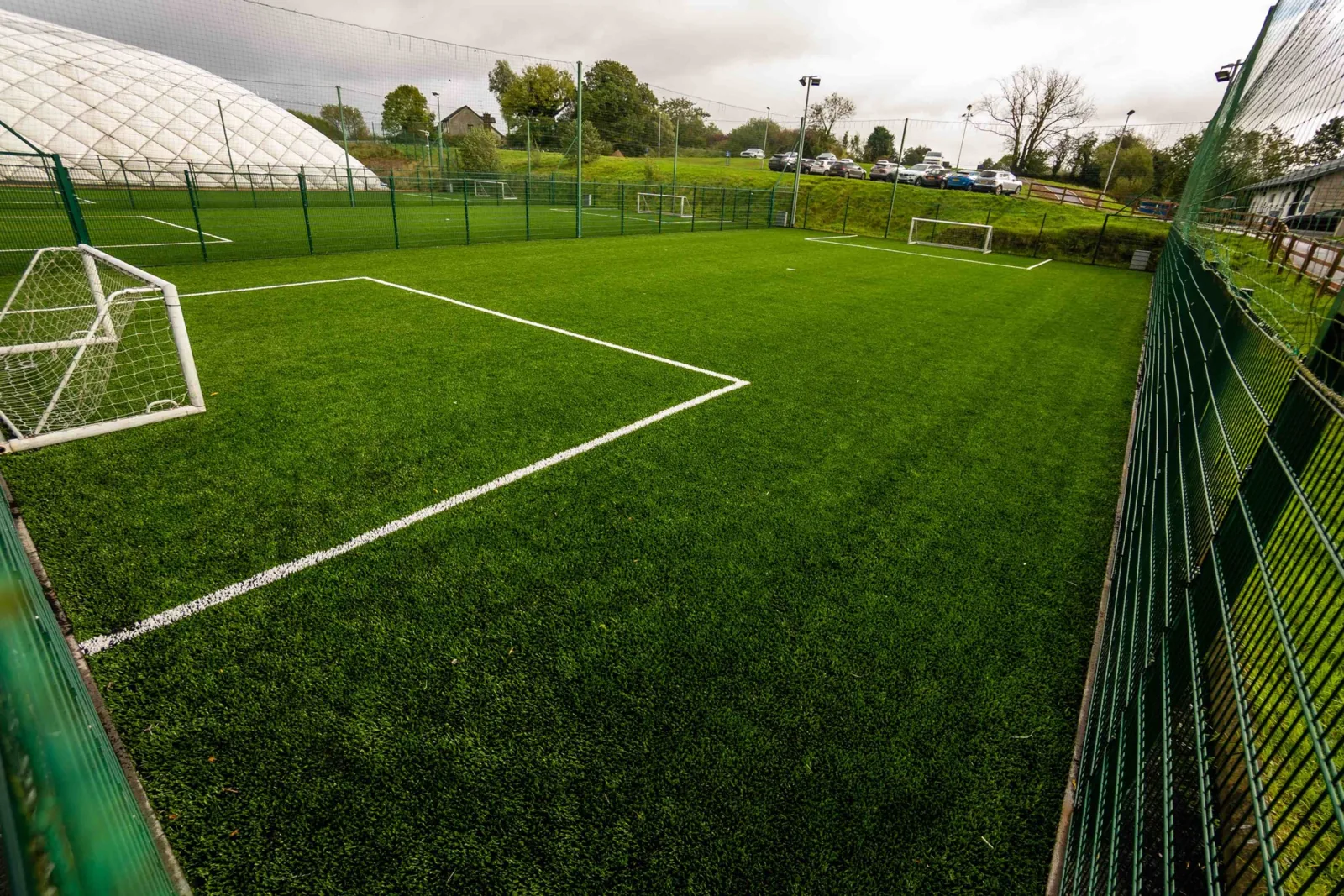
Any pitch with permanent lighting for evening use counts. In practice, most floodlit community pitches are artificial: a 3G pitch, a sand-based astro or a fenced 5-a-side cage. The FA has made lighting a standard part of new 3G pitches because a pitch that can only be used in daylight sits empty for half the year. Floodlit grass pitches exist, mostly at non-league grounds and a few council sports grounds, but grass cannot take the hours of use that lights make possible.
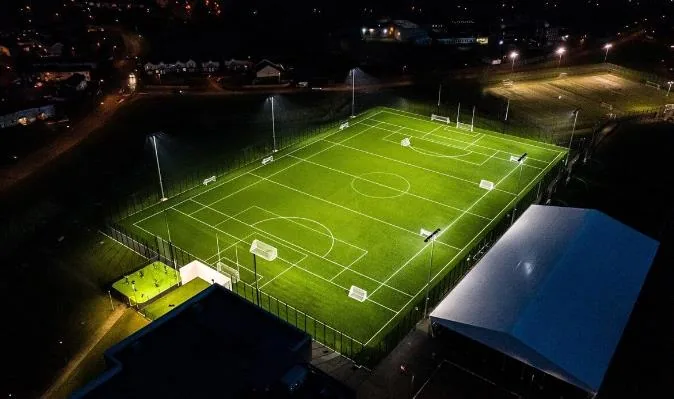
The columns usually stand along the touchlines, sometimes in the corners. Modern installations use LED lamps aimed down at the pitch with shields to cut spill into nearby homes. Older pitches may still have metal halide lamps, which take several minutes to warm up to full brightness and buzz a little when they do.
How bright the lights are
Lighting is measured in lux, the amount of light landing on the pitch surface. The FA's 3G pitch design guide sets these minimum maintained averages:
| Use | Typical average |
|---|---|
| Training and cross-play on a community 3G pitch, and small commercial 5-a-side pitches | At least 120 lux |
| Full-size 11-a-side matches on a community 3G pitch | At least 200 lux |
| Non-league ground grading and televised football | Much higher, set by each competition |
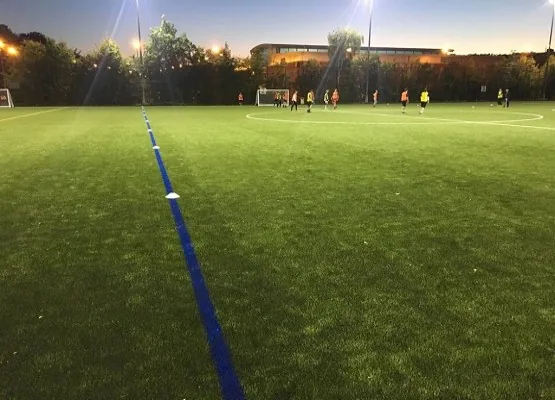
On the night, that means you will see the ball clearly in the middle of the pitch. The corners and the space just outside the touchline are often darker, and a high ball can disappear briefly against a black sky. A light-coloured or fluorescent ball helps.
Evenness matters as much as brightness. A pitch with one dead column has a noticeably dark patch, and goalkeepers facing into a low-angled lamp can be dazzled. If something is wrong, tell reception. Venues fix failed lamps quickly because they lose bookings otherwise.
Planning rules shape your booking. Floodlights near homes almost always come with planning conditions on hours. That is why many community pitches stop taking bookings at 10pm or 10.30pm, and why the lights can go off right on the hour.
Do floodlights cost extra?
It depends on the venue. Prices we have seen at venues in our directory in 2026:
- Included. Olympia Leisure Centre in Belfast includes floodlights in its 3G rates.
- Higher evening rate. Astrobay in Galway charges €50 an hour in the daytime and €60 from 6pm to 10pm with floodlights from September to April.
- Separate lit and unlit prices. At Marley in Keighley, a quarter pitch is £34.50 unlit and £44 floodlit. Lancaster University's 3G full pitch is £89 without lights and £109.80 with them for non-students.
- An add-on. Yate Outdoor Sports Complex near Bristol adds £19 for floodlights to its all-weather pitch hire.
Evening slots are also peak slots, so even where lights are free, a 7pm booking usually costs more than a 2pm one. Our guide to what it costs to hire a football pitch has the wider picture.
What to expect on the night
- Lights on at the start. The venue switches them on for your slot, usually from reception or on a timer. If they are off when you arrive, ask; do not wait out the first ten minutes in the dark.
- Lights off at the end. On a timer, they go off on the hour. Finish your last game a minute early and collect balls while you can still see them.
- Cold and damp. Evening dew makes artificial grass slippery in winter. Wear the right soles. See boots for 3G.
- Bright kit. Dark bibs against a dark fence are hard to pick out. Bring two clearly different colours.
- Frost. A floodlit pitch can still be closed by ice on a cold night. Read frozen pitches.
Finding a floodlit pitch
Most 5-a-side centres, council 3G pitches and school sports lets are floodlit. In Australia and New Zealand, many floodlit synthetic soccer pitches are run by councils or clubs and booked for evening training. These venues in our directory are floodlit:
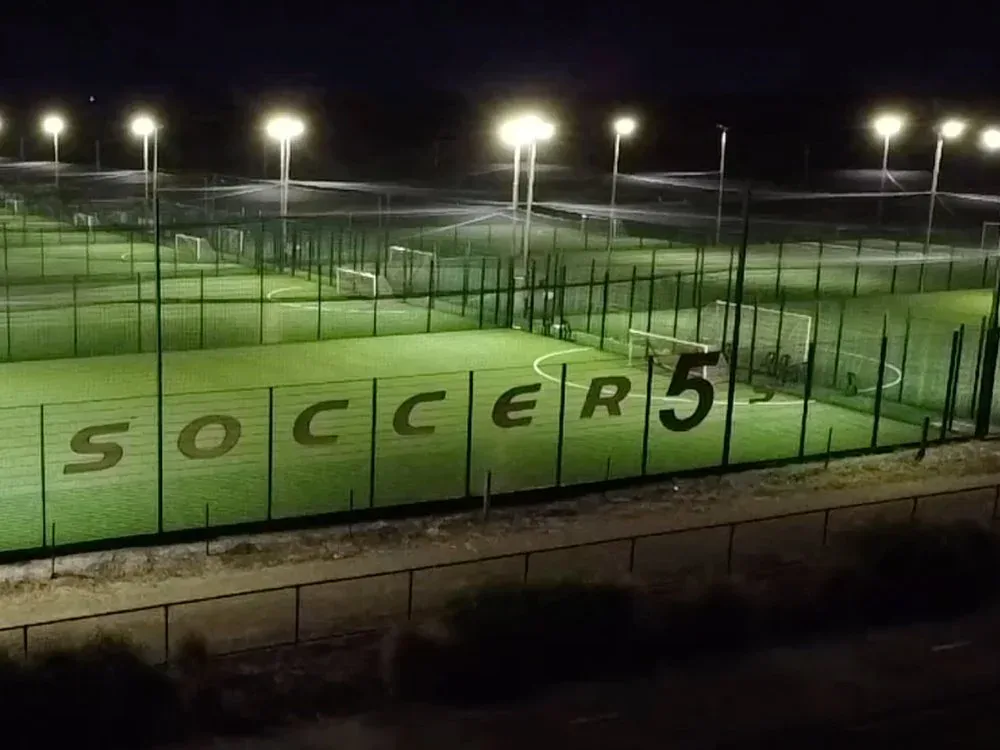
Soccer5s Dandenong
Melbourne · Floodlit 5-a-side
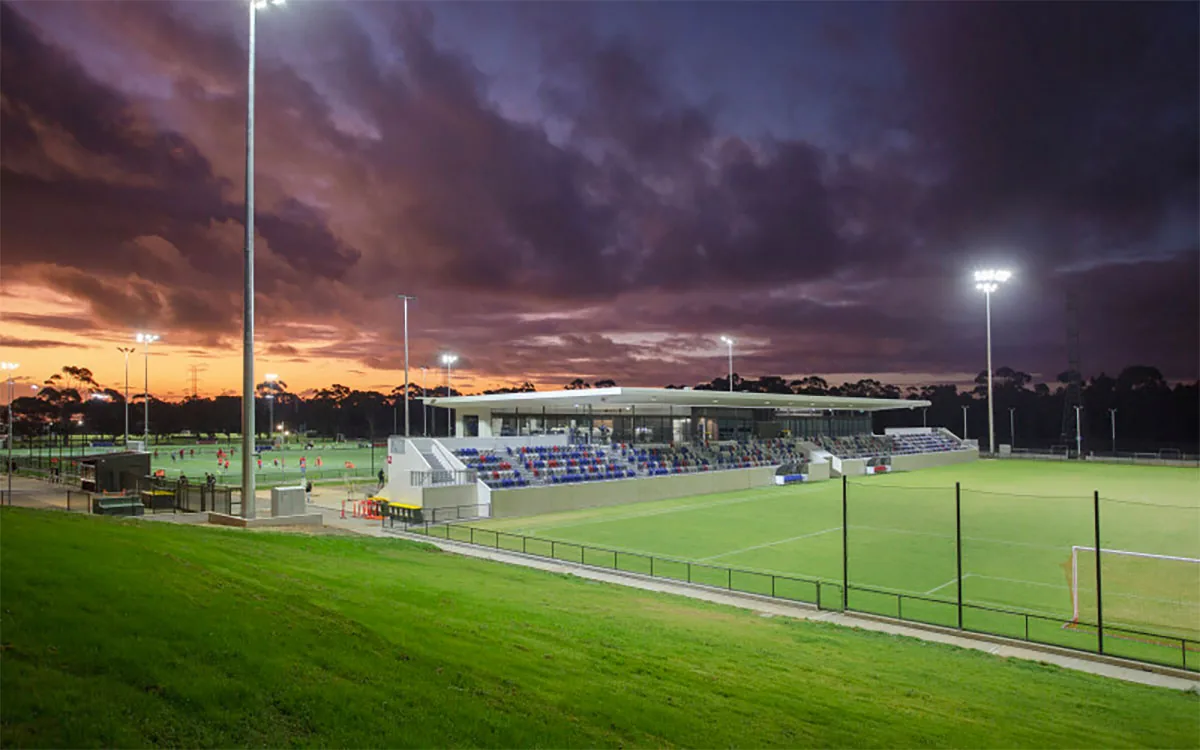
ServiceFM Stadium
Adelaide · Floodlit pitch
Croydon Sports Arena
London · Floodlit grass
Cities with the most floodlit pitches in our directory:
FAQ
How bright are floodlights on a 5-a-side pitch?
FA guidance asks for at least 120 lux on average for training and small-sided pitches, and at least 200 lux for full-size matches on a community 3G pitch. Professional stadiums are far brighter, especially for television.
Do you pay extra for floodlights?
Sometimes. Some venues include them, some charge a higher evening rate, and some add a fixed floodlight fee. Check the price for your exact slot when you book.
Why do floodlit pitches close at 10pm?
Usually because of planning conditions that limit how late the lights can be on near homes. Many community pitches take their last booking at 9pm or 9.30pm.
Are grass pitches floodlit?
Some are, mainly at non-league grounds and a few council sports grounds. Most floodlit community pitches are artificial, because grass cannot take heavy evening use.