When is a pitch too frozen to play?
 By the Find My Football Pitch team·
Updated ·
5 min read
A white frost at 8am does not always mean the game is off, and a pitch that looks fine from the car park can be rock-hard in the shade of the stand. This is how referees and pitch owners decide whether frozen ground is safe, and what you can do when it is not.
The short answer
A pitch is too frozen to play when the ground is hard enough that studs will not go in, the ball bounces unpredictably, or patches of ice make footing unsafe. A light surface frost that thaws by kick-off is usually fine. In organised football, the referee decides on the day, often after an early inspection, and a council or club can close its own pitches before that. No law sets a temperature limit: it is a judgement about player safety.
Signs a pitch is too frozen
Frost comes in two kinds. A surface frost whitens the grass but the soil underneath is still soft. Once the sun is up, it usually melts within an hour or two and the pitch is playable. A hard frost, after several cold nights, freezes the top layer of soil itself. That is the dangerous one.
Referees use simple tests:
- Studs. Walk the pitch in boots. If your studs will not sink into the ground anywhere, it is frozen solid.
- Bounce. Drop and kick a ball in several areas. A ball that skids or bounces high and off line on hard ground means players cannot control it, and goalkeepers will land on concrete.
- Shade. Check the areas that never see the sun in winter: along a stand, a row of trees or a building. They often stay frozen all day while the rest has thawed.
- Ice. Frozen puddles, rutted mud that has set hard, and icy goalmouths are the most common reason for a call-off.
Uneven frozen ground is worse than flat frozen ground. Studs that were pressed into mud last week leave ridges that freeze like small rocks. A twisted ankle on that surface is a real risk.
Who decides
For a league or cup match, the referee has the final say on whether the pitch is fit. Most leagues in England follow the FA's standard rule that a club cannot postpone a match just because of the apparent state of the ground. If there is doubt, the home club asks for an inspection, usually by a local referee with no link to either team, early enough to save the away side a wasted trip. The inspecting referee speaks to the match referee before reporting back. If the pitch is declared unfit, the home club must tell the league, the visitors and the officials straight away.
There is one exception that overrides the referee. The pitch owner, often a council or a school, can close its grounds. Many councils post closures on their website or phone line on match mornings when there is a hard frost. If the pitch is closed, there is nothing to inspect.
In professional football the process is the same idea at a higher level: the match referee or a league-appointed official inspects, sometimes the day before. See undersoil heating for why top grounds rarely lose games to frost.
Check before you travel. Look at the league's website or app, your club group chat and the council's pitch closure page. In England, the FA's Full-Time results system usually shows postponements once the league updates it.
Frost on artificial pitches
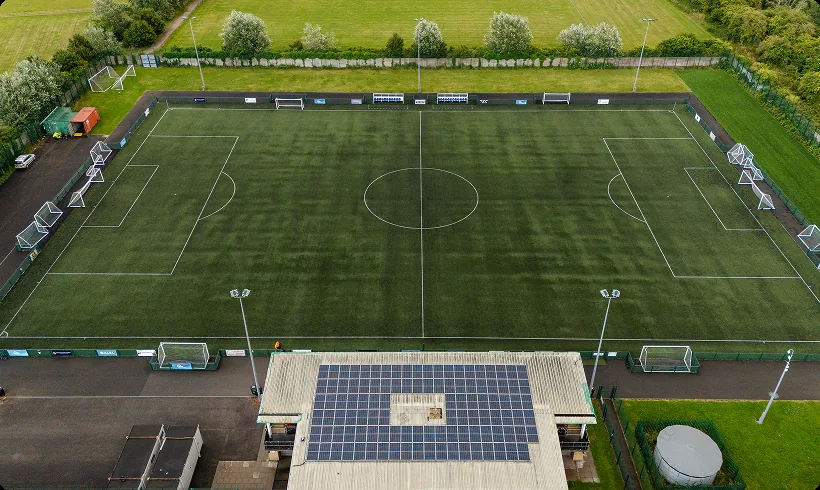
Artificial grass is much less likely to be lost to frost than real grass, but it is not immune. Moisture in the fibres and infill can freeze, leaving a crust of ice on top of the carpet. Rubber crumb and sand infill can lock together and set hard. On a frosty morning a 3G pitch can be very slippery, especially in the shade.
Operators close artificial pitches when they are icy or under snow, and some will not let maintenance machines on them while they are frozen because that can damage the fibres. Pitches usually reopen once the sun or a rise in temperature has cleared the ice. If you have booked a 3G pitch on a frosty evening, phone ahead.
If the game goes ahead
- Boots. Moulded studs or AG soles grip better than long screw-ins on firm, cold ground. See AG, FG and TF boot soles.
- Warm up longer. Cold muscles strain easily. Our football warm-up guide has a 10-minute routine.
- Cover up. Base layers, gloves and long sleeves are allowed in most leagues, as long as base layers match the shirt or shorts colour where the rules require it.
- Goalkeepers. Long padded trousers make a big difference on hard ground.
Options when grass is frozen
Many leagues let clubs move a game to an artificial pitch with the opponents' agreement, and some county FAs order a frost-hit cup tie to be played on an all-weather surface after repeated postponements. For training and friendlies, an indoor venue avoids the weather altogether.
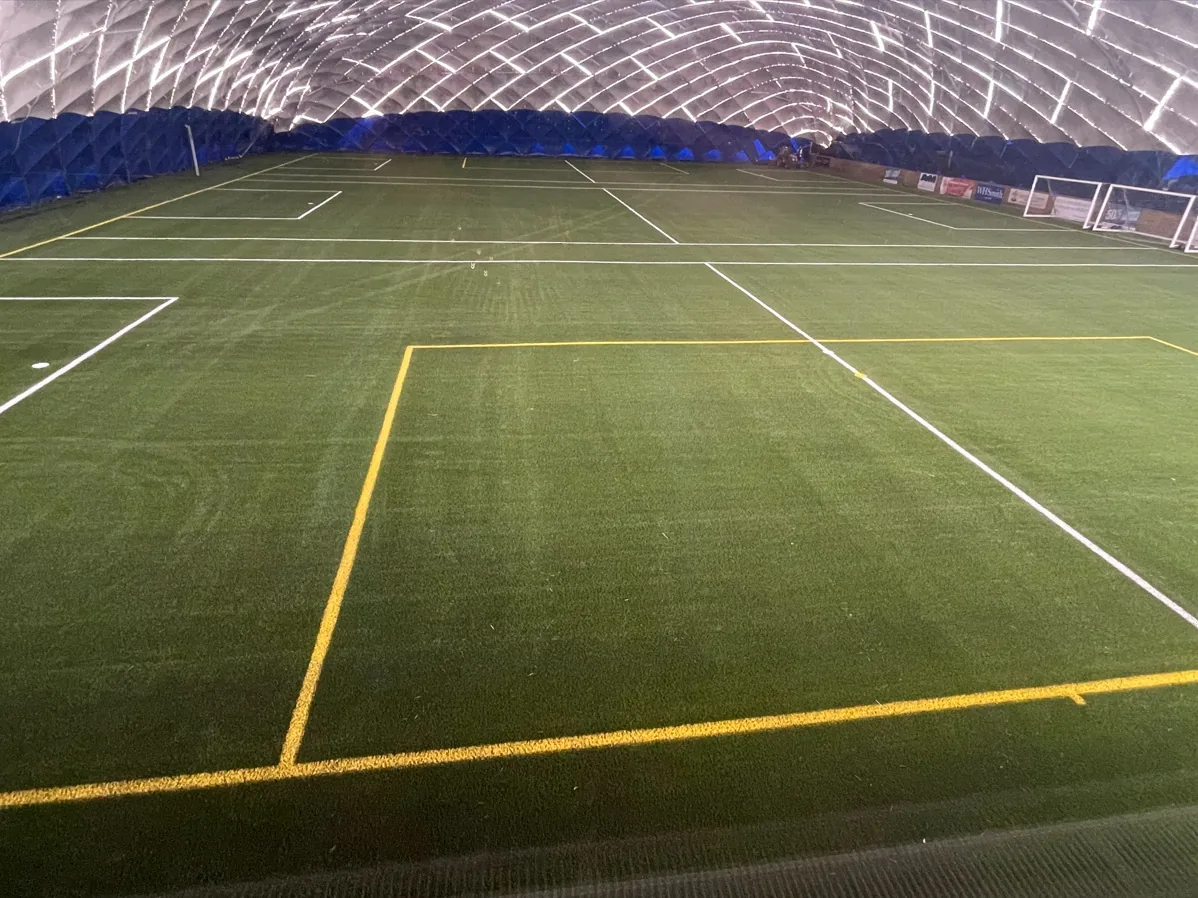
Read indoor football pitches and sports halls for what is available, and waterlogged pitches for the other common reason games are called off.
FAQ
Can you play football on a frozen pitch?
On a light surface frost, usually yes, once the ground underneath is soft. On a hard frost where studs will not go in and the ground is rutted or icy, referees normally call the game off for safety.
Who decides if a frozen pitch is playable?
The referee decides on the day, often after an early inspection by a neutral local referee. The pitch owner, such as a council, can also close its pitches before any inspection.
Can a club postpone a game because the pitch looks frozen?
Not on its own say-so in most leagues. The FA standard rules say a club cannot postpone because of the apparent state of the ground; a referee must declare it unfit.
Do 3G pitches freeze?
Yes. Water in the fibres and infill can freeze into a slippery crust, and operators close them when they are icy or covered in snow.