Waterlogged pitches: who calls the game off?
 By the Find My Football Pitch team·
Updated ·
6 min read
It rained all week, the forecast says more, and the group chat wants to know if the game is on. A wet pitch is not the same as a waterlogged one. Here is how the decision is made, who makes it, and why some pitches flood when others drain in minutes.
The short answer
A pitch is waterlogged when water sits on the surface instead of draining away, so the ball stops dead in puddles and players cannot keep their footing. For a league or cup match, the referee decides whether it is playable, usually after an inspection when there is doubt, and most leagues do not let a club postpone just because the ground looks wet. The pitch owner, such as a council, can close its pitches outright. Artificial pitches rarely waterlog because water drains through the carpet.
Wet or waterlogged
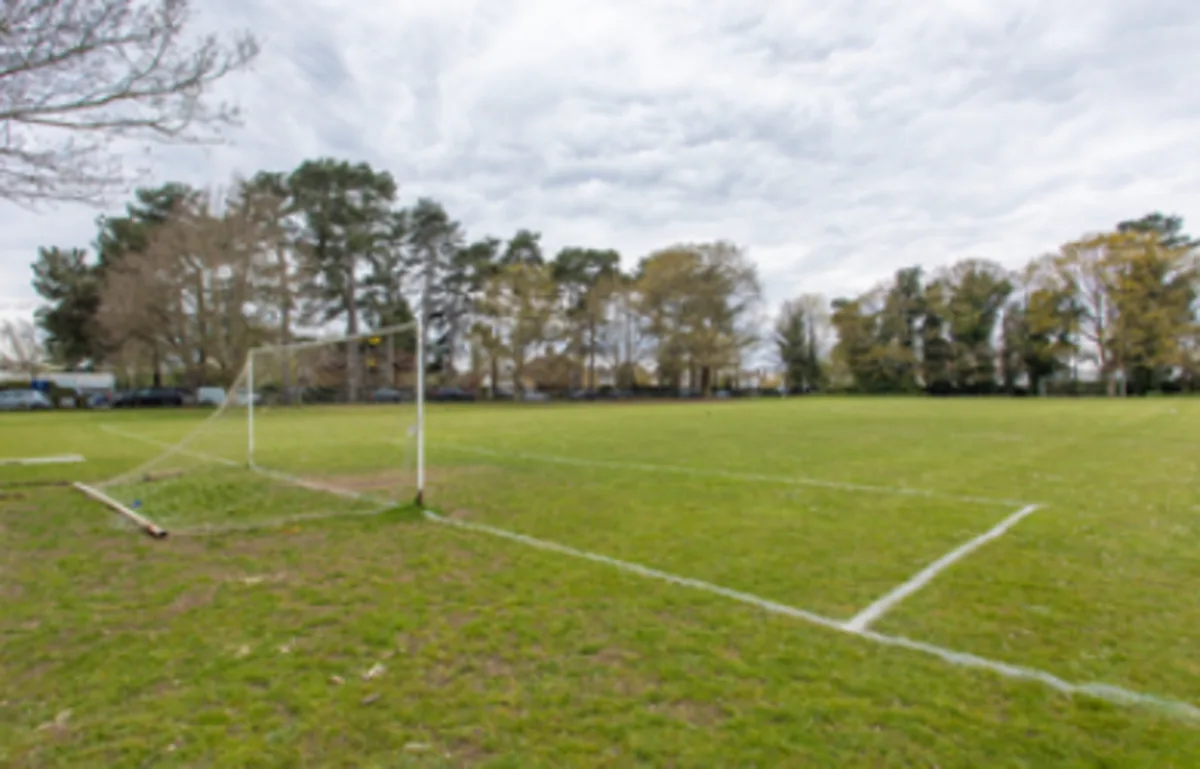
Football is played in the rain all the time, and a soft, wet pitch is often a good one. The problem starts when the soil is so full of water that rain has nowhere to go. Standing water appears in the lowest areas, usually the goalmouths and along one touchline, and the surface turns to mud under studs.
A waterlogged pitch is a safety problem as much as a football one. A ball that stops dead in a puddle invites a late tackle. Players slide into each other with no control. Wet clay also gets churned into ruts that set hard when the weather turns cold, so a game played in a quagmire can wreck the pitch for weeks.
How referees test a pitch
There is no measurement in the Laws of the Game for how wet is too wet. It is the referee's judgement, and most use the same practical checks:
- Walk the whole pitch. Especially the goalmouths, the centre circle and any dip near the touchline.
- Roll and bounce a ball. In the wettest areas, a ball that will not roll or bounce at all means passing is impossible there.
- Check footing. If the surface gives way or players are likely to slip at speed, it is not safe.
- Look at the forecast. A pitch that is borderline at 9am with more rain due by kick-off is unlikely to improve.
Referees also consider the areas around the pitch: flooded paths, an unsafe car park or a run-off area with standing water can be enough on their own.
Who calls the game off
In grassroots football in England, the usual process is set by the league, following the FA's standard rules:
- The home club cannot simply postpone. The standard rule says no club shall postpone a match because of the apparent state of the ground.
- An inspection is arranged when there is doubt. This is often done by a local referee with no connection to either club, early enough to stop the visitors travelling. Some leagues ask the home club to pay that referee a fee and travel costs.
- The referees agree the decision. The inspecting referee usually speaks to the match referee before and after the inspection.
- The home club tells everyone. If the pitch is unfit, the home club must tell the league, the visitors and the officials straight away.
Some leagues allow a blanket postponement without inspections when the weather across the area is extreme. Some county FAs order a repeatedly postponed cup tie to be reversed or moved to an artificial pitch. Your league handbook has the details, and they do differ.
The one decision that overrides all this is the pitch owner's. A council or school that closes its pitches after heavy rain has the final word. Many councils post closures online or on a phone line by early morning on match days.
For casual bookings, such as a hired 5-a-side or a friendly, the venue makes the call. If they close the pitch, you should get a refund or a transfer. If you cancel yourself because of rain, the normal cancellation terms usually apply.
Why some pitches flood
Two things decide how fast a pitch drains: what it is made of and what is underneath. Clay soil holds water and drains slowly. Pitches built on sand drain fast, which is why stadium pitches are built on deep sand root zones over gravel and pipe drains. See stadium vs park pitches for how big that gap is.
Compaction makes things worse. Every match presses the soil down, closing the air gaps that let water move through. That is why groundstaff spike and aerate pitches regularly, and why the most-used areas flood first. Our guide to pitch maintenance covers the routine work.
Artificial pitches are built to drain. Water passes through holes in the carpet backing into a stone base and away through drains, so a 3G pitch is usually playable minutes after a downpour. That is why many grassroots leagues and clubs move games onto artificial grass in wet winters.
What players and clubs can do
- Check before you set off. League sites, the FA's Full-Time system, the council closure page and your club chat.
- Protect the pitch. Warm up on the touchline, not in the goalmouth, and keep training off grass pitches in the wettest weeks.
- Have a fallback. Clubs that book a 3G pitch as a backup can often keep fixtures going when grass is closed.
- If you play, wear studs that grip soft ground and pack spare socks. Our guide to playing football in the rain has more.
For cold-weather call-offs, see when a pitch is too frozen to play.
FAQ
Who decides if a waterlogged pitch is playable?
The referee, usually after an inspection when there is doubt. In most leagues the home club cannot postpone just because the pitch looks wet. The pitch owner, such as a council, can close the pitch outright.
How do referees test a waterlogged pitch?
They walk the whole pitch, roll and bounce a ball in the wettest areas, check the footing and consider the forecast. If the ball stops dead in standing water or players cannot keep their feet, the game is usually off.
Can a 3G pitch be waterlogged?
Rarely. Water drains through the carpet into a stone base. A 3G pitch with blocked drains or a damaged base can hold surface water, but most are playable soon after heavy rain.
Do I get a refund if a booked pitch is waterlogged?
If the venue closes the pitch, you should normally get a refund or a new slot. If you cancel because of the weather and the venue stays open, its usual cancellation terms apply.