How football pitches are looked after
 By the Find My Football Pitch team·
Updated ·
5 min read
A good pitch is made by the people who look after it between games. The work differs a lot between a stadium, a council park and a 3G cage, but the basic jobs are the same: keep the surface level, keep it draining, and repair the damage before it spreads.
The short answer
Grass football pitches are mown regularly, marked out before matches, and repaired after each game by putting divots back and seeding bare patches. Through the season they are aerated with spikes or tines to relieve compaction and help drainage. At the end of the season they get a renovation: scarifying, top dressing with sand, overseeding and feeding. Artificial 3G pitches need different care: frequent brushing to keep the infill level and the fibres upright, topping up rubber, clearing debris, and deeper specialist cleaning at least once a year.
Weekly work on a grass pitch
- Mowing. In the growing season grass is cut at least weekly, and far more often at professional grounds. Regular cutting keeps the grass dense; letting it grow long and then cutting hard weakens it. See why pitches have stripes for how mowing creates the pattern.
- Line marking. Lines are painted with a wheeled marker before matches. Most groundstaff use a transfer wheel or a spray marker with paint made for sports turf.
- Divoting. After a game, groundstaff walk the pitch with forks and put back the turf that was kicked up, then tread it in. Divots replaced the same day usually root again.
- Goalmouths. The most worn areas get extra seed, a little topdressing and sometimes a cover to protect them.
- Brushing or switching. A brush or a long flexible pole is dragged across the grass early in the day to knock off dew, which reduces disease.
Through the season
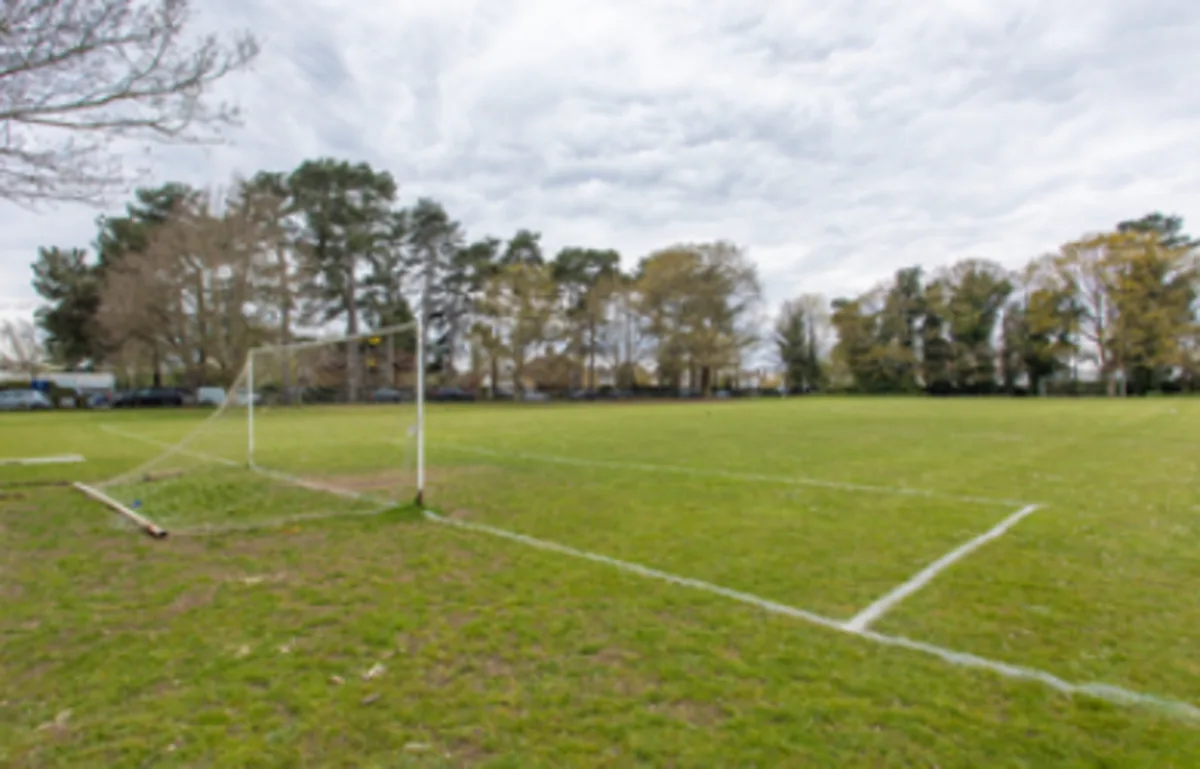
Football is played through the wettest months, and studs press the soil down. Compacted soil drains badly and roots struggle, so the main seasonal job is aeration.
- Slit tining pushes narrow blades into the surface to let water and air in. It can be done often because it leaves little mark.
- Deep aeration, often with a machine called a Verti-Drain, drives long tines in and levers them to crack the compacted layer underneath. It is done when the ground is neither too wet nor too dry.
- Feeding. Fertiliser keeps grass growing and recovering. Spring and autumn feeds are typical, with lighter feeds at the top level.
- Worm and weed control, within the rules on what chemicals can be used.
When the ground is frozen or waterlogged, groundstaff keep everyone off. Playing on a saturated pitch can do more damage in one game than a month of normal use. See our guides to frozen pitches and waterlogged pitches.
End-of-season renovation
As soon as the season ends, a grass pitch gets its biggest piece of work of the year:
- Scarifying. Machines with vertical blades rip out dead grass, moss and the spongy layer of thatch.
- Aeration with deep tines or hollow cores.
- Top dressing. Tonnes of sand or a sand and soil mix are spread and worked into the surface. Over years this builds a free-draining top layer and fills small hollows.
- Overseeding with perennial ryegrass, often with a drill that drops seed into slits. See what grass is used on football pitches.
- Feeding and watering to get the new grass established over summer.
Stadiums go further. Many strip the whole surface back to the rootzone with a fraise mower, which shaves off the top layer, then reseed. A hybrid pitch is renovated in the same way, with the fibres staying in place; see what a hybrid pitch is.
Why your park pitch is closed in May and June. Council pitches are often taken out of use after the season so the renovation can establish. Summer leagues tend to move to 3G pitches or to a smaller set of grass pitches that are rested in rotation.
Looking after a 3G pitch
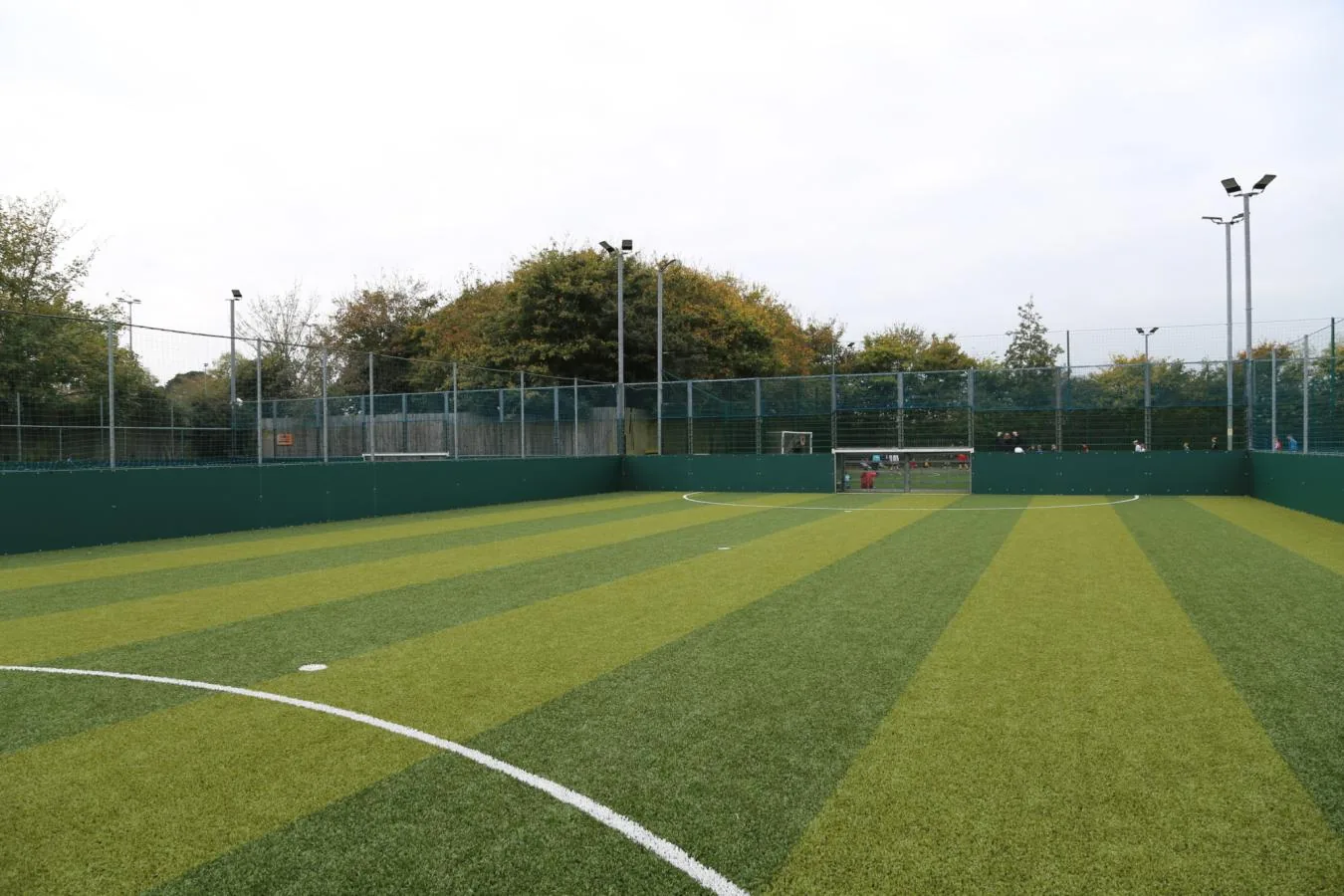
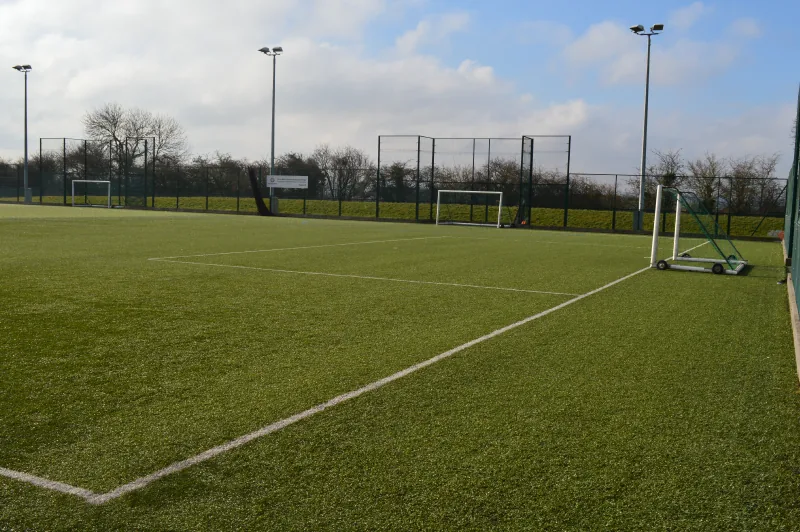
An artificial pitch does not need mowing or seeding, but it is not maintenance-free. Without care the infill compacts and drifts, the fibres lie flat and the surface turns hard and slow to drain.
| How often | Job |
|---|---|
| Daily or after use | Pick up litter, check goals and nets, clear leaves near the fence |
| Weekly on busy pitches | Drag brush the whole surface to lift fibres and spread infill evenly |
| Regularly | Top up rubber in goalmouths and along the edges; check seams and lines |
| A few times a year | Power brushing or grooming to loosen compacted infill |
| At least once a year | Specialist deep clean and decompaction, removing fine dirt from the infill |
| Every three years (England) | Performance test to stay on the FA's register of football turf pitches |
Pitches funded by the Football Foundation must also keep a maintenance plan and pay into a replacement fund. Good maintenance is the main reason one 3G pitch lasts much longer than another. See how long a 3G pitch lasts.
What players can do
- Respect closures. If a council or club says a pitch is off, playing on it anyway can ruin it for weeks.
- Wear the right boots. Moulded studs or turf shoes on 3G, never metal studs. See boots for 3G.
- Knock mud off before you step on an artificial pitch.
- Move training drills around. Cones in the same goalmouth every week create bald patches.
- Put divots back at the end of a game on grass. It takes the team five minutes.
- Take bottles, tape and gum home.
The Grounds Management Association in the UK trains groundstaff and runs advice for clubs that look after their own pitches. Its website is a good start if your club has just taken on a pitch.
Hackney Marshes Centre
London · Over 80 grass pitches
Low Hall Sports Ground
London · Grass and 3G
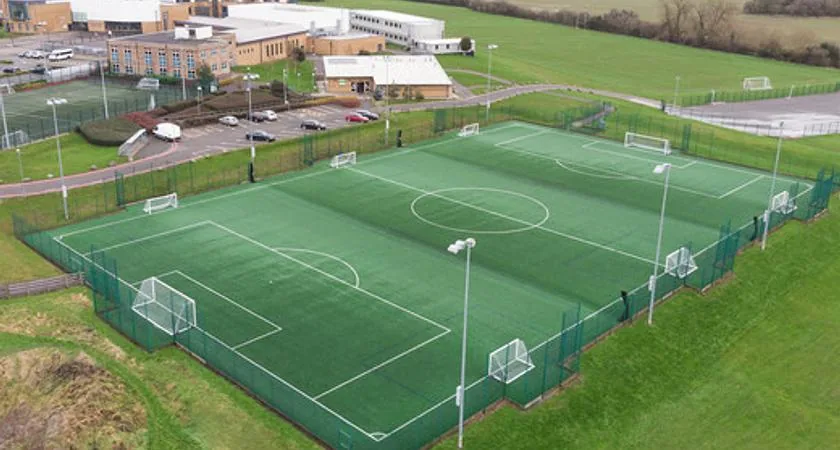
Judgemeadow Community College
Leicester · Floodlit 3G
FAQ
How often is a football pitch mown?
At least weekly in the growing season on community pitches, and several times a week at professional grounds, sometimes daily before matches.
What is a Verti-Drain?
A machine that drives long tines into the ground and levers them to break up compacted soil, so water drains and roots grow deeper.
Why is sand put on football pitches?
Top dressing with sand builds a free-draining surface layer, fills small hollows and helps new seed establish.
Do 3G pitches need maintenance?
Yes. They need regular brushing, infill top-ups, debris clearing and a specialist deep clean at least once a year.