Why football pitches have stripes
 By the Find My Football Pitch team·
Updated ·
5 min read
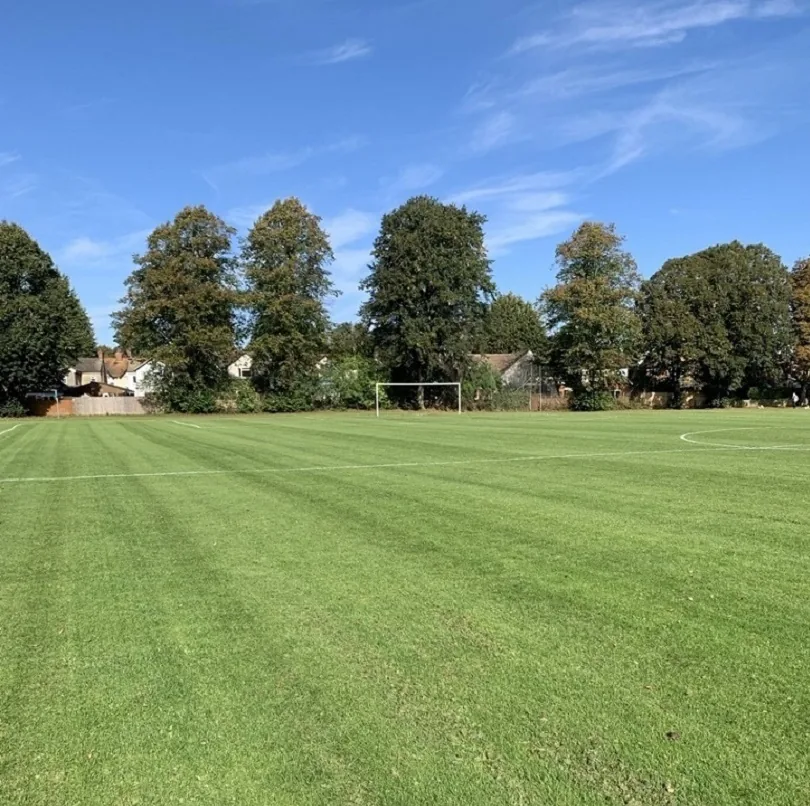
Light and dark bands across a football pitch look as if they were painted on, or grown from two kinds of grass. They are neither. The whole pitch is the same grass, cut to the same height, and the stripes come from the direction the mower travelled.
The short answer
Football pitches have stripes because the mower bends the grass. Most pitch mowers have a heavy roller behind the blades that flattens the leaves in the direction of travel. Grass bent away from you reflects more light and looks pale; grass bent towards you shows its shaded side and looks dark. Mowing up and down in alternate directions gives the striped pattern. There is no rule in the Laws of the Game requiring stripes, but they look good on television, and competitions such as UEFA's set rules on mowing patterns for their matches.
How stripes are made
Pitch mowers, whether a walk-behind cylinder mower or a ride-on, usually have a full-width roller at the back. As the mower moves forward, the blades cut the grass and the roller presses the cut leaves flat in the direction of travel. They spring back slowly, so the bend lasts for a day or two.
To stripe a pitch, the groundsperson mows a straight line from one end to the other, turns, and mows back alongside it. Each pass bends the grass the opposite way to the one next to it. Repeat across the pitch and you get bands the width of the mower. For wider stripes, they mow two or three passes in the same direction before turning.
The grass type helps. Perennial ryegrass, the usual pitch grass in the UK and Ireland, has a shiny underside that reflects light strongly, which is one reason British pitches stripe so well. See what grass is used on football pitches.
Why light and dark swap
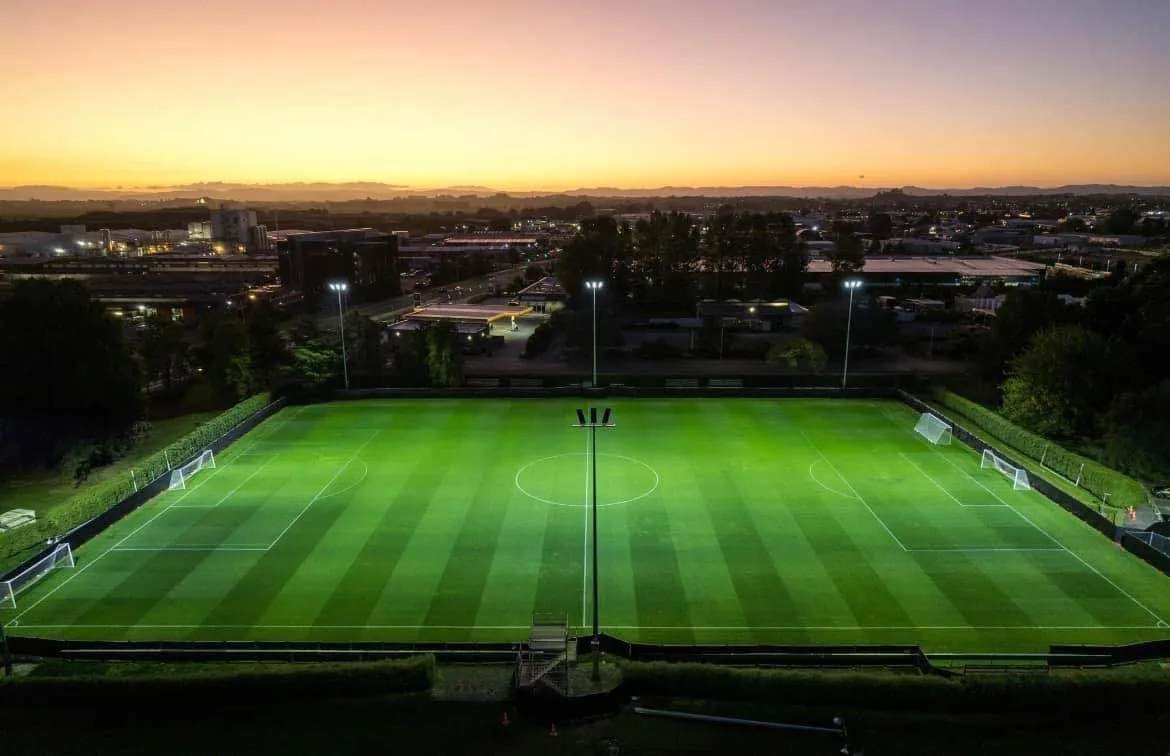
The colour you see depends on where you stand.
- Grass bent away from you shows you the flat, wide face of the leaves. It reflects more sky light and looks lighter.
- Grass bent towards you shows you the tips and the shaded sides of the leaves. It looks darker.
Walk to the other end of the ground and every stripe flips: the pale bands become dark and the dark ones pale. Watch a match on television and you will see the same effect when the broadcast switches to a camera behind a goal.
Stripes are sharpest in the low sun of morning and evening, and when the grass is dry. Dew, rain and longer grass soften them.
Patterns and rules
The Laws of the Game say nothing about stripes. They only cover the markings, which must be clearly visible lines no wider than 12 cm. Mowing patterns are up to the ground and the competition.
Common patterns:
- Straight stripes across the width or along the length. The most common at every level.
- Checkerboard, made by mowing across and then along, giving squares.
- Diagonal stripes or diamonds.
- Circles or arcs in the centre circle, seen at some stadiums.
Top competitions do regulate it. UEFA sets rules on grass height and mowing patterns for its club competitions, and the French league says it asks clubs to follow UEFA's pattern rules. Plain straight stripes of an even width are the standard look in televised football.
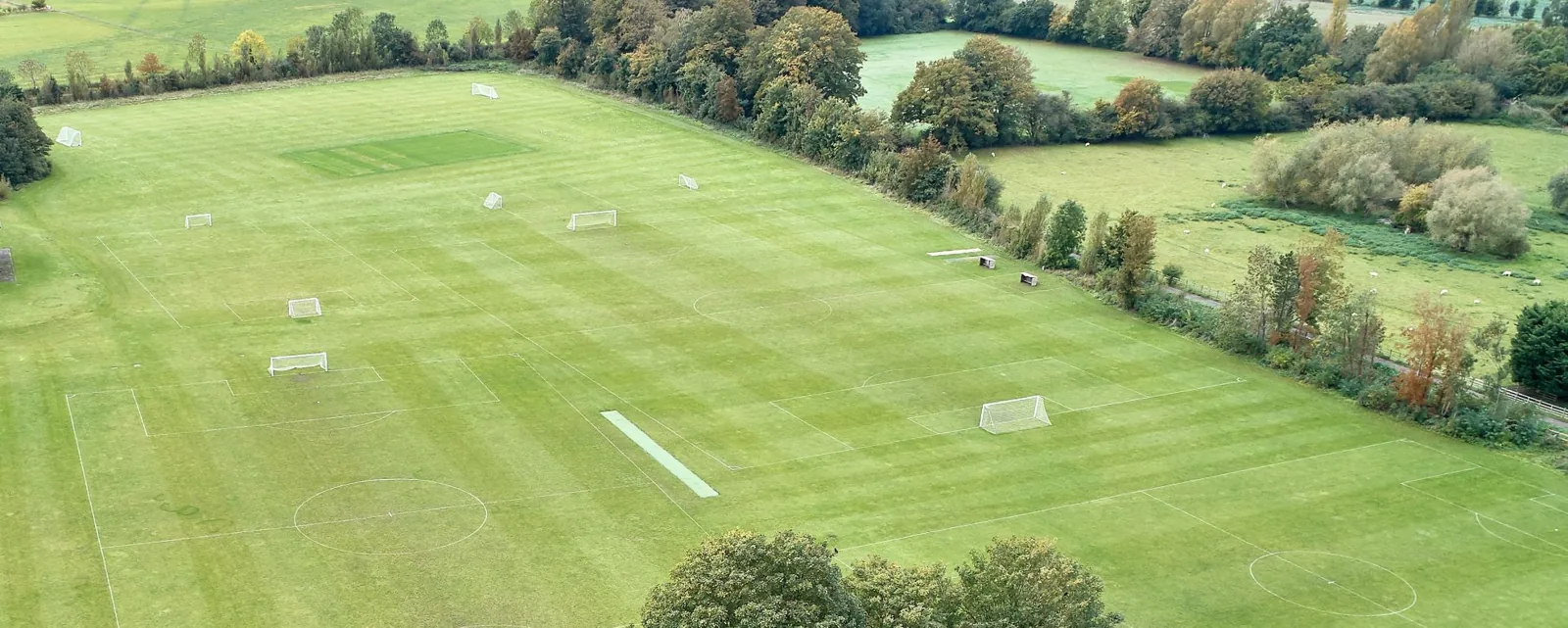
Why groundstaff bother
Striping takes little extra effort, since the pitch has to be mown anyway. It adds:
- Looks. A crisply striped pitch is a point of pride for groundstaff and a big part of how a stadium looks on television.
- A check on the mowing. Straight stripes show that every strip has been cut and that nothing was missed.
- Even wear. Groundstaff change the mowing direction from cut to cut, so the grass does not lean the same way all the time and the mower wheels do not run in the same ruts.
Stripes do not change how the ball rolls in any way you would notice. Grass height, moisture and firmness matter far more, which is why many grounds water the pitch before kick-off.
Striping a garden lawn. The same method works at home. You need a mower with a rear roller, or a striping kit that drags a roller behind a rotary mower. Mow in straight lines, overlap slightly and turn on a path or a border strip so the ends stay neat.
Stripes on artificial pitches
Many 3G pitches have stripes too, but they are permanent. The carpet is made in two shades of green and the rolls are laid alternately, so the stripes look the same from every angle. They imitate a freshly mown grass pitch. For more on how these carpets are laid, see how an artificial pitch is built.
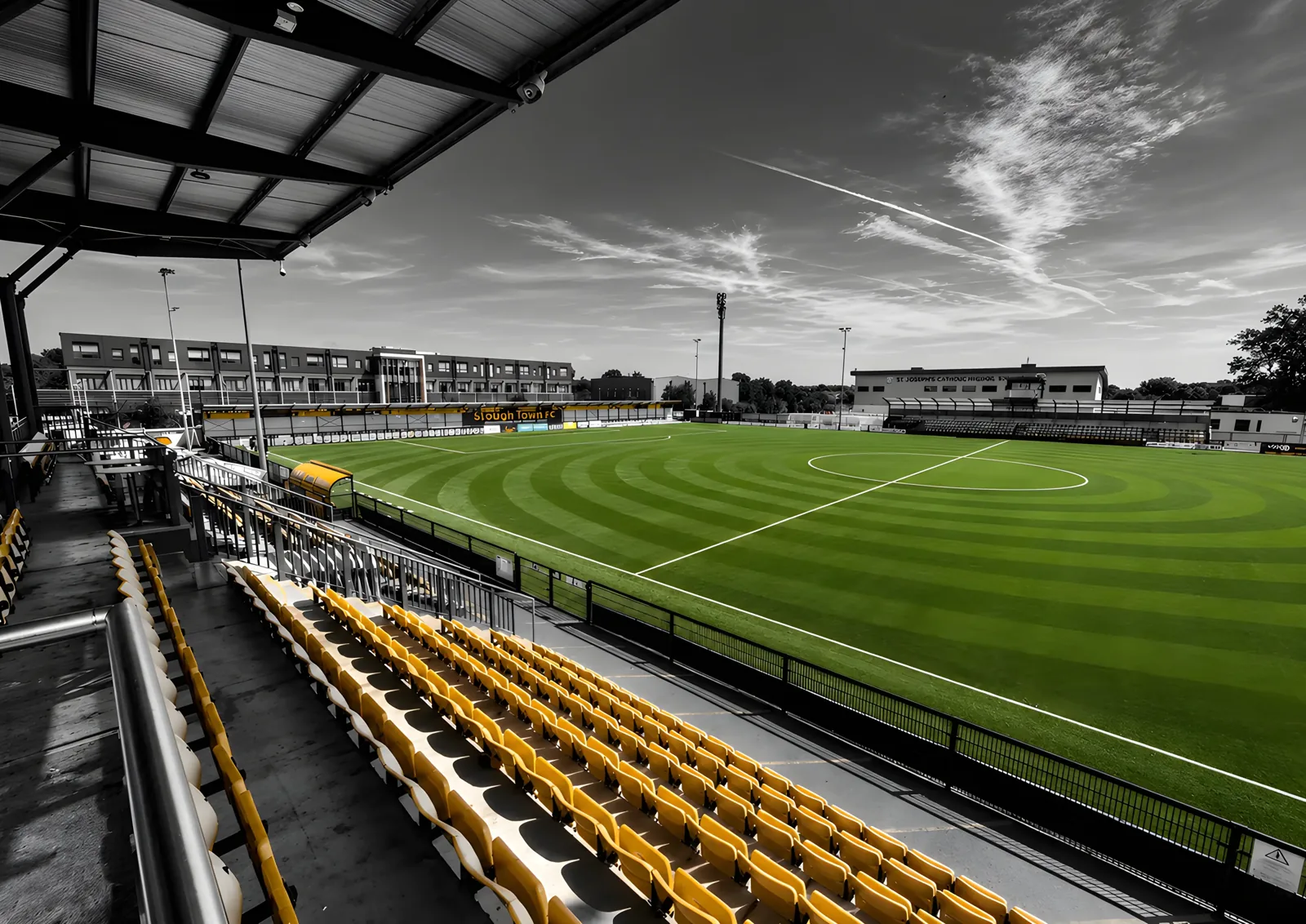
Arbour Park Community Sports Stadium
Slough · Striped 3G
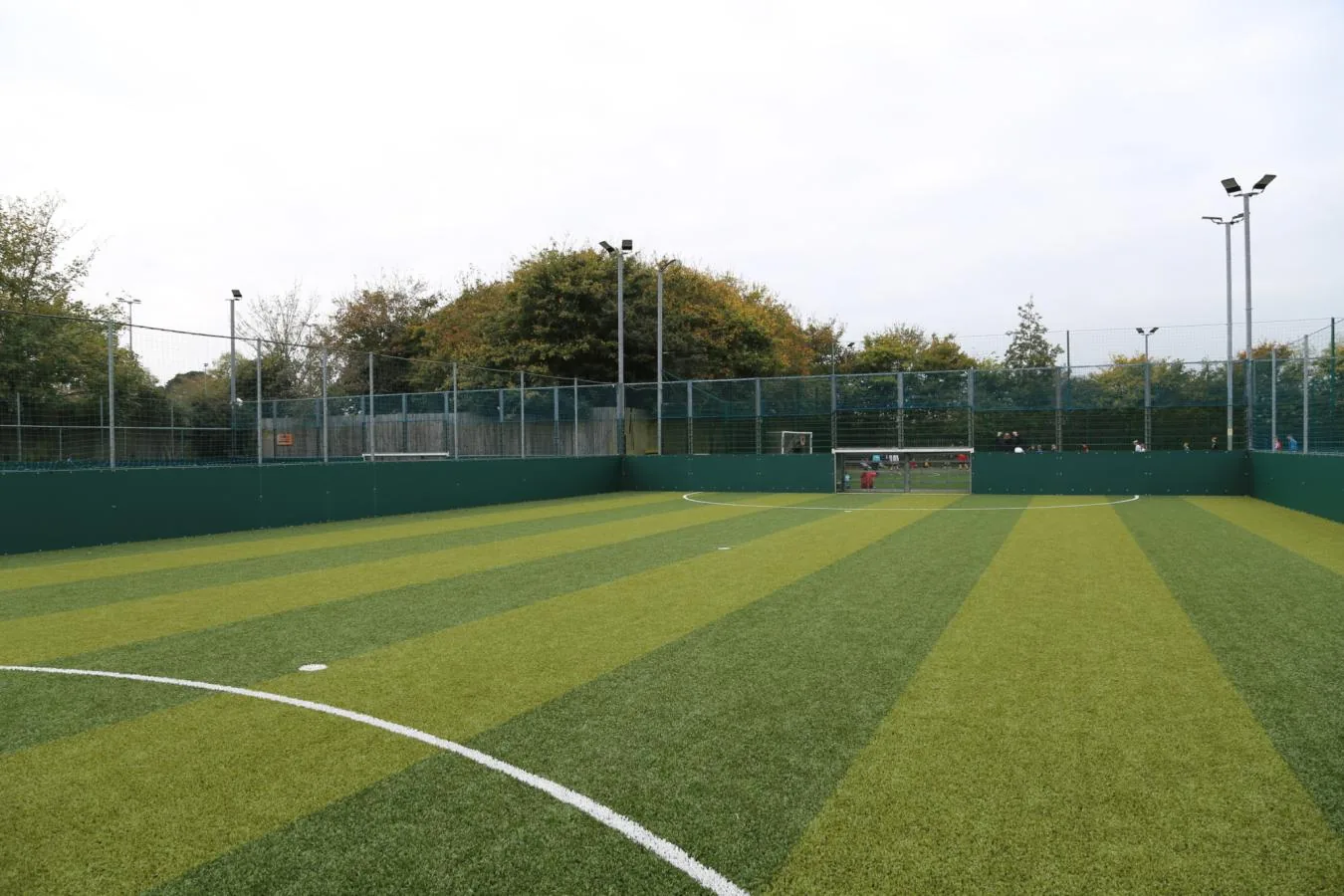
BH Live Active, Pelhams
Bournemouth · Two-tone 5-a-side 3G
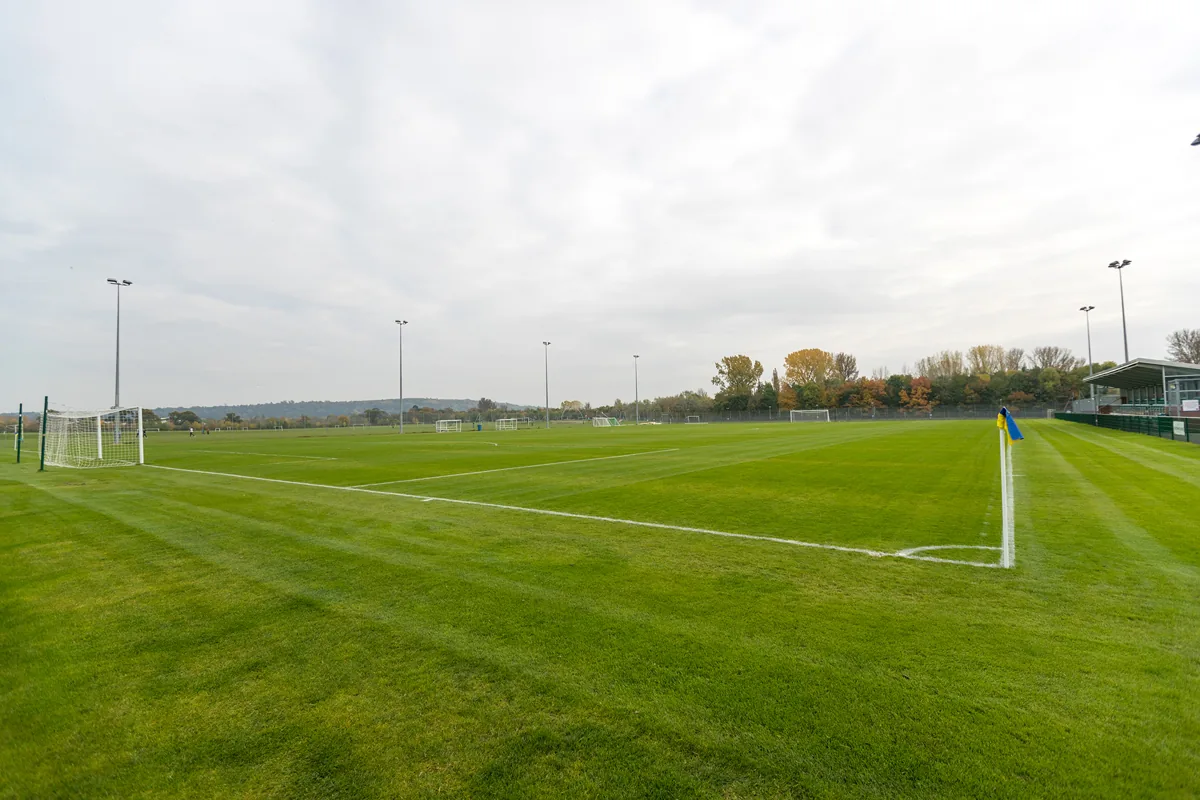
Shrewsbury Sports Village
Shrewsbury · Striped grass
Cities with the most grass pitches in our directory:
FAQ
Are pitch stripes two different types of grass?
No. It is the same grass cut to the same height. The stripes come from the grass being bent in opposite directions by the mower roller.
Why do the stripes change colour when the camera angle changes?
Grass bent away from you looks light and grass bent towards you looks dark, so stripes swap shade when seen from the opposite end.
Is there a rule about stripes on a football pitch?
Not in the Laws of the Game. Competitions such as UEFA set their own rules on mowing patterns for their matches.
How long do mowing stripes last?
A day or two in dry weather. The grass straightens as it grows, so stripes are renewed at each cut.