Why stadium pitches look perfect and park pitches don't
 By the Find My Football Pitch team·
Updated ·
5 min read
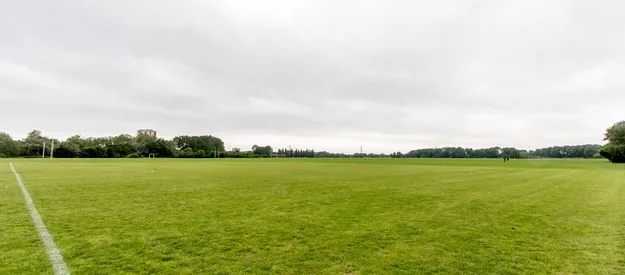
On television the grass is flat, green and striped from corner to corner. On Sunday morning your pitch has bald goalmouths, a dog-walker's path across the halfway line and a puddle on the edge of the box. The two are built and looked after in completely different ways.
The short answer
Stadium pitches look perfect because they are engineered and staffed like a lawn in a laboratory. They sit on a deep sand root zone over drainage layers, often have synthetic fibres stitched into the grass, and many have undersoil heating and grow lights. A full-time grounds team cuts, feeds and repairs them every day and they host one or two matches a week. A park pitch is usually native soil with basic drainage, mown once a week by a council crew and used for several matches every weekend.
What is under the grass
A modern stadium pitch is engineered from the drains up. From the bottom up, there is usually a network of drainage pipes, a layer of gravel, and then a root zone made mostly of sand, often a few hundred millimetres deep. Sand lets rain drain straight through and resists compaction, so the surface stays firm and level after heavy rain.
Many top grounds also use a hybrid surface. Synthetic fibres are stitched or woven into the root zone, and the real grass grows around them. The fibres anchor the roots, so the turf does not tear up in big divots. Our guide to hybrid pitches explains the systems in detail.
A typical park pitch is the field it always was: local topsoil over whatever is underneath, which in much of England, Ireland and Wales means clay. Clay holds water, packs down hard when it is walked on, and cracks in a dry summer. Some council pitches have pipe drains, many have none.
Staff, machines and money
A Premier League ground has a head groundsperson and a team of staff working on one pitch, plus the training ground. They mow most days in the growing season, verti-drain and spike the soil to let air in, feed the grass, mark the lines and repair every divot by hand after a match. Under the stands, where sunlight never reaches, mobile grow-light rigs sit on the grass between games. Undersoil heating keeps the soil above freezing in winter. Read undersoil heating explained for how that works.
A council grounds crew may look after dozens of pitches across a borough, along with parks, verges and cemeteries. A park pitch might be mown once a week in summer, marked out on a Friday and left until the next week. Repairs happen at the end of the season, if the budget allows.
The famous stripes are no secret either. They come from a roller on the mower bending the grass in alternate directions, so light reflects differently. Any well-kept pitch can have them. See how pitch stripes are made.
How much the pitch is used
This is the biggest difference of all. A stadium pitch hosts a match or two a week, and the first team trains elsewhere. Even so, groundstaff fight constant wear around the goalmouths and down the middle.
A park pitch might take an adult game on Saturday, two junior games on Sunday and training in midweek if the council allows it. Every match concentrates wear in the same places: the goal areas, the centre circle and the line the referee's assistants run along. On wet clay, that use turns soft ground to mud quickly, and the grass has no chance to recover before the next game.
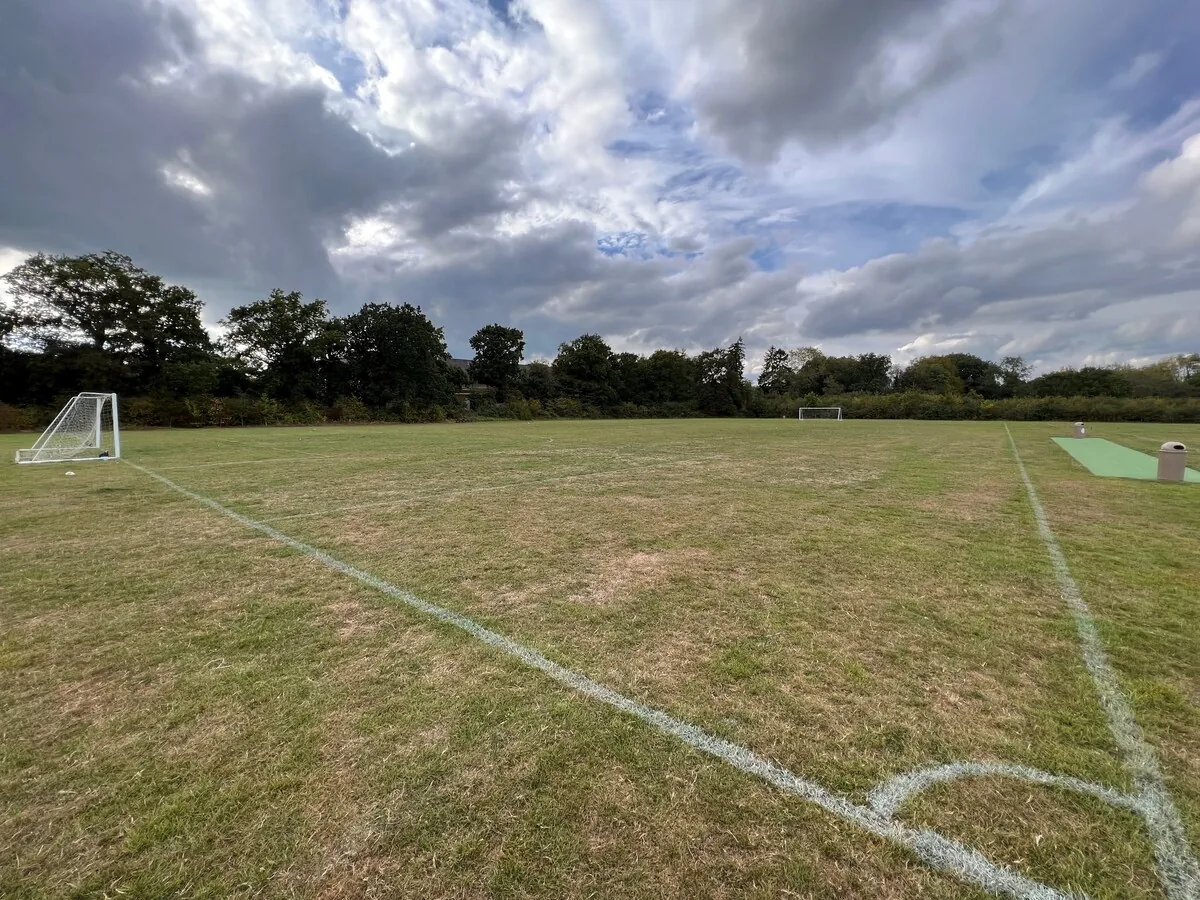
Why park pitches look the way they do
- Bare goalmouths. Goalkeepers and defenders stand in the same spot every match, and grass cannot grow back between games.
- Bumps and ruts. Wet clay is soft, studs and feet sink in, and when it dries the marks set hard.
- Long grass. Mowing is weekly at best, and less often in a wet spell when machines cannot get on.
- Puddles. Low spots collect water with nowhere to go. Our guide to waterlogged pitches explains who decides whether a game goes ahead.
- Slope. Many park pitches were laid on whatever land was available. See pitch slope.
Help your own pitch. Many grassroots clubs now do some of the work themselves: replacing divots after the game, moving training off the goalmouths and warming up on the touchline instead of in the penalty area. It costs nothing and it shows by spring.
What helps a park pitch
You do not need a stadium budget to improve a grass pitch. In England, the FA, the Football Foundation and the Grounds Management Association run pitch improvement schemes that send advisers to assess grassroots pitches and set out a maintenance plan. The simple steps make the biggest difference: regular aeration to relieve compaction, sanding to improve drainage, overseeding worn areas in late spring, and keeping heavy use off the pitch in the wettest weeks.
The other answer has been artificial grass. A 3G pitch can take many hours of use a week in almost any weather, which is why so many councils and schools have built one beside their grass fields. Our guide to artificial grass vs real grass sets out the trade-offs.
If you want grass for an 11-a-side game, look for a venue that lists its grass pitches and changing rooms clearly. These grounds in our directory have grass pitches for hire:
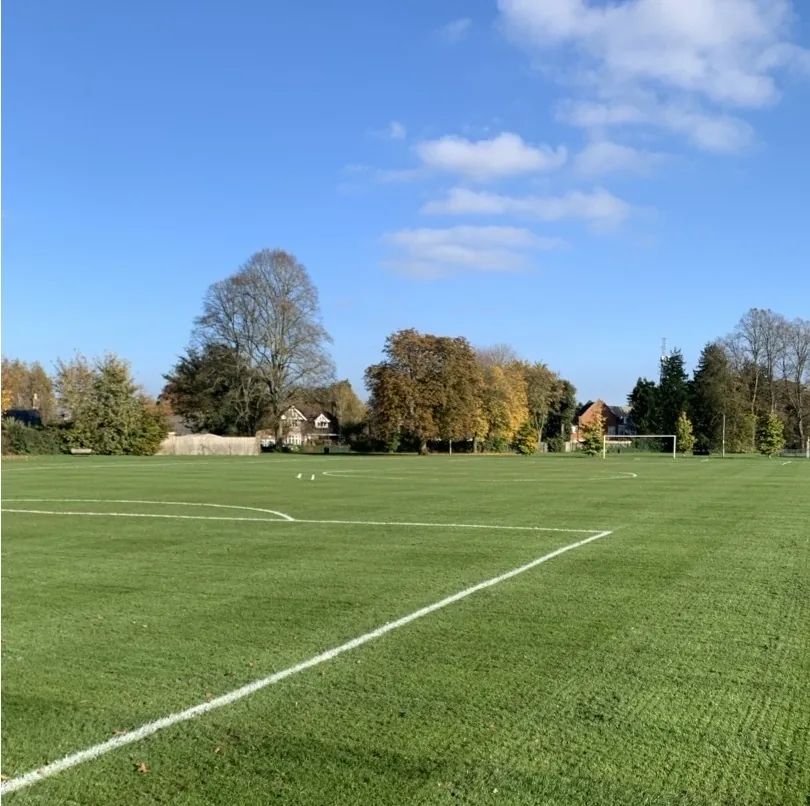
Easington Recreation Ground
Banbury · Council grass pitch

Croydon Sports Arena
London · Floodlit grass

Korikori Park
Hamilton · Grass and artificial turf
Cities with the most grass pitches in our directory:
FAQ
Are Premier League pitches real grass?
Yes, but most are hybrid. Real grass grows through a small share of synthetic fibres stitched into a sand root zone, which holds the surface together.
Why are park pitches so muddy?
Most are built on native soil, often clay, which drains slowly. Heavy use on wet ground churns it into mud, and there is rarely time or money to repair it during the season.
How often are stadium pitches mown?
In the growing season, grounds teams at top clubs mow most days. A council park pitch is usually mown about once a week.
Can a park pitch be made as good as a stadium pitch?
Not without rebuilding it, which is expensive. But aeration, sanding, overseeding and keeping heavy use off it in wet weather make a clear difference.