Cage football: what it is
 By the Find My Football Pitch team·
Updated ·
5 min read
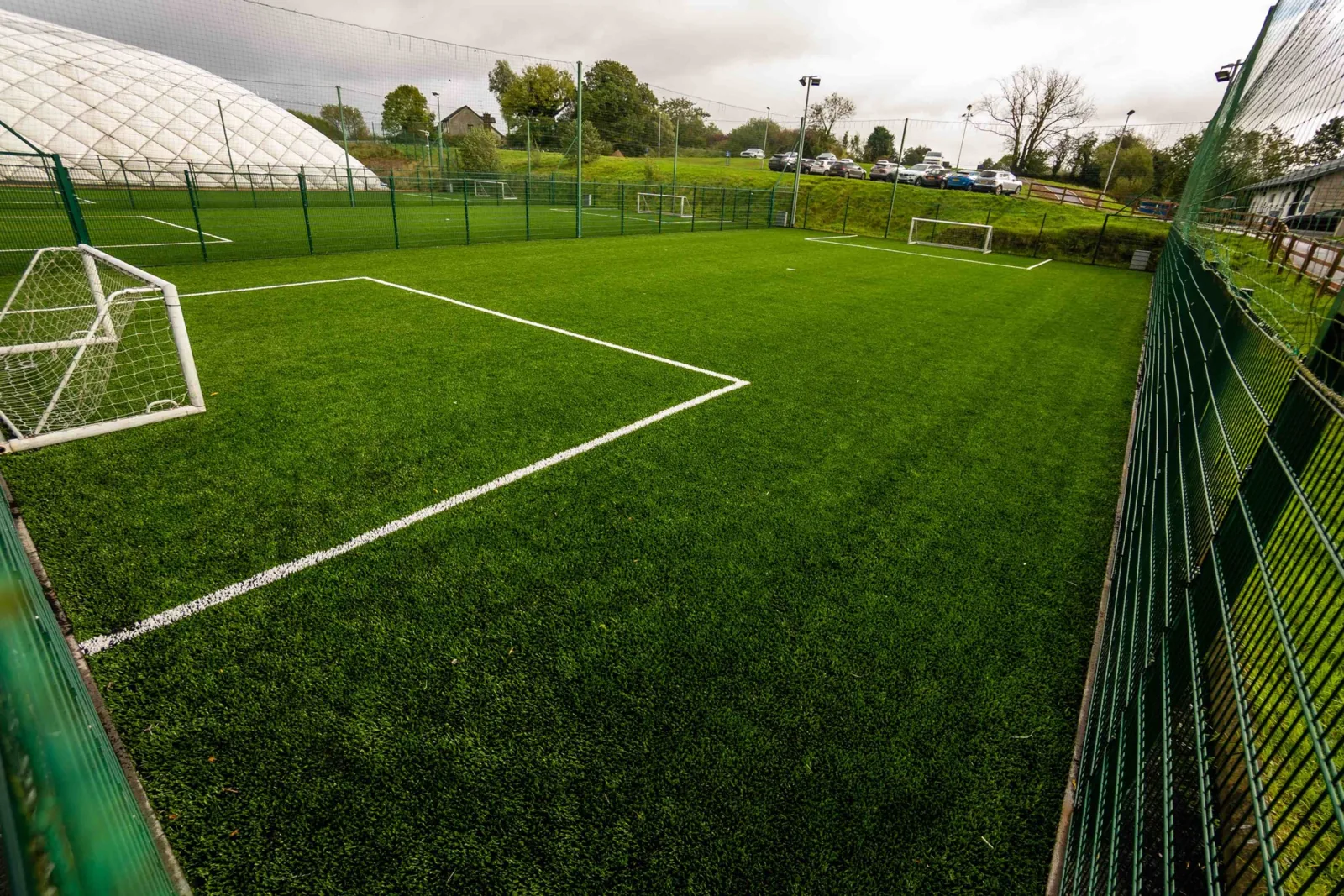
Cage football is the 5-a-side most people in the UK and Ireland actually play: a small artificial pitch with fencing all round and kickboards along the bottom. The cage changes the game more than you might expect. Here is what it is, how it plays and the rules that usually come with it.
The short answer
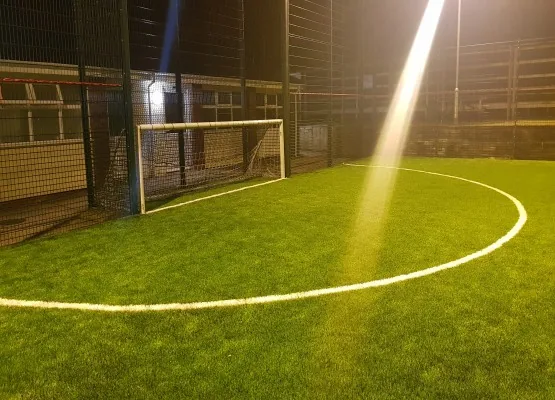
Cage football is small-sided football, usually 5 or 6-a-side, played on a fully enclosed artificial pitch. High mesh fencing surrounds the pitch, with solid kickboards at the bottom, so the ball bounces back into play instead of going out. That means no throw-ins and very few stoppages, so games are fast and tiring. Most cages are floodlit 3G or similar, and they are found at 5-a-side centres, leisure centres and schools. Rules vary by venue, but head-height limits and keeper-only areas are common.
What a cage pitch is
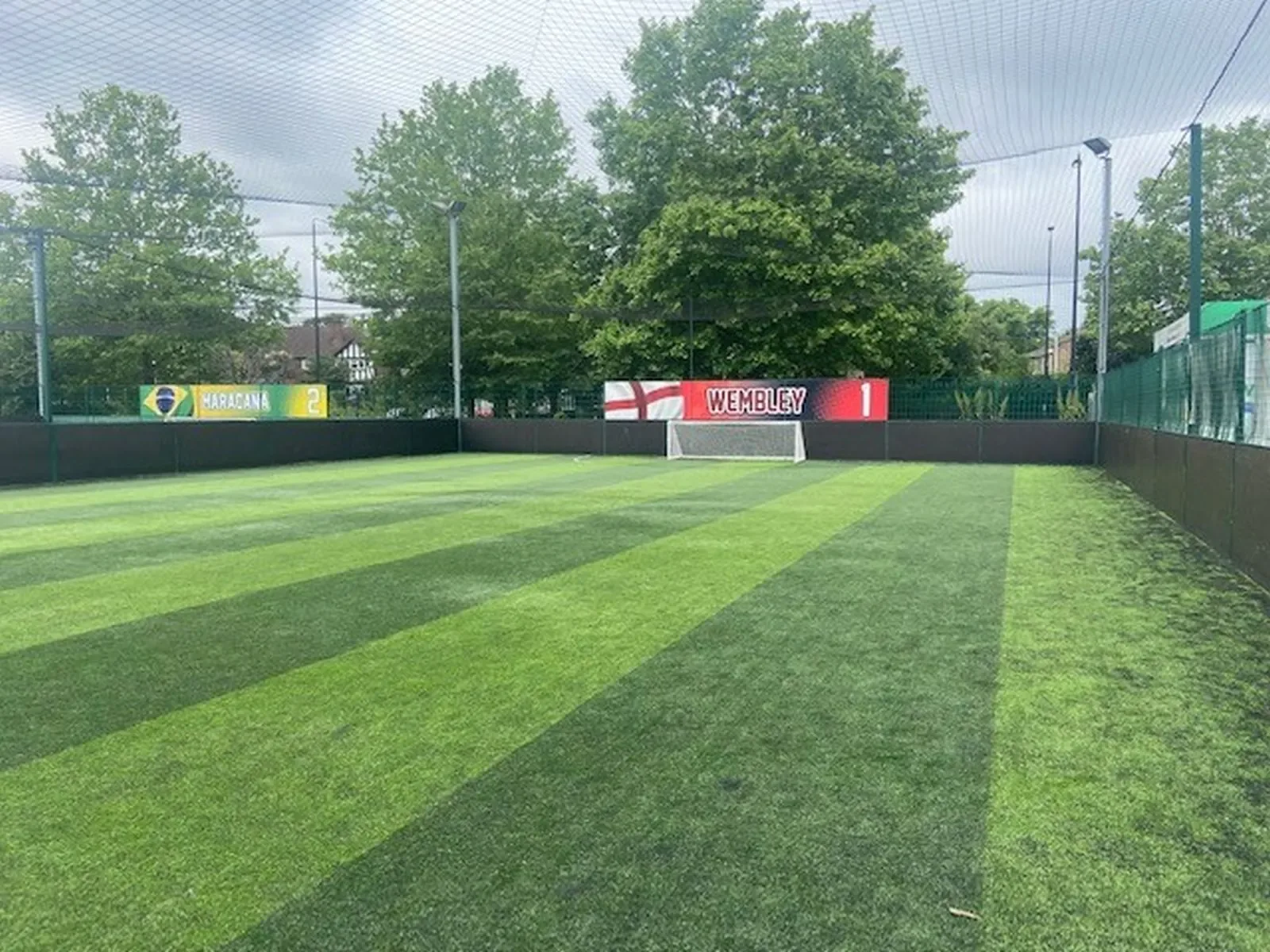
A cage is a small pitch with a fence on all four sides. The fence is usually weld mesh, several metres high, often with netting over the top or above the goals to stop balls flying out. Along the bottom there is a band of solid boards, the kickboards, so the ball rebounds cleanly off the side instead of getting caught in the mesh.
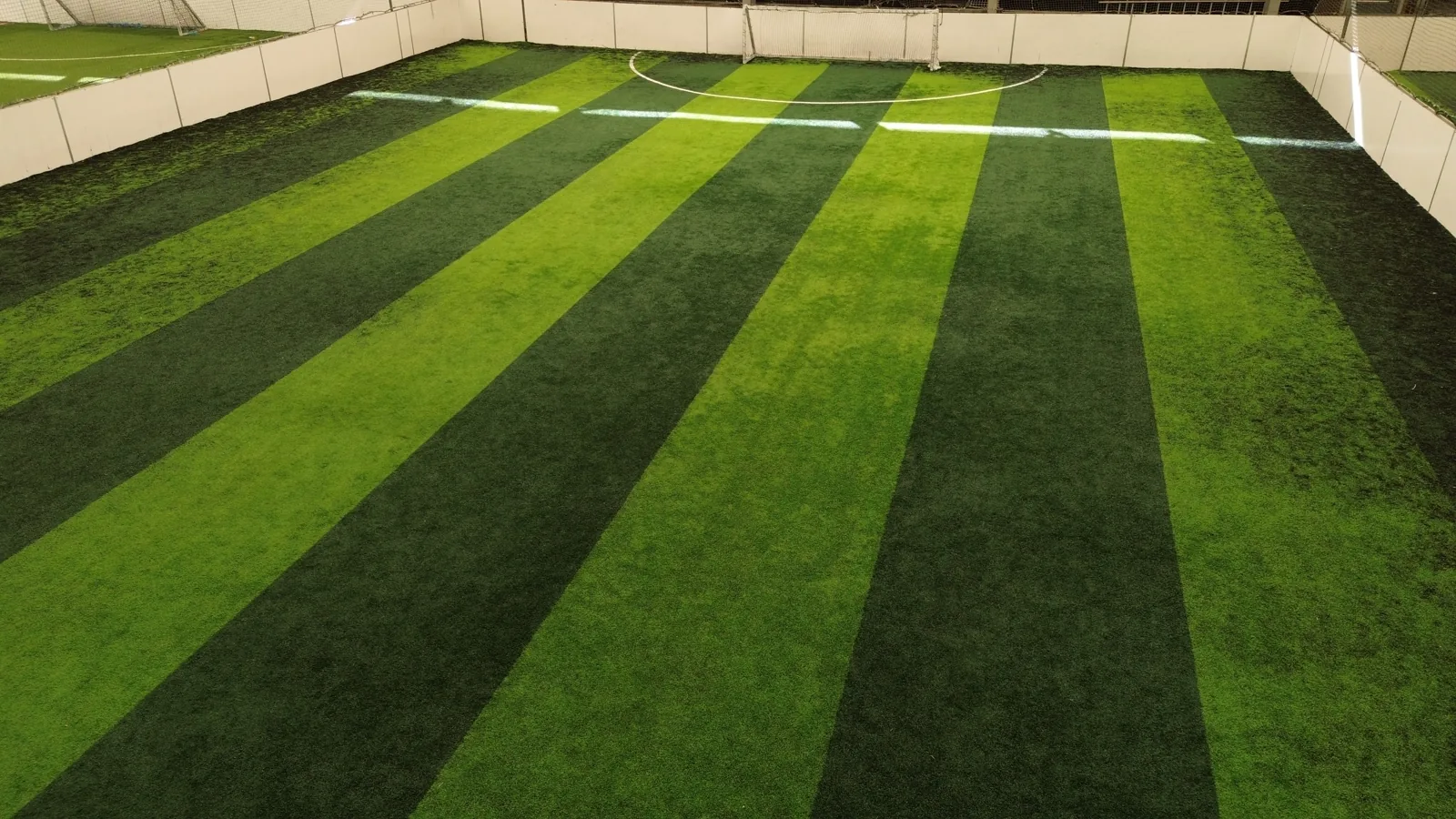
Inside is a short artificial pitch, most often 3G with rubber crumb infill, though older cages may have sand-filled or sand-dressed carpet. Goals are small and often built into the fence. Many centres have several cages side by side, with paths between them and floodlights on tall columns. Belfast leisure centres call them cages in their price lists; elsewhere you will see "pens", "courts" or simply "5-a-side pitches".
How it changes the game
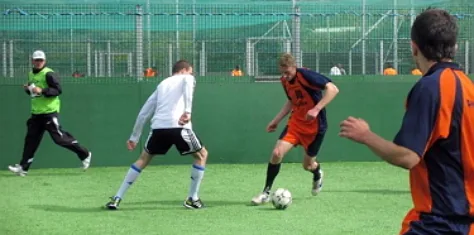
The ball almost never goes out. It comes back off the boards, so you can play a one-two with the fence. Good cage players use the side walls as a teammate.
There is no rest. Without throw-ins, goal kicks from every miss or long searches for the ball, the clock keeps running. An hour in a cage is far more running than it sounds. Our guide to whether football is good exercise covers the fitness side.
Space is tight. Cages are small, often not much more than 30 metres long, so there is little room to run into. Close control and quick passing matter more than pace. See 5-a-side pitch sizes for typical dimensions.
Shooting is about angles. Small goals and a defender never far away mean low, early shots score more often than big hits.
Common cage rules
There is no single rulebook. Each centre or league sets its own, so read the board by reception or ask before kick-off. The most common ones:
- Head height. The ball cannot go above head height, except from a goalkeeper's save. A foul gives a free kick to the other side. See the head-height rule.
- Keeper's area. Only the goalkeeper may enter the semicircle or box in front of goal; outfield players cannot score from inside it.
- Over the fence. If the ball goes over the top or out through a gap, play restarts with a kick-in from the side, or a goal kick or corner at the ends.
- No slide tackles. Banned almost everywhere in small-sided football.
- Rolling subs. You can change players at any time from the side.
Leagues add their own details, such as kick-in rather than throw-in, back-pass rules for the keeper and how long each half lasts. For the full picture, read 5-a-side rules.
Futsal is different. Futsal is played on a court with lines, not boards, and the ball does go out. If you are moving from cage football to futsal, read futsal vs 5-a-side first.
Playing safely in a cage
- The fence does not move. Do not chase a ball flat out into the corner. Slow down and turn.
- Watch your fingers. Keep hands off the mesh while the ball is near; a hard shot into the fence can catch them.
- Wear the right soles. Turf shoes or AG boots grip 3G without catching. Long metal studs are banned on most cages. See boots for 3G.
- Cover your knees. Falls on artificial grass cause friction burns. Read turf burn.
- Shin pads. Many leagues require them, and tight spaces mean plenty of contact.
Where to find one
Cages are the standard pitch at commercial 5-a-side centres, and many council leisure centres and universities have a row of them beside a full-size 3G pitch. Most are floodlit for evening games and bookable by the hour, with leagues on weeknights. These venues in our directory have caged 5-a-side pitches:
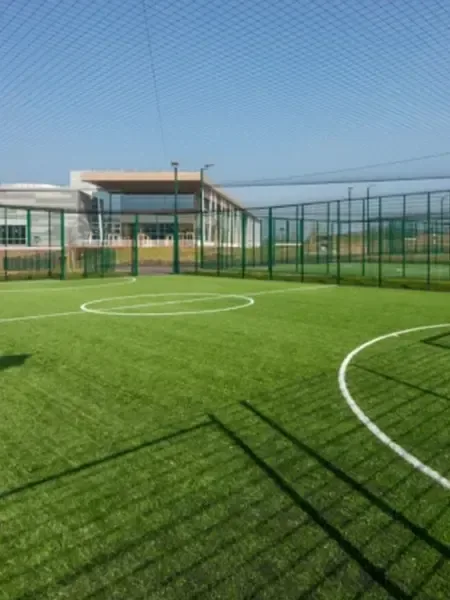
Team Warwick Sports and Wellness Hub
Coventry · Caged 5-a-side
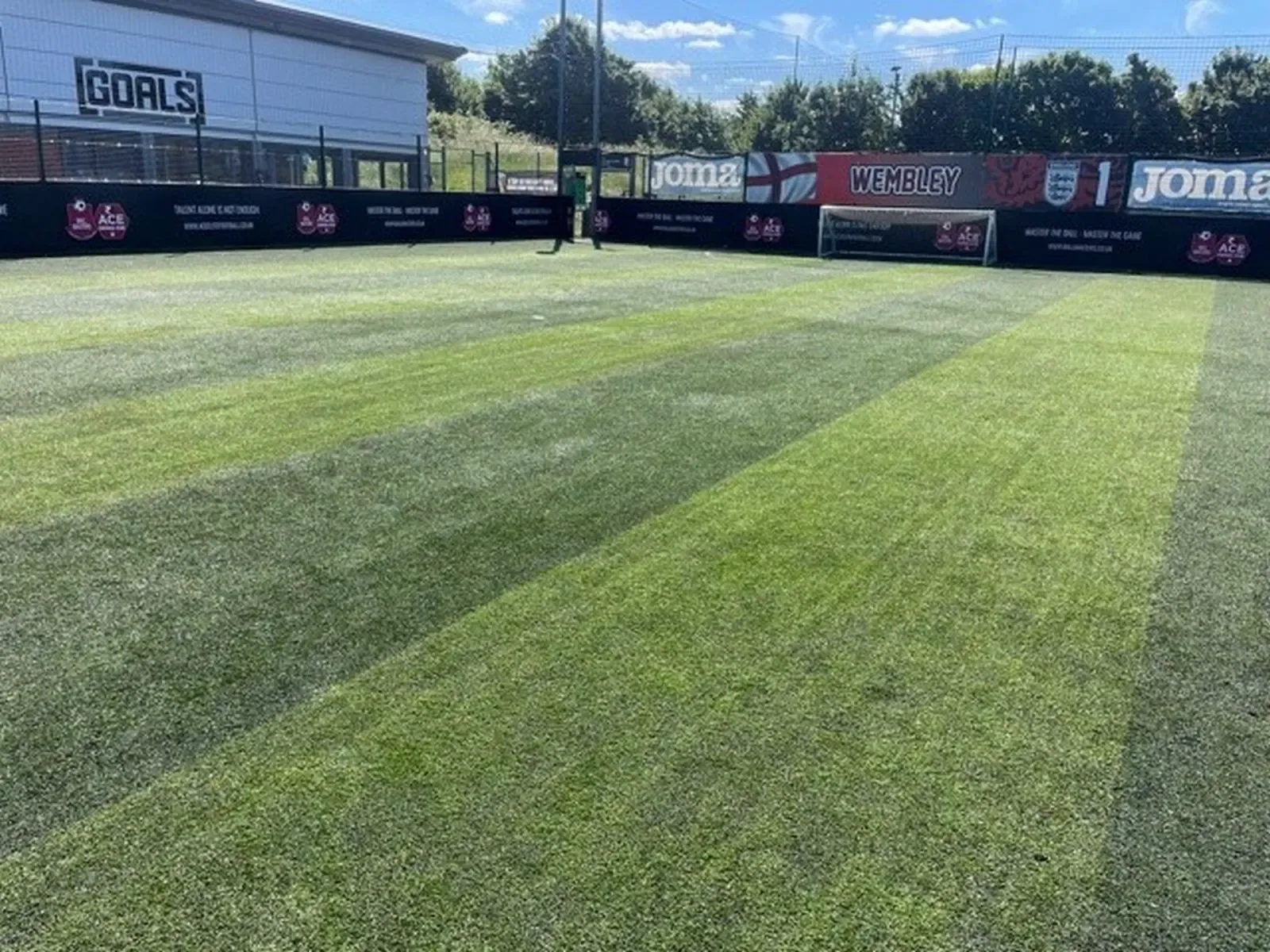
GOALS Ipswich
Ipswich · Caged pitches
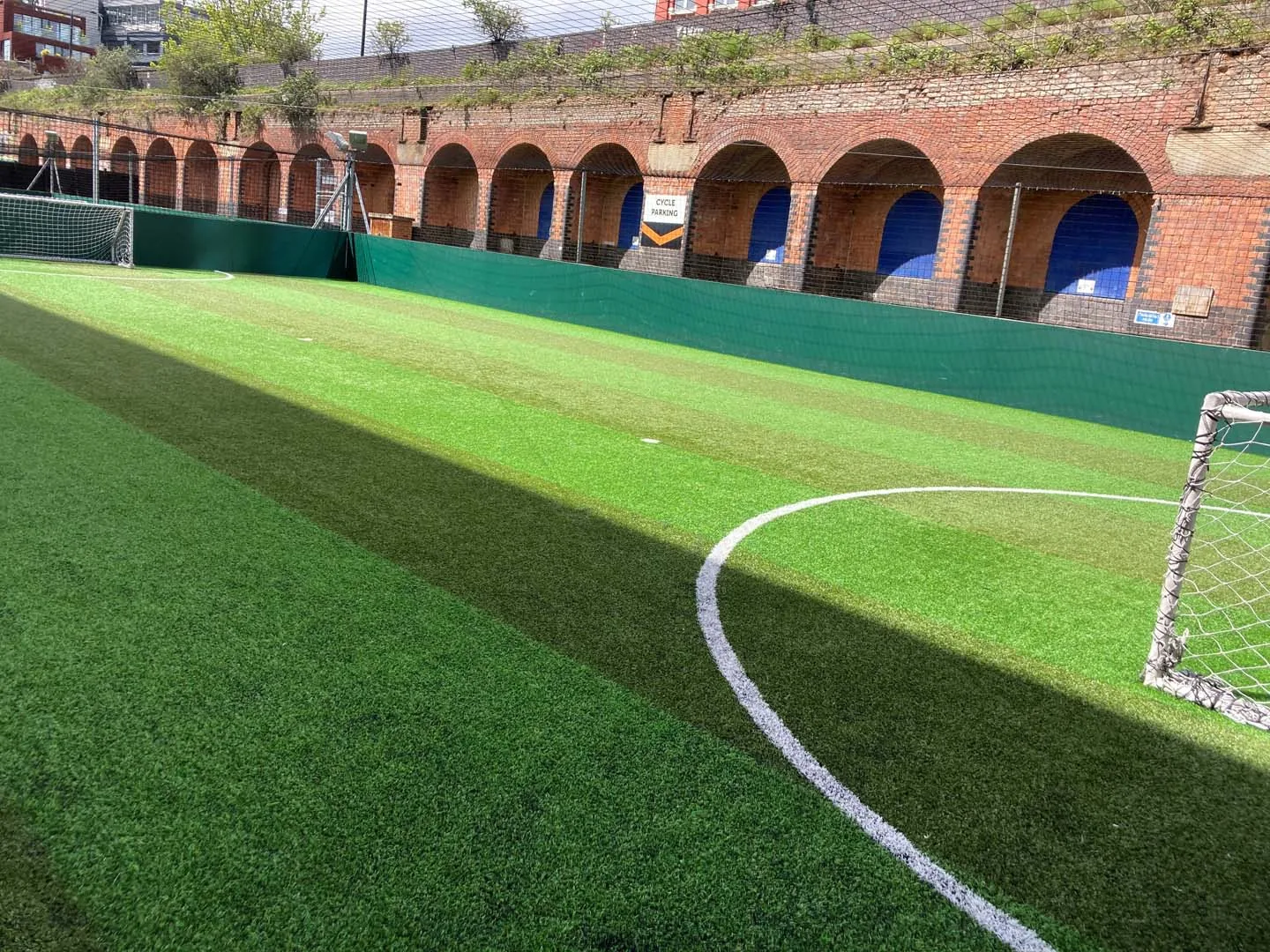
Powerleague Shoreditch
London · Under railway arches
Cities with the most 5-a-side pitches in our directory:
For what an hour in a cage costs, see how much it costs to hire a football pitch.
FAQ
What is cage football?
Small-sided football, usually 5 or 6-a-side, on an artificial pitch fully enclosed by fencing and kickboards, so the ball stays in play off the sides.
Are there throw-ins in cage football?
No. The ball rebounds off the boards. If it goes over the fence, play usually restarts with a kick-in.
What boots do you wear for cage football?
Turf shoes or AG boots for 3G cages. Most centres ban metal studs, and long screw-in studs grip too much on artificial grass.
Is cage football the same as futsal?
No. Futsal uses lines instead of walls, a smaller low-bounce ball and its own rules, and is usually played indoors on a hard court.