Is football good exercise?
 By the Find My Football Pitch team·
Updated ·
5 min read
An hour of 5-a-side feels like a game, not a workout, which is exactly why it works for so many people. Here is what football does for your body, how it fits the official activity guidelines and how to make it count.
The short answer
Yes. Football is vigorous exercise: the NHS lists it alongside rugby, netball and hockey as vigorous activity. Adults are advised to do 150 minutes of moderate or 75 minutes of vigorous activity a week, so one hour of 5-a-side plus a little extra covers the target. Football mixes jogging, sprinting, turning and kicking, so it works your heart, lungs and legs together. Its weak spots are injury risk and the upper body, which a short warm-up and some strength work help with.
How football fits the activity guidelines
The UK guidelines for adults aged 19 to 64 ask for one of these each week:
- at least 150 minutes of moderate activity, such as brisk walking or cycling, or
- 75 minutes of vigorous activity, such as running or team sports, or
- a mix of the two,
plus strengthening activities on at least two days a week. The NHS names football as a vigorous activity. That means a weekly hour of 5-a-side, with the warm-up and a few minutes either side, gets most adults close to the full weekly target on its own. Two games a week clears it with room to spare.
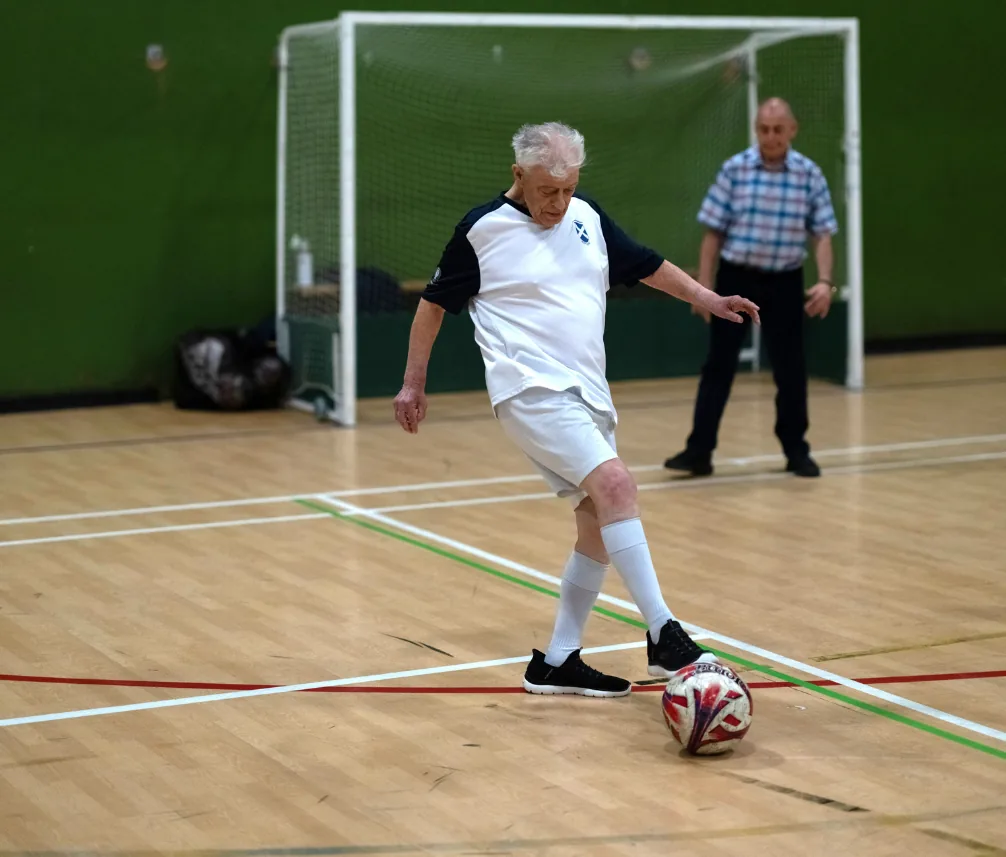
Walking football is gentler. It counts as moderate activity for most players, so you would need more of it to reach the same target. That makes it a good fit for older players or anyone coming back from injury.
What football does for your body
Football is interval training without the stopwatch. In a typical game you jog, stop, sprint, walk back into position and sprint again. That pattern is good for you in several ways:
- Heart and lungs. Repeated bursts push your heart rate high, then let it recover. Over weeks your fitness improves and the same game feels easier.
- Legs and hips. Kicking, jumping and quick changes of direction work your thighs, calves, glutes and the muscles around your hips.
- Bones. Running and jumping put load through your bones, which helps keep them strong. Swimming and cycling do much less of this.
- Balance and coordination. Controlling a ball while someone challenges you trains balance and footwork in a way a treadmill never does.
- Calories. An hour of casual football burns a little less energy than an hour of slow jogging. Our guide to calories burned playing football has figures by body weight.
There is also the part that keeps you coming back. You play with friends, at a set time, with a team relying on you. People who struggle to make themselves go to the gym often turn up every week for 5-a-side. Exercise you actually do beats a better plan you skip.
Which kind of football is the best workout
Every format counts, but they feel different:
| Format | What it is like |
|---|---|
| 5-a-side | Small pitch, constant involvement, short sprints, few chances to rest. A hard hour if you play outfield the whole time. |
| 7-a-side | More running between actions, slightly longer recoveries. |
| 11-a-side | Longer distances and more walking. Midfielders run the most. Goalkeepers do far less. |
| Futsal | Hard court, quick ball, very high intensity in short spells. Rolling substitutions let you go flat out. |
| Walking football | No running allowed. Moderate effort, low impact, very social. |
For pure fitness per minute, small-sided games and futsal usually beat 11-a-side, because you are involved all the time. For a long session outdoors, 11-a-side is hard to beat.

Where football falls short
- Injuries. Twists, tackles and sudden sprints mean ankle and knee injuries and pulled muscles are common. A proper warm-up before football cuts the risk noticeably.
- Upper body. Football does little for your chest, back and arms. Two short strength sessions a week fill the gap and also count towards the guidelines.
- Once a week is not much. If the weekly game is your only exercise, add a walk, a run or a bike ride on other days. Your body handles Monday's game better when it moves on Thursday too.
- Standing in goal. Goalkeepers in casual games often get the least exercise. Rotate.
Starting again after a break
Many people come back to football in their thirties or forties after years off. The game has not changed, but your hamstrings have. A few habits make the return smoother:
- Do two or three weeks of jogging or brisk walking before your first game, so your legs are used to running.
- Play at half pace for the first few games. Most pulled muscles in returning players happen in the first sprint.
- Wear the right footwear for the surface. See what to wear for 5-a-side.
- Expect sore legs two days after the first game. That eases within a few weeks.
If you have a heart condition, chest pain or dizziness when you exert yourself, or another long-term condition, see a doctor before you start playing again. Walking football is a good first step for many people in that position; read what walking football is.
Ready to play? Our guides to finding a football game and joining a 5-a-side league show you where to start.
FAQ
Is football good cardio?
Yes. The mix of jogging and sprinting keeps your heart rate high for long spells, and the NHS lists football as vigorous activity.
Can you get fit just by playing football?
You can get fit for football by playing it, especially two or three times a week. For all-round fitness, add some strength work for your upper body and core.
Is 5-a-side once a week enough exercise?
An hour of 5-a-side covers most of the weekly target of 75 minutes of vigorous activity. Add a short walk or run on another day, plus strength work twice a week, to meet the full guideline.
Is football good exercise for older adults?
Yes, at the right level. Walking football gives the social side and moderate exercise with far less impact on joints and much lower injury risk.