Walking football: rules and who it's for
 By the Find My Football Pitch team·
Updated ·
4 min read
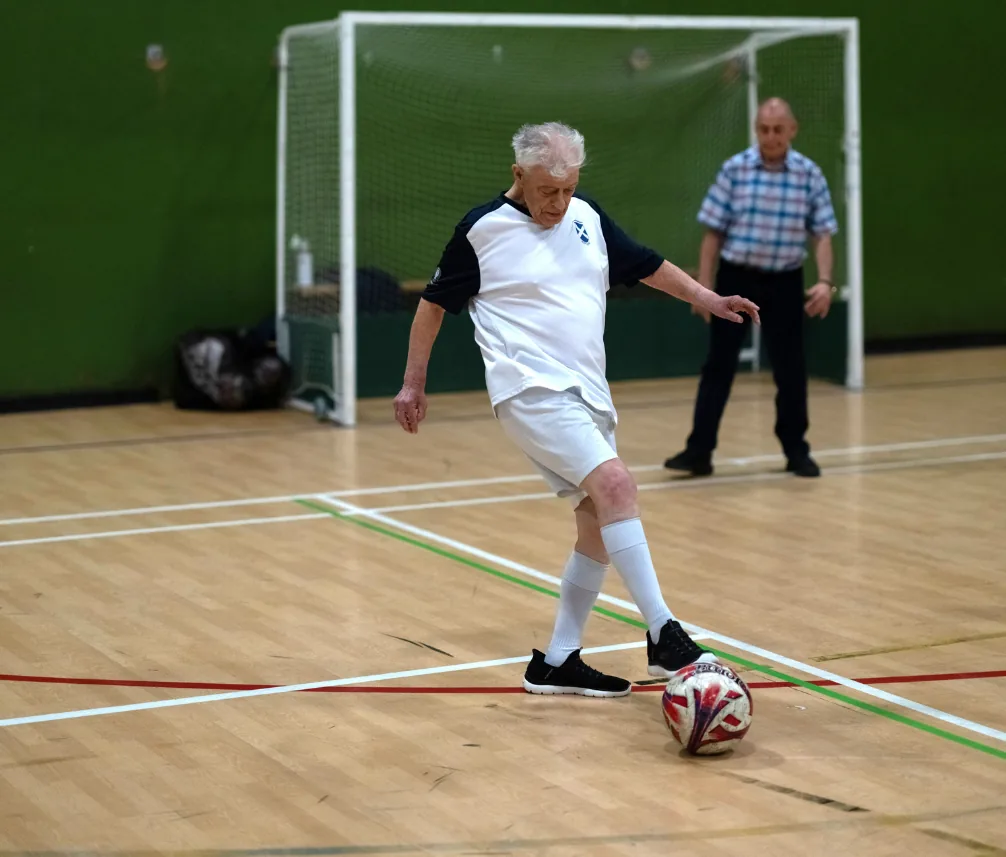
Walking football is small-sided football at a walk: no running, no contact and the ball kept low. It was set up for older players and people coming back from injury or illness, and it is now one of the fastest-growing forms of the game in the UK.
The short answer
Walking football is played five, six or seven a side on a small pitch or sports hall. You must always have one foot on the ground, so running and jogging are fouls. There is no physical contact, no slide tackling, and the ball must stay below a set height, usually crossbar or head height. Free kicks are indirect. Only the goalkeeper may enter the goal area. Most sessions are aimed at over-50s, but many welcome anyone who wants a gentler game. Sessions are cheap: at Oriam in Edinburgh walking football is £5 a session in 2026.
What walking football is
Walking football was created in 2011 at Chesterfield FC as a gentler game for older players. It spread quickly through club community trusts and leisure centres. The FA published its own Laws of Walking Football in 2017, and the Walking Football Association (WFA) runs a separate set of rules and its own competitions. Both share the same core: walk, no contact, keep the ball low.
The result is a game that is still competitive and still football, with passing, shooting and tactics, but without sprints and collisions. It is played on 3G pitches, on grass and in sports halls.
The main rules
The FA and WFA rules differ in detail. Competitions say which they follow; friendly sessions often mix the two.
| Rule | FA Laws | WFA Laws |
|---|---|---|
| Walking | At least one foot on the ground at all times | One foot in contact with the ground; both feet off only briefly while the leading leg straightens |
| Running penalty | Indirect free kick; repeat offences by a team are punished more heavily | Indirect free kick |
| Contact | None: no charging, pushing, tackling from behind or tripping | None, including shoulder charges |
| Ball height | Set by the competition, between crossbar height and 2 m | 1.83 m (head height) or crossbar height |
| Goal area | 6 m semicircle; goalkeeper only | 4 to 6 m semicircle; goalkeeper only |
| Free kicks | All indirect; opponents 3 m away | All indirect; opponents 3 m away |
| Sin bin | 2 to 5 minutes, set by the competition | 10% of the game's length |
Other rules you will meet in most games:
- No heading. The height limit makes it rare, and most sessions ban it.
- Kick-ins instead of throw-ins.
- No offside.
- No slide tackles, and no playing the ball while on the ground.
- Goalkeepers stay in their area and usually roll or throw the ball out below the height limit.
You can read the FA's announcement of its Laws of Walking Football on thefa.com.
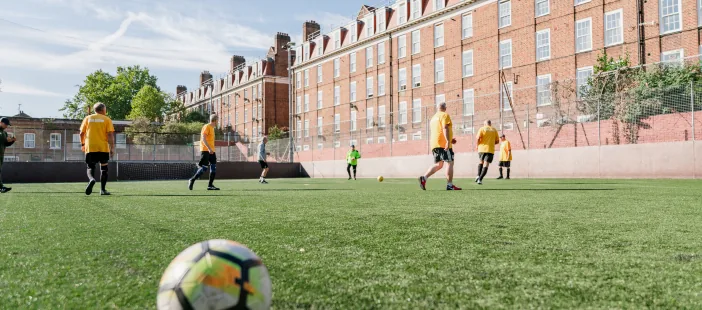
Who it is for
- Over-50s. Most sessions and leagues are aimed here. Competitions often have age groups such as over-50s, over-60s and over-65s, and there are women's walking football teams and tournaments too.
- People returning to exercise, including after injury or a long break. The game builds up fitness without the hard stops and sprints of normal football.
- People with long-term health conditions. Many sessions run with health or community programmes. If you have a heart condition, joint replacement or other medical concern, see a doctor before you start.
- Anyone who wants a slower game. Plenty of sessions are mixed-age and open to all.
The walking rule does not make it a stroll. Fast walking for an hour with lots of turns is real exercise. Our guide to whether football is good exercise covers the general picture.
What a session is like
Most turn-up-and-play sessions last about an hour. A coach or volunteer organises a gentle warm-up, then splits the group into teams for several short games. Referees, often players taking turns, watch closely for running, and the first few weeks are mostly about learning to stop yourself breaking into a jog.
Wear trainers or astro trainers on 3G and non-marking shoes indoors; see can you play on astro in trainers. Bring water and layers. Shin pads are optional at most sessions.
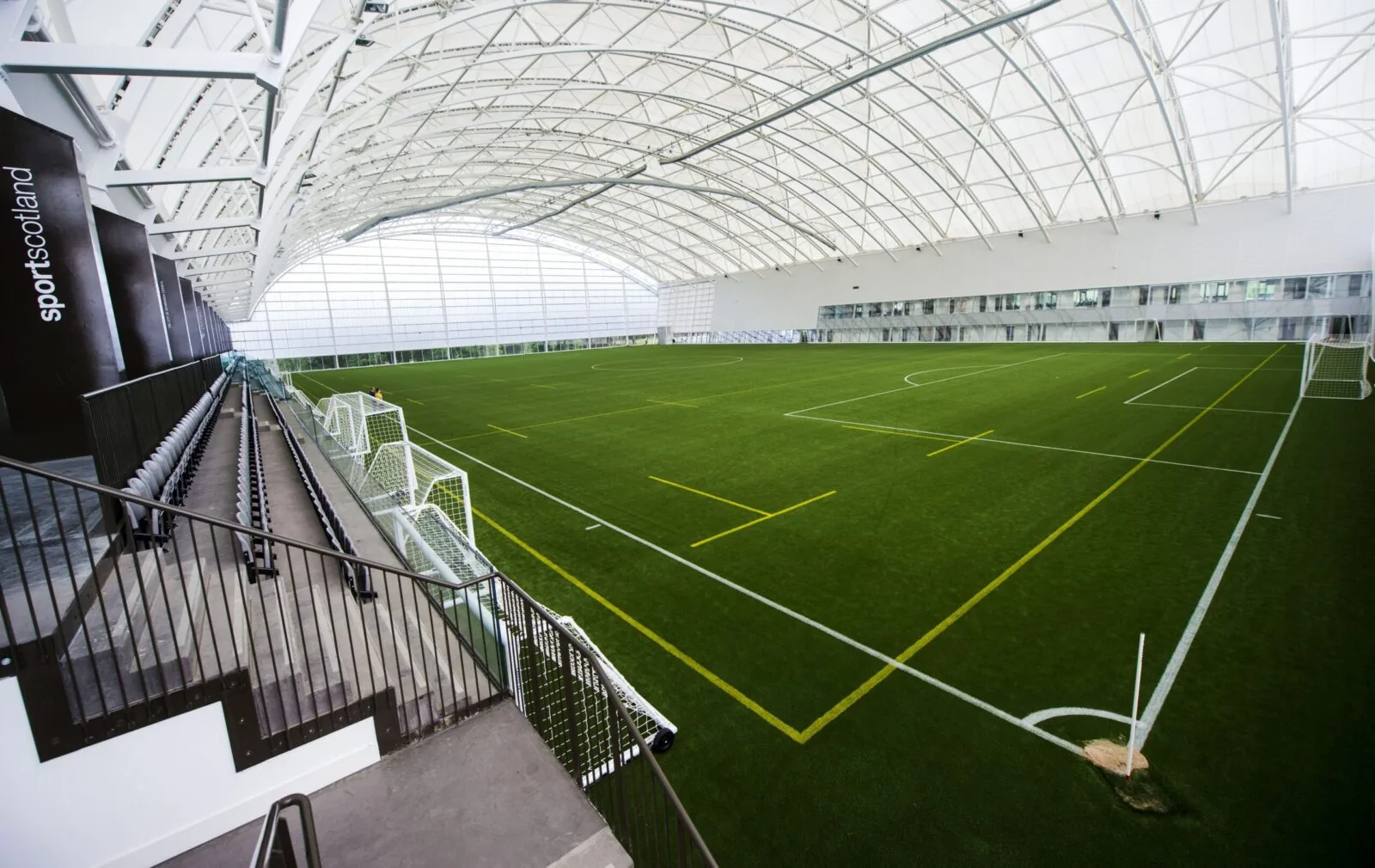
Oriam, Heriot-Watt University
Edinburgh · Walking football £5
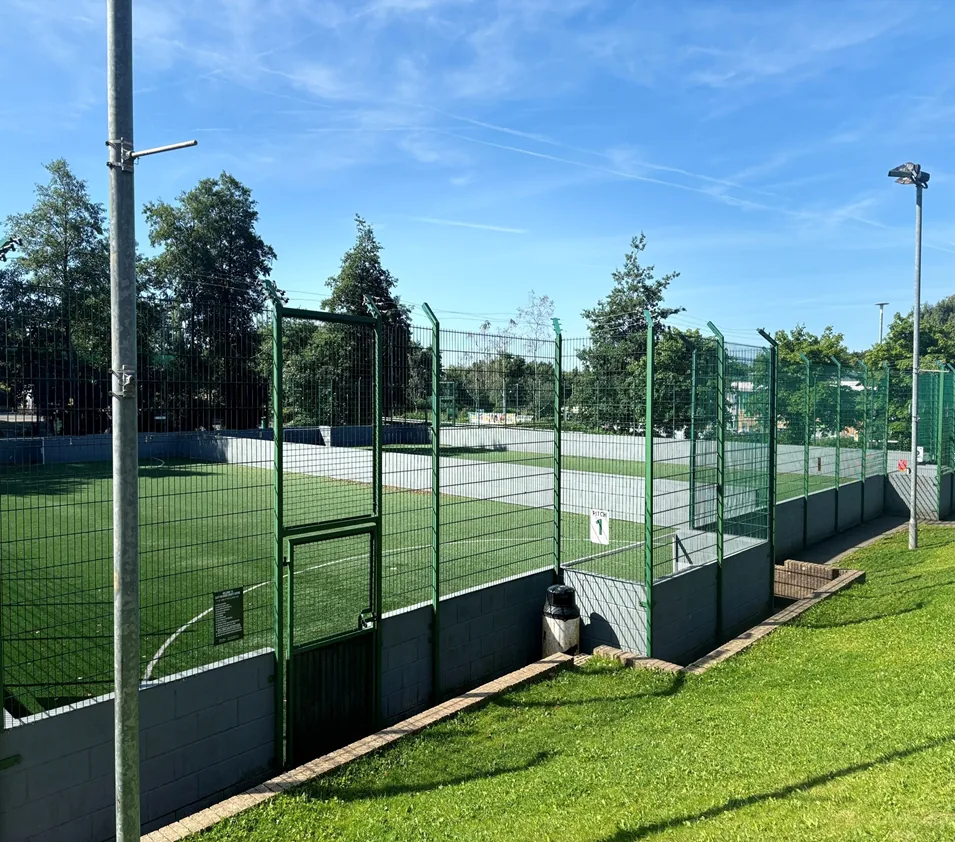
Clayton Green Sports Centre
Preston · Tuesday walking football
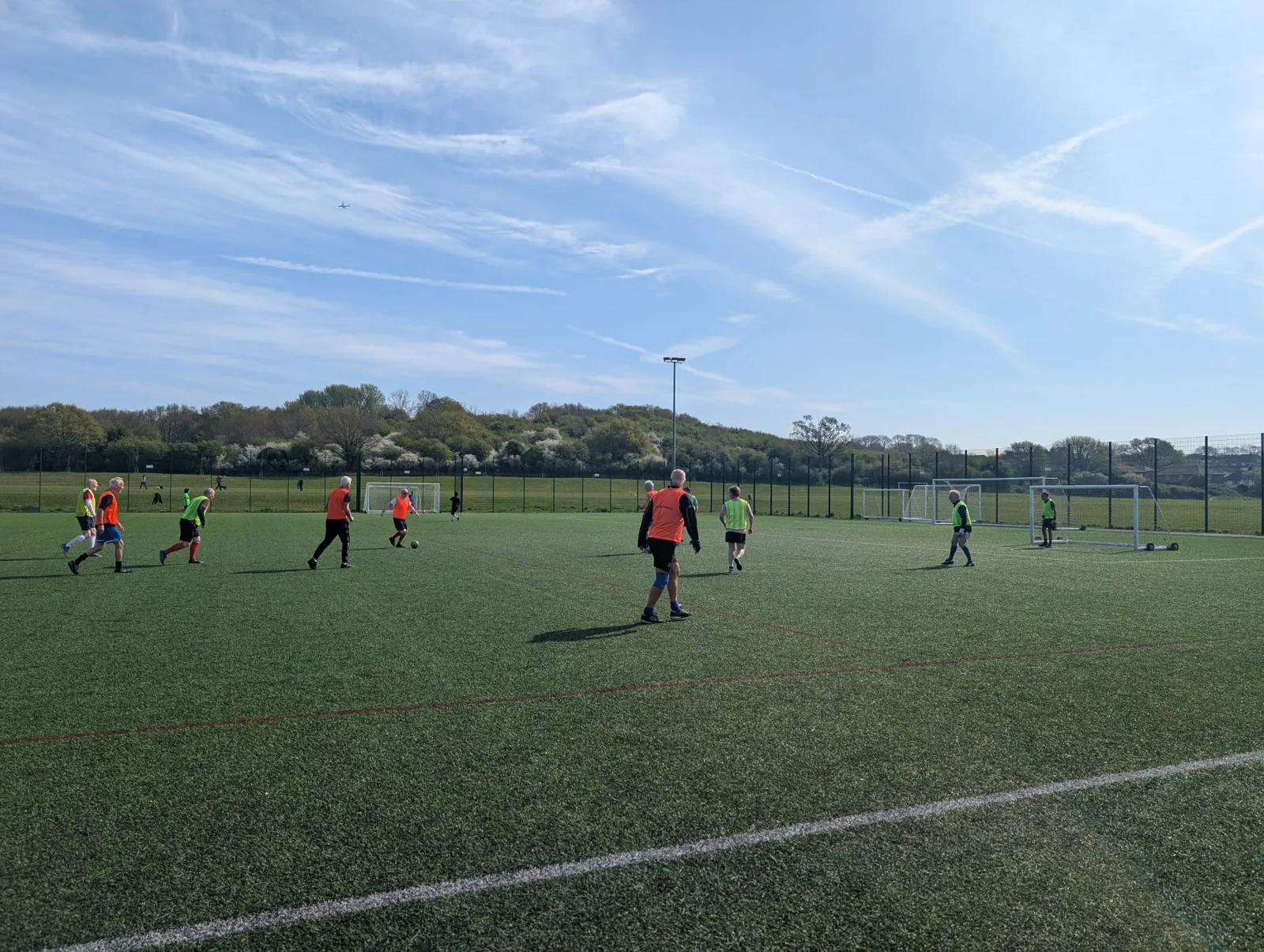
Rivermead Leisure Complex
Reading · Friday morning sessions
Finding a game
Walking football runs at leisure centres, professional club community trusts, local football clubs and church and community halls. Some examples from our directory:
- Oriam in Edinburgh, where walking football is £5.00 a session in 2026.
- Clayton Green Sports Centre in Preston, on Tuesdays.
- Rivermead Leisure Complex in Reading, on Friday mornings, on the 3G pitch.
- Sobell Leisure Centre in Islington, London, on Fridays.
- Manchester Tennis and Football Centre, with sessions for over-50s.
- UEA Sportspark in Norwich, which runs walking football alongside its leagues.
Session times change by season, so check with the venue before going. Your county FA and the WFA also list clubs and sessions. For other ways to get a game, read how to find a football game.
FAQ
What counts as running in walking football?
Having both feet off the ground at the same time. Under FA rules one foot must stay in contact with the ground at all times. Jogging counts as running.
What age do you have to be for walking football?
There is no fixed minimum for most sessions, but they are usually aimed at over-50s. Competitions set their own age groups, such as over-50s or over-60s.
Can you head the ball in walking football?
Rarely. The ball must stay below crossbar or head height, and most sessions ban heading.
Is walking football good exercise?
Yes. An hour of brisk walking with turns, passes and shots raises your heart rate and works your legs without the impact of running.