Can you play on astro in trainers?
 By the Find My Football Pitch team·
Updated ·
4 min read
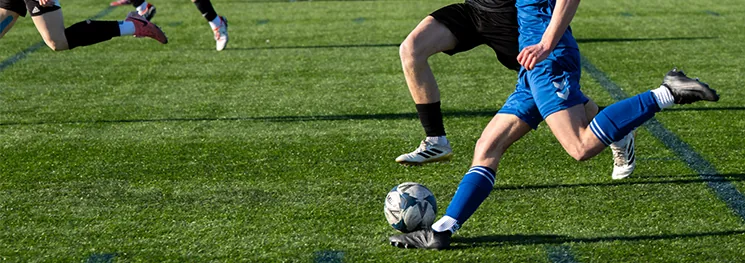
You have booked a pitch for tonight and your boots are in a loft somewhere. Trainers will usually get you on, but how well they work depends on the surface, and a few venues insist on proper footwear.
The short answer
Yes, you can play on astro in trainers at most venues. Trainers are allowed on almost every 3G and 4G pitch and are the normal choice on older sand-based astroturf. What you lose is grip: a smooth running shoe slides on rubber crumb and wet sand, so turning and stopping get harder and ankle rolls more likely. Flat-soled "astro trainers" (turf shoes, TF in shop codes) fix most of this. A few venues ask for boots on their 3G, so check the booking page first.
Trainers on 3G and on sand astro
"Astro" covers two quite different surfaces, and trainers behave differently on each.
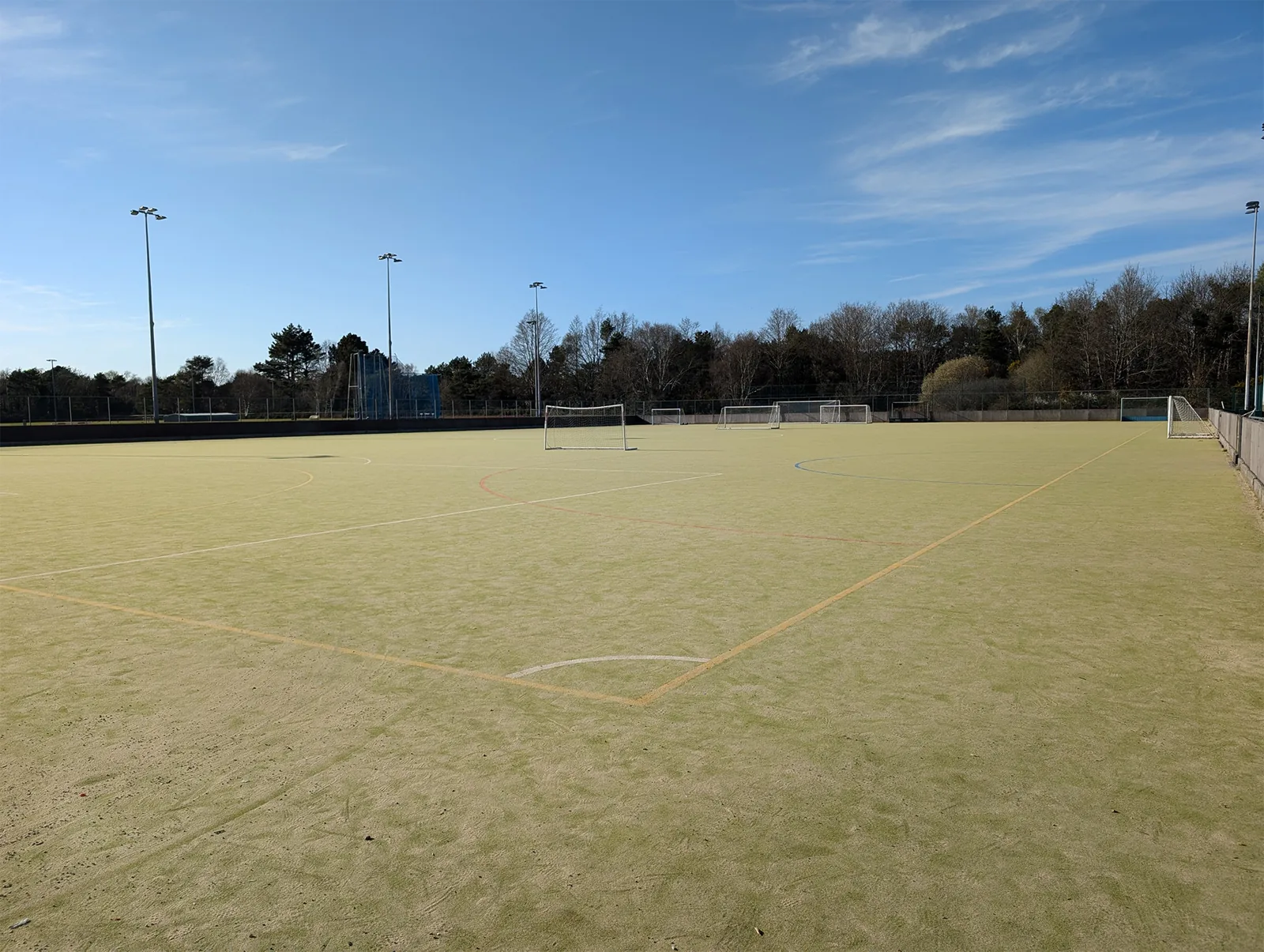
- 3G and 4G. Long synthetic fibres, often around 60 mm, filled with sand and black rubber crumb. Built for moulded boots. Trainers are allowed almost everywhere, but they sit on top of the crumb instead of biting into it, so you will feel the pitch move under you when you turn.
- Sand-based or sand-dressed astro (often called 2G). Short, stiff fibres packed with sand. This is the classic astroturf of school and leisure-centre pitches and hockey surfaces. Trainers and astro trainers are the right shoe here. Studs grip too hard and many of these pitches ban them.
Our guide to 3G and 4G explains the newer surfaces, and what is astroturf covers the older kind.
What venues allow
There is no national rule about footwear on artificial pitches. Each venue sets its own, usually to protect an expensive surface. The patterns are consistent, though:
| Footwear | 3G / 4G | Sand-based astro |
|---|---|---|
| Ordinary trainers | Usually allowed | Allowed |
| Astro trainers (TF) | Allowed | Allowed, the best choice |
| Moulded studs (FG, AG) | Allowed, the best choice | Often banned |
| Screw-in or metal studs | Banned at nearly every venue | Banned |
| Blades | Often banned | Banned |
A few examples from the venues in our directory: Melbourne Park in Chelmsford asks for astro trainers or moulded boots on its 3G. The 3G at Zara Sports Centre in Bradford asks for 3G turf boots or trainers. The King's Academy pitch in Middlesbrough is a sand-dressed surface meant for trainers. At the other end, Queensferry Sports and Community Hub near Edinburgh asks for studded footwear on its 3G, so trainers would not get you on there.
Most small-sided leagues are relaxed. Gôl Centres, for one, lists astro boots, moulded rubber boots or trainers as allowed and bans screw-in studs and blades. For more on the stud question, read can you wear metal studs on astro.
Clean your shoes at the gate. Mud from a grass pitch clogs a 3G carpet. Many venues have a boot brush or mat at the entrance and expect you to use it, whatever you are wearing.
Why ordinary trainers slip
A running shoe is designed to grip tarmac and roll forward from heel to toe. On astro you need to plant a foot and push sideways, and that is where it struggles:
- Smooth or shallow tread. Rubber crumb behaves like small ball bearings under a flat sole. On wet sand astro, a worn sole aquaplanes.
- Soft, high heel. Thick foam cushioning raises your foot and makes the shoe tip over when you cut. That is the movement that rolls ankles.
- Mesh uppers. Fine for jogging, thin when someone treads on your foot or you strike the ball with your laces.
Court shoes and old-style flat trainers are better than running shoes because they are lower and flatter. Fashion trainers with a smooth cupsole are the worst of all on a wet night.
Astro trainers: the middle option
Astro trainers, sold as turf shoes or with the code TF, look like trainers but have a sole covered in dozens of small rubber pimples. Those pimples dig a few millimetres into the crumb or sand and give far more grip than a flat sole, without the locking effect of studs.
They suit:
- sand-based and sand-dressed astro, where they are the best shoe available;
- 3G and 4G when you play 5-a-side, with lots of short turns and no long sprints;
- people who play once a week and do not want a separate pair of boots.
On a full-size 3G pitch for 11-a-side, moulded boots still give better traction. If you are choosing between sole types, AG, FG, TF or IC lays out the differences, and the best boots for 3G goes into the 3G case in more detail.
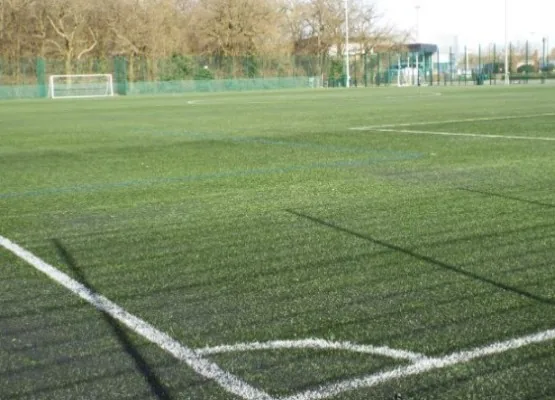
Melbourne Park 3G (Leisure Leagues)
Chelmsford · Astro trainers or moulded
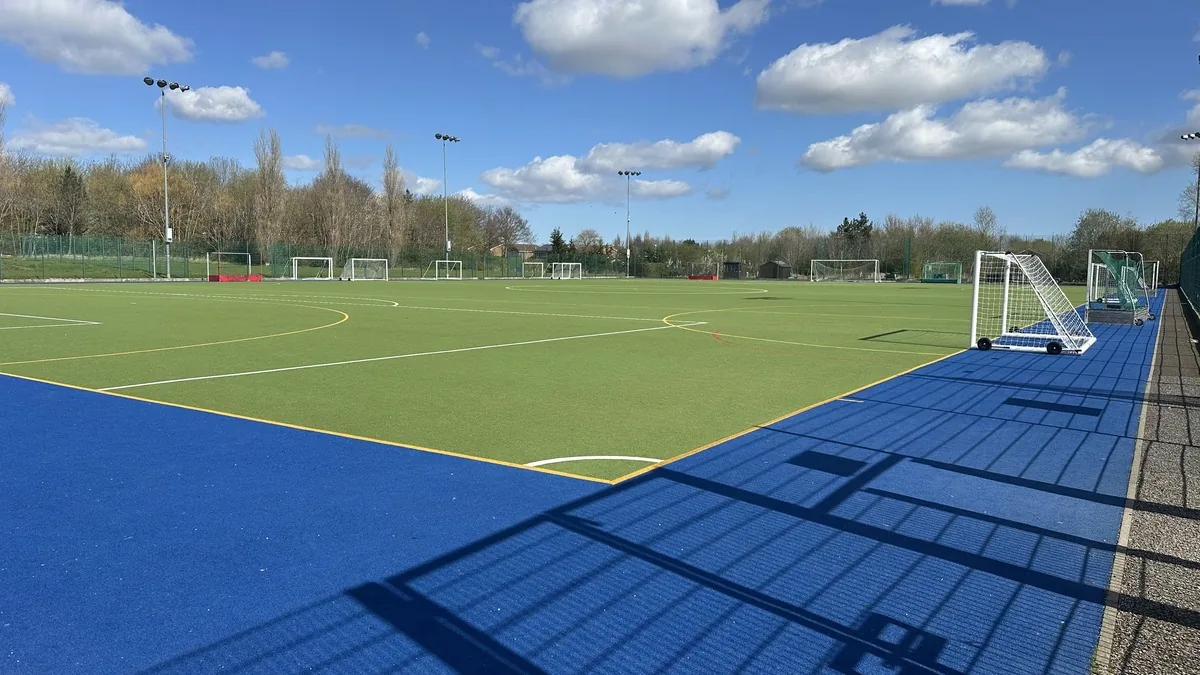
The King's Academy All Weather Pitch
Middlesbrough · Sand-dressed, for trainers
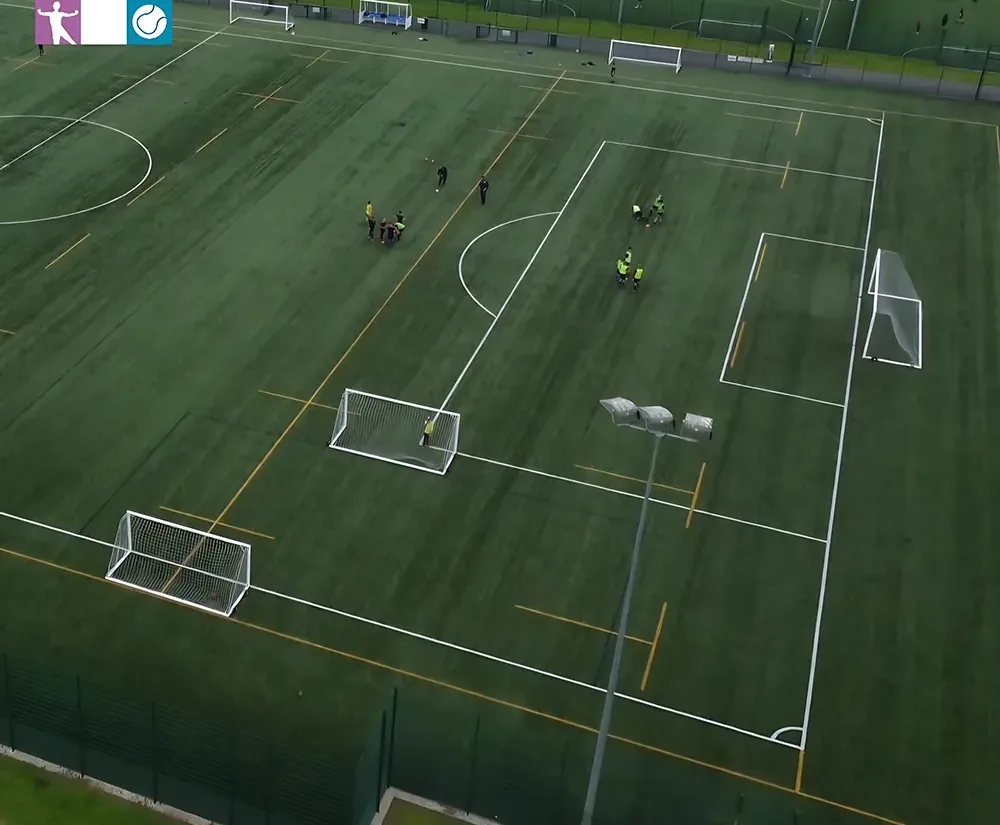
Queensferry Sports & Community Hub
Edinburgh · Studs required on 3G
Which pair to wear
- Check the venue. Look for a footwear line on the booking page. If it says "studded footwear only", trainers are out.
- Sand astro or a hard 2G pitch: astro trainers first, flat court trainers second.
- 3G or 4G for 5-a-side or 7-a-side: astro trainers or moulded boots. Ordinary trainers are fine for a casual game if the surface is dry.
- 3G for 11-a-side: moulded FG or AG boots. Read moulded studs on 3G before buying.
- Wet night, worn trainers: expect to slide. Shorten your steps and turn on the ball of your foot instead of planting hard.
If you only want to buy one pair for weekly 5-a-side across different venues, astro trainers cover the most ground. Our guide to what to wear for 5-a-side covers the rest of the kit.
Pitches with artificial grass in our directory, by city:
FAQ
Can I wear running trainers on 3G?
Usually yes, the venue will let you on. Expect less grip than boots or astro trainers, especially when the pitch is wet, and be careful when you turn sharply.
Are astro trainers the same as indoor shoes?
No. Astro trainers (TF) have a pimpled rubber sole for artificial grass. Indoor shoes (IC) have a flat gum rubber sole for sports hall floors and slide around on astro.
Do trainers damage astroturf?
No. Trainers are among the gentlest shoes for an artificial surface. Venues ban screw-in and metal studs because those cut the fibres and backing.
Can kids wear trainers to football on astro?
Yes, and many junior sessions on 3G or sand astro expect trainers or astro trainers. Check the session details, as some clubs ask for moulded boots.