Do you need shin pads for 5-a-side?
 By the Find My Football Pitch team·
Updated ·
4 min read
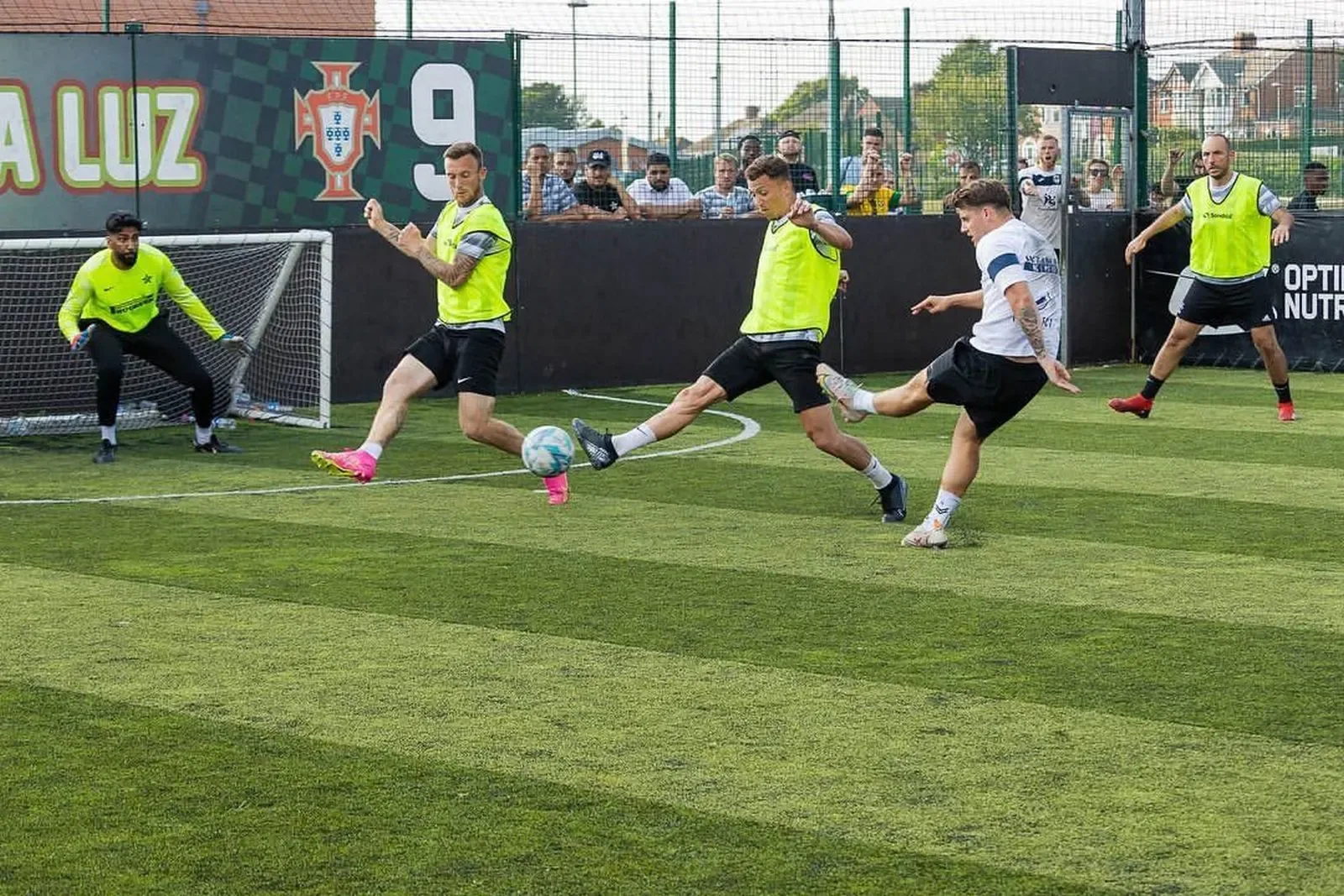
Plenty of people play 5-a-side every week without shin pads and never think about it. Then someone mistimes a block in a cage and you spend a fortnight limping. Whether you need them comes down to two things: your league's rules and how much you value your shins.
The short answer
For a casual 5-a-side booking, no one will check, and many players go without. In organised leagues it varies. Some small-sided leagues, such as Gôl Centres, require shin pads for every player, including the goalkeeper. Others only recommend them. In 11-a-side and futsal the Laws of the Game make shin guards compulsory. Even where they are optional, a light pair is worth wearing: most 5-a-side knocks are blocked shots and studs-on-shin tackles at close range, exactly what pads are for.
What the rules say
There is no single rulebook for 5-a-side. Each league operator or venue writes its own, usually on top of a few borrowed Laws of the Game.
| Type of game | Shin pads |
|---|---|
| 11-a-side (IFAB Laws of the Game) | Compulsory, covered by socks |
| Futsal (Futsal Laws of the Game) | Compulsory |
| Affiliated youth and small-sided competitions | Usually compulsory |
| Commercial 5-a-side leagues | Depends on the operator: some require them, others recommend them |
| Casual pitch hire, kickabouts | Up to you |
Law 4 of the IFAB Laws of the Game lists shin guards as compulsory equipment. They must be made of a suitable material that gives reasonable protection and be covered by the socks. Small-sided leagues that follow the Laws closely, and any competition affiliated to a county FA, tend to copy that rule.
If you are joining a league, read its rules page or ask the organiser before your first game. A referee who enforces the rule can keep you off until you have pads, and spare pairs at the venue are not guaranteed. Our guide to joining a 5-a-side league covers what else to ask.
Why 5-a-side is hard on shins
People assume 5-a-side is gentler than 11-a-side. Tackles are softer and slide tackles are banned in most leagues. But the small pitch changes the type of knock you take:
- Blocked shots at close range. Shots are struck from a few metres. Blocking one with your shin hurts with or without studs involved.
- Two feet on the ball. In tight spaces two players often strike the ball at the same moment. The follow-through lands on the other player's shin.
- Boards and walls. In a cage the ball and players end up against the kickboards, with legs tangled.
- Mixed footwear. One player in trainers, another in moulded studs. Studs raked down an unprotected shin leave cuts that take weeks to heal.
The shin bone sits just under the skin with almost no muscle over it. A bruise there is painful and slow to settle, and a cut can get infected easily on artificial grass.
Types of shin pad
- Slip-in pads. A thin shell you slide into your sock or a compression sleeve. Light and barely noticeable. The best choice for most 5-a-side players.
- Pads with ankle guards. A sock-style sleeve with padding over the ankle bones. More protection, more bulk, and hotter. Common for children and for players who get kicked on the ankle a lot.
- Strap pads. A shell held on with Velcro straps. Easy on and off, and they stay in place without a sleeve.
- Mini pads. Very small pads, popular with professionals. They meet the letter of the Laws but cover little, so they protect less than a full-length pad.
Shell materials range from plain plastic to fibreglass and carbon fibre. For 5-a-side, a light plastic or fibreglass pad with foam backing is plenty.
Size matters. A pad should cover from about two finger widths above the ankle to a few centimetres below the knee. Too long and it digs into your ankle when you flex your foot. Most makers sell by height.

Rocks Lane Chiswick
London · 5-a-side leagues
Active+ Hull
Hull · League matches

Gôl Centres Cardiff
Cardiff · 5 and 7-a-side leagues
How to wear them
- Pull on a compression sleeve or a thin sock first, if you use one.
- Slide the pad in with the curve facing your shin and the narrow end at the bottom.
- Pull your football sock up over it. If it slips, add a strip of shin pad tape or a short sleeve on top.
- Run on the spot. If the pad moves more than a centimetre, it is the wrong size or needs a sleeve.
Wash the foam backing after every few games. Sweat soaks in and it starts to smell quickly.
Shin pads are one part of the kit list. Our guide to what to wear for 5-a-side covers footwear and clothing, and 5-a-side rules explains the tackle and contact rules that decide how many knocks you take.
FAQ
Do you need shin pads for Powerleague or GOALS?
It depends on the competition and changes over time, so check the rules on the league page or ask at reception. Casual bookings are not checked.
Do goalkeepers need shin pads in 5-a-side?
Where a league requires pads, the rule usually covers goalkeepers too. Gôl Centres, for example, names goalkeepers in its shin pad rule.
Are shin pads compulsory in futsal?
Yes. The Futsal Laws of the Game list shin guards as compulsory equipment, as in 11-a-side.
Can I wear shin pads with trainers?
Yes. Shin pads go under your socks and work with any shoe, including trainers and astro trainers.