What size football for each age?
 By the Find My Football Pitch team·
Updated ·
4 min read
Footballs come in five sizes, and the right one for a child depends on their age group and the format they play. In England the FA changed the age bands from the 2026/27 season, so older charts online are now out of date.
The short answer
In England from the 2026/27 season, the FA's FutureFit plan uses a size 3 ball from Under 7 to Under 11 (3v3, 5v5 and 7v7), a size 4 for Under 12 and Under 13 (9v9) and a size 5 from Under 14 to adult (11v11). In Australia, MiniRoos usually plays its smaller formats with a size 3 and 9v9 (Under 10 and 11) with a size 4. Adults play with a size 5, and futsal uses its own heavier size 4.
Ball sizes by age in England
The FA's FutureFit changes to youth football come in from the 2026/27 season. They push smaller formats and smaller balls up into older age groups. Primary school children all use a size 3; the size 4 is for the first two years of secondary school.
| Age group | School year | Format | Ball from 2026/27 |
|---|---|---|---|
| Under 7 to Under 10 | Years 2 to 5 | 3v3, 5v5, 7v7 | Size 3 |
| Under 11 | Year 6 | 7v7 | Size 3 |
| Under 12, Under 13 | Years 7 and 8 | 9v9 | Size 4 |
| Under 14 | Year 9 | 11v11 | Size 5 |
| Under 15 and older | Year 10 up | 11v11 | Size 5 |
Under 6 and younger children usually play with a size 3 or a light size 2 in sessions, since there are no matches at that age. Your club or league will confirm what it uses; leagues that have not switched formats yet may still play the older bands this season.
The formats also set pitch and goal sizes. See youth football pitch sizes for those.
Australia, Ireland and elsewhere
- Australia. MiniRoos club football runs 4v4 at Under 6 and 7, 7v7 at Under 8 and 9 and 9v9 at Under 10 and 11. Association rules we have seen use a size 3 for 4v4 and 7v7 and a size 4 for 9v9, but each association sets its own, so check your local rules.
- Ireland, Scotland, Wales, New Zealand and Canada. The pattern is similar: size 3 for the youngest small-sided games, size 4 in the late primary and early secondary years, size 5 by the mid teens. The exact cut-off ages vary by association and league, so ask the club.
Across all of these, adults play with a size 5, women's football included. Unlike basketball, there is no smaller ball for the women's game.
What each size measures
Law 2 of the IFAB Laws of the Game sets the size 5 at 68 to 70 cm round and 410 to 450 g. The smaller sizes follow industry standards, so the figures below are typical rather than exact.
| Size | Circumference | Typical use |
|---|---|---|
| Size 1 | About 43 to 46 cm | Skills and keepy-up balls, souvenirs |
| Size 2 | About 51 to 53 cm | Toddlers, under 5s, skills training |
| Size 3 | About 58 to 61 cm | Primary-age matches and training |
| Size 4 | About 63.5 to 66 cm | Early secondary age, some indoor games |
| Size 5 | 68 to 70 cm | Teenagers and adults, 5-a-side and 11-a-side |
Why the size matters
A ball that is too big and heavy for a child is hard to control, hard to kick far and more tiring to play with. Smaller balls mean more touches, more successful passes and more confidence. That is the reasoning behind keeping the size 3 until the end of primary school.
Heading is part of it too. The FA has limited heading in youth football and in training, and a lighter ball is part of reducing the load on young heads. Our guide to heading rules covers the current guidance.
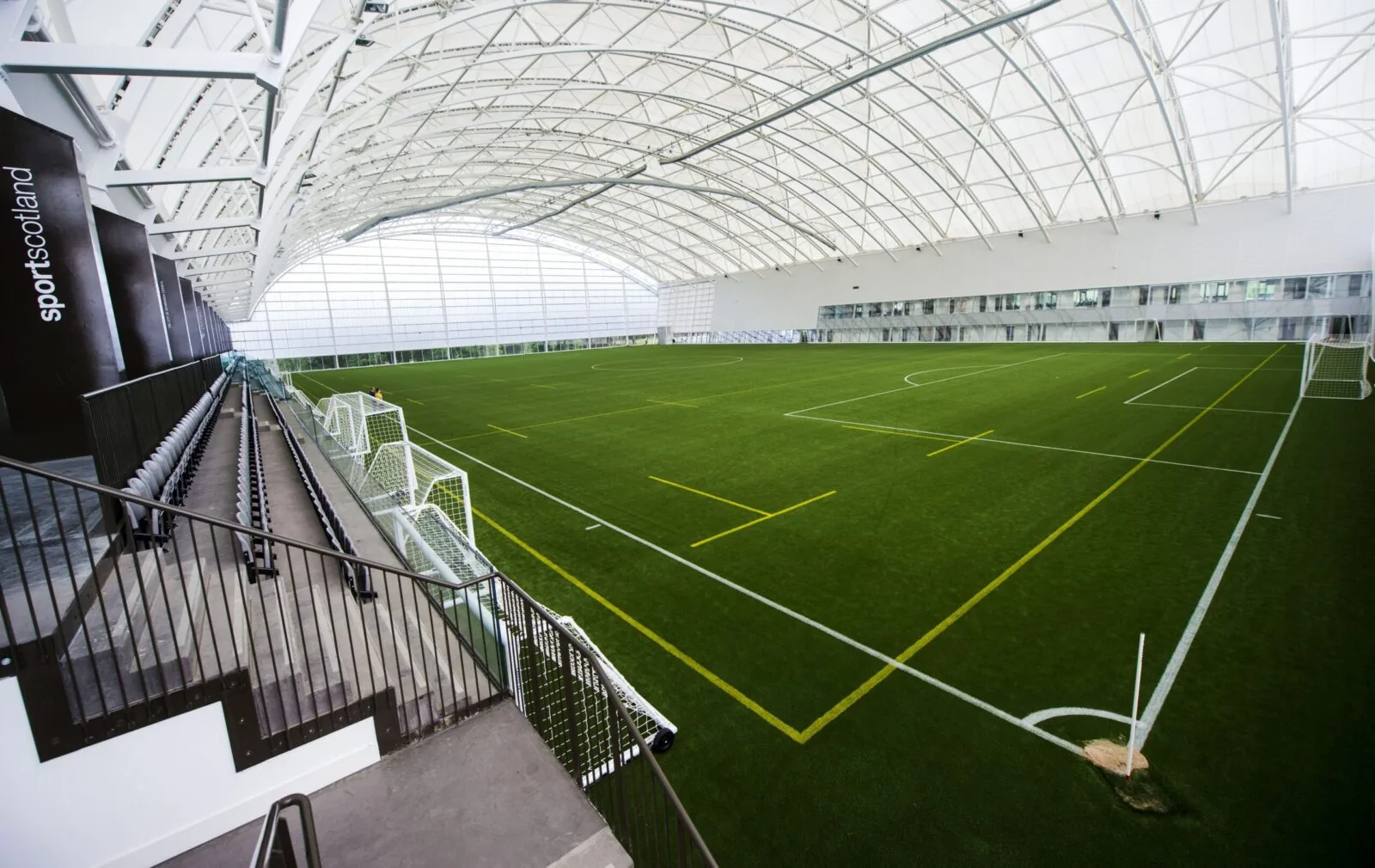
Oriam, Heriot-Watt University
Edinburgh · Junior classes
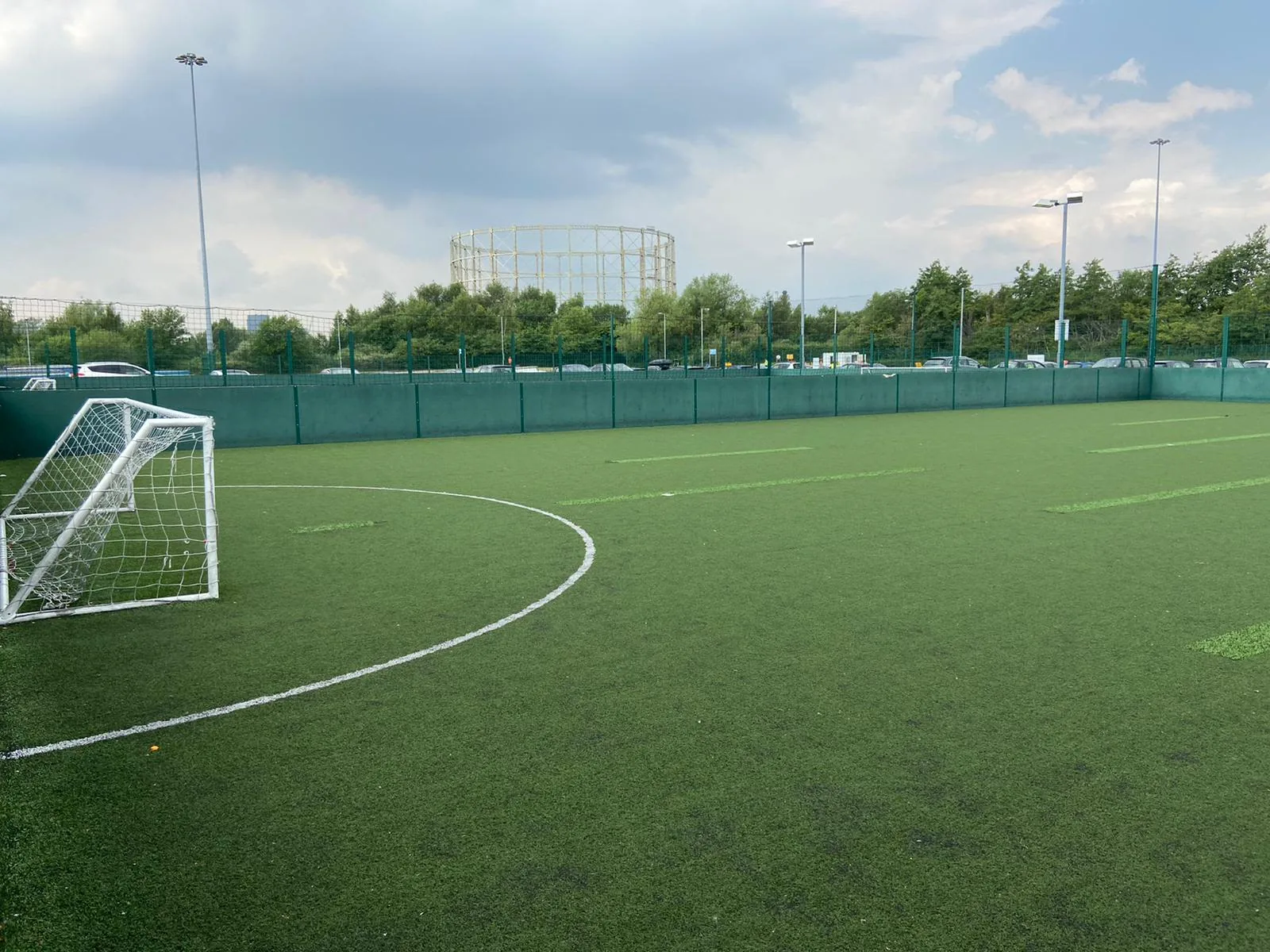
Manchester Tennis and Football Centre
Manchester · Kids football
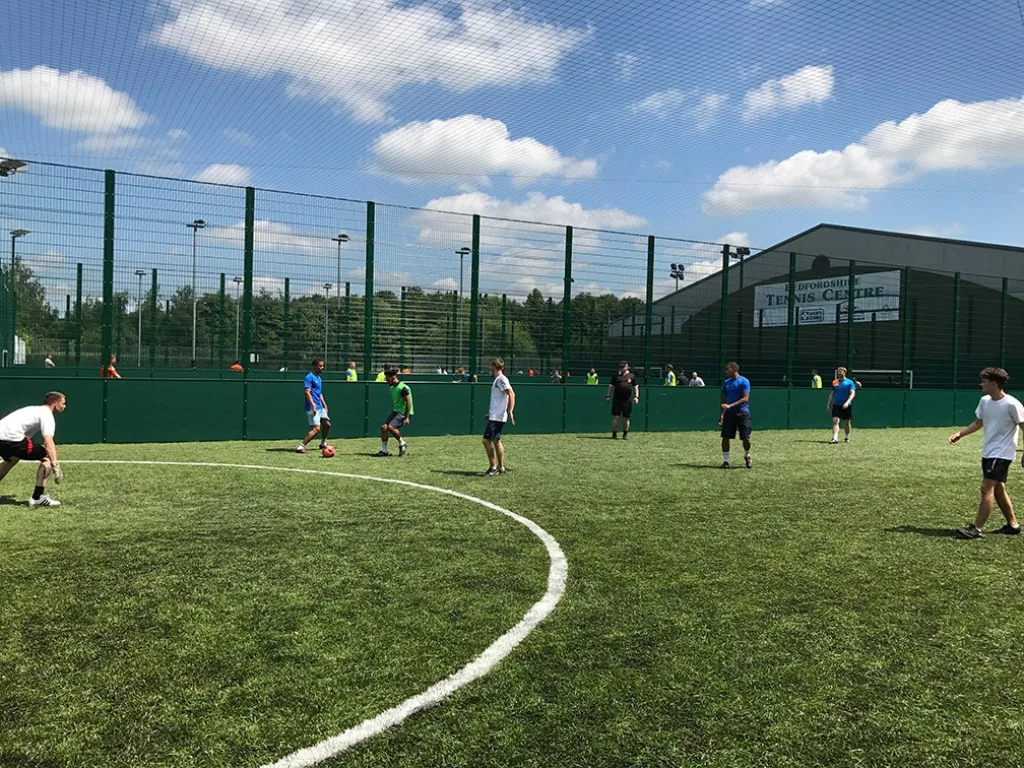
Venue 360
Luton · Kids football
Futsal balls
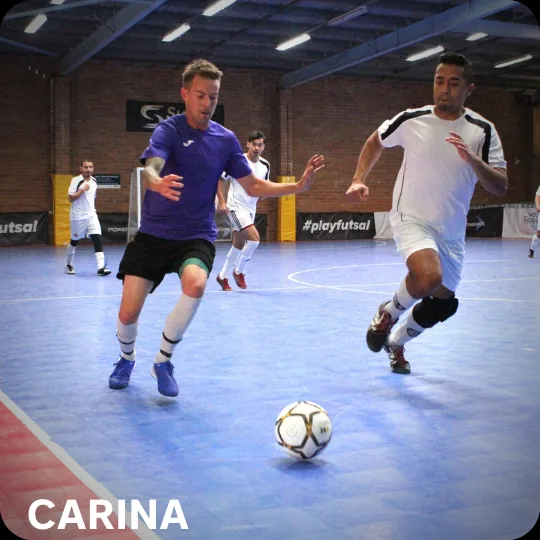
Futsal uses its own ball. The adult futsal ball is called a size 4 but is not the same as an outdoor size 4: it measures 62 to 64 cm round, weighs 400 to 440 g and is built to bounce low. Dropped from 2 m, its first bounce must be between 50 and 65 cm. An outdoor size 5 bounces far too much on a sports hall floor, which is why indoor sessions often use a futsal ball. Read futsal rules for the rest of the differences.
Buying the right ball
- Check the panel. The size is printed on the ball, usually near the valve.
- Match the surface. Training balls for 3G and astro have tougher covers. Indoor play suits a futsal or low-bounce ball.
- Pump it properly. The recommended pressure is printed by the valve. An over-pumped ball stings and bounces wildly; an under-pumped one is dead.
- Buy for the season ahead. If your child moves up an age group in September, check which size the new format uses before buying.
Cities in our directory with the most venues running kids' football:
FAQ
What size football does a 10-year-old need?
In England a size 3, which from 2026/27 is used up to Under 11. In Australia a 10-year-old in MiniRoos plays with a size 4.
What size football is used in 5-a-side?
Adult 5-a-side uses a size 5. Some indoor and futsal-style leagues use a size 4 futsal ball instead.
When do kids start using a size 5 football?
In England from Under 14 under the FA changes for 2026/27.
Is a size 4 football the same as a futsal ball?
No. A futsal ball is about the same size as a size 4 but heavier and filled to bounce much less.