7-a-side rules
 By the Find My Football Pitch team·
Updated ·
3 min read
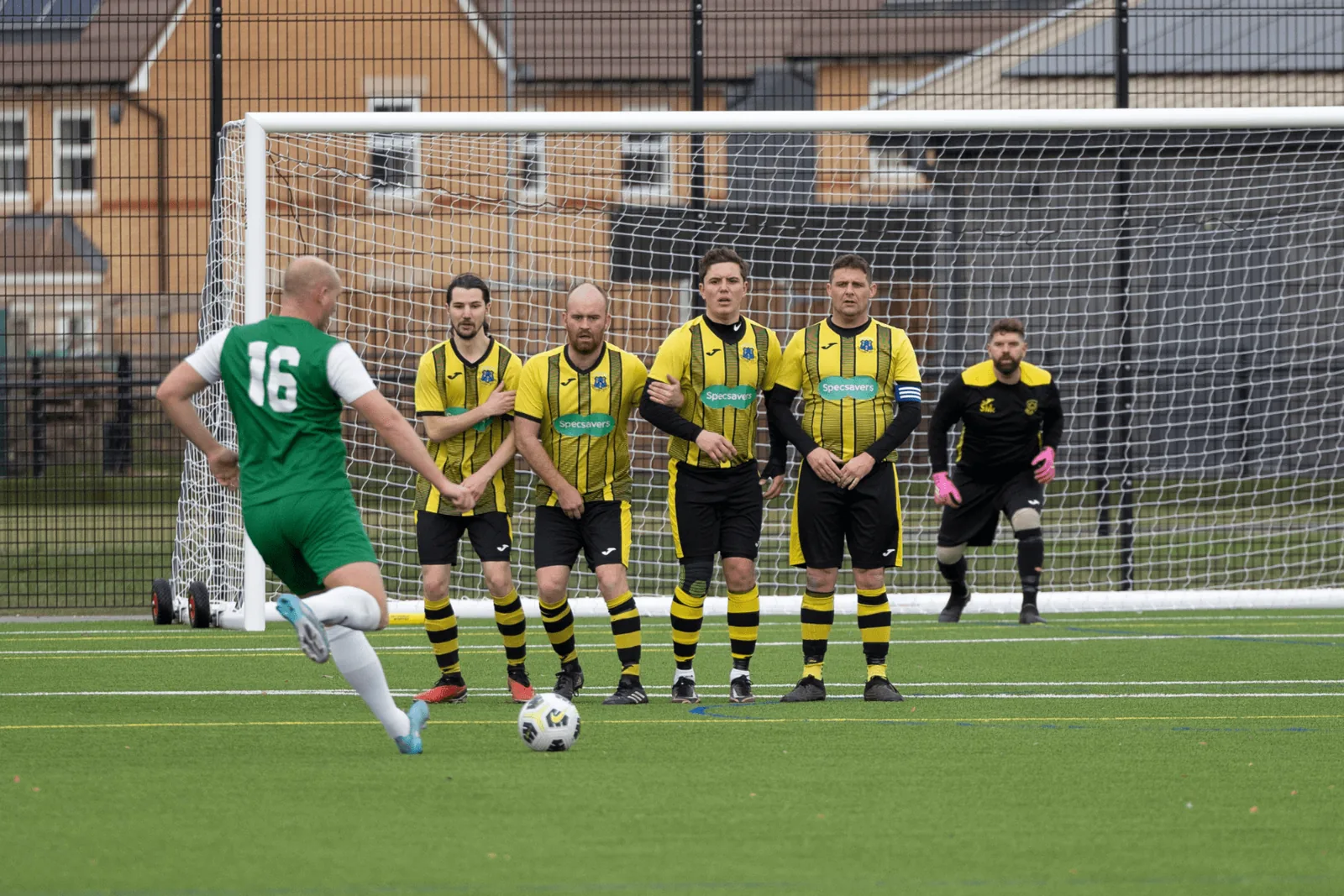
7-a-side sits between 5-a-side and the full game. The pitch is bigger, the goals are bigger and the rules are closer to 11-a-side. Adult leagues write their own versions, and youth 7v7 follows the FA's mini-soccer rules, so here are both.
The short answer
Each team has seven players including a goalkeeper, with rolling substitutes. Adult 7-a-side leagues usually play without offside, allow heading with no height limit, use throw-ins or kick-ins, and let the keeper handle anywhere in the penalty area. Slide tackles are often banned. Free kicks are direct or indirect as in 11-a-side, with defenders 5 m back. Youth 7v7 in England follows FA rules: no offside, a retreat line on goal kicks and a size 3 ball. Games last 40 to 50 minutes in most adult leagues.
The basics
- Players. Seven a side, one a goalkeeper. A team usually needs at least five to start or carry on.
- Substitutes. Rolling and unlimited, usually with three or so on the bench.
- Pitch. Much bigger than a 5-a-side cage. A typical 7-a-side pitch is around 50 to 60 m long and 30 to 40 m wide, often a third of a full-size 3G pitch. See 7-a-side pitch size.
- Goals. Usually 12 by 6 feet (3.66 by 1.83 m) for youth 7v7. Adult venues use 12 by 6 or 16 by 7 feet.
- Ball. Size 5 for adults, size 3 for youth 7v7 in England.
- Offside. Not used in most adult 7-a-side leagues or in FA youth 7v7.
How it differs from 5-a-side
| Rule | 5-a-side | 7-a-side |
|---|---|---|
| Pitch | Small, often caged with kickboards | Larger, usually open with lines and fencing |
| Goalkeeper area | Small D; outfield players banned from entering | Penalty box; players can enter as in 11-a-side |
| Head height | Often limited | Usually no limit; heading allowed |
| Ball out of play | Rare; kick-ins or keeper restarts | Throw-ins or kick-ins, corners, goal kicks |
| Free kick distance | About 2 to 3 m | About 5 m |
| Fitness | Short sprints, constant involvement | Longer runs, more space to cover |
Gôl Centres, one league operator, sums up the difference neatly in its rules: heading is banned in its 5-a-side games, while in 7-a-side there is no height restriction and players can head the ball. Defenders stand 5 m from a free kick instead of 2 m. For the smaller game, see 5-a-side rules.
Typical adult league rules
- Penalty area. Marked as a box or D. The goalkeeper can handle anywhere inside it. Attackers and defenders can go in.
- Back pass. Most leagues follow the 11-a-side rule: the keeper cannot pick up a deliberate pass from a teammate's foot.
- Restarts. Throw-ins in most leagues, kick-ins in some. Goal kicks and corners as normal. Some leagues ban the keeper from kicking out of their hands or launching it over halfway.
- Tackles. Standing tackles are fine. Many leagues ban slide tackles on artificial grass; some allow them on grass.
- Cards. Yellow cards, or a timed sin bin. Red cards as in 11-a-side, with the player not replaced.
- Match length. Usually two halves of 20 to 25 minutes. Casual bookings run the hour.
Youth 7v7 rules in England
7v7 is the main format for primary-age football. Under the FA's FutureFit changes from 2026/27 it is the format for Under 10 and Under 11. The FA sets the core rules for affiliated youth matches:
- No offside.
- Retreat line. At a goal kick or other restart from the goal line, the other team drops back into its own half until the ball is in play. It gives teams a chance to play out from the back.
- Rolling substitutions. Everyone is expected to get game time.
- No heading. A deliberate header is penalised. See heading rules.
- Sideline restarts. Under 10s pass or dribble the ball in instead of a throw-in; Under 11s take throw-ins.
- Up to 50 minutes. That is the maximum match length.
- Size 3 ball. See football size by age.
- Pitch and goals. The FA recommends 55 x 37 m with 12 x 6 ft goals. See youth football pitch sizes.
Leagues add their own rules on things like touchline behaviour, so check your county FA and league handbook.
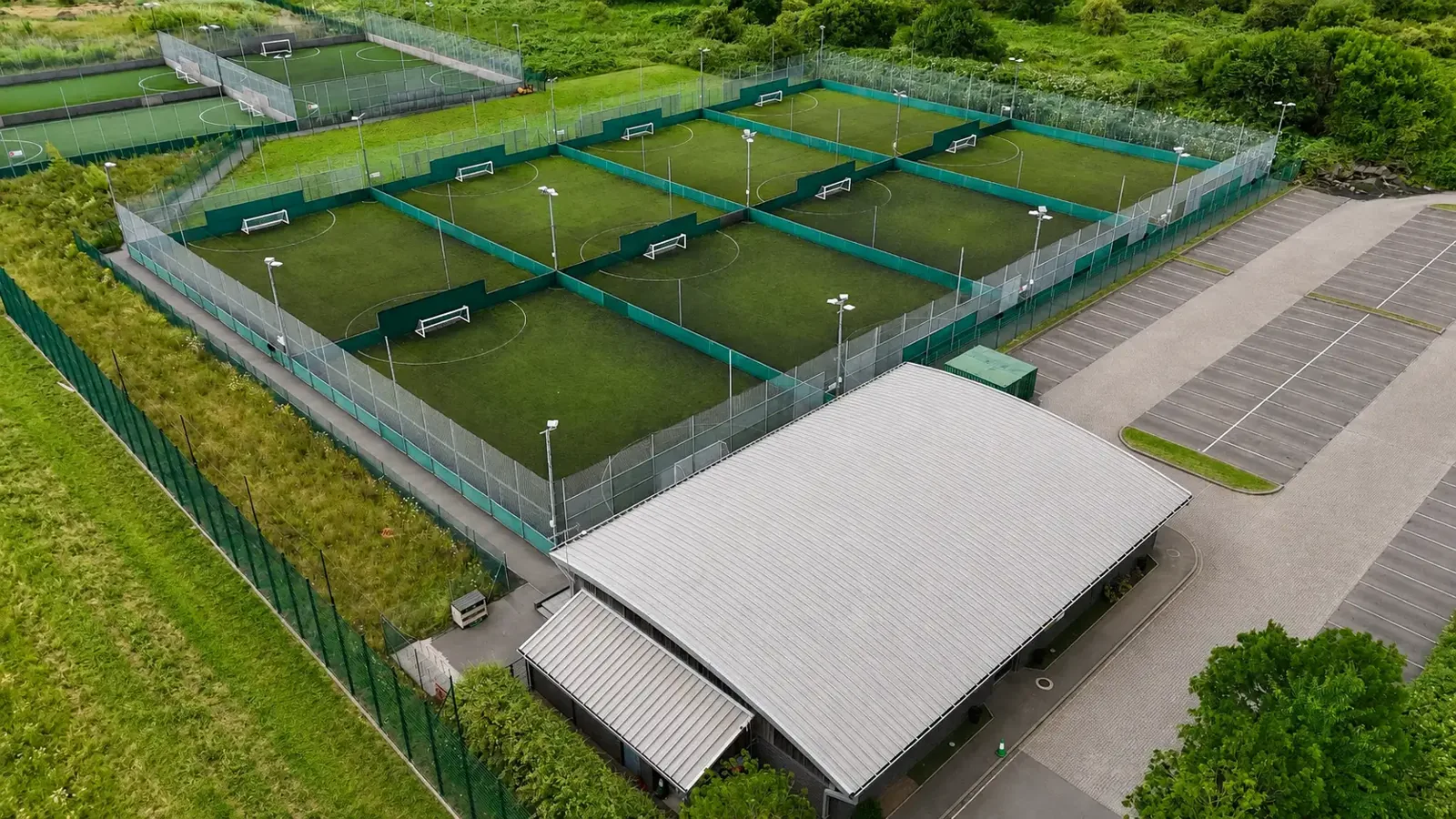
Gôl Centres Cardiff
Cardiff · 7-a-side £91 one-off
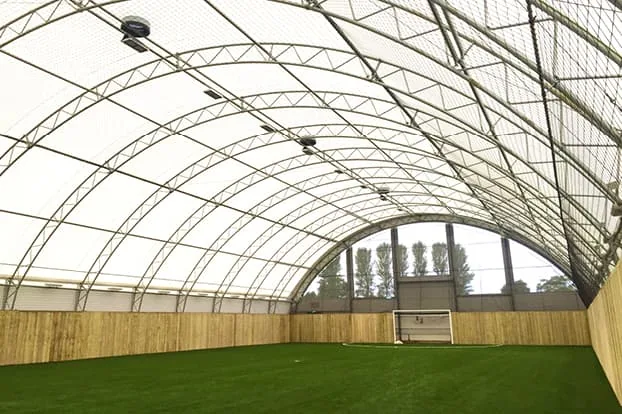
World of Football Marine Drive
Edinburgh · Covered 3G
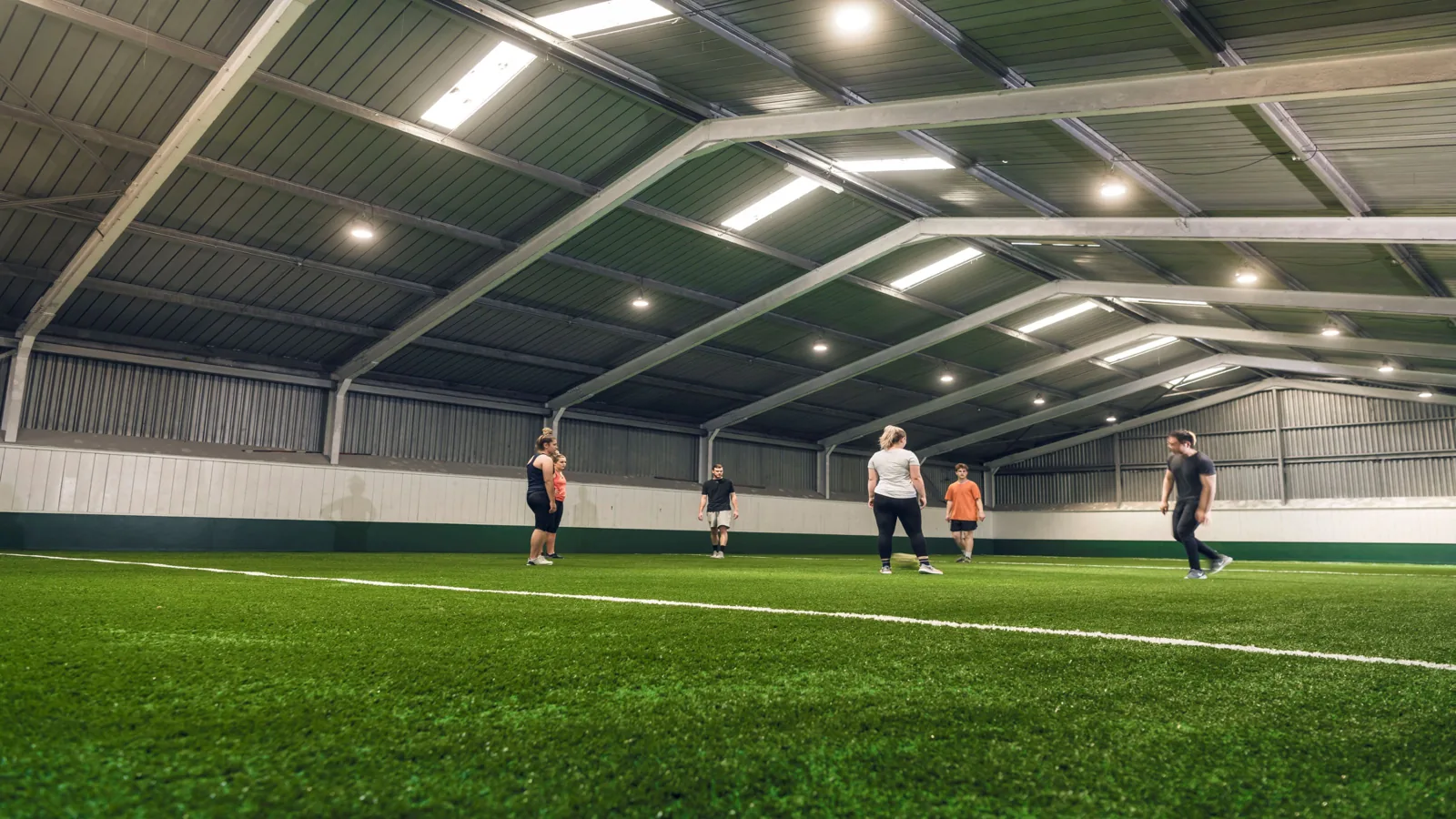
University Recreation Wellington, Kelburn
Wellington · Indoor turf arena
House rules to check
- Throw-ins or kick-ins?
- Is there offside in the final third? A few leagues use it.
- Can the keeper kick from their hands or throw past halfway?
- Are slide tackles allowed?
- How many players do you need to start, and how long do you wait for latecomers?
- What footwear is allowed on the surface?
Hiring a 7-a-side pitch costs more than a 5-a-side one. At Gôl Centres Cardiff a one-off 7-a-side booking is £91 in 2026. Our guide to pitch hire costs has more prices.
Cities in our directory with the most 7-a-side pitches:
FAQ
Is there offside in 7-a-side?
Usually not. Most adult 7-a-side leagues and FA youth 7v7 play without offside. A few adult leagues use offside in the final third, so check.
Can you slide tackle in 7-a-side?
Depends on the league. Many ban slide tackles on artificial pitches; some allow them on grass.
Are there throw-ins in 7-a-side?
In most leagues yes. Some use kick-ins instead, as in futsal.
How many subs can you have in 7-a-side?
Most leagues allow around three substitutes with unlimited rolling changes.