Youth football pitch and goal sizes by age
 By the Find My Football Pitch team·
Updated ·
5 min read
Children play on smaller pitches with smaller goals, and the size grows with each age group until they reach the adult game. Here are the FA's recommended pitch and goal sizes for every age, the Australian MiniRoos formats, and what to do when your club's pitch does not match the table.
The short answer
In England from the 2026-27 season, under-7s play 3v3 on about 15 by 10 m with 4 by 2.5 ft goals. Under-8s and under-9s play 5v5 on 37 by 27 m with 12 by 6 ft goals, and under-10s and under-11s play 7v7 on 55 by 37 m with the same goals. Under-12s and under-13s play 9v9 on 73 by 46 m with 16 by 7 ft goals. 11-a-side starts at under-14, on 82 by 50 m with 21 by 7 ft goals, rising to 91 by 55 m and full 24 by 8 ft goals at under-15 and the adult 100 by 64 m pitch from under-17.
FA pitch and goal sizes by age
These are the FA's recommended sizes for the age groups that apply from the 2026-27 season, when the FA moved each format up a year. The pitch size is the playing area without the safety run-off.
| Age group | Format | Pitch (metres) | Pitch (yards) | Goal (width x height) |
|---|---|---|---|---|
| Under-7 | 3v3, no keepers | 15 x 10 (up to 20 x 15) | about 16 x 11 | 4 x 2.5 ft (1.20 x 0.75 m) |
| Under-8, under-9 | 5v5 | 37 x 27 | 40 x 30 | 12 x 6 ft (3.66 x 1.83 m) |
| Under-10, under-11 | 7v7 | 55 x 37 | 60 x 40 | 12 x 6 ft (3.66 x 1.83 m) |
| Under-12, under-13 | 9v9 | 73 x 46 | 80 x 50 | 16 x 7 ft (4.88 x 2.13 m) |
| Under-14 | 11v11 | 82 x 50 | 90 x 55 | 21 x 7 ft (6.40 x 2.13 m) |
| Under-15, under-16 | 11v11 | 91 x 55 | 100 x 60 | 24 x 8 ft (7.32 x 2.44 m) |
| Under-17, under-18 | 11v11 | 100 x 64 | 110 x 70 | 24 x 8 ft (7.32 x 2.44 m) |
| Adult | 11v11 | 100 x 64 | 110 x 70 | 24 x 8 ft (7.32 x 2.44 m) |
The FA adds a run-off of 3 m around each pitch, so a 9v9 pitch needs 79 by 52 m of flat ground in total. For under-14s the FA recommends 21 by 7 ft goals; its older facilities guide accepted full-size 24 by 8 ft goals where a site could not provide a separate set.
The guides on 7-a-side and 9-a-side pitch sizes give the penalty areas and other markings for those formats.
Why youth pitches are smaller
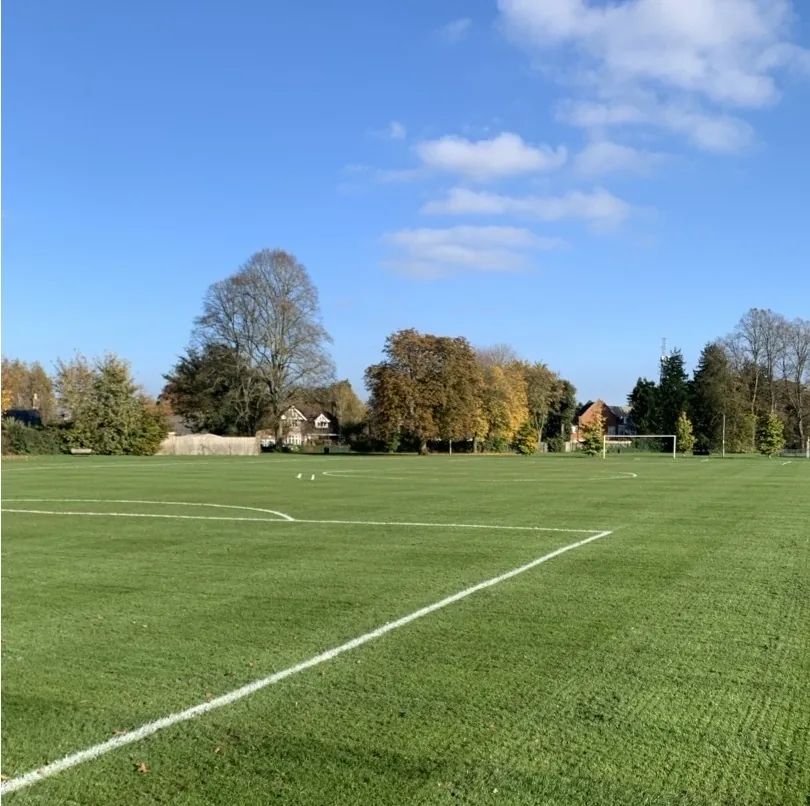
The Laws of the Game allow the pitch size, the goal size, the ball and the length of the match to be changed for players under 16, among others. The FA uses that to give children a game that fits them.
- More touches. Fewer players on a smaller pitch means each child is on the ball more often.
- Fair goals for keepers. An 8-year-old in a 24 by 8 ft goal has no chance. A 12 by 6 ft goal makes saves possible.
- Realistic distances. Young players cannot kick a ball 60 m. On a smaller pitch, passes, crosses and shots reach where they are meant to.
Ball size goes up with age too. Our guide to football size by age covers sizes 3, 4 and 5.
Line colours and shared pitches
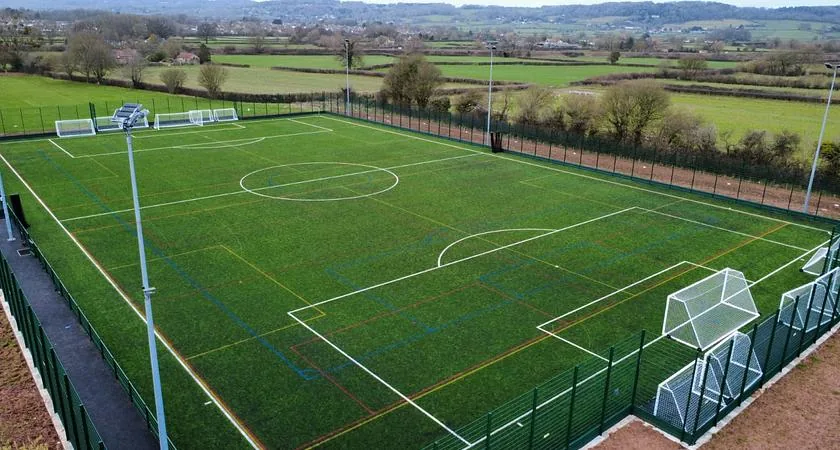
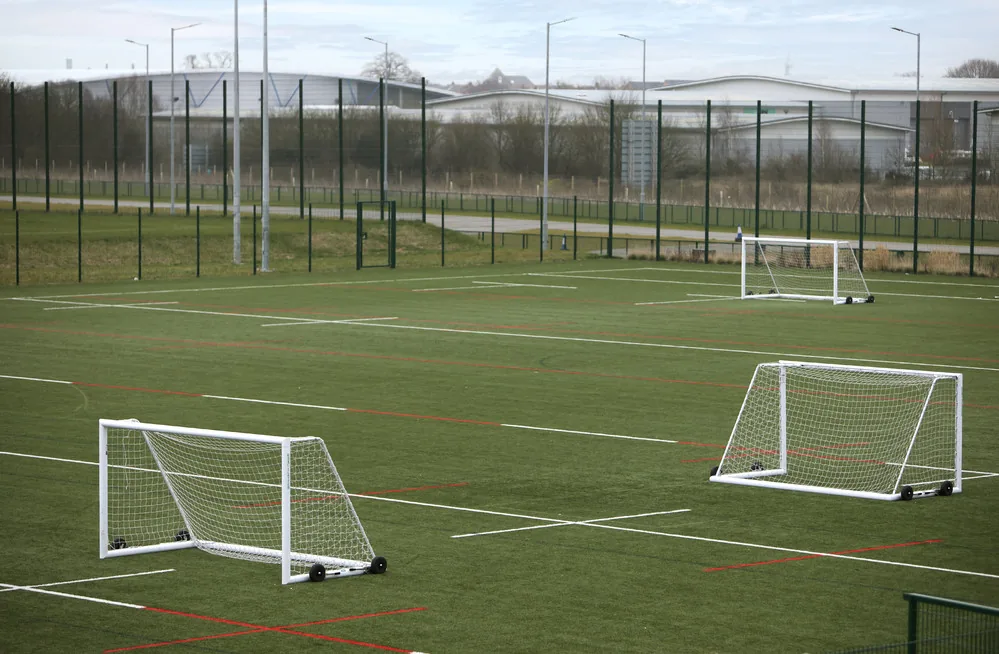
Most clubs do not have a pitch for each age group. They mark smaller pitches across or inside adult pitches, and on 3G the lines are built into the carpet. To keep things readable, the FA recommends a colour for each format:
- Red: 5v5 (under-8 and under-9 from 2026-27)
- Yellow: 7v7 (under-10 and under-11)
- Blue: 9v9 (under-12 and under-13)
- White: 11v11 and adults
Before a match on a multi-lined 3G, agree with the referee and the other coach which colour is in use. It saves an argument about whether a ball was out.
Australia: MiniRoos formats
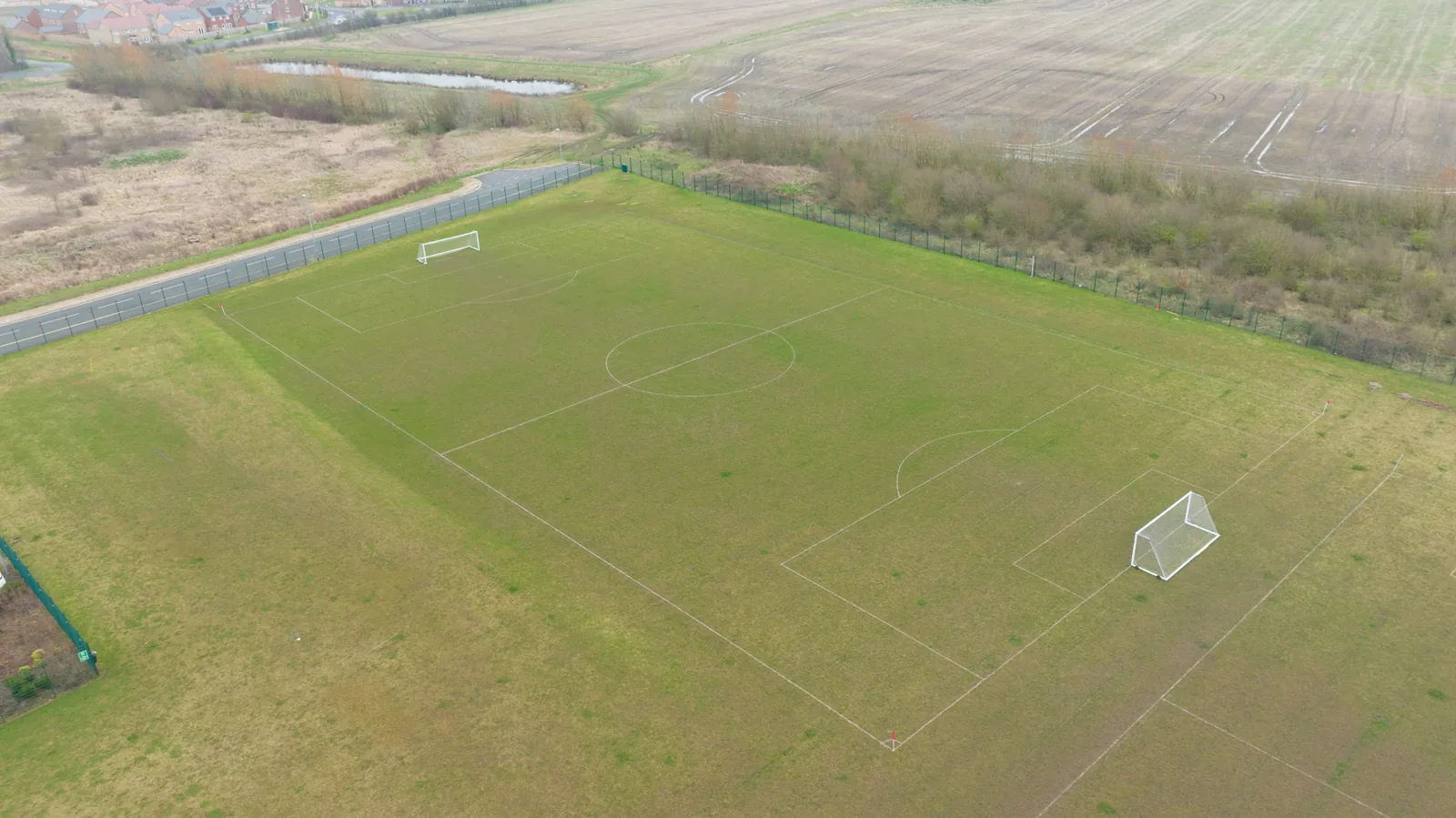
Football Australia's MiniRoos club football uses 4v4 for under-6 and under-7, 7v7 for under-8 and under-9, and 9v9 for under-10 and under-11, before 11-a-side. Associations can adapt the ages and sizes. As an example, one Queensland association's 2024 rules use:
| Format | Ages in that association | Field | Goal | Ball |
|---|---|---|---|---|
| 4v4, no keepers | Under-5 to under-6 | 30 x 20 m | 2 x 1 m | Size 3 |
| 7v7 | Under-7 to under-9 | 40 to 50 x 30 to 40 m | 3 x 2 m | Size 3 |
| 9v9 | Under-10 to under-11 | 50 to 60 x 40 to 50 m | 5 x 2 m | Size 4 |
Other associations use different age bands, so treat this as a guide and check your own competition rules.
Ireland, Scotland, Canada and New Zealand
These associations all run small-sided formats for younger players and switch to 11-a-side in the early teens, but their age bands, pitch sizes and goal sizes differ from the FA's. Your club secretary or league handbook will have the current table. If you are marking a new pitch, your national or regional association's facilities team can tell you the sizes that local leagues expect.
Goal safety. Most youth goals are portable. They must be weighted or anchored every time, checked before use, and never climbed on. The FA's goalpost guidance notes that serious injuries and deaths have followed unsafe or badly secured goals.
When the pitch does not match
Real pitches rarely match the table exactly. Councils mark what fits their parks, and schools fit pitches between buildings and fences. A few practical points:
- Leagues decide. If your league allows a range, a pitch a few metres short is fine. If it sets a minimum, measure before the season.
- Smaller is better than bigger. For young children, a pitch slightly under size plays better than one that is too big.
- Goals matter most. Use the right goal size for the age group even if the pitch is a compromise.
Western Park Pavilion 4G pitch
Cambridge · 4G and grass
St Augustine Academy grass pitches
Maidstone · Grass, all formats

Korikori Park
Hamilton · Grass and turf fields
Cities with the most pitches for kids football in our directory:
FAQ
What age do kids start playing 11-a-side?
In England, from the 2026-27 season, under-14s move up to 11-a-side. The FA recommends an 82 by 50 m pitch and 21 by 7 ft goals for under-14s.
What size goal does an under-12 team use?
Under-12s play 9v9 in England, with 16 by 7 ft goals (4.88 by 2.13 m). From 2026-27 under-13s do too.
When do players use full-size goals?
The FA recommends full-size 24 by 8 ft goals from under-15. Under-14s should use 21 by 7 ft goals where they are available.
Are youth pitch sizes compulsory?
They are recommendations. Leagues and county FAs can set their own sizes within the Laws of the Game, so check your league handbook.