Types of football pitches
 By the Find My Football Pitch team·
Updated ·
5 min read
Book a pitch and you might get muddy park grass, a rubber-crumb 3G, a sand-filled hockey astro, a sports hall floor or a fenced cage on a roof. Each plays differently and needs different boots. This guide sorts out the main types of football pitch by surface and by size, so you know what you are turning up to.
The short answer
The main types of football pitch are natural grass, hybrid grass, 3G artificial grass (long pile with rubber and sand infill, sometimes sold as 4G), 2G sand-filled or sand-dressed astro, and indoor surfaces such as sports hall floors and futsal courts. Multi-use games areas (MUGAs) with polymeric or macadam surfaces are common at schools and parks. Pitches also come in sizes for 5-a-side, 7-a-side, 9-a-side and 11-a-side.
Natural grass
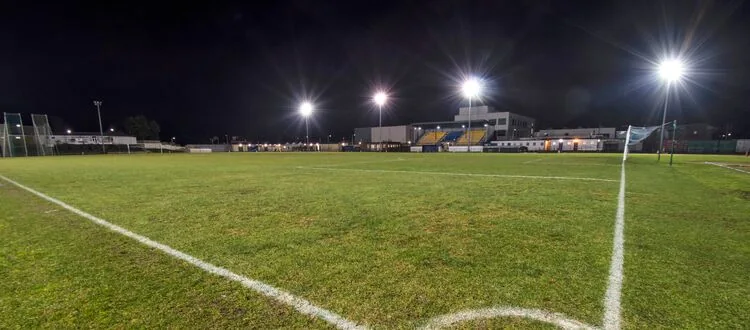
Most football in Britain and Ireland is still played on grass. The quality ranges from a council park pitch, marked on whatever ground was there, to a sand-based stadium pitch with drainage, irrigation and a full-time groundsman.
- Good for: 11-a-side league football, the feel most players prefer, softer landings.
- Downsides: it wears out, especially in goalmouths, and it closes when frozen or waterlogged. Most councils limit how many matches a pitch takes each week.
- Boots: firm ground (FG) studs, or soft ground (SG) on wet, muddy pitches.
Read artificial vs real grass for football for a fuller comparison.
Hybrid grass
A hybrid pitch is real grass reinforced with a small share of synthetic fibres, either stitched deep into the root zone or woven into a backing. The roots grow around the fibres, which hold the surface together under heavy use. Hybrid pitches are now standard at top professional stadiums and training grounds. You are unlikely to hire one by the hour. See what a hybrid pitch is.
3G artificial grass
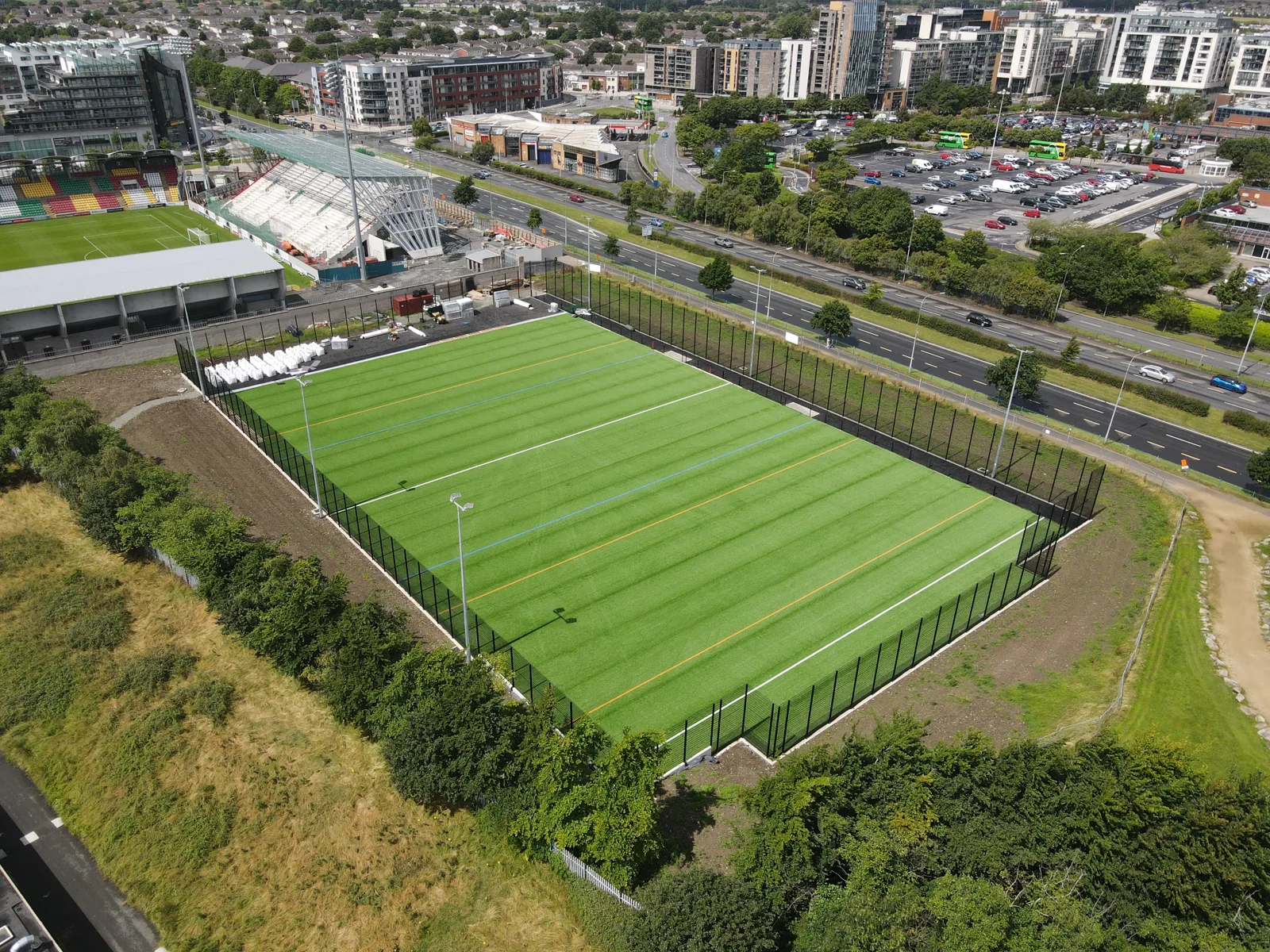
3G, short for third generation, is the surface most people now mean by an artificial football pitch. It has long synthetic grass fibres, usually several centimetres tall, with a layer of sand at the bottom for weight and rubber crumb on top for cushioning and grip. It is designed to play like good grass: the ball rolls and bounces in a similar way, and you can slide on it.
- Good for: all formats, all year, heavy use, floodlit evening games. Almost all commercial 5-a-side and 7-a-side is on 3G.
- Standards: in England, a 3G must be tested and on the FA's register of football turf pitches to host affiliated competitive matches.
- Boots: artificial ground (AG) boots, or turf (TF) trainers.
Some venues call their pitches 4G or even 5G. There is no official standard for those names. Our guides on what a 3G pitch is and 3G vs 4G explain more.
2G sand-based astro
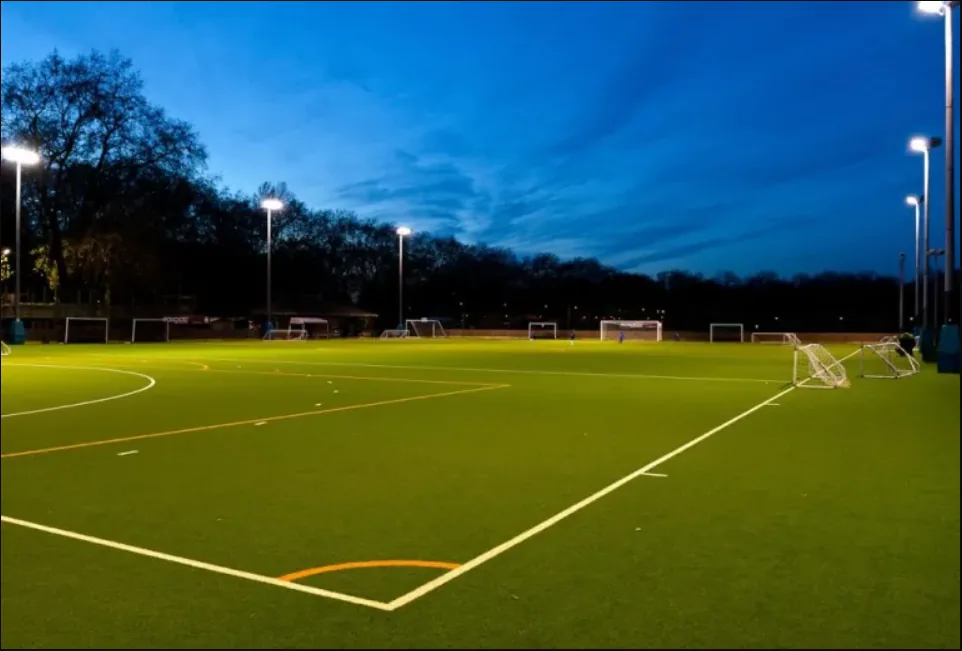
Older all-weather pitches at schools and leisure centres are often 2G: shorter fibres filled or topped with sand, and no rubber. People in the UK usually call these astro or astroturf, whatever the brand. They are built mainly for hockey, which needs a fast, true roll.
- How it plays: fast and hard. The ball skids and bounces higher than on grass, and sliding takes the skin off your legs.
- Boots: turf trainers or flat soles. Studs are often banned.
Plenty of small-sided football is still played on 2G because it is cheap to hire. Read what astroturf is for the difference between the brand and the generic word.
Indoor pitches and courts
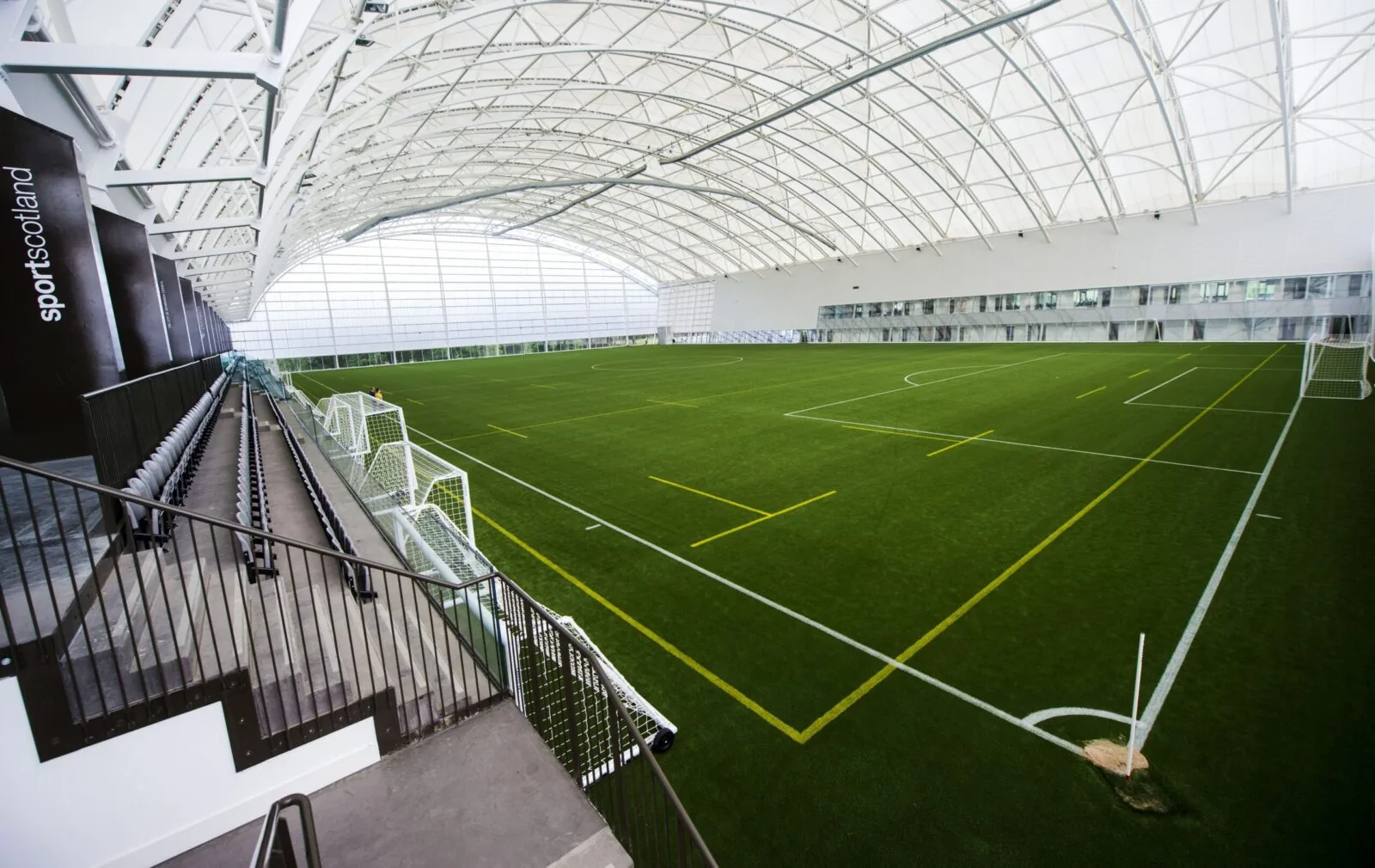
- Indoor 3G halls. Full-size or small-sided 3G under a roof, such as the Oriam in Edinburgh. They play like outdoor 3G and never close for weather.
- Sports halls. Timber or vinyl floors in leisure centres, with small goals at each end. Used for indoor 5-a-side, often with walls in play.
- Futsal courts. Hard floors with futsal markings and 3 by 2 m goals. See futsal court dimensions.
- Netted indoor soccer arenas. Common in Australia, where courts are enclosed in netting and the ball rarely goes out.
MUGAs and hard courts
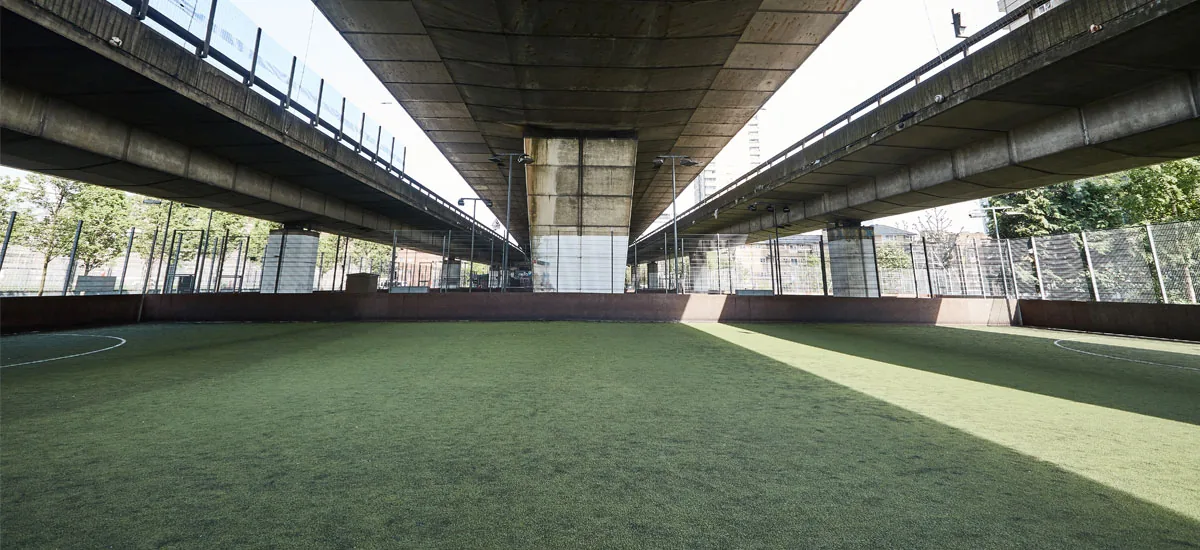
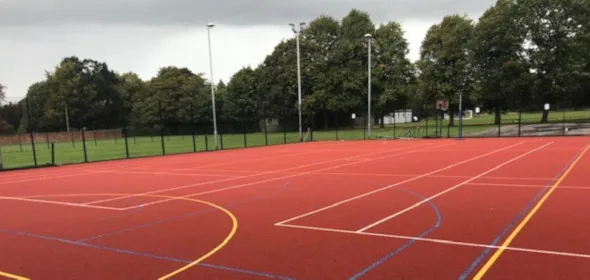
A MUGA (multi-use games area) is a fenced outdoor court for football, netball, basketball and tennis. The surface can be polymeric (a rubbery coloured coating), macadam or a short sand-filled carpet. Most have small goals built into the fence at each end. They are free or cheap and good for kickabouts, but the hard surface is unforgiving in a fall. Our guide to MUGAs covers them in detail.
Cage football pitches are similar in shape but usually have 3G carpet and high mesh walls. See cage football.
Pitches by size and format
| Format | Typical size | Where you find it |
|---|---|---|
| 5-a-side | Around 30 x 20 m to 40 x 25 m | Football centres, cages, sports halls |
| 7-a-side | FA youth 55 x 37 m; adult sizes vary | Split 3G pitches, football centres |
| 9-a-side | FA youth 73 x 46 m | Junior club pitches, half a full-size 3G |
| 11-a-side | FA recommendation 100 x 64 m | Parks, clubs, schools, stadiums |
| Futsal | 25 to 42 m x 16 to 25 m | Sports halls, futsal arenas |
Our guides to 5-a-side, 7-a-side and 9-a-side pitch sizes give the details.
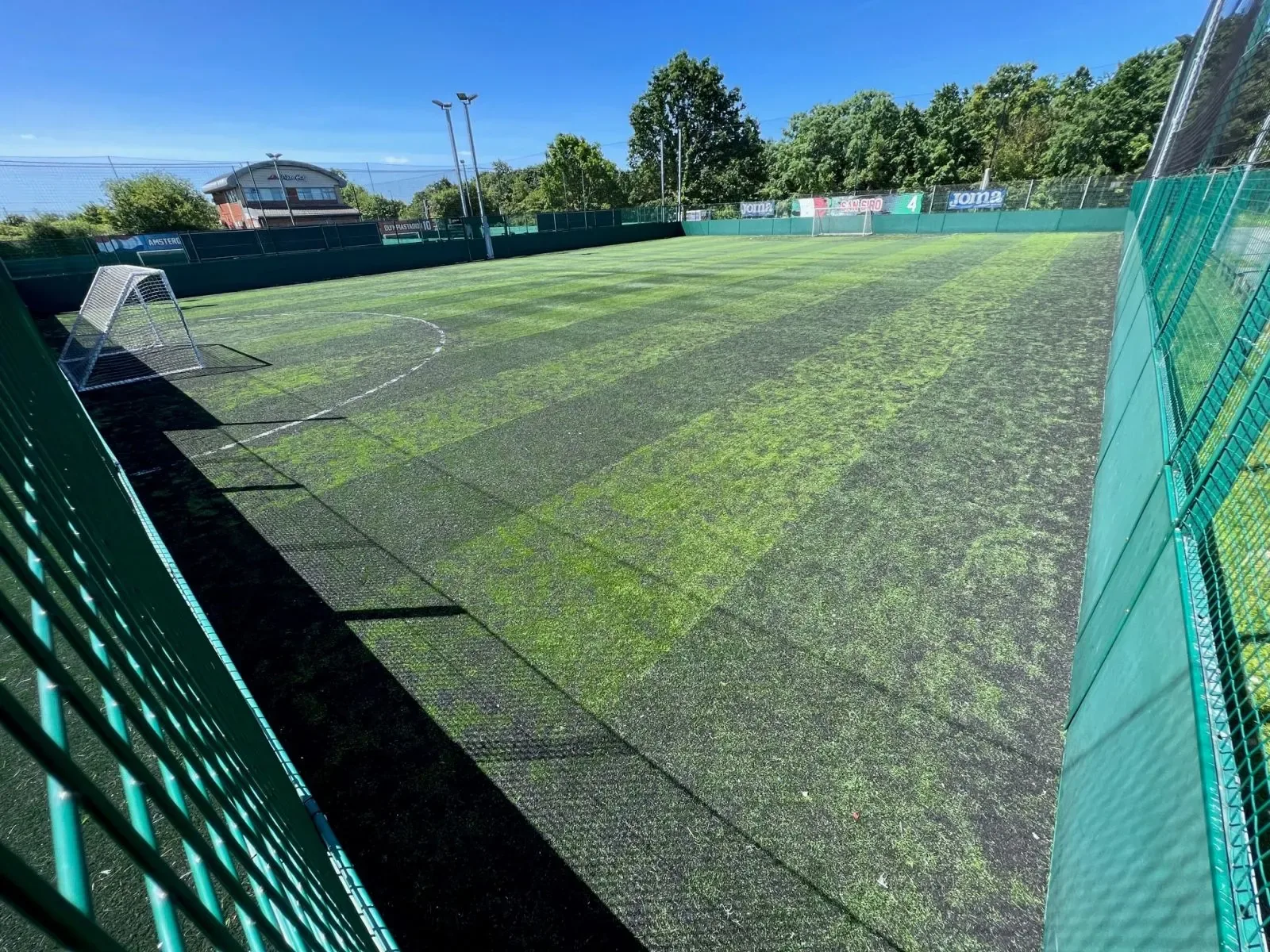
GOALS Coventry
Coventry · Caged 3G
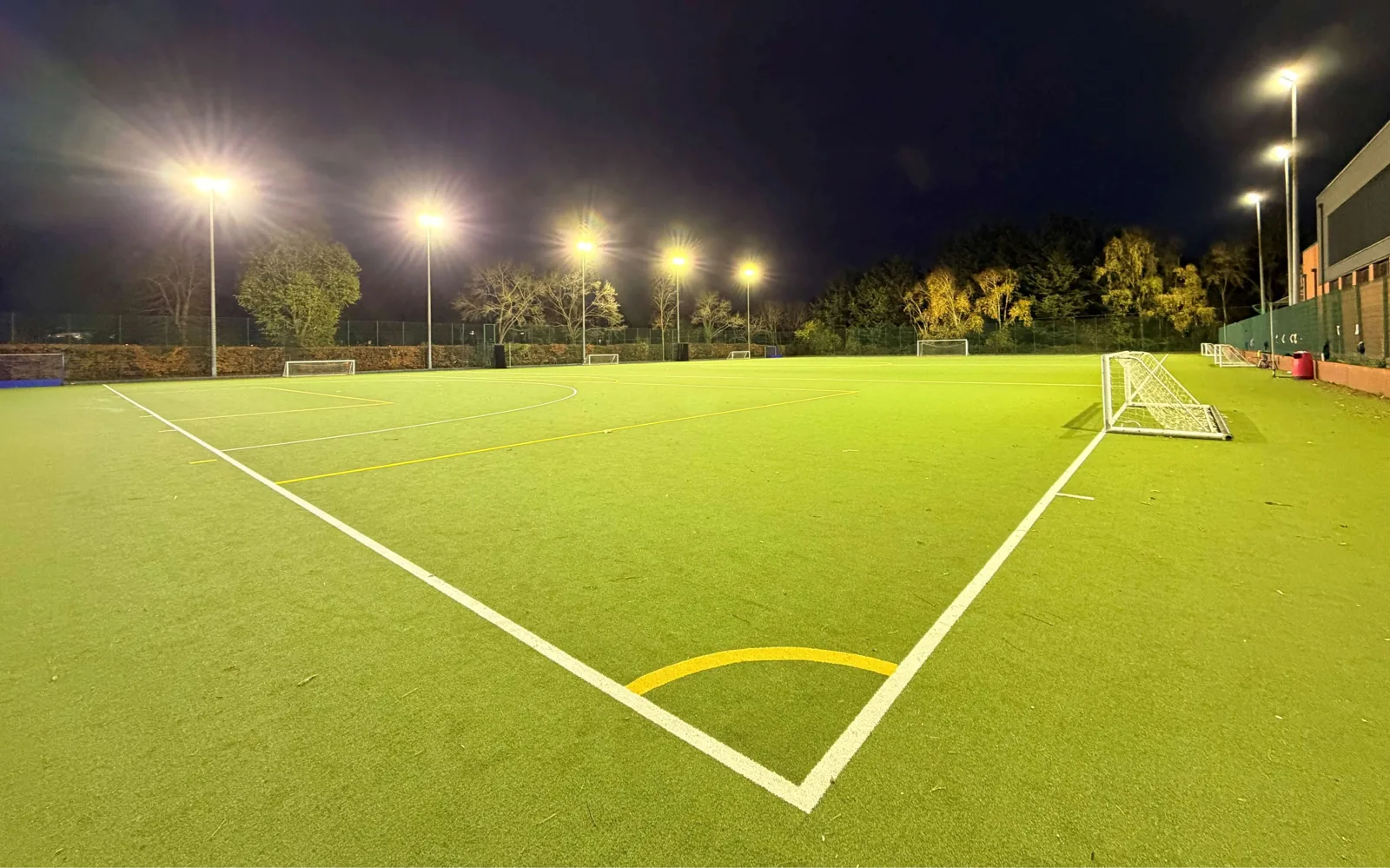
Shene Sports & Fitness Centre
London · Sand-dressed turf
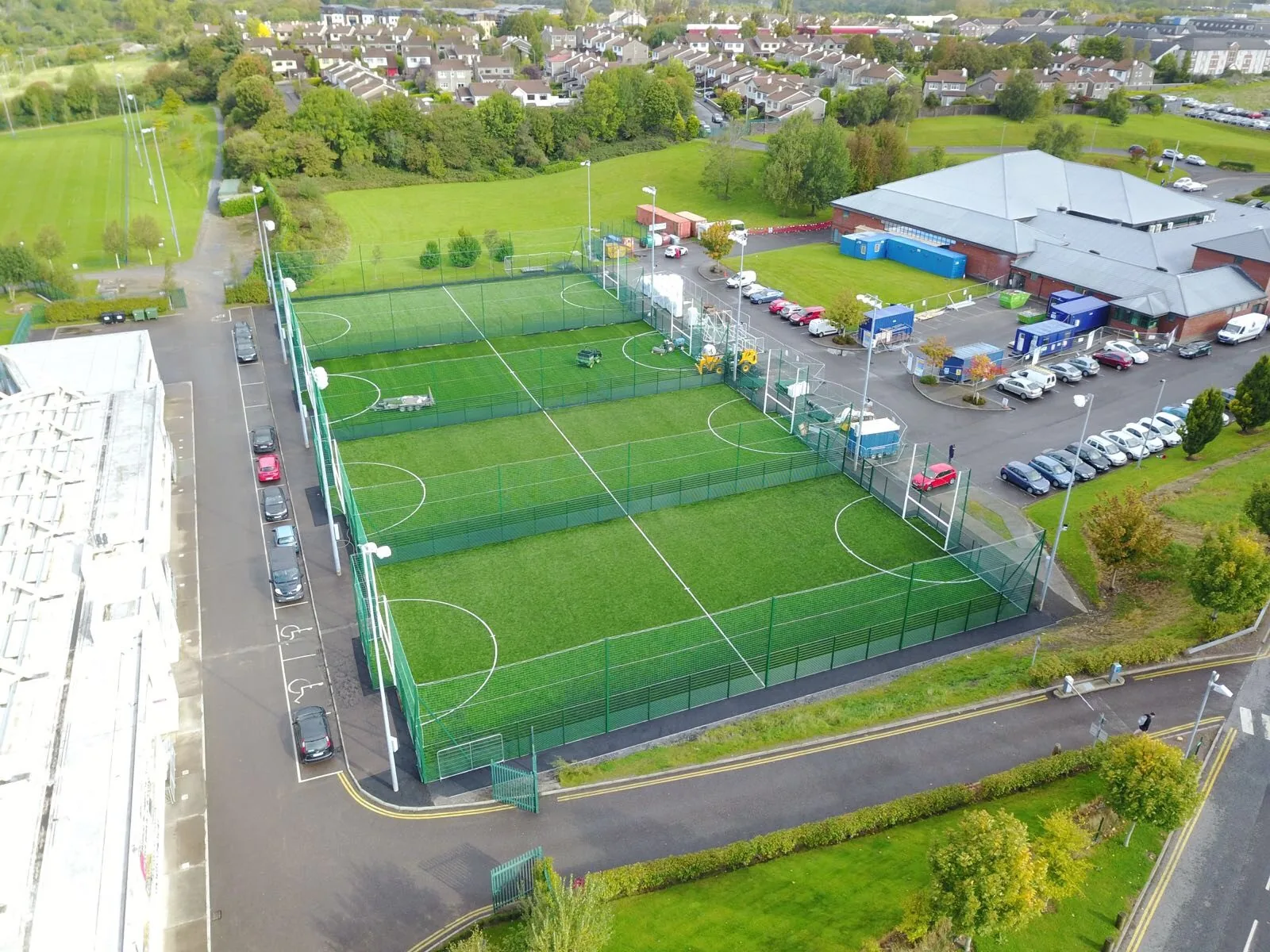
LeisureWorld Bishopstown Astro Pitches
Cork · Floodlit astroturf
Which type to book
- Weekly 5-a-side or 7-a-side: a floodlit 3G. It plays well in any weather.
- Pre-season or friendlies for an 11-a-side team: a full-size 3G or a good grass pitch.
- Cheap kickabout: a MUGA or a 2G astro, in trainers.
- Winter evenings in a wet climate: anything artificial or indoor, since grass may be closed.
Whatever you book, ask what the surface is before you pick your boots. A 3G and a sand astro need different footwear.
FAQ
What is the most common type of football pitch?
Natural grass is still the most common for 11-a-side, while 3G artificial grass is the most common surface for small-sided football you can hire.
Is astro the same as 3G?
Not usually. In the UK, astro normally means an older sand-based pitch with short fibres, while 3G has longer fibres with rubber crumb infill.
What is a MUGA?
A multi-use games area: a fenced outdoor court with a hard or carpet surface, marked for several sports and often with goals built into the fence.
Do professional clubs play on artificial pitches?
Top professional clubs in England play on grass or hybrid grass. 3G is common in lower leagues in some countries, in non-league football and on training grounds.