What is a MUGA?
 By the Find My Football Pitch team·
Updated ·
5 min read
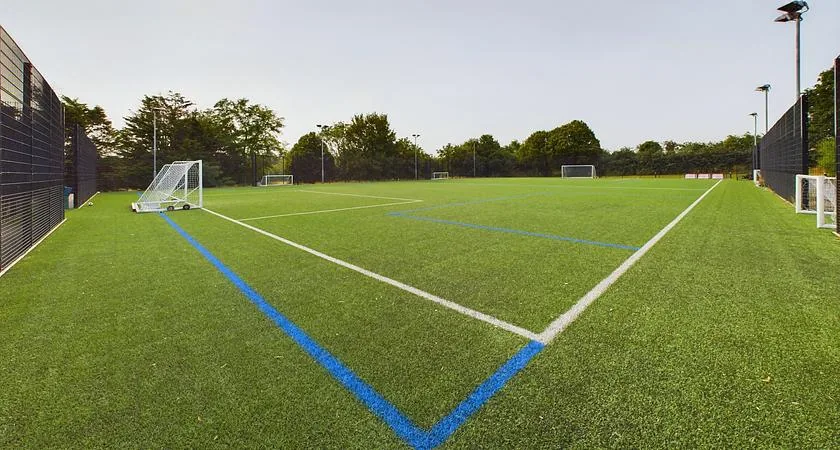
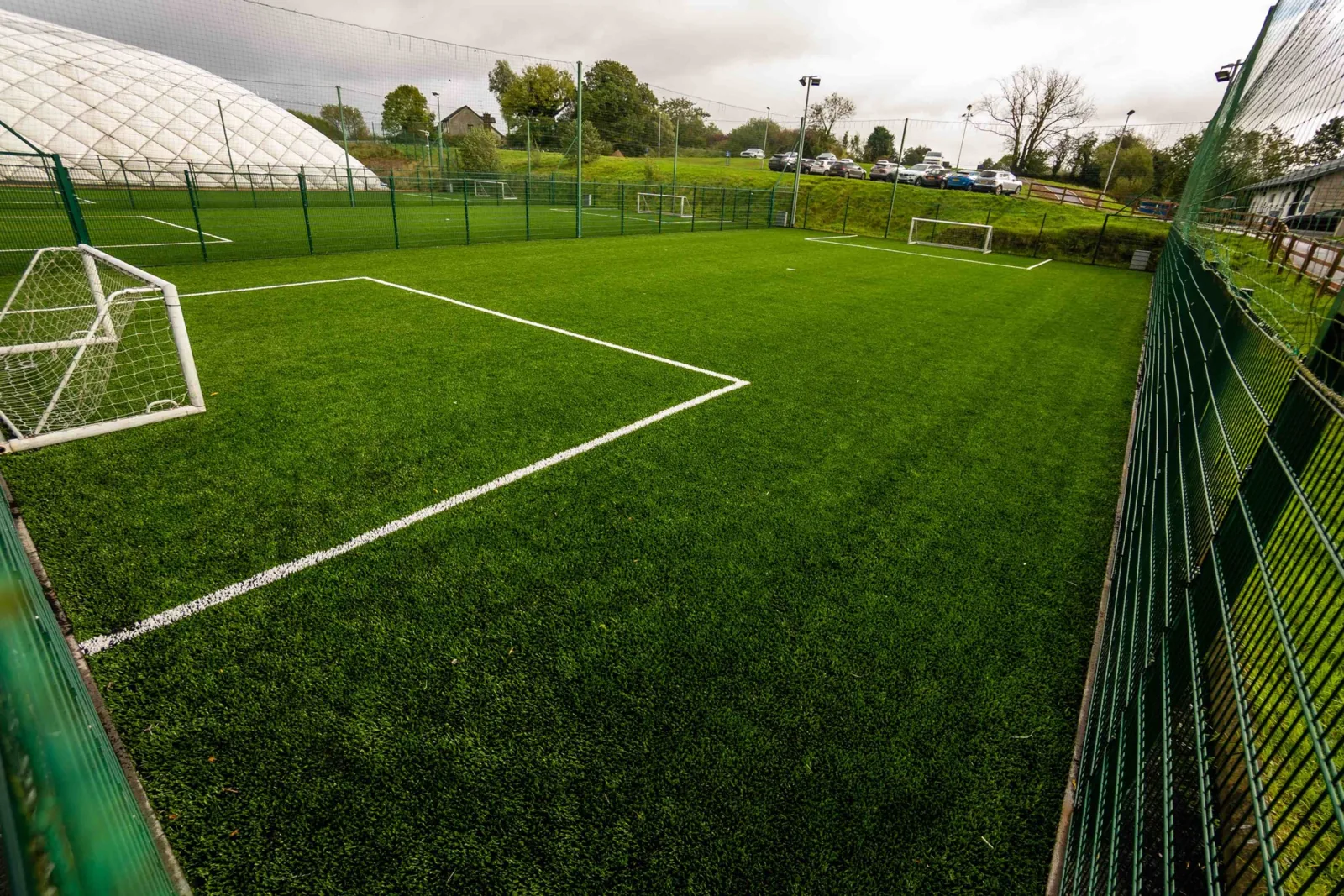
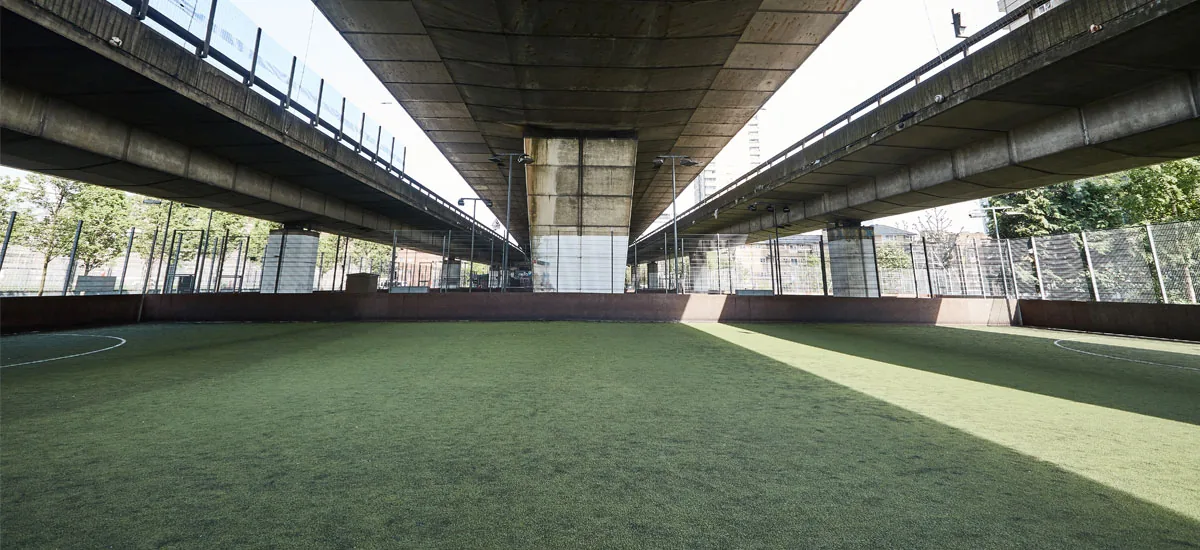
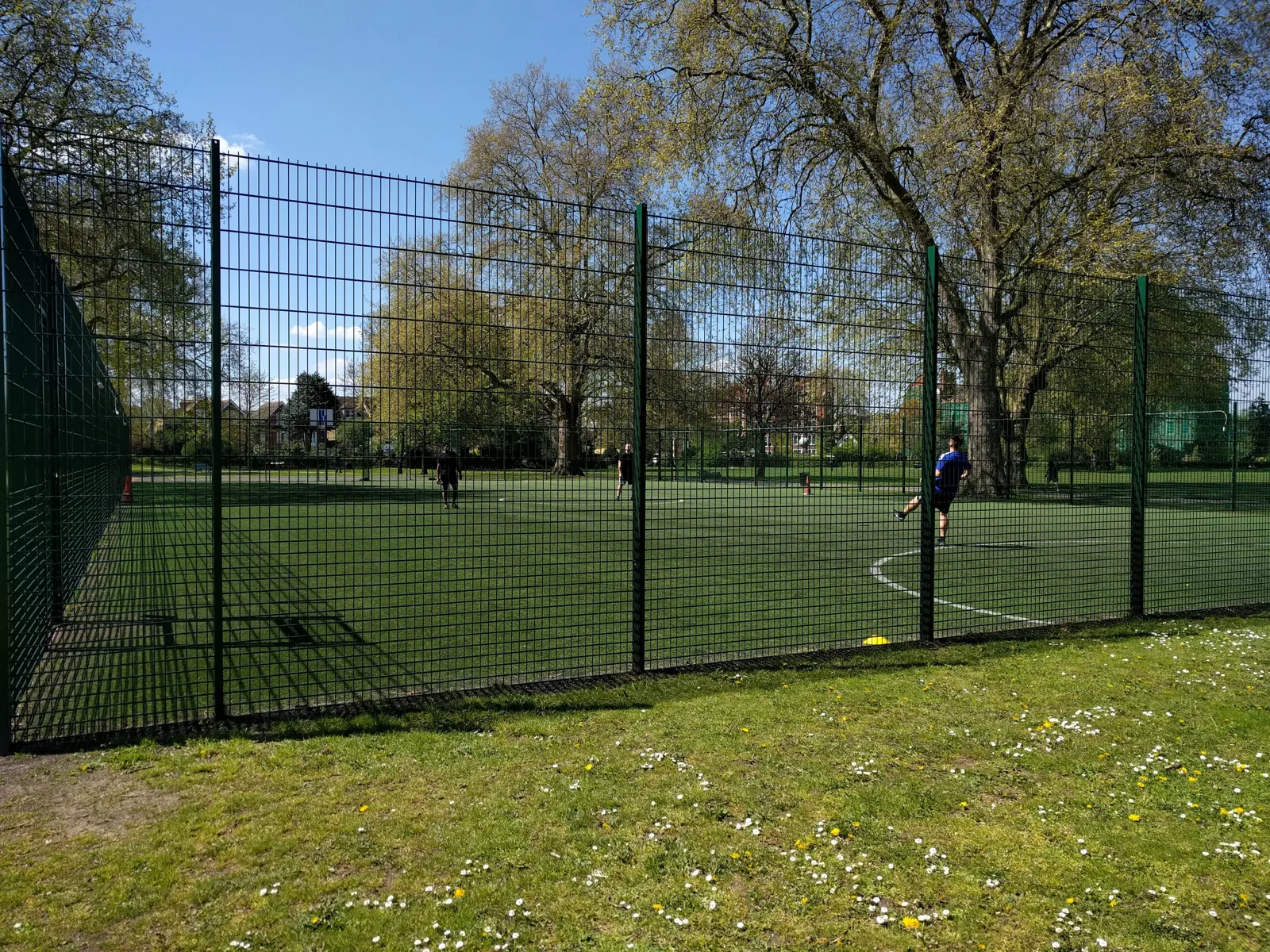
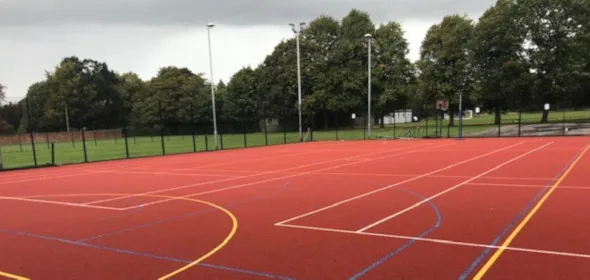
If you have seen a fenced court in a park or a school with goals at each end, basketball hoops at the sides and lines in four colours, you have seen a MUGA. The name sounds like jargon, but these courts are where a lot of informal football in the UK happens.
The short answer
A MUGA is a multi-use games area: an outdoor, usually fenced, all-weather court marked out for several sports, such as football, basketball, netball and tennis. The surface is tarmac, a rubbery polymeric surface or artificial grass. MUGAs are common in UK parks, housing estates and schools, and many are free to use. Some school and leisure centre MUGAs are floodlit and can be hired by the hour for 5-a-side. The term is mostly British; in Australia and New Zealand you will hear "multi-purpose court".
What a MUGA is
MUGA stands for multi-use games area, and people usually say it as a word ("mugga") rather than spelling it out. The idea is simple: one hard-wearing, fenced space that can be used for several sports, all year, without the upkeep of a grass pitch. In England, Sport England publishes design guidance for them with SAPCA, the trade body for sports surface builders.
A typical MUGA has:
- A fence all round, usually high weld mesh, sometimes with solid rebound boards along the bottom.
- Built-in goals at each end, often combined with basketball hoops above them.
- Several sets of lines in different colours, for football, netball, basketball and sometimes tennis.
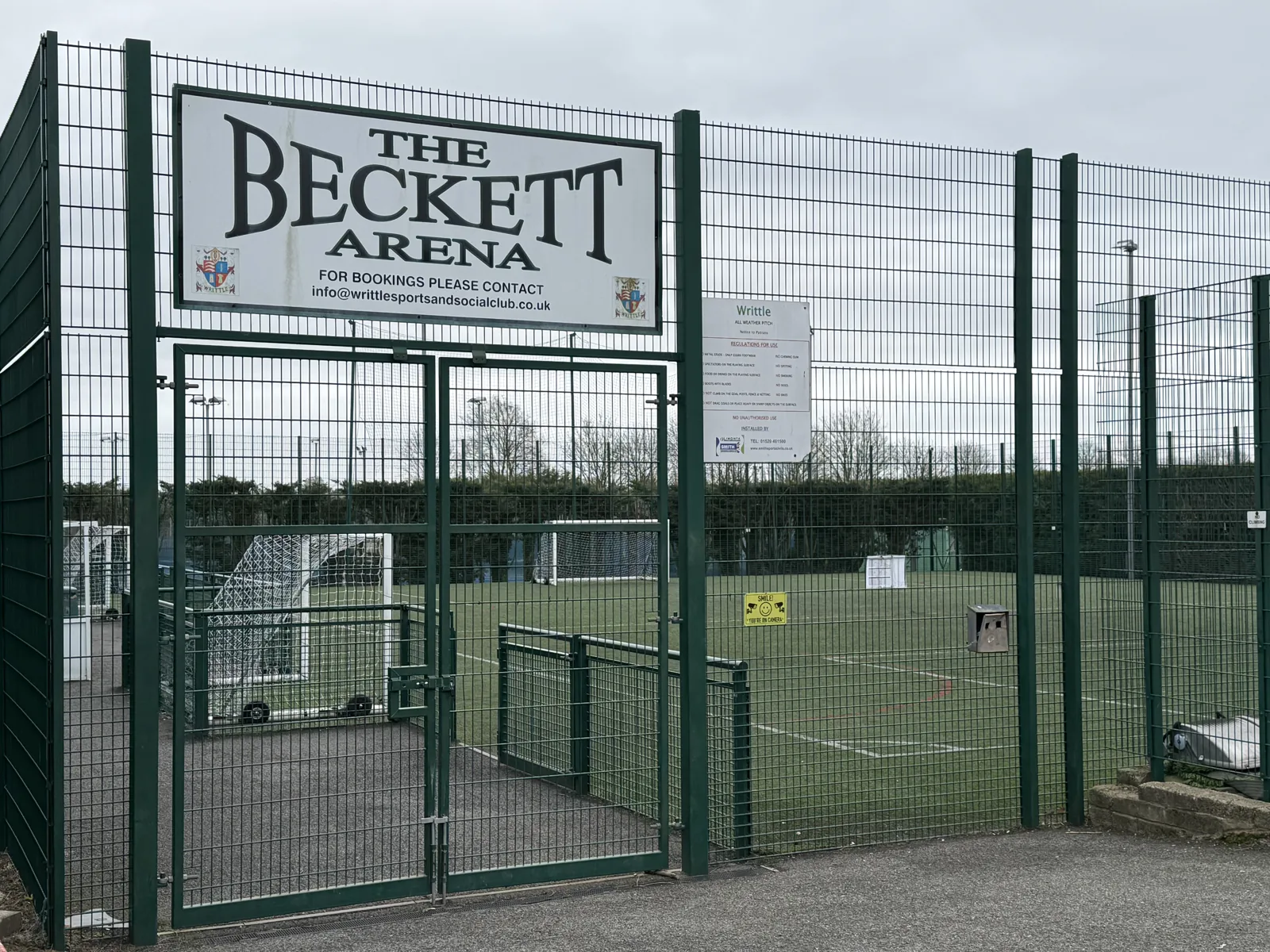
- Gates at one or two corners, sometimes locked outside set hours.
- Floodlights on some, especially at schools and leisure centres that let them out in the evening.
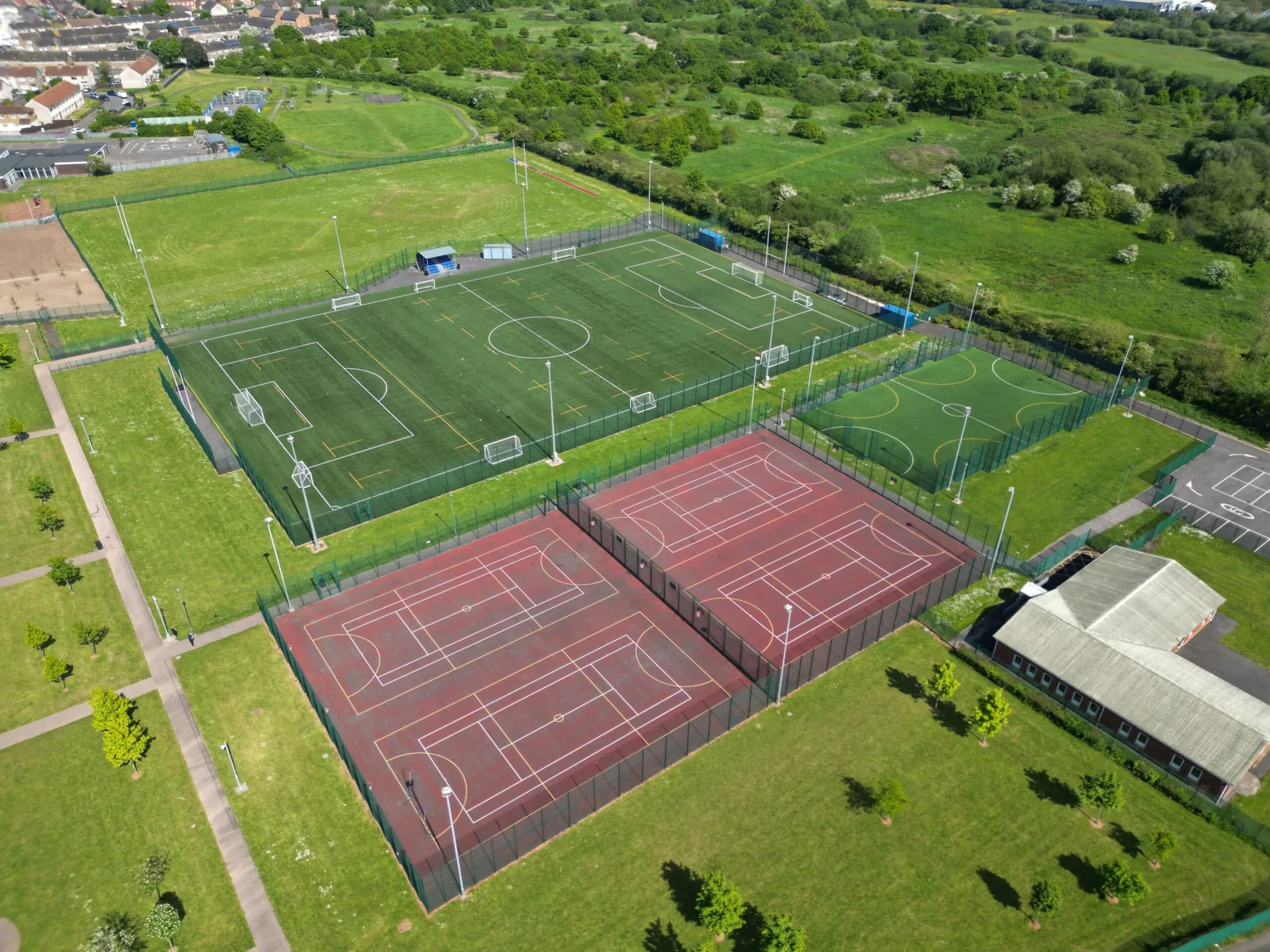
Sizes vary a lot. A small park MUGA might be about the size of a netball court, while a school MUGA can be large enough to be split into two 5-a-side pitches.
MUGA surfaces
The industry guidance groups MUGA surfaces into three families:
| Surface | What it is | For football |
|---|---|---|
| Macadam (tarmac) | Porous asphalt, often painted | Hard and fast; grazes if you fall |
| Polymeric | A rubber-based layer over the base, often red, green or blue | Slightly softer, good grip in trainers |
| Synthetic turf | Sand-filled, sand-dressed or 3G artificial grass | Closest to a pitch; 3G suits football best |
Older MUGAs are mostly tarmac or polymeric. Newer ones built mainly for football are often artificial grass, which blurs the line between a MUGA and a small 3G pitch. Our guide to types of football pitches explains the differences between surfaces.
Playing football on a MUGA
A MUGA game is closer to cage football than to a park kickabout. The fence keeps the ball in, the space is tight and the surface is quick. See cage football for how enclosed pitches change the game.
- Footwear: trainers or turf shoes on tarmac and polymeric surfaces. Studs and blades slip on hard surfaces and are usually banned because they damage them. On a 3G MUGA, turf shoes or AG boots. Read trainers on astro for more.
- Ball: a hard surface wears out a leather-look match ball fast. A cheap rubber or futsal ball lasts longer and bounces less.
- Falls: tarmac takes skin off. Long sleeves and tracksuit bottoms help, and slide tackles are a bad idea.
- Sharing: park MUGAs are shared space. Expect to rotate with others at busy times, and give way to younger children's games where that is the custom.
Lines everywhere. With four sports marked out, the football lines are often hard to pick out. Agree before you start which colour is the football boundary and where the keeper's area is.
Free MUGAs and hired MUGAs
Park and estate MUGAs run by councils are usually free and open during park hours, first come, first served. Schools and leisure centres more often let theirs out by the hour, especially in the evening when they have floodlights. In 2026, St Wilfrid's Catholic School in Crawley listed its MUGA at £30 an hour on weekdays, or £20 for half of it.
Booking a school MUGA works the same way as booking any school pitch: through the school's lettings team or a booking site. Our guide to how to book a football pitch walks through it, and free football pitches covers where to play without paying.
MUGA vs 3G pitch
A 3G pitch is built for football first, with long artificial grass fibres and rubber infill that let you wear AG boots and tackle the way you would on grass. A MUGA is built to serve several sports, so it compromises. For a casual game with friends, a MUGA is fine and often free. For a club training session or a league match, book a 3G pitch. See what is a 3G pitch for the full description.
FAQ
What does MUGA stand for?
Multi-use games area. It is an outdoor, usually fenced court marked for several sports, such as football, basketball, netball and tennis.
Can you play football on a MUGA?
Yes. Most MUGAs have built-in goals and football is one of the main uses. Wear trainers or turf shoes on tarmac or polymeric surfaces, not studs.
Are MUGAs free to use?
Park and estate MUGAs run by councils usually are. School and leisure centre MUGAs are often hired by the hour, especially floodlit ones.
Is a MUGA the same as an astroturf pitch?
Not quite. Some MUGAs have artificial grass, but many are tarmac or a rubbery polymeric surface, and all are marked for several sports rather than just football.