Futsal court dimensions
 By the Find My Football Pitch team·
Updated ·
5 min read
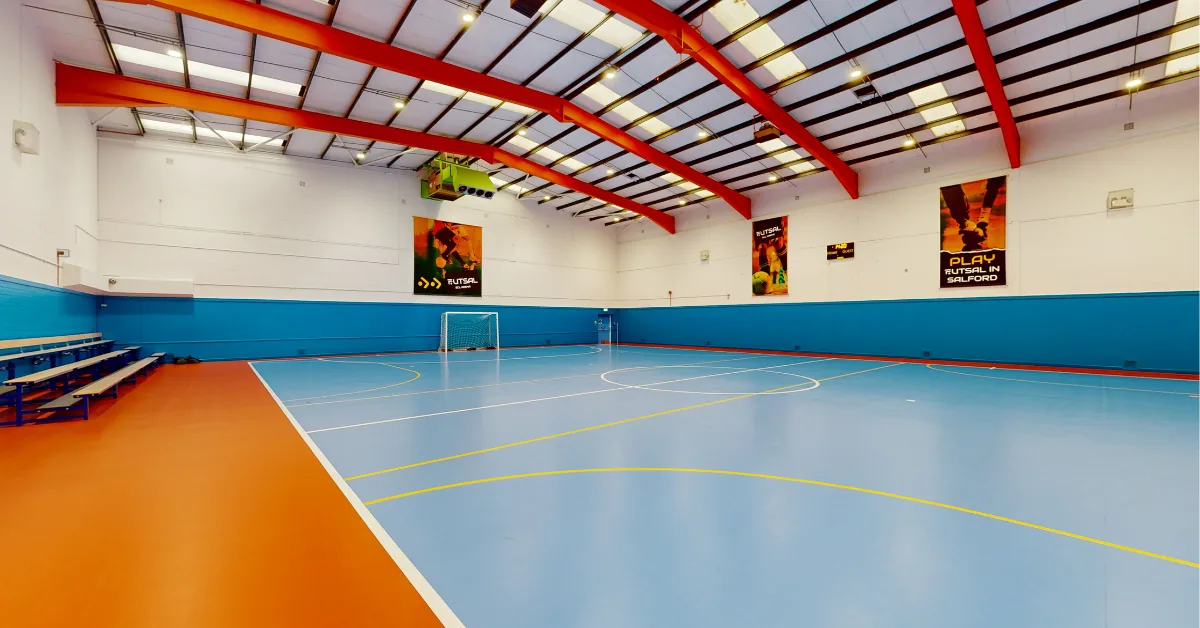
A futsal court is a hard indoor court with its own set of markings, smaller goals and curved penalty areas. The Futsal Laws of the Game set a range of sizes rather than one fixed size, with a tighter range for international matches. Here is every measurement, and what to expect from courts you can actually hire.
The short answer
Under the Futsal Laws of the Game, a court is 25 to 42 m long and 16 to 25 m wide. For international matches it must be 38 to 42 m by 20 to 25 m. The goals are 3 m wide and 2 m high. The penalty area is drawn with 6 m quarter circles from each post, joined by a 3.16 m straight line, and the penalty mark is 6 m from goal, with a second penalty mark at 10 m. The centre circle has a 3 m radius and all lines are 8 cm wide.
Court size
The court is a rectangle. The long sides are the touchlines and the short sides are the goal lines. The Futsal Laws give these limits:
| Length (touchline) | Width (goal line) | |
|---|---|---|
| Non-international matches | 25 to 42 m | 16 to 25 m |
| International matches | 38 to 42 m | 20 to 25 m |
So the smallest legal court is 25 by 16 m and the biggest is 42 by 25 m. A 40 by 20 m court, which is common at national level, sits inside the international range. Compare that with an adult football pitch, which is around 100 by 64 m. Our guide to football pitch dimensions has the full-size figures.
Every marking on a futsal court
All lines are 8 cm wide and must stand out clearly from the floor. The lines belong to the areas they mark.
- Halfway line across the middle, with a centre mark.
- Centre circle: 3 m radius.
- Penalty area: from the outside of each post, draw a 6 m line at right angles to the goal line. Each ends in a quarter circle of 6 m radius towards the nearest touchline. The tops of the two quarter circles are joined by a 3.16 m line parallel to the goal line, the same width as the goal plus posts. The result is a D-shaped area.
- Penalty mark: 6 m from the midpoint between the posts.
- Second penalty mark: 10 m from the midpoint between the posts. Kicks from here are given after a team's sixth accumulated foul in a half.
- Corner arcs: 25 cm radius.
- 5 m marks: a mark outside the court 5 m from each corner arc, to show where defenders must stand at corners, and two marks 5 m either side of the second penalty mark.
- Substitution zones: 5 m long, on the touchline in front of each team's bench. Each end is marked by an 80 cm line, half on the court and half off. The 5 m either side of the halfway line, in front of the timekeeper's table, is kept clear.
There is no goal area (six-yard box) in futsal. The penalty area is also the only place the goalkeeper may handle the ball.
Futsal goals
A futsal goal is 3 m wide and 2 m high, measured inside the posts and from the ground to the underside of the crossbar. That is about the size of a handball goal, and the same as the 3 by 2 m goals used in many indoor 5-a-side halls. The posts and crossbar are 8 cm square, in a colour that contrasts with the floor. The Laws also require goals to have a stabilising system so they cannot tip over.
For other goal sizes, from mini-soccer to full size, see football goal sizes.
Futsal or 5-a-side? Futsal is played on a hard floor with lines, not walls, and with a smaller, heavier, low-bounce ball. Most commercial 5-a-side is played on 3G inside fences or boards. Read futsal vs 5-a-side for the differences in rules and feel.
Floor and surface
The Laws ask for a flat, smooth, non-abrasive surface, preferably wood or an artificial sports floor. Concrete and tarmac should be avoided. Artificial turf is allowed only in exceptional cases and only in national competitions.
In practice, you will find three kinds of floor:
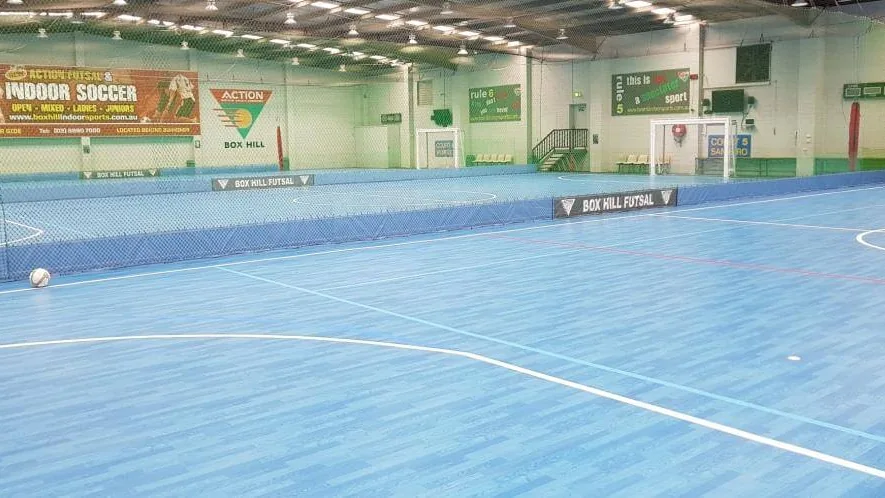
- Sprung timber in sports halls and stadiums. Fast, with a true bounce. Common in Australia and New Zealand.
- Vinyl or polyurethane sports floors in purpose-built futsal arenas, often in blue or orange.
- Outdoor hard courts and multi-use games areas. Fine for a casual game, but rough on skin when you fall.
Wear flat non-marking indoor shoes. Our guide to futsal shoes explains what to look for.
Courts you can hire
Many courts you can book are below international size, because they are marked inside a multi-sport hall. That is fine for leagues and casual games. Published sizes in our listings, checked in 2026, include:
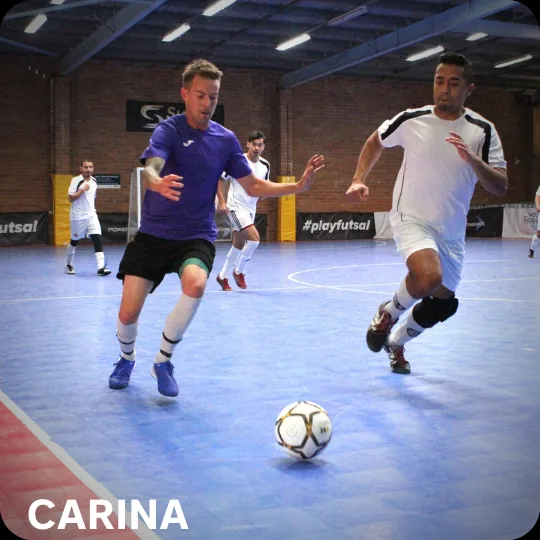
- Super Futsal Carina, Brisbane: an indoor court of 32 by 17 m and an outdoor court of 30 by 15 m. A$100 an hour for the indoor court.
- North Melbourne Community Centre: a walled outdoor futsal court of 22 by 16 m, which is shorter than the 25 m minimum in the Laws, so it suits casual play rather than official matches.
- UniSC Arena, Sunshine Coast: an international-sized futsal court alongside three multi-sport courts.
Hire prices in our listings run from about A$54 to A$105 an hour in Melbourne and from NZ$40 to NZ$50 an hour in Wellington. In the UK, Cardiff's House of Sport lists its multi-sport court, where the futsal courts are, at £50 an hour.
When you book a hall for futsal, ask for the court size, whether futsal goals are provided, and whether the floor is timber or vinyl. A badminton-hall floor with five sets of coloured lines is playable, but agree which lines count before kick-off.
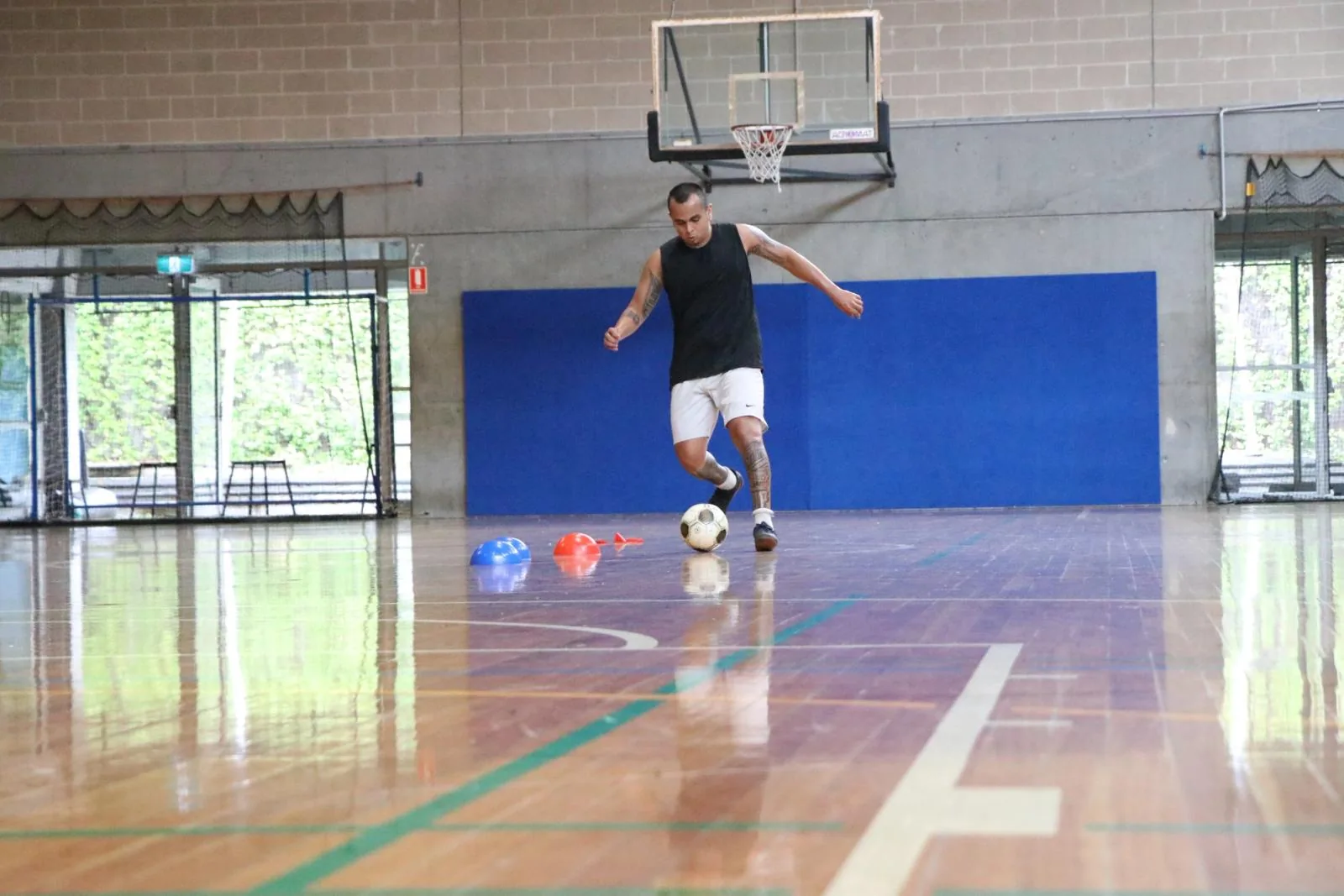
Cook + Phillip Park Indoor Sports Court
Sydney · Hardwood indoor court
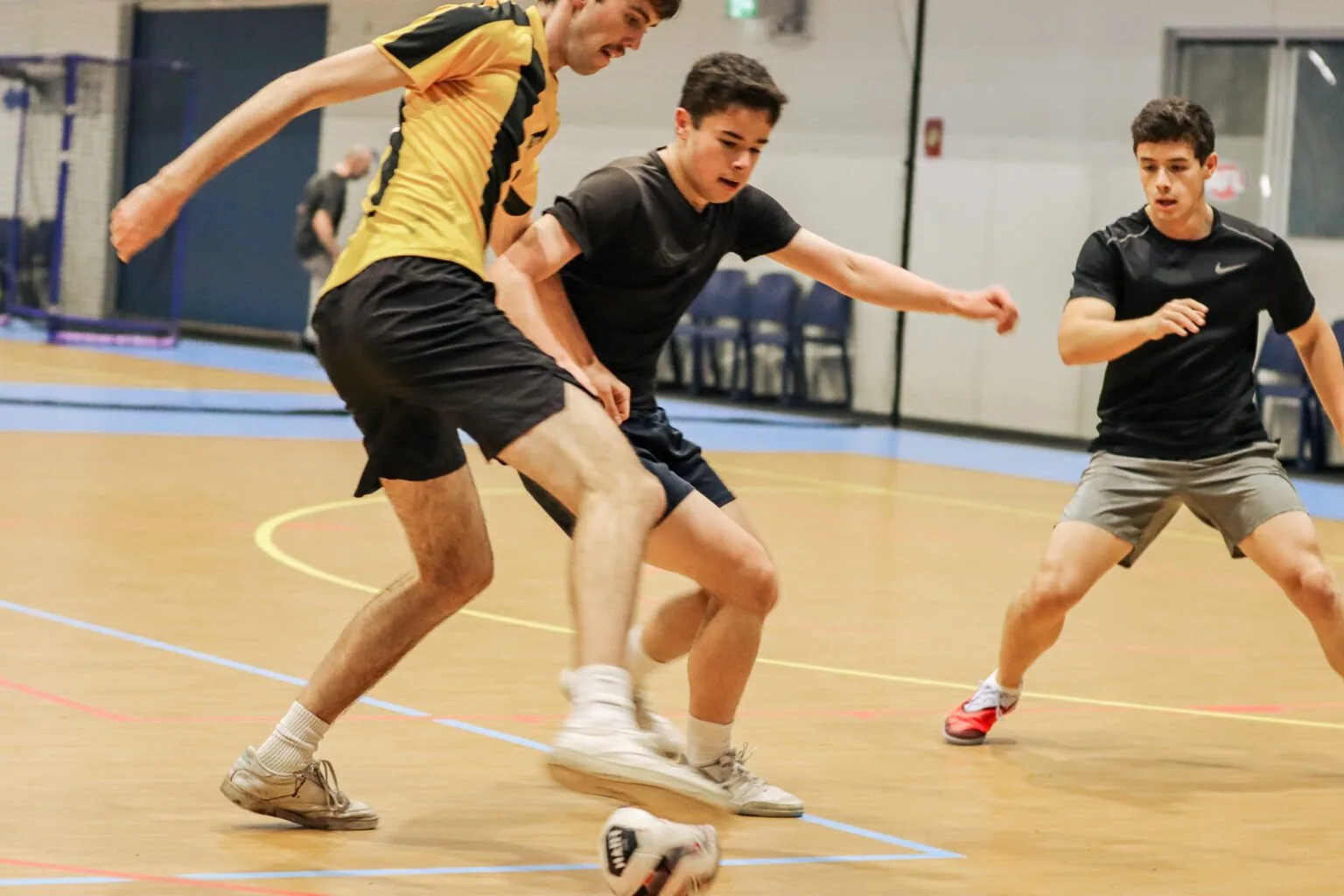
UniActive Sports Hub, University of Wollongong
Wollongong · Futsal competitions
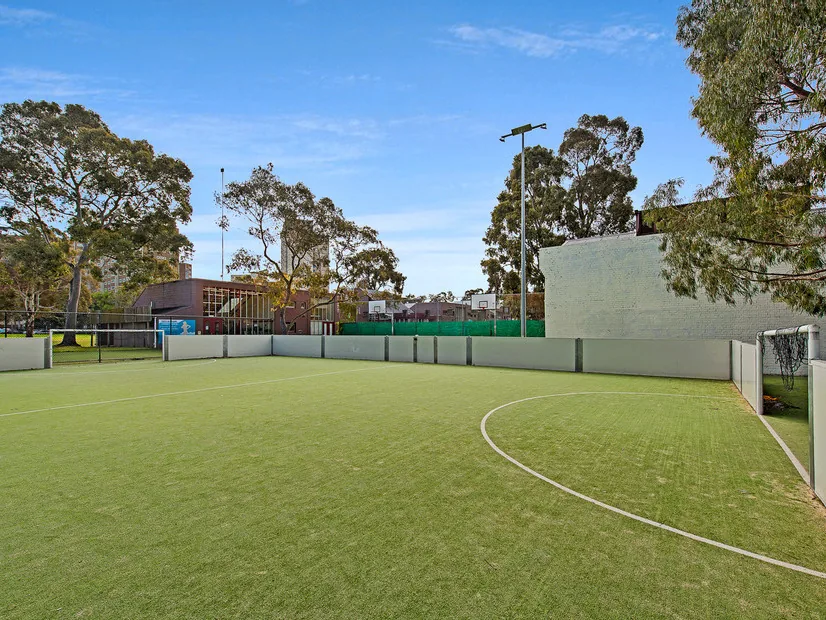
North Melbourne Community Centre
Melbourne · Outdoor 22 x 16 m
Cities with the most futsal courts in our directory:
FAQ
Is a futsal court the same size as a basketball court?
No. A FIBA basketball court is 28 by 15 m, which is close to the smallest legal futsal court of 25 by 16 m but too narrow. Most halls with a basketball court have room for a small futsal court marked over it.
What size is a futsal goal?
A futsal goal is 3 m wide and 2 m high, measured from inside the posts and to the underside of the crossbar.
Why is the futsal penalty area curved?
The Laws draw it with 6 m quarter circles from each post joined by a short straight line, so every point on its edge is about 6 m from the goal.
Can futsal be played on artificial grass?
The Futsal Laws allow artificial turf only in exceptional cases and only for national competitions. Official futsal is played on wood or an artificial sports floor.