Futsal rules
 By the Find My Football Pitch team·
Updated ·
4 min read
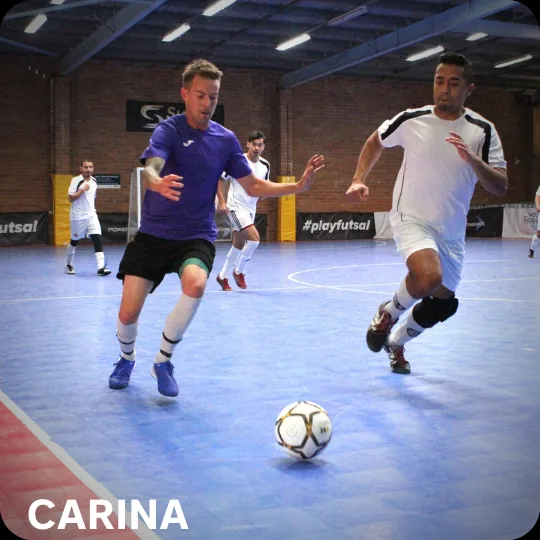
Futsal is FIFA's official five-a-side game, played indoors on a hard court with a small, heavy ball. It has its own Laws of the Game, and several of them surprise people who come from 5-a-side or 11-a-side: four-second restarts, kick-ins, accumulated fouls and a stopped clock.
The short answer
Futsal is five against five, including goalkeepers, on a court about 40 by 20 m with 3 by 2 m goals. Matches are two halves of 20 minutes with the clock stopped whenever the ball is dead, and each team gets one timeout per half. Substitutions are unlimited and on the fly. There is no offside. The ball comes back in with a kick-in, not a throw. Restarts must be taken within four seconds. From a team's sixth accumulated foul in a half, every direct free kick offence gives the other side a free shot from 10 m with no wall.
Court, goals and ball
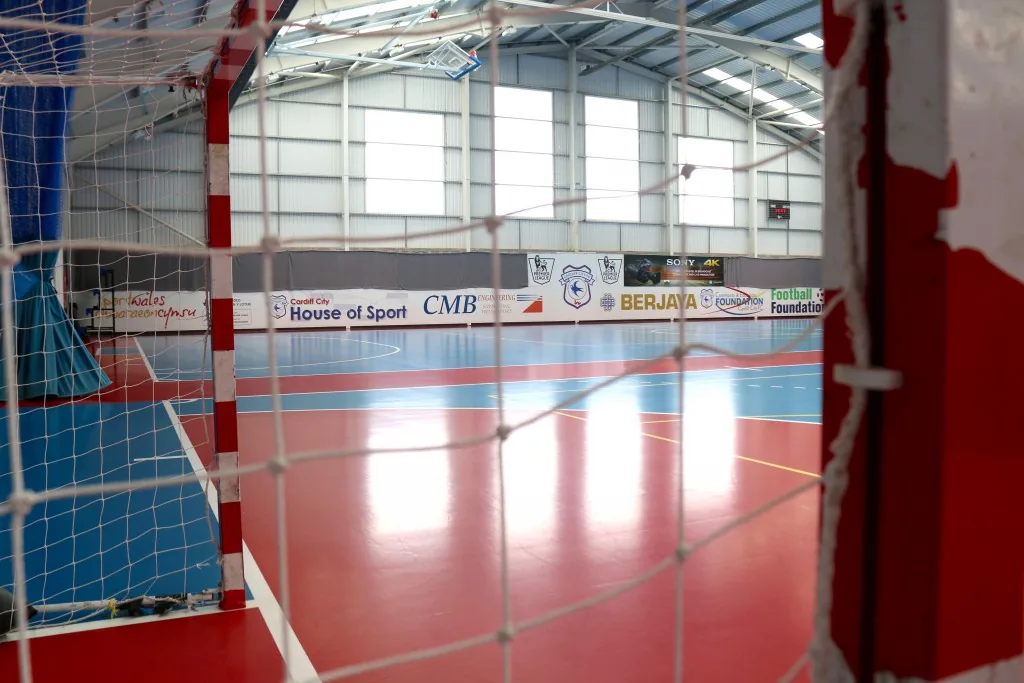
- Court. 25 to 42 m long and 16 to 25 m wide. International matches use 38 to 42 m by 20 to 25 m. Lines, not walls or boards, mark the edge, so the ball goes out of play. Our futsal court dimensions guide has every marking.
- Penalty area. Two quarter circles of 6 m radius drawn from each post and joined by a short straight line. The penalty mark is 6 m from goal; the second penalty mark is 10 m.
- Goals. 3 m wide and 2 m high, the same as handball goals.
- Ball. A size 4 futsal ball, 62 to 64 cm round and 400 to 440 g, with a low bounce. Dropped from 2 m, its first bounce must be 50 to 65 cm.
Players, substitutes and time
- Five players a side, one of them the goalkeeper. A team needs at least three to carry on.
- Substitutes. Up to nine on the bench in official matches. Changes are unlimited and on the fly, through a marked substitution zone in front of your own bench. The player coming off must be off the court before the new one goes on.
- Time. Two halves of 20 minutes, stopped clock. A timekeeper stops the clock every time the ball goes out or play stops, so an official match takes well over 40 minutes in real time.
- Timeouts. Each team may call one one-minute timeout in each half.
- No offside.
Many recreational leagues play a running clock, often two halves of 20 or 25 minutes, and skip timeouts.
Restarts and the four-second rule
Futsal is built to keep the ball moving. Almost every restart has a four-second limit, counted by the referee with raised fingers.
| Restart | How | If you take longer than 4 seconds |
|---|---|---|
| Kick-in (ball over the touchline) | Ball placed on the line, kicked in; opponents 5 m away | Kick-in to the other team |
| Corner kick | From the corner arc; opponents 5 m away | Goal clearance to the other team |
| Free kick | Opponents 5 m away | Indirect free kick to the other team |
| Goal clearance (ball over the goal line off an attacker) | Goalkeeper throws the ball out from the penalty area | Indirect free kick to the other team |
You cannot score directly from a kick-in or a goal clearance.
Goalkeeper rules
- The keeper has four seconds to release the ball once they control it in their own half, with hands or feet.
- If a team-mate deliberately passes the ball back after the keeper has played it, the keeper cannot touch it again in their own half until an opponent has played or touched it.
- The keeper can come out and play anywhere. Many teams use a "fly goalkeeper", an outfield player in a keeper's shirt or the keeper themselves, to get a five against four in attack late in a game.
- Goal clearances are thrown, not kicked.
Fouls, accumulated fouls and cards
The fouls are the same as in 11-a-side: kicking, tripping, pushing, holding, careless or reckless challenges and deliberate handball give a direct free kick. Sliding to play the ball is not banned outright in the Laws, but a slide that is careless or endangers an opponent is a foul, and many recreational leagues ban slide tackles completely.
Accumulated fouls are the rule that changes how futsal is played. Every direct free kick offence counts towards a team total for that half. From the sixth one:
- the other team gets a direct free kick from the 10 m mark, or, if the foul was within 10 m of the goal line, the kicker can choose to take it from where it happened;
- defenders cannot form a wall, and only the goalkeeper can defend it.
So defenders tackle with care once their team reaches four or five fouls.
Sending off. A player shown a red card cannot return. The team plays a player short for two minutes, or until the other team scores, and then a substitute can come on.
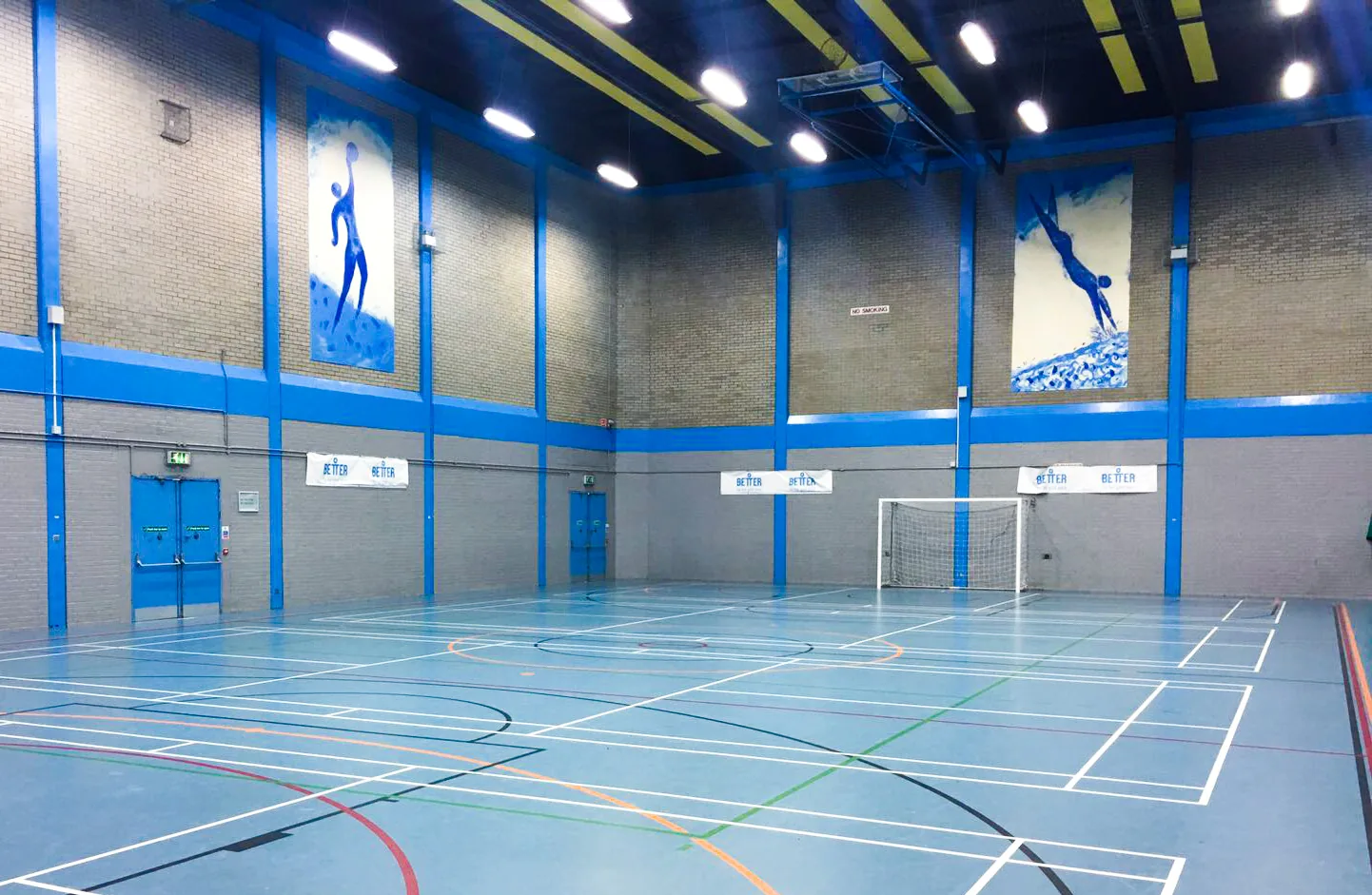
Shankill Leisure Centre
Belfast · Indoor futsal hall
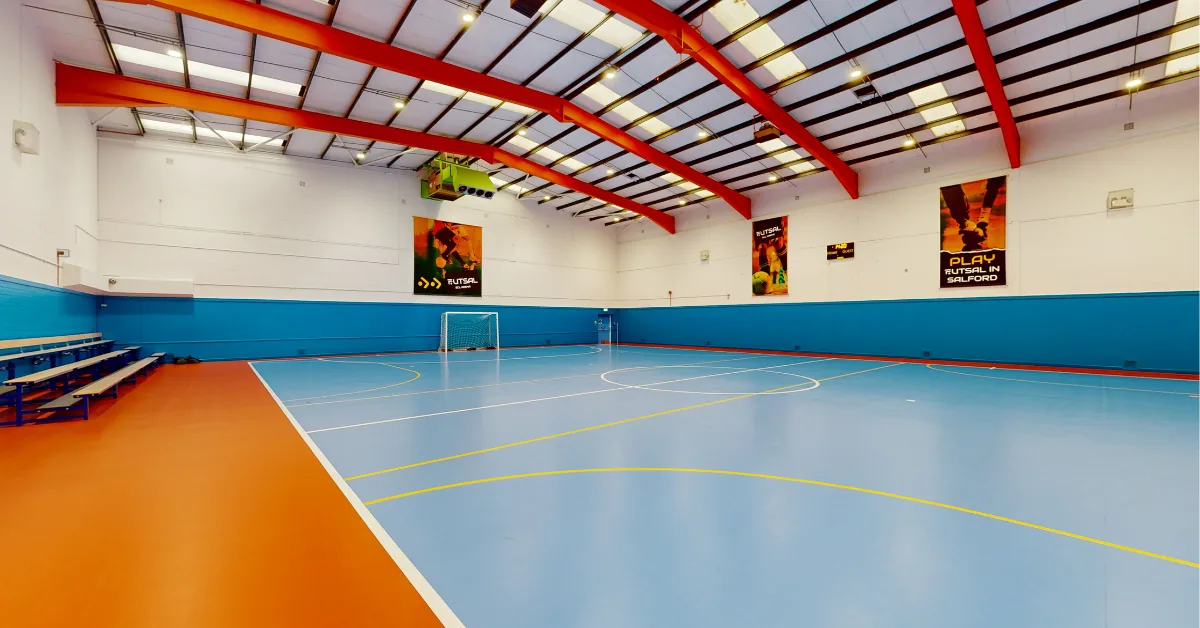
Ordsall Leisure Centre
Manchester · Futsal arena

The RISE
Perth · Futsal leagues
How casual futsal differs
Drop-in sessions and social leagues usually keep the kick-ins, the low-bounce ball and no offside, but relax the rest: one referee, a running clock, fewer formal timeouts and often a looser four-second count. Shin guards are compulsory under the Laws and in most leagues. Footwear must be non-marking indoor shoes; read futsal shoes before your first session. To compare the game with caged 5-a-side, see futsal vs 5-a-side.
Cities in our directory with the most futsal courts:
FAQ
Is there offside in futsal?
No. There is no offside in futsal.
Are there throw-ins in futsal?
No. When the ball crosses the touchline the game restarts with a kick-in from the line, which must be taken within four seconds.
How long is a futsal match?
Two halves of 20 minutes with a stopped clock in official matches. Recreational leagues often use a running clock.
What happens after five fouls in futsal?
From the sixth accumulated foul in a half, the other team gets a direct free kick from 10 m, or closer, with no defensive wall.
Can the goalkeeper score in futsal?
Yes. The keeper can play anywhere on the court and score, but cannot score directly by throwing the ball from a goal clearance.