5-a-side pitch size
 By the Find My Football Pitch team·
Updated ·
5 min read
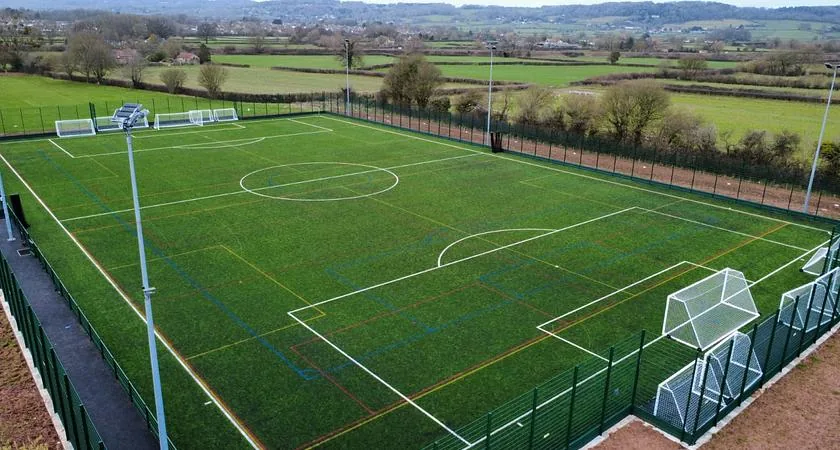
There is no law that fixes the size of an adult 5-a-side pitch, so every centre builds to its own plot. Most land in a fairly narrow range, though, and the FA has a recommended size for youth 5v5. Here is what to expect when you book.
The short answer
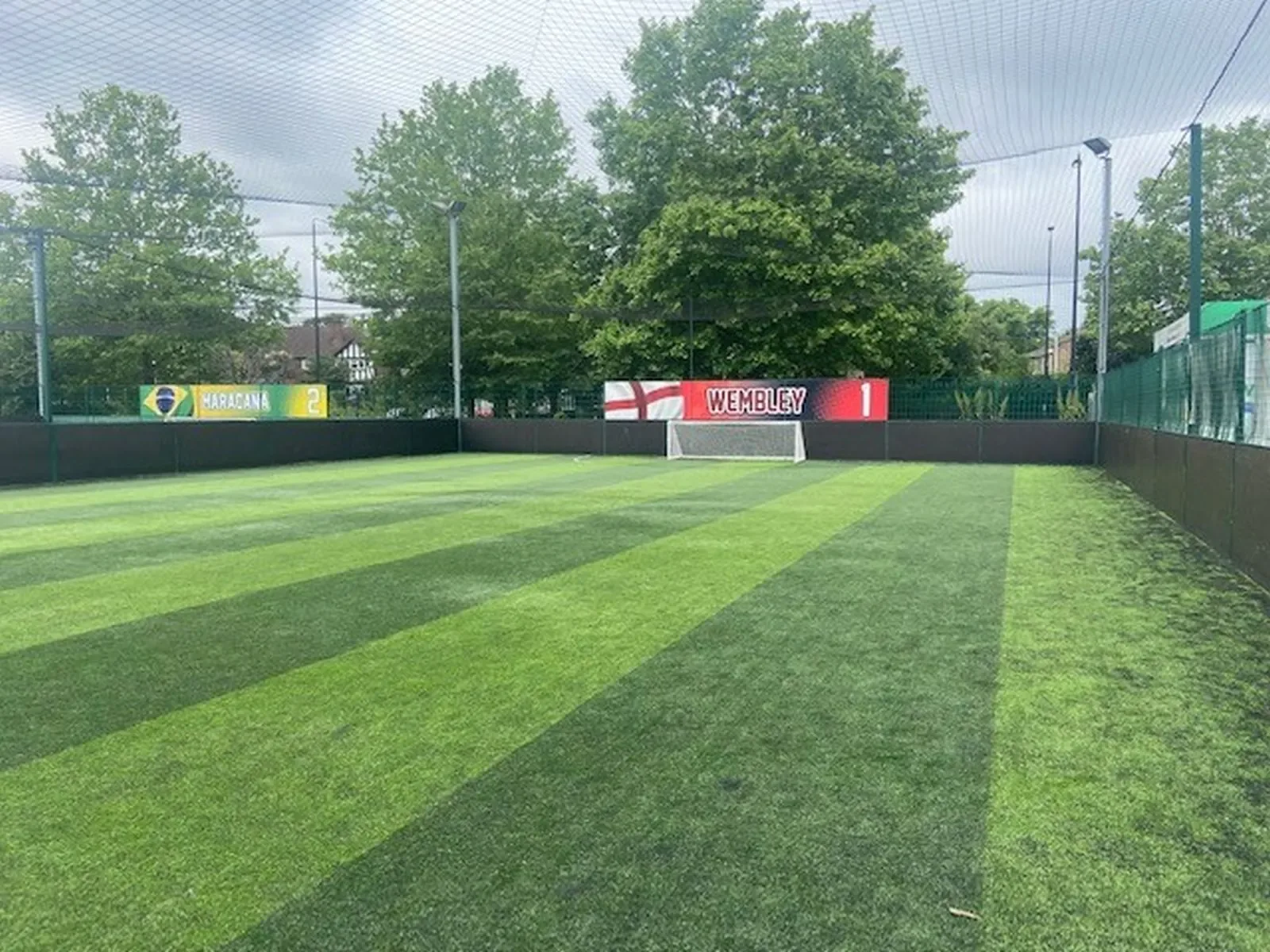
A 5-a-side pitch is usually between about 30 x 20 m and 40 x 30 yards (37 x 27 m). The FA recommends 37 x 27 m (about 40 x 30 yards) for youth 5v5, and the same as a minimum for new small-sided facilities. Many commercial and council cages are smaller, around 30 x 20 m, with walls or boards round the edge. Adult goals are not standardised, but they are usually low, and 12 ft wide by 4 ft high is a common size.
Typical 5-a-side pitch sizes
Because adult 5-a-side is not run by one governing body, there is no compulsory size. Pitch sizes published by venues in our directory show the spread:
| Type of pitch | Typical size | Area |
|---|---|---|
| Small outdoor cage, council or school | about 28 x 18 m to 30 x 20 m | 500 to 600 m² |
| Commercial 5-a-side pitch | about 31 x 22 m to 31 x 24 m | about 680 to 750 m² |
| Larger pitch, FA youth size | 40 x 30 yd (about 37 x 27 m) | about 1,000 m² |
| Futsal court (FIFA range) | 25 to 42 m x 16 to 25 m | 400 to 1,050 m² |
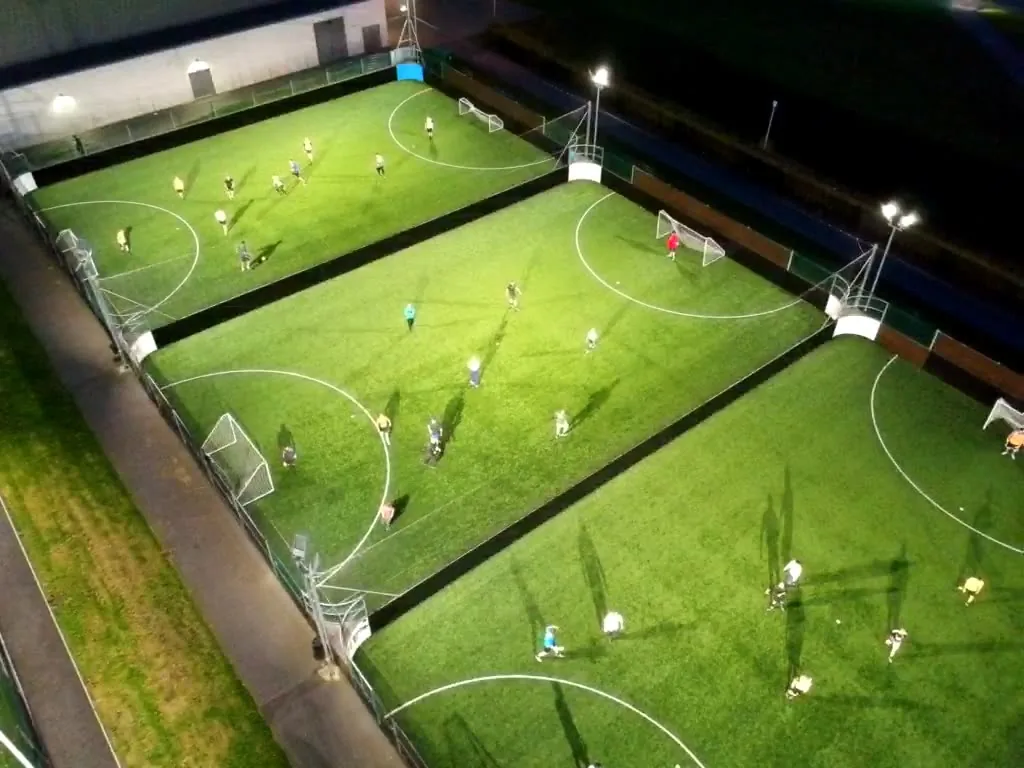
For comparison, a full-size 105 x 68 m pitch has room for about a dozen 30 x 20 m cages. With ten players on a 600 m² pitch, each player has about 60 m² of space. In an 11-a-side game on a stadium pitch, each of the 22 players has more than 300 m². That is why 5-a-side is so quick: less space means less time on the ball and more touches for everyone.
The FA size for youth 5v5
For youth 5v5, which from the 2026-27 season is the format for under-8s and under-9s, the FA recommends a pitch of 37 x 27 m, about 40 x 30 yards, with 12 x 6 ft goals. Including the recommended run-off round the edge, the area grows to 46 x 36 yards. These pitches are usually marked on grass or as part of a larger 3G pitch, often in red lines.
The FA's 3G design guide recommends a minimum of 37 x 27 m when anyone builds a new small-sided facility, the same as its youth 5v5 size. Older commercial centres and council cages vary more, and the smaller cages are often well under that.
For the older youth formats, see youth football pitch sizes and 7-a-side pitch size.
Markings, goals and boundaries
- Boundaries. Most outdoor 5-a-side pitches are fenced or walled, often with kickboards along the bottom. At many centres the ball stays in play off the boards; others restart with a kick-in when the ball hits the netting above.
- Goals. There is no rule for adult 5-a-side goals. They are usually low, and 12 ft wide by 4 ft high (3.66 x 1.22 m) is a common size, but ask the venue. Youth 5v5 uses 12 x 6 ft goals. All the sizes are in football goal sizes.
- Goalkeeper area. Most pitches have a semicircle or D in front of each goal. In many leagues only the goalkeeper may play the ball inside it, and outfield players who enter it give away a free kick or penalty.
- Halfway line and centre circle. Present on most pitches, but the circle is small, not the 9.15 m radius of a full-size pitch.
House rules on the area, head height and slide tackles differ between operators. Our guide to 5-a-side rules covers the common versions.
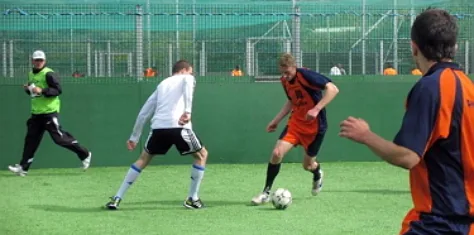
Indoor 5-a-side and futsal
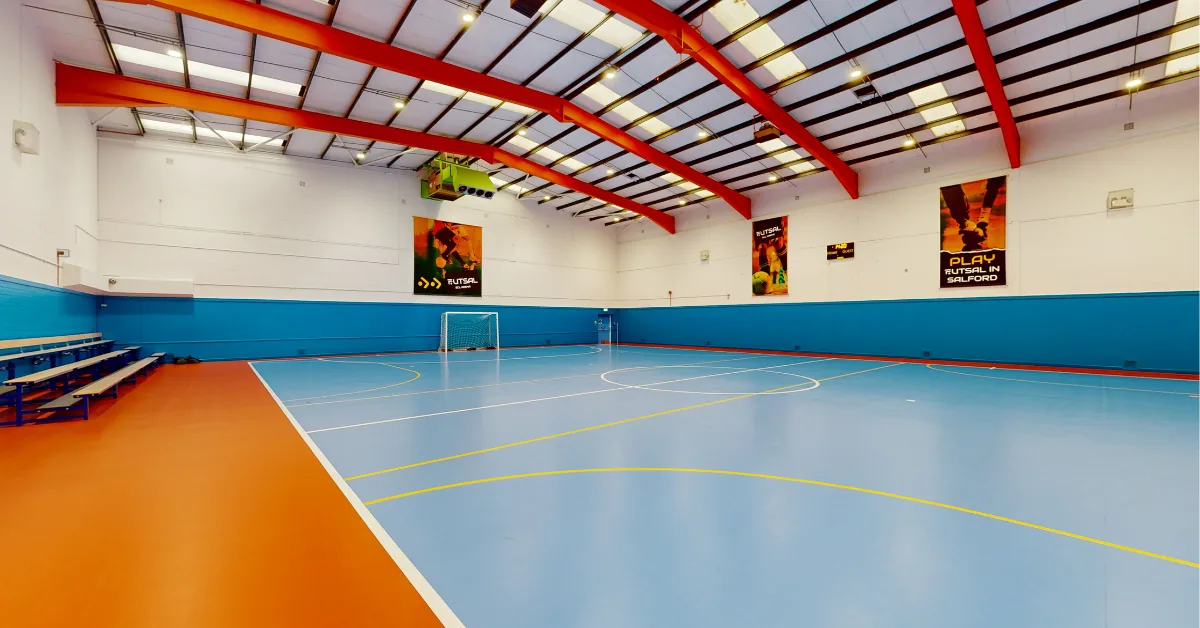
Indoor 5-a-side is usually played in a sports hall on a timber or vinyl floor, with the hall walls acting as boundaries or with lines marked inside them. Hall sizes vary, so the pitch is whatever the hall allows; one indoor centre in our directory lists 35 x 25 m.
Futsal is a separate, FIFA-run game with a set court size: 25 to 42 m long and 16 to 25 m wide, and 38 to 42 m by 20 to 25 m for international matches. It has touchlines instead of walls and 3 x 2 m goals. See futsal court dimensions and futsal vs 5-a-side.
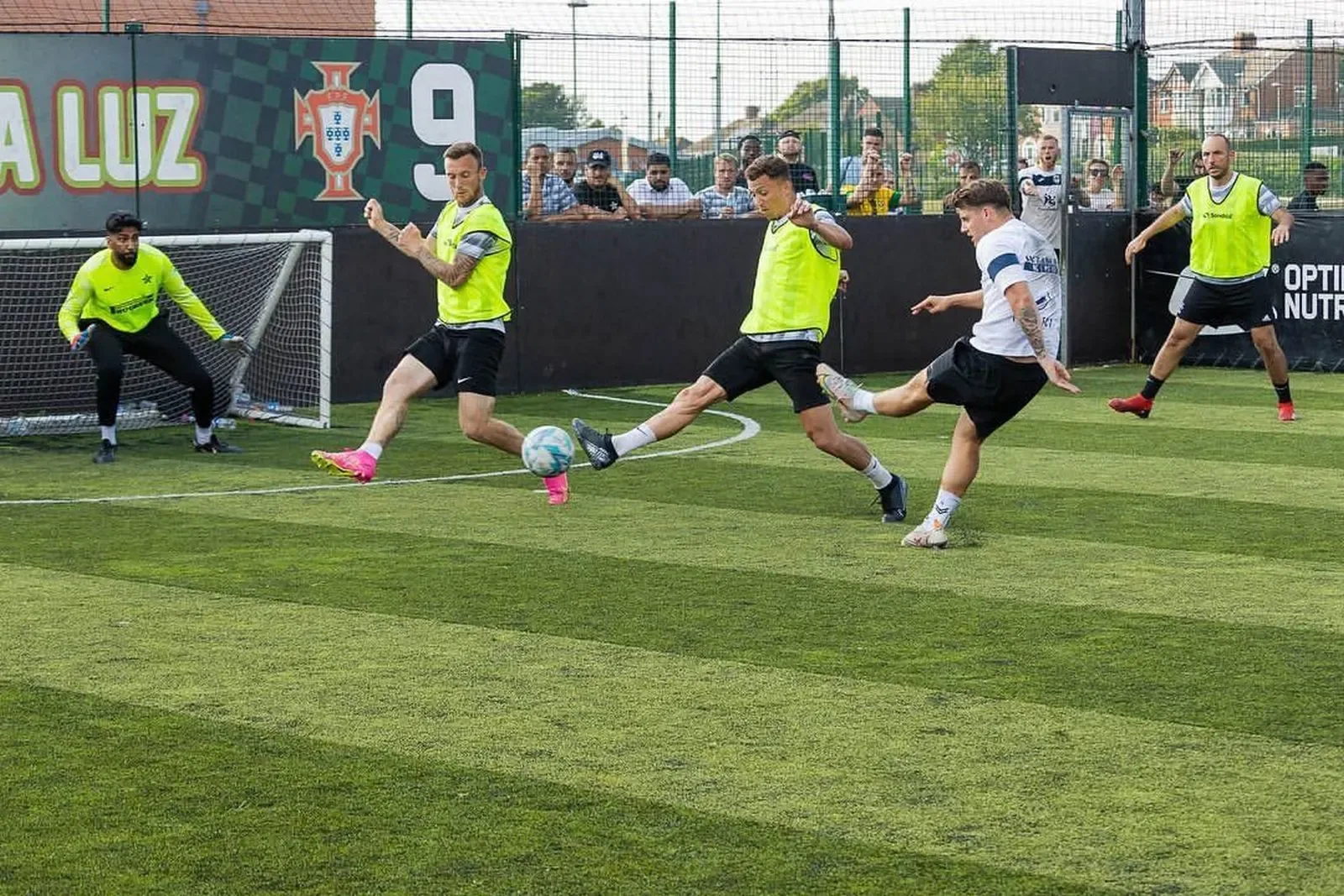
GOALS Leicester
Leicester · ProTurf cage
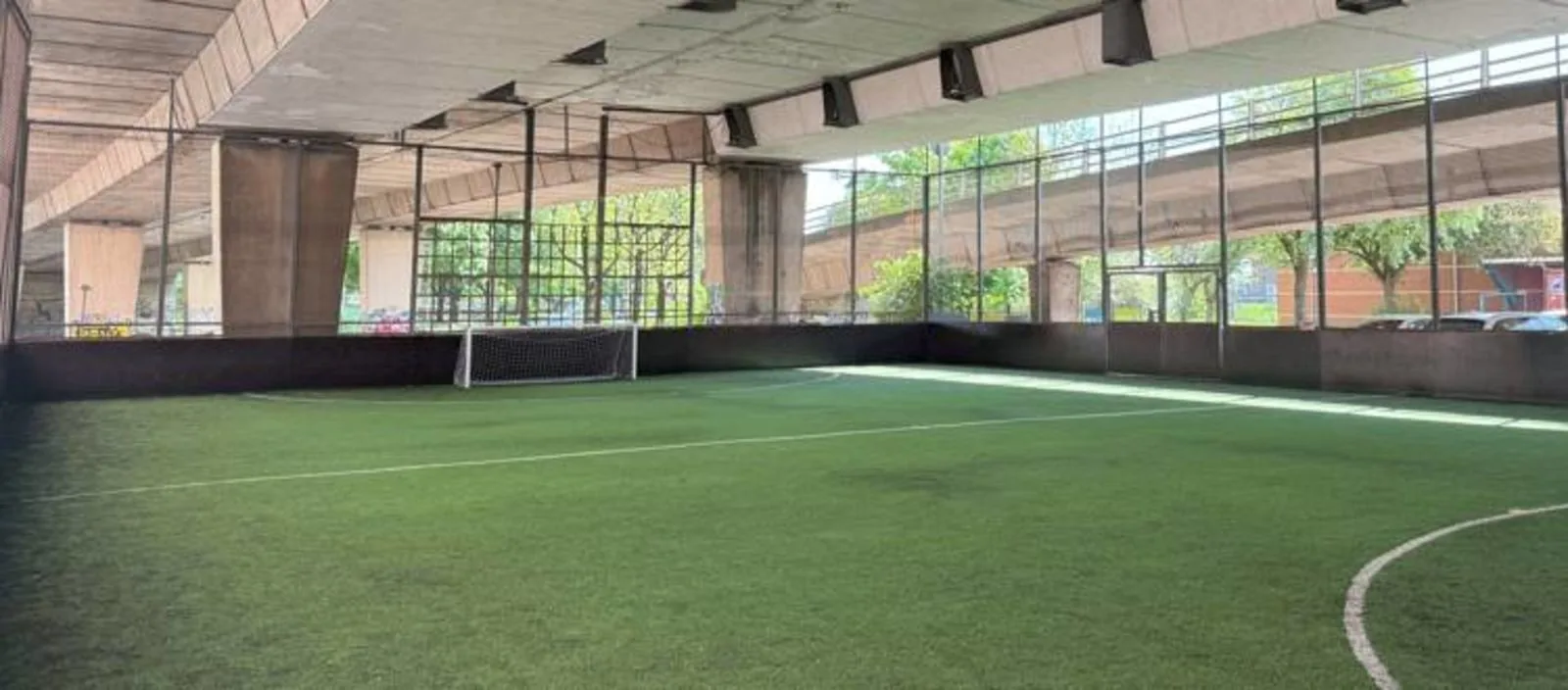
Sugden Sports Centre
Manchester · 3G 5-a-side pitch
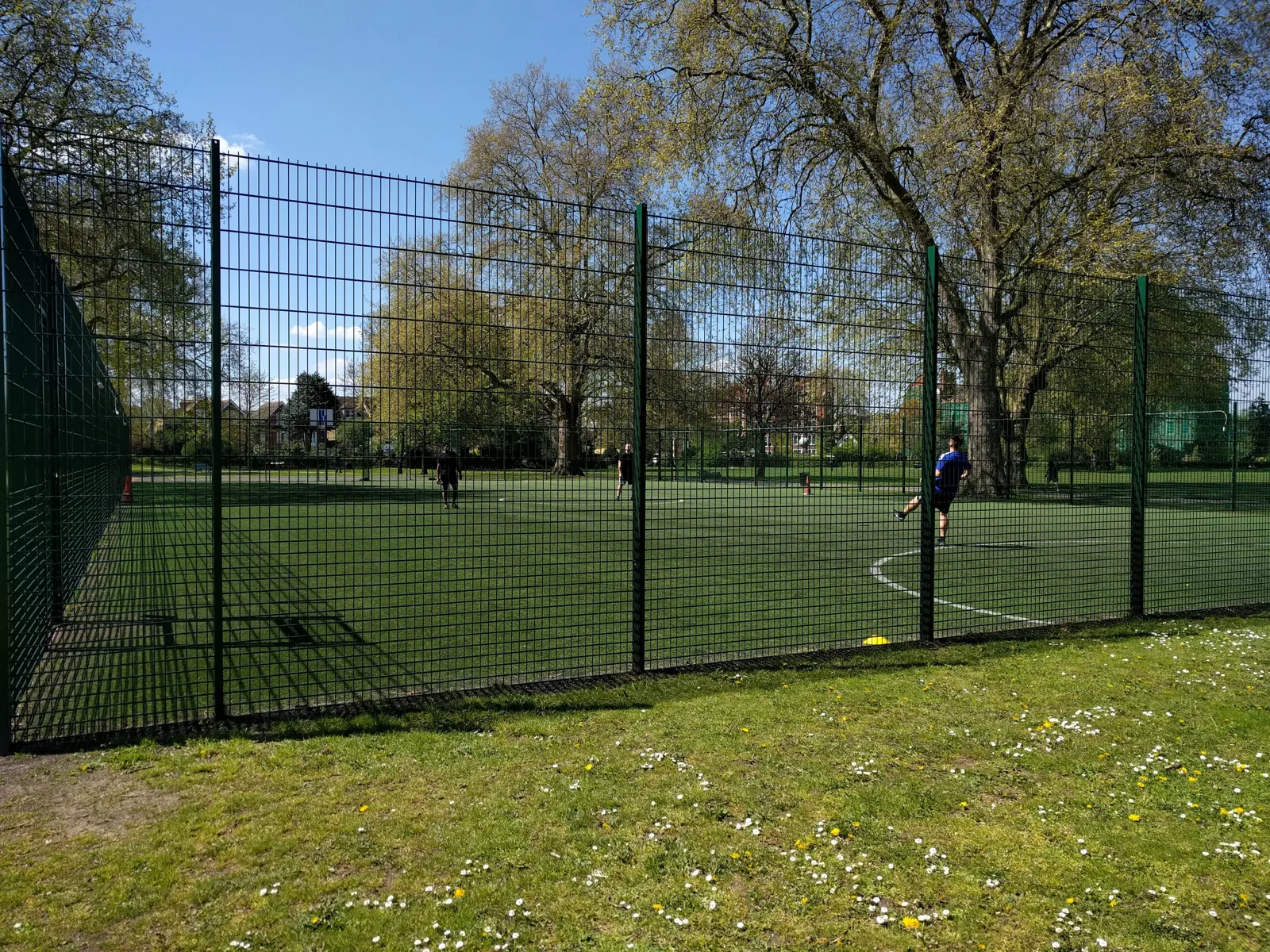
Myatt's Fields Park pitch
London · Park 5G pitch
What the size means when you book
A small cage suits five players a side with no rolling subs. On a bigger pitch, like the FA 40 x 30 yard size, five a side gets tiring fast, and many groups bring six or seven and rotate. If your group regularly has 12 to 14 players, look for a 6-a-side or 7-a-side pitch instead.
In the UK in 2026, the 5-a-side pitches in our directory mostly cost about £25 to £55 an hour, with evenings at the top of that range. Most venues book in 60-minute slots, and a few offer 40 or 50-minute games for leagues.
Ask for the size. If a venue lists several 5-a-side pitches, they may not all be the same. Covered or indoor pitches may be smaller than the outdoor ones, and an end pitch may be shorter to fit the site.
Cities with the most 5-a-side pitches in our directory:
FAQ
What is the standard 5-a-side pitch size?
There is no single standard. The FA recommends 37 x 27 m (about 40 x 30 yards) for youth 5v5, and most adult pitches are between about 30 x 20 m and that size.
How big is a 5-a-side pitch in metres?
Commonly around 30 x 20 m for a fenced cage, and up to about 37 x 27 m for a larger pitch.
How big are 5-a-side goals?
There is no fixed size for adult 5-a-side. Low goals of 12 ft by 4 ft (about 3.66 x 1.22 m) are common. Youth 5v5 uses 12 x 6 ft goals.
How many 5-a-side pitches fit on a full-size pitch?
About a dozen 30 x 20 m pitches would fit on a 105 x 68 m pitch, though in practice a full-size 3G is usually split into two or three.