Undersoil heating explained
 By the Find My Football Pitch team·
Updated ·
6 min read

Professional grounds stay green and playable through a hard frost while the park pitch down the road is closed. The difference is usually a network of pipes under the grass. Here is how undersoil heating works, who has it and why your Sunday league pitch almost certainly does not.
The short answer
Undersoil heating is a grid of pipes or cables buried beneath a grass pitch that keeps the soil just above freezing, so the surface stays soft enough to play on in a frost. Most stadium systems pump warm water through plastic pipes laid under the root zone, heated by a gas, oil or electric boiler. Premier League clubs must have it. EFL clubs must provide frost covers, undersoil heating or both. Grassroots pitches almost never have it because it costs a great deal to install and run.
How undersoil heating works
The common system in football is a closed loop of hot water. Long runs of plastic pipe are laid in parallel lines under the whole playing area, deep enough to sit below the grass roots and the machines that spike the turf. A boiler plant beside the stadium heats a mix of water and antifreeze and pumps it round the loop. Sensors in the soil tell the control system when the temperature at root level is heading towards zero, and the plant switches on.
A few grounds use electric heating cables instead of pipes, and some use warm air blown through the drainage layer. The idea is the same in each case: put a little heat into the ground from below so the water in the soil never freezes solid.
The heat is gentle. The aim is to keep the root zone a few degrees above freezing, not to warm the grass like a greenhouse. Groundstaff switch systems on ahead of a forecast frost, often a day or two before a match, because soil takes a long time to warm up once it has frozen.
What it is for
Frozen ground is hard, uneven and slippery. The ball bounces unpredictably, studs do not grip, and a fall on rock-hard turf hurts far more than one on soft grass. Referees call matches off for exactly these reasons. Our guide to when a pitch is too frozen to play explains how that decision is made.
For a professional club, a postponed match costs money: ticket refunds, catering already bought, rearranged travel and a fixture pile-up later in the season. Broadcasters want games played when they are scheduled. Undersoil heating is insurance against all of that.
There is a grass benefit too. Warmer soil lets the grass keep growing a little longer into winter and start earlier in spring, which helps a pitch recover from heavy use. Many stadiums pair heating with mobile grow lights that sit over the worn areas between matches.
Who has to have it
Rules depend on the league, and they change from time to time, so check the current handbook if it matters to you.
| Competition | Rule |
|---|---|
| Premier League | Each club must provide and maintain undersoil heating at its stadium |
| EFL (Championship, League One, League Two) | Home clubs must provide full-pitch frost covers and/or undersoil heating |
| Scottish professional football | No longer required across the board; tied to the higher grades of the league's licensing criteria |
| Bundesliga and 2. Bundesliga | Required |
| Non-league and grassroots | Not required; very rare |
The idea is not new. Goodison Park, Everton's old ground, was the first English stadium to install undersoil heating, in 1958. Many of the big grounds followed over the next few decades, and today it is standard at the top level across northern and central Europe.
What it cannot do
Undersoil heating keeps soil from freezing. It is much less effective against a heavy fall of snow, which sits on top of the grass and insulates it from the warmth below. On 28 December 2005, three Premier League games were postponed because snow covered pitches at grounds that had heating. Clubs now combine heating with frost covers and teams of volunteers with shovels when snow is forecast.
It also cannot make a pitch safe if the area around it is dangerous. A match can still be called off because of ice on the roads, in the car park or on the terraces, even when the grass itself is fine.
Heating does nothing for drainage either. A heated pitch can still flood if the drains cannot cope. See waterlogged pitches for how that problem is handled.
Heating and frost covers are different tools. Covers are large sheets, sometimes inflated with warm air, laid over the pitch the night before. They are cheaper than heating and are what many EFL and non-league clubs rely on. Plenty of grounds use both.
Why park pitches do not have it
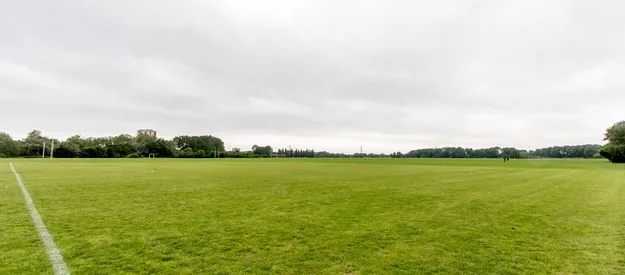
A council pitch is usually native soil, often clay, with simple drainage or none at all. Undersoil heating needs a free-draining sand root zone, a boiler house, pipework under the whole field and someone to run it. Installing it means rebuilding the pitch from the ground up, and the running costs through a cold winter are high. For a pitch that earns a match fee a week, it never adds up.
That is why grassroots football in the UK and Ireland loses so many weekends to frost. The practical answer for amateur teams is not heating but a different surface. Artificial pitches drain fast and stay playable in most cold snaps, though a hard frost can still make the fibres icy and operators do close them. Indoor pitches avoid the problem altogether.

Some of the newest indoor venues use a 3G surface under a roof or a dome, so frost never reaches the pitch. If your league keeps losing games in January, ask whether fixtures can move to one of these. Our guide to indoor football pitches covers the options.

For more on how top-level surfaces differ from your local field, read why stadium pitches look perfect and park pitches don't.
FAQ
Does undersoil heating melt snow?
Only slowly. It is designed to stop soil freezing, not to clear snow. A thick layer of snow insulates the grass, so clubs still need covers and people with shovels when heavy snow is forecast.
Is undersoil heating compulsory in the Premier League?
Yes. The Premier League handbook requires every club to provide and maintain an undersoil heating system at its stadium.
Do EFL clubs need undersoil heating?
Not on its own. EFL rules require home clubs to have full-pitch frost covers, undersoil heating or both, so some clubs rely on covers alone.
Do artificial pitches have undersoil heating?
Almost never in community football. Artificial pitches drain quickly and usually stay playable in light frost, but a hard frost or snow can still close them.