Indoor football pitches and sports halls
 By the Find My Football Pitch team·
Updated ·
5 min read
Indoor football can mean a full-size 3G pitch under a roof, a netted court on artificial grass, or five-a-side in the badminton hall of your local leisure centre. They play very differently. Here is what each type is like, what to wear and roughly what it costs.
The short answer
An indoor football pitch is any football surface under a roof. There are three main kinds: indoor 3G pitches in halls or domes, which play like outdoor artificial grass; dedicated indoor 5-a-side centres, often with netted or walled courts where the ball stays in play; and sports halls, with a sprung wooden or vinyl floor, where you play 5-a-side or futsal. Wear turf shoes on indoor 3G and flat indoor court shoes in a sports hall. In Australia, New Zealand and Canada this is often called indoor soccer.
The three kinds of indoor pitch
| Type | Surface | Usual format | Best for |
|---|---|---|---|
| Sports hall | Sprung timber or vinyl | 5-a-side, futsal | Cheap weekly games, futsal |
| Indoor 3G hall or dome | Artificial grass with infill | 5 to 11-a-side | Club training in winter, full matches |
| Indoor soccer centre | Short artificial turf or court surface, often netted | 5 or 6-a-side leagues | Fast, social league games |
Football in a sports hall
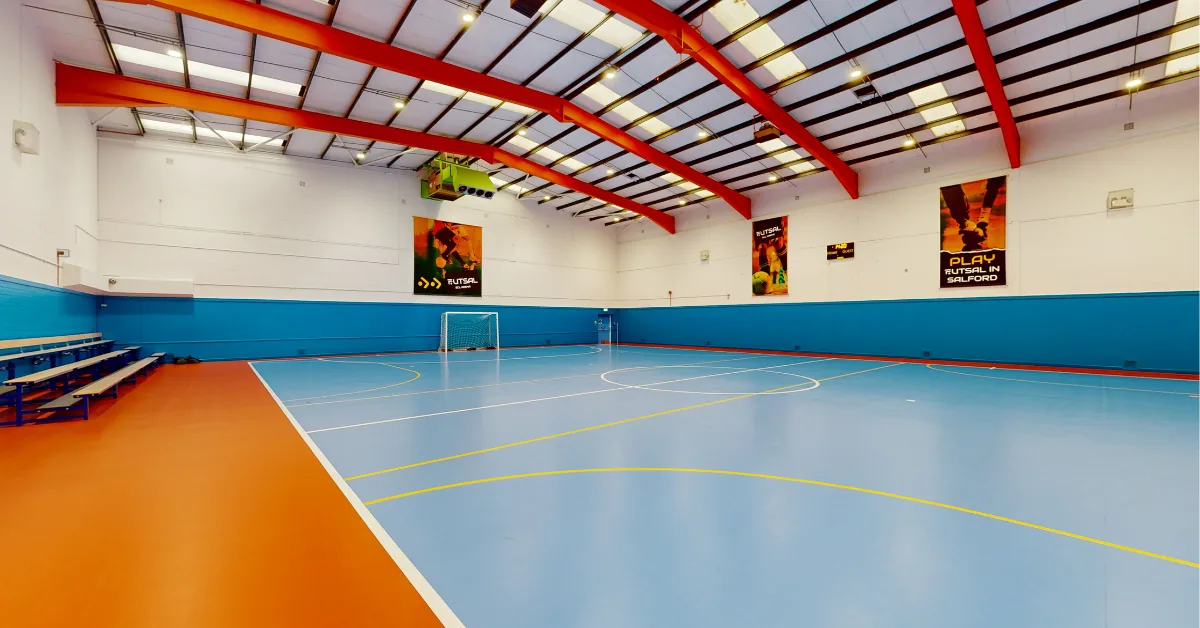
Most leisure centres in the UK and Ireland let their main hall for 5-a-side. A standard four-court hall, the size used for four badminton courts side by side, is 34.5 m by 20 m. That makes a good 5-a-side pitch, and it fits a futsal court at the smaller end of the sizes the futsal laws allow (25 to 42 m long and 16 to 25 m wide for non-international games).
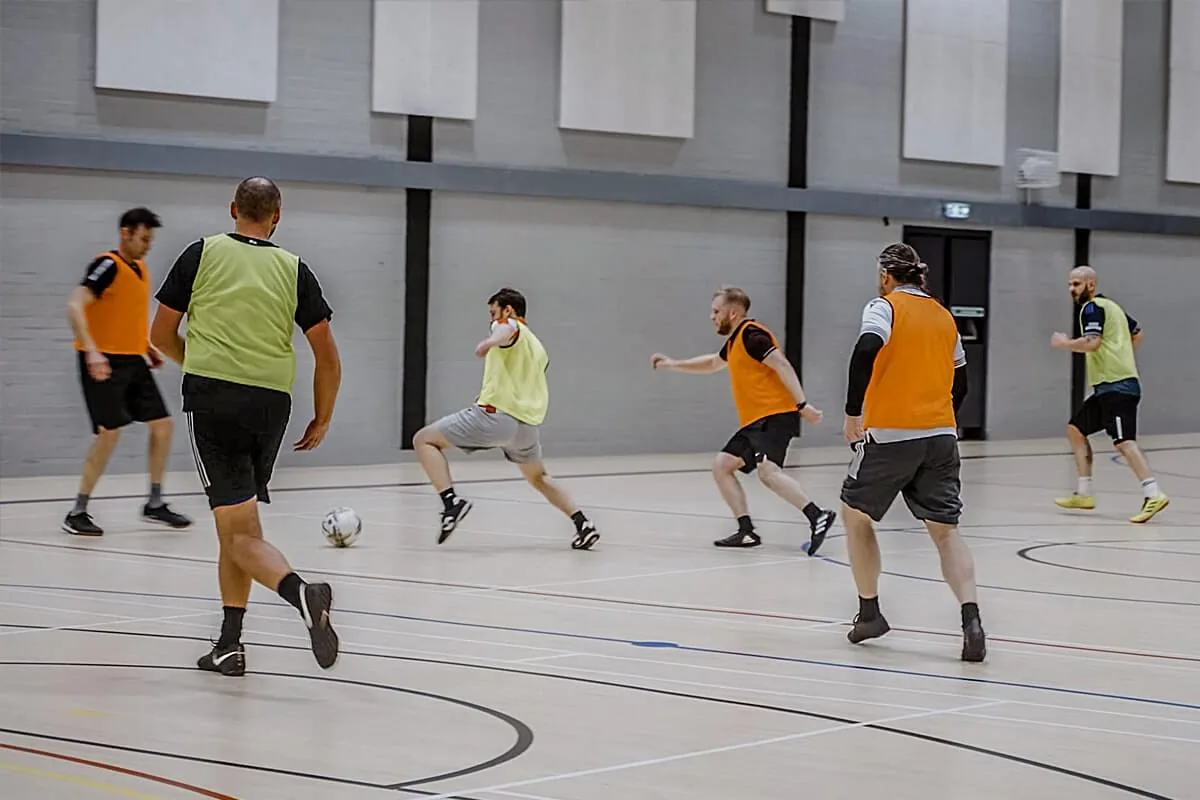
Walls are part of the game in many halls, so the ball rarely goes out. Some centres put up rebound boards; others play off the walls as they are. The floor is fast and the ball skids, so passing is quicker and touches need to be softer than on grass. A low-bounce futsal ball suits a hall much better than a normal football. Our guide to futsal court dimensions has the full markings.
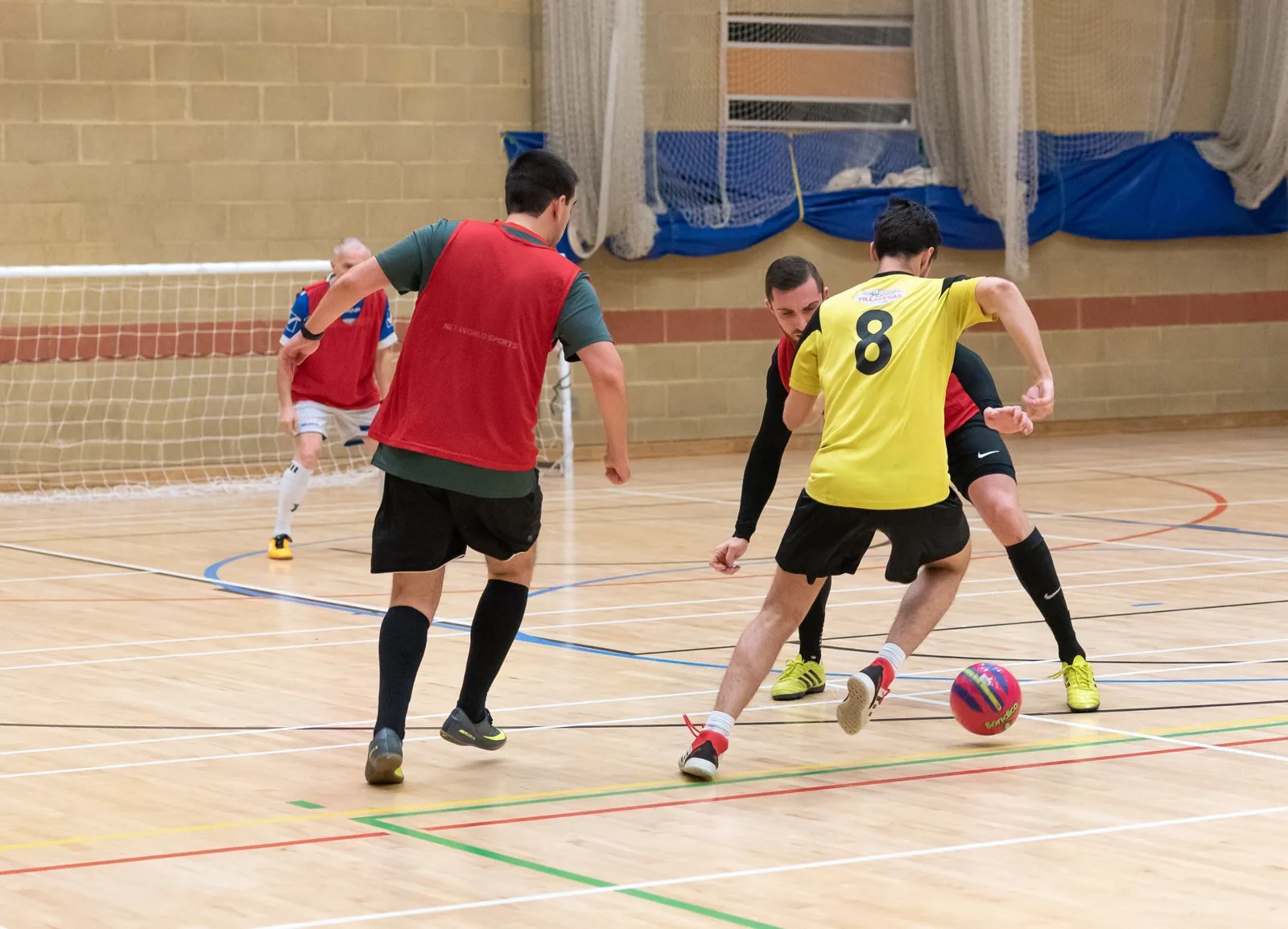
Halls are usually the cheapest indoor option, and the slots are easy to find on weeknights. The downside is that they are shared with badminton, netball and basketball, so the lines on the floor are a tangle of colours and evening slots get booked up in winter.
Indoor 3G halls and domes
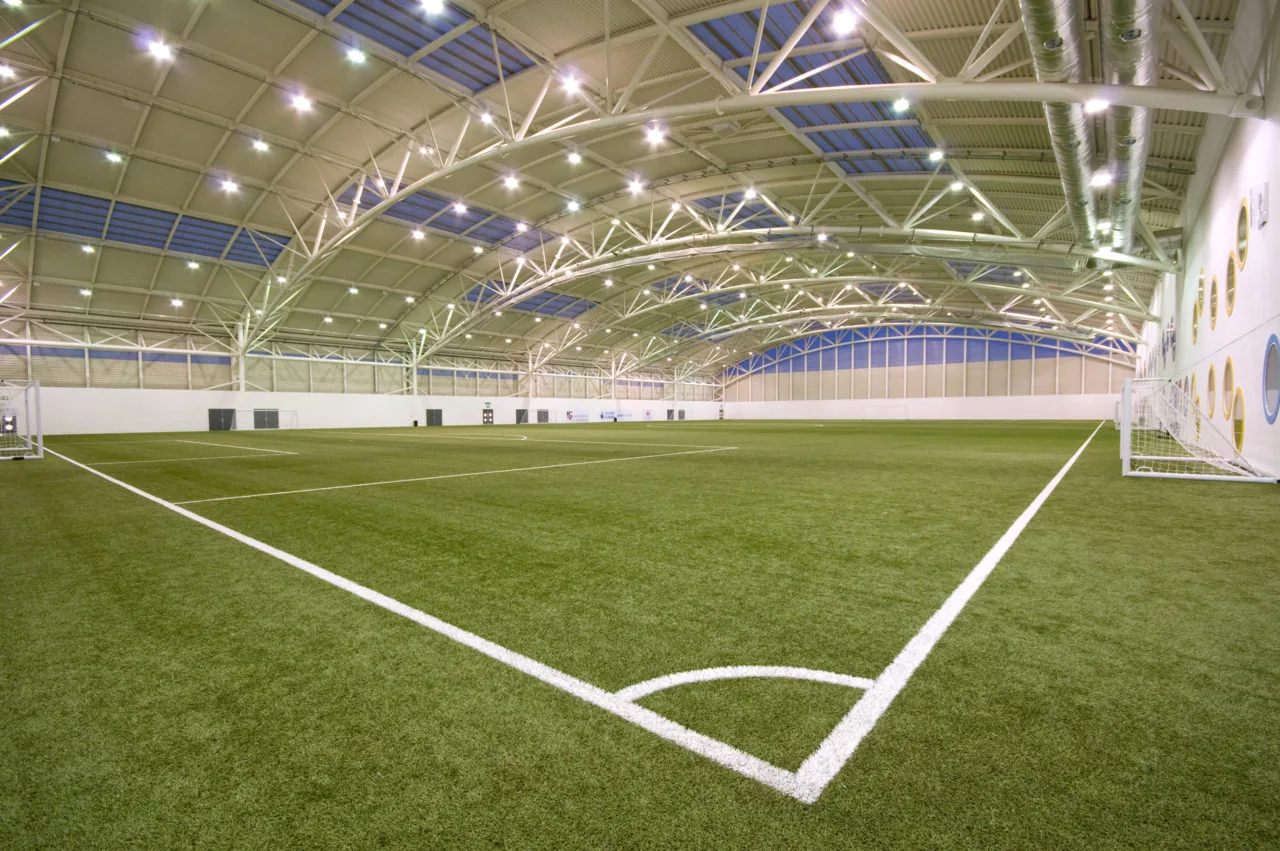
These are full artificial grass pitches with a roof over them, either a steel-framed hall or an inflated fabric air dome. They play exactly like an outdoor 3G pitch, with the same boots, but without wind, rain, frost or darkness. Many can be split into thirds for 7-a-side or used whole for 11-a-side.
They are popular with clubs for winter training, especially in Scotland and the north of England, where grass pitches are closed for weeks at a time. Because they are big and expensive to run, they cost more per hour than an outdoor pitch.
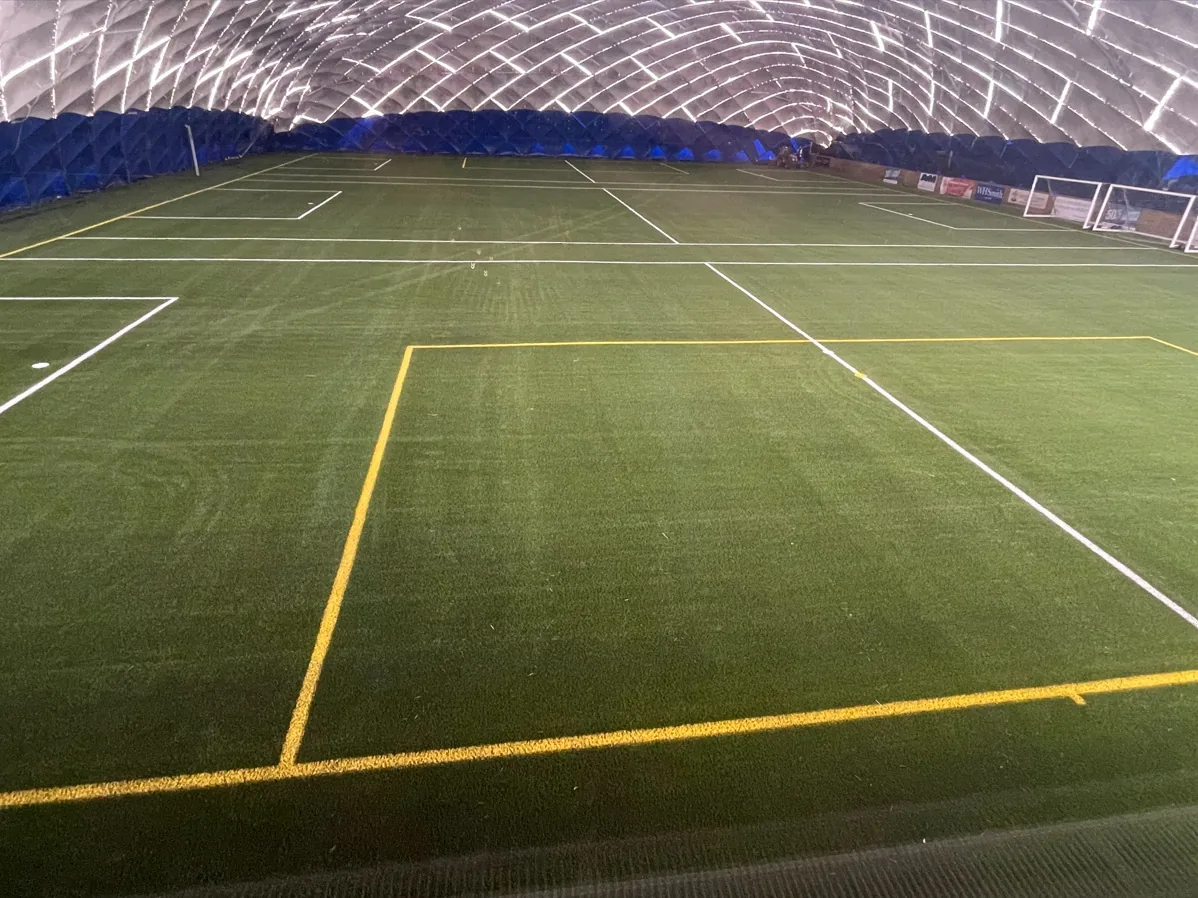
The Swindome at Supermarine
Swindon · Air dome 3G
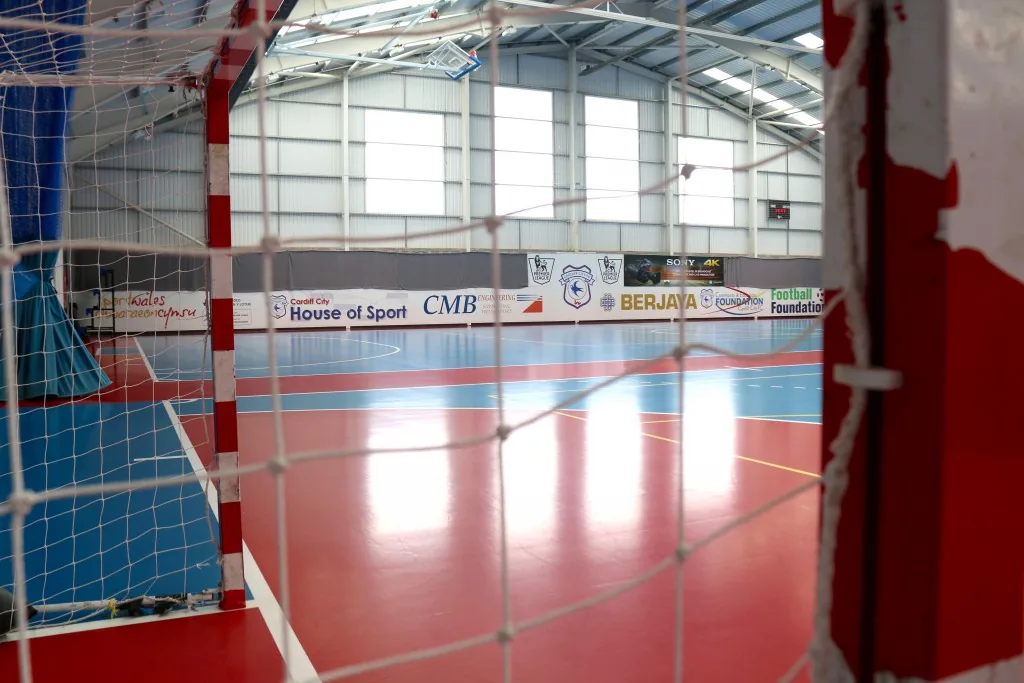
Cardiff City House of Sport (Leckwith)
Cardiff · Futsal hall
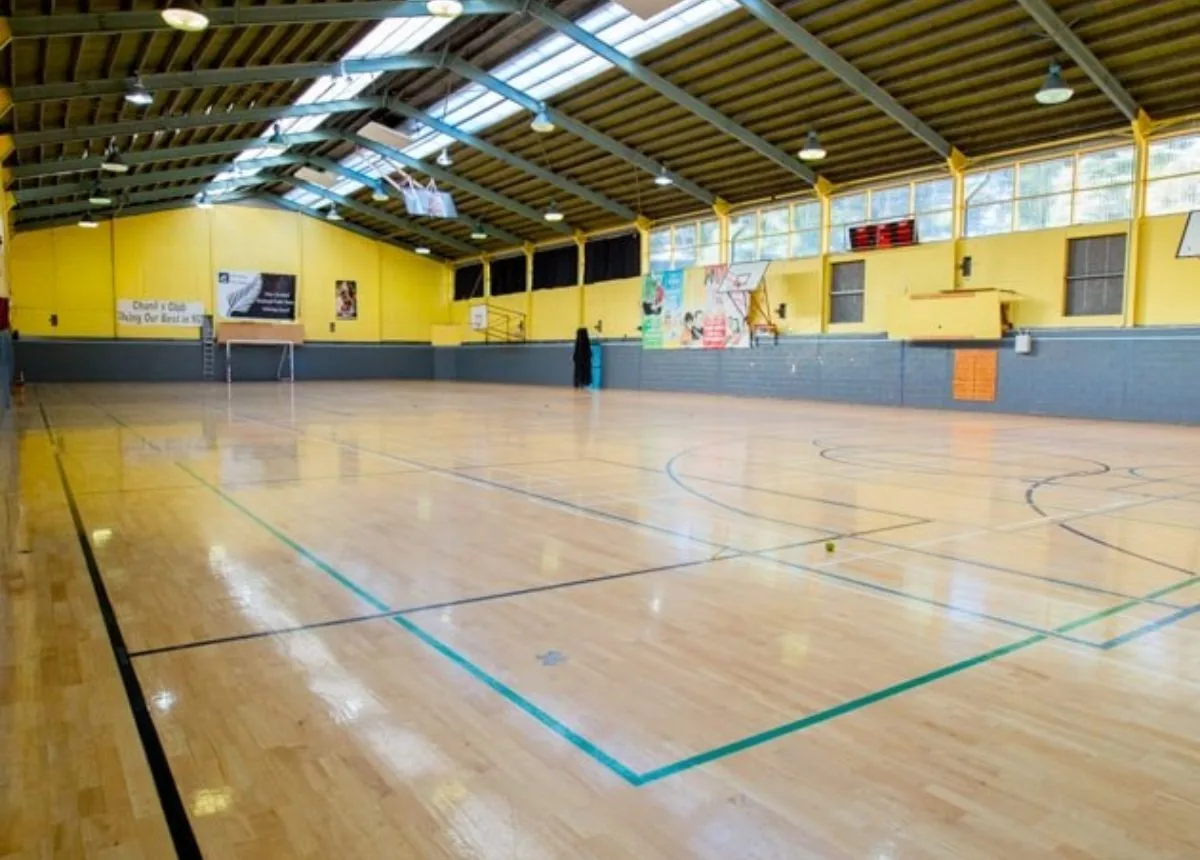
Lagoon Stadium
Auckland · Indoor sports floor
Netted indoor soccer courts
In Australia and New Zealand, indoor soccer is its own sport, played in dedicated centres. Courts are enclosed by nets from floor to ceiling, so the ball stays in play almost all the time. Games are usually 5 or 6-a-side in organised leagues, with short halves and a referee supplied by the centre. The surface is often a short artificial turf or a court floor. The UK has similar indoor 5-a-side centres, usually on short artificial grass with solid walls.
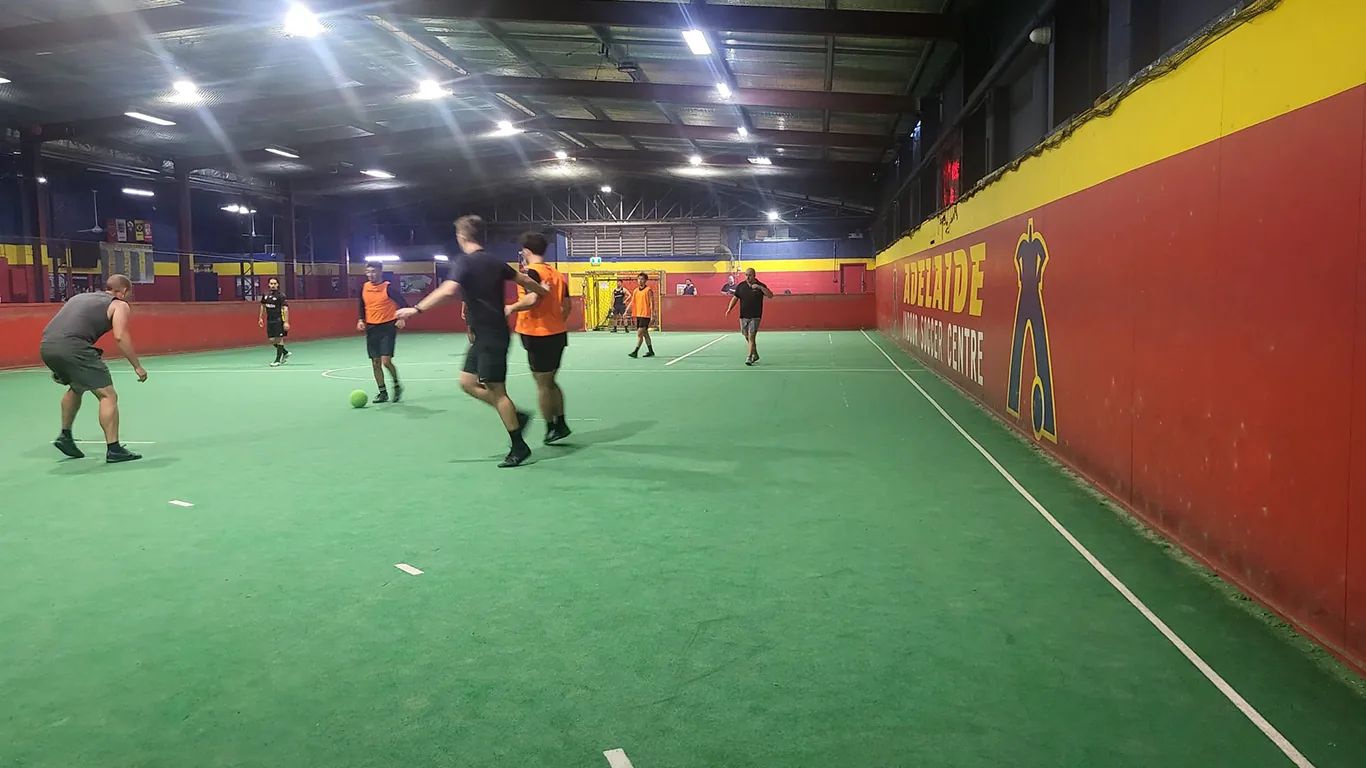
Our guide to indoor soccer covers the rules, which differ from both futsal and outdoor 5-a-side.
What to wear
- Sports hall: flat indoor court shoes (IC) with non-marking soles. Studs and blades are banned because they damage the floor and slip on it.
- Indoor 3G: turf shoes (TF) or artificial grass boots (AG). Check the venue's rules; some ban metal studs. See boots for 3G.
- Netted courts: turf shoes or court shoes, depending on the surface. Ask when you book.
- Shin pads: often required in leagues. See shin pads for 5-a-side.
Halls are hard on knees and elbows. There is no give in a wooden floor compared with grass. Long sleeves and sliding shorts save skin, and slide tackles are usually banned anyway.
What it costs
Prices from venues in our directory, as published in 2026:
- UK sports hall: roughly £43 to £60 for 5-a-side in a hall, for example £43.10 for sports-hall 5-a-side at Whiterock Leisure Centre in Belfast and £60 an hour for the full hall at Rykneld Sports Centre in Derby.
- UK indoor 3G: a third of the indoor pitch at Aberdeen Sports Village is £76.55 an hour off-peak and £123.60 at peak times; the whole pitch is £229.60 off-peak.
- Australian indoor soccer centres: roughly A$48 to A$120 per court per hour, with A$100 common in Adelaide and Brisbane.
- New Zealand council stadiums: roughly NZ$70 to NZ$110 an hour for a court.
For outdoor prices and how to split the cost, see how much it costs to hire a football pitch.
Cities with the most indoor football venues in our directory:
FAQ
What shoes do you wear for indoor football?
Flat, non-marking indoor court shoes in a sports hall, and turf shoes or AG boots on indoor artificial grass. Moulded studs and blades are not allowed on hall floors.
How big is an indoor football pitch?
It varies. A standard four-court sports hall is 34.5 m by 20 m. Indoor 3G halls range from 5-a-side size up to a full-size pitch.
Is indoor football the same as futsal?
Not always. Futsal has its own rules, a smaller low-bounce ball and lines rather than walls. Many sports-hall games use walls and a normal ball, and indoor soccer centres have their own rules again.
Is indoor football more expensive than outdoor?
A sports hall is often similar to an outdoor 5-a-side pitch. Indoor 3G halls and domes usually cost more per hour than outdoor artificial pitches.