Why football pitches are different sizes
 By the Find My Football Pitch team·
Updated ·
5 min read
Basketball courts and tennis courts are the same size everywhere. Football pitches are not, and the difference between two legal pitches can be bigger than a 5-a-side pitch. The reasons go back to how the game's rules were written, and to the land each ground was built on.
The short answer
Football pitches differ because the Laws of the Game set a range, not one size: 90 to 120 m long and 45 to 90 m wide, or 100 to 110 m by 64 to 75 m for internationals. Grounds were built to fit the land available, many long before any standard, and pitches share space with running tracks, rugby and cricket. Competitions can set tighter rules, and the Premier League now asks for 105 by 68 m, but most grassroots pitches still vary.
The Laws give a range
Law 1 of the Laws of the Game says a pitch for any 11-a-side match must be between 90 and 120 m long and between 45 and 90 m wide. For international matches the range is 100 to 110 m by 64 to 75 m. Inside those limits, a competition can choose.
That freedom is deliberate. Football is played on school fields, in parks, in village recreation grounds and in 90,000-seat stadiums. A rule demanding one exact size would make thousands of existing pitches illegal overnight. The Laws instead fix the parts that affect fairness directly. The goals, the penalty area, the penalty spot and the centre circle are the same size on every full-size pitch, whatever its length and width.
The range was wider still in the past. The first FA laws of 1863 allowed a pitch up to 200 yards long and 100 yards wide, and the limits have been narrowed over time. The current figures are in football pitch dimensions.
Old grounds and tight sites
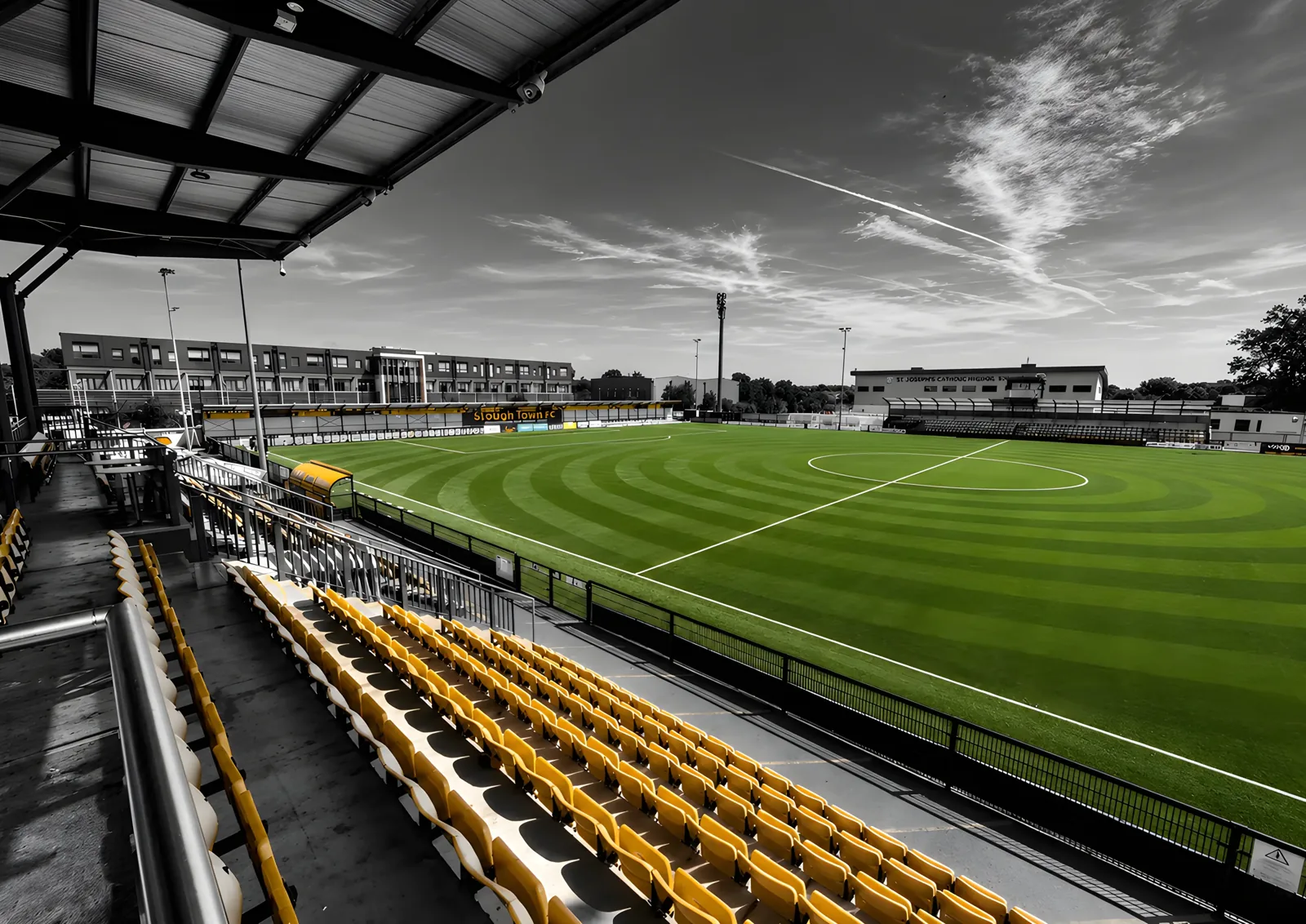
Many English league grounds were built in the late 19th and early 20th centuries, on whatever plot a club could rent or buy. Terraced streets, railway lines and rivers fixed the edges. When stands were rebuilt later, the pitch often stayed the size it had always been.
That is why the Premier League, which now sets 105 by 68 m as its standard, still lets its board approve a smaller pitch where a ground cannot be extended. West Ham's old Boleyn Ground, for example, was 100.5 by 68 m because there was no room to make it longer. The rule and its exceptions are covered in how big is a Premier League pitch.
Lower down the pyramid the same thing happens on a smaller scale. A non-league ground squeezed between a housing estate and a road may be at the bottom of the legal range, while a club on the edge of town may have room for a wide pitch and a second training pitch beside it.
Shared and multi-use pitches
Many pitches share their space with something else, and the other use often decides the size.
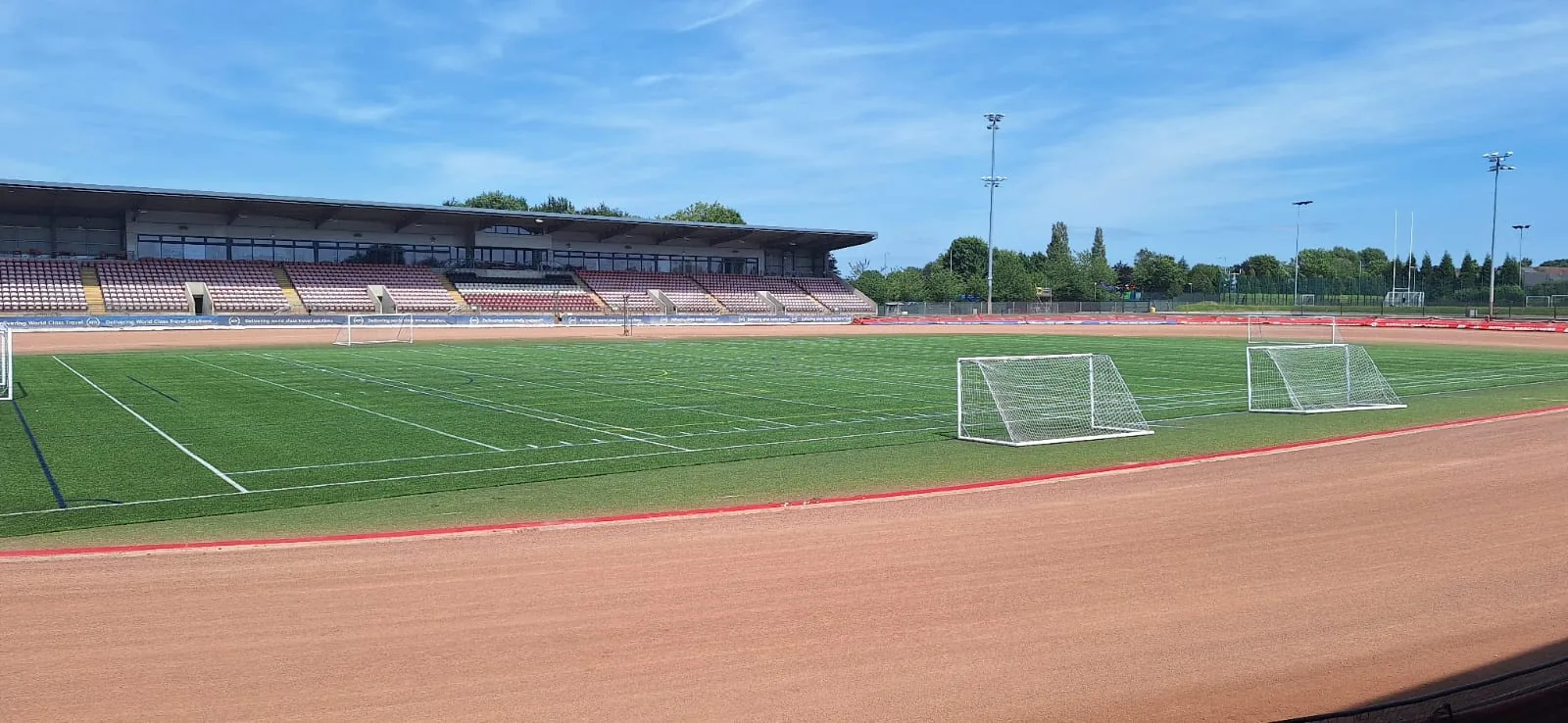
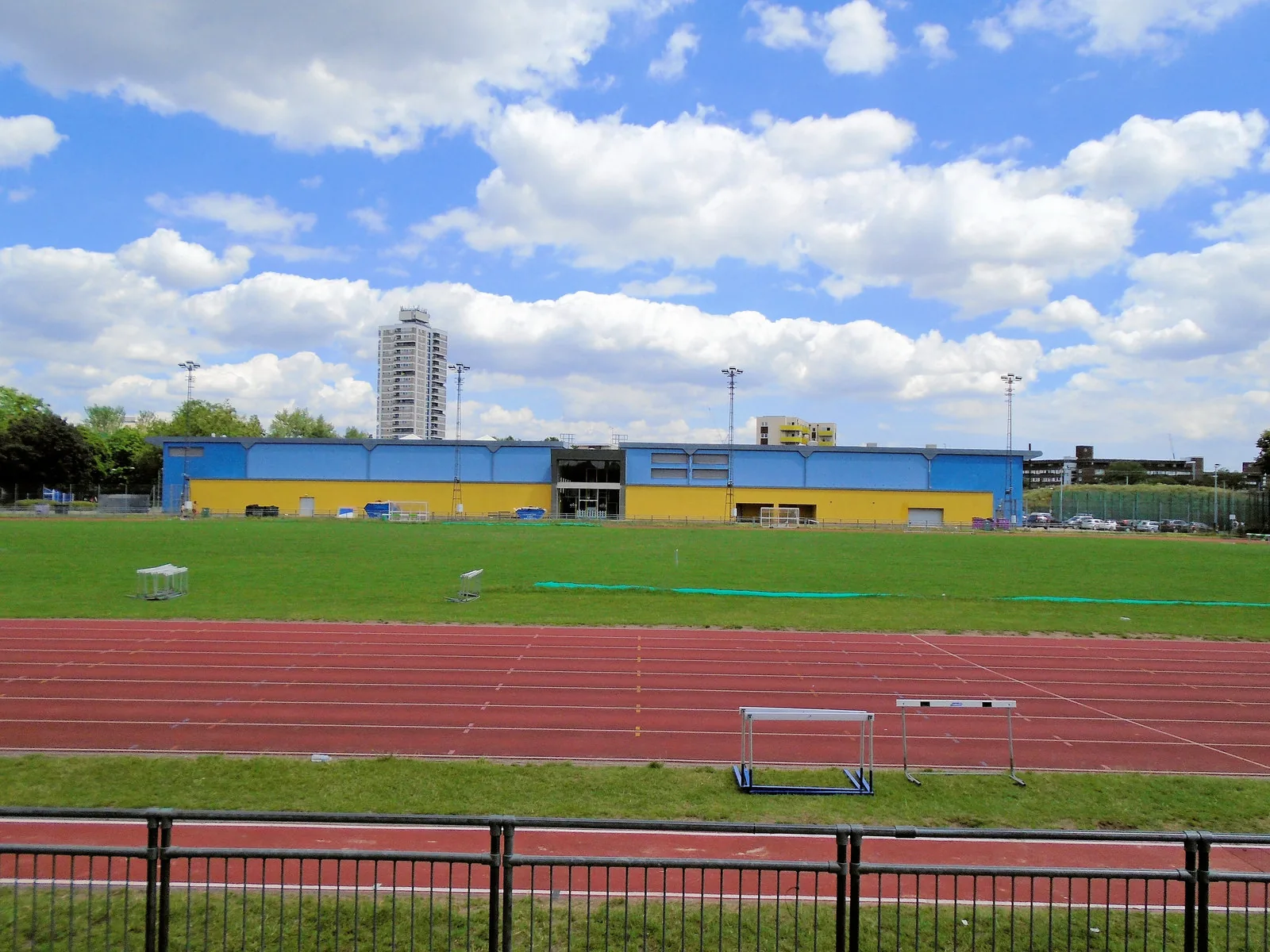
- Running tracks. Athletics stadiums put the football pitch on the infield, inside the bends. A standard 400 m track leaves room for a full-size pitch, but the curves limit how far the corners can go.
- Rugby and other codes. Parks and school fields are often marked for football in winter and other sports at other times. The football lines are fitted round whatever space the field has.
- Cricket outfields. Some village grounds use part of the cricket outfield for football in the winter months, which leaves the pitch set by where the square sits.
- Parks with several pitches. Councils fit as many pitches as they can into one field, so each pitch may be a bit shorter or narrower than ideal.
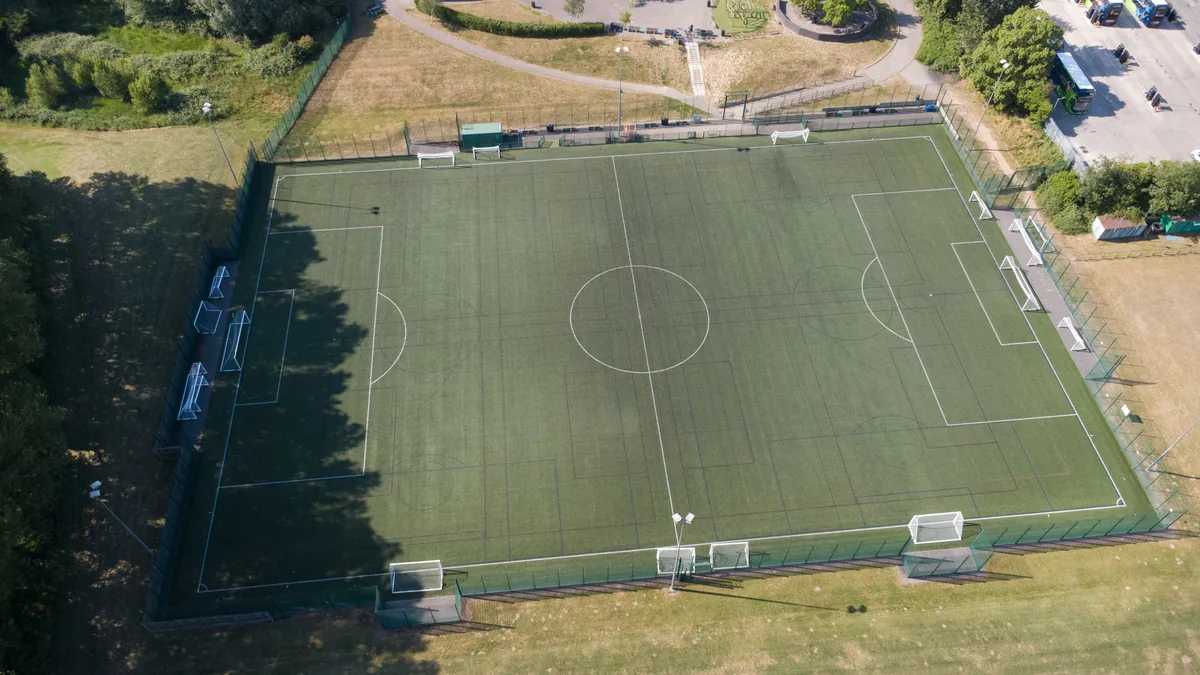
Artificial pitches have their own pressure. A 3G pitch is priced per square metre, so a council or school building one on a budget may pick a size near the minimum it needs rather than the maximum it could fit. Many community 3G pitches are built at about 100 by 64 m, which matches the FA's recommended adult size and leaves room for run-off.
Size and tactics
A bigger pitch means more space between players. Teams that like to pass, stretch the play and use wingers tend to prefer a wide pitch. Teams that defend deep and win the ball back in tight areas find a narrow pitch easier to cover. Long throws and set pieces count for more when the pitch is short, because more of the pitch is within reach of the box.
Where competition rules allow it, clubs have sometimes moved their touchlines in or out to suit the way they play. Professional leagues now limit this. The Premier League fixes the size, needs approval for any change, and does not allow changes during a season. Below that level there is still some room to adjust inside the legal range.
Width is easier to change than length. Moving a touchline in or out only needs repainting. Making a pitch longer means moving the goals, and often there is a stand or a fence in the way.
Different sizes for different players
Children do not play on full-size pitches. In England the FA recommends a maximum of 40 by 30 yards for 5v5 (under-8s and under-9s from 2026-27), rising to 60 by 40 for 7v7, 80 by 50 for 9v9 and 90 by 55 for under-14s. Only from under-17 does the recommended size reach the adult 110 by 70 yards. The full table is in youth football pitch sizes.
Adult small-sided football is different again. 5-a-side centres build to whatever fits their site, often around 30 by 20 m, and a full-size 3G is usually split into halves or thirds for 7-a-side or 9-a-side bookings. See 5-a-side pitch size.
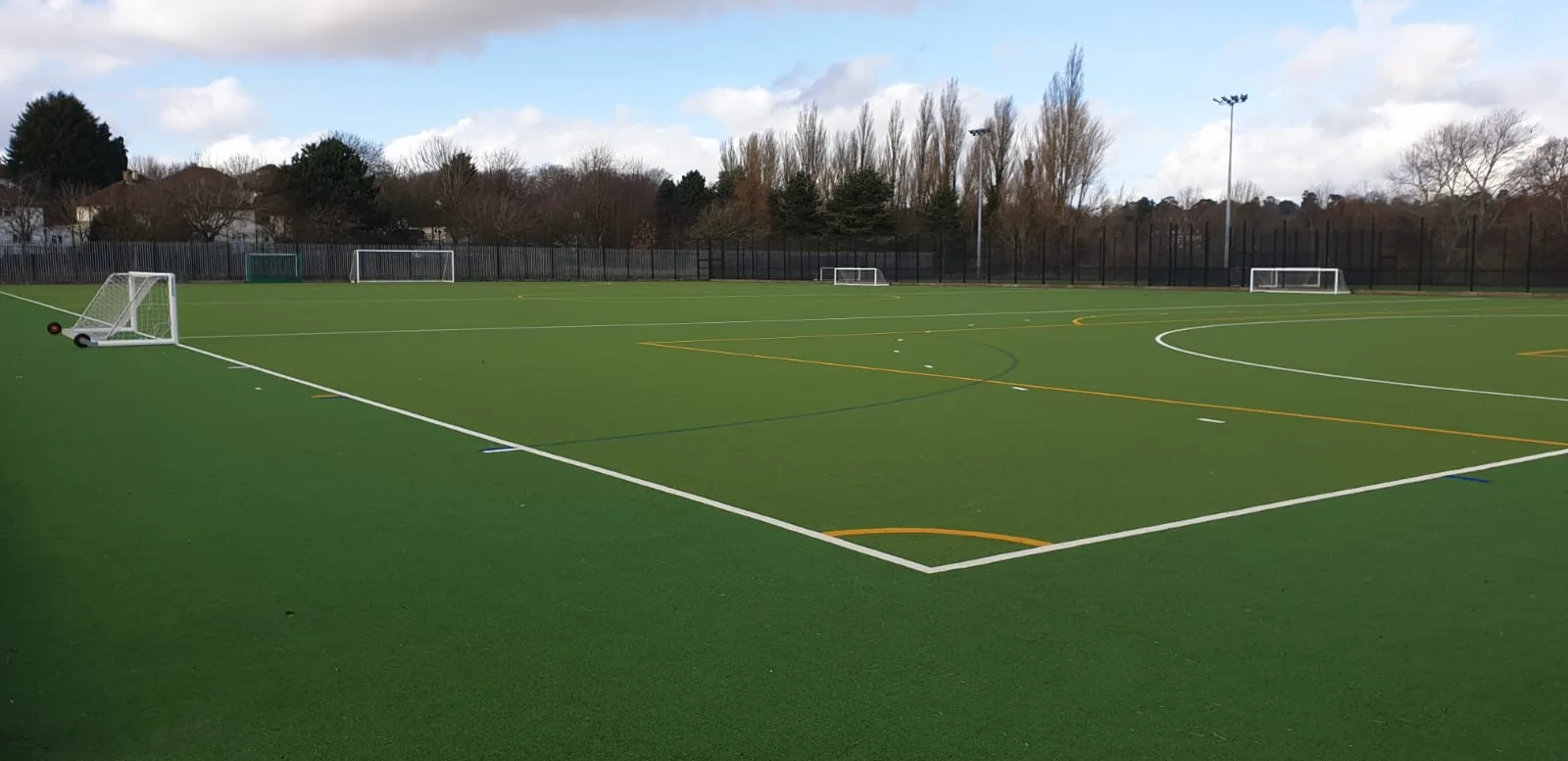
Monks Hill Sport Centre
London · Full-size synthetic
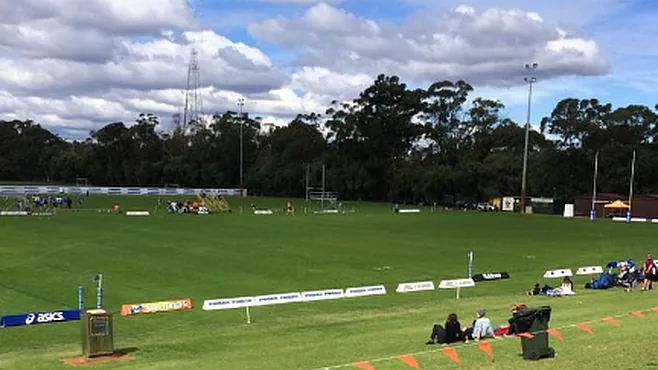
UWA Sports Park
Perth · Grass playing field
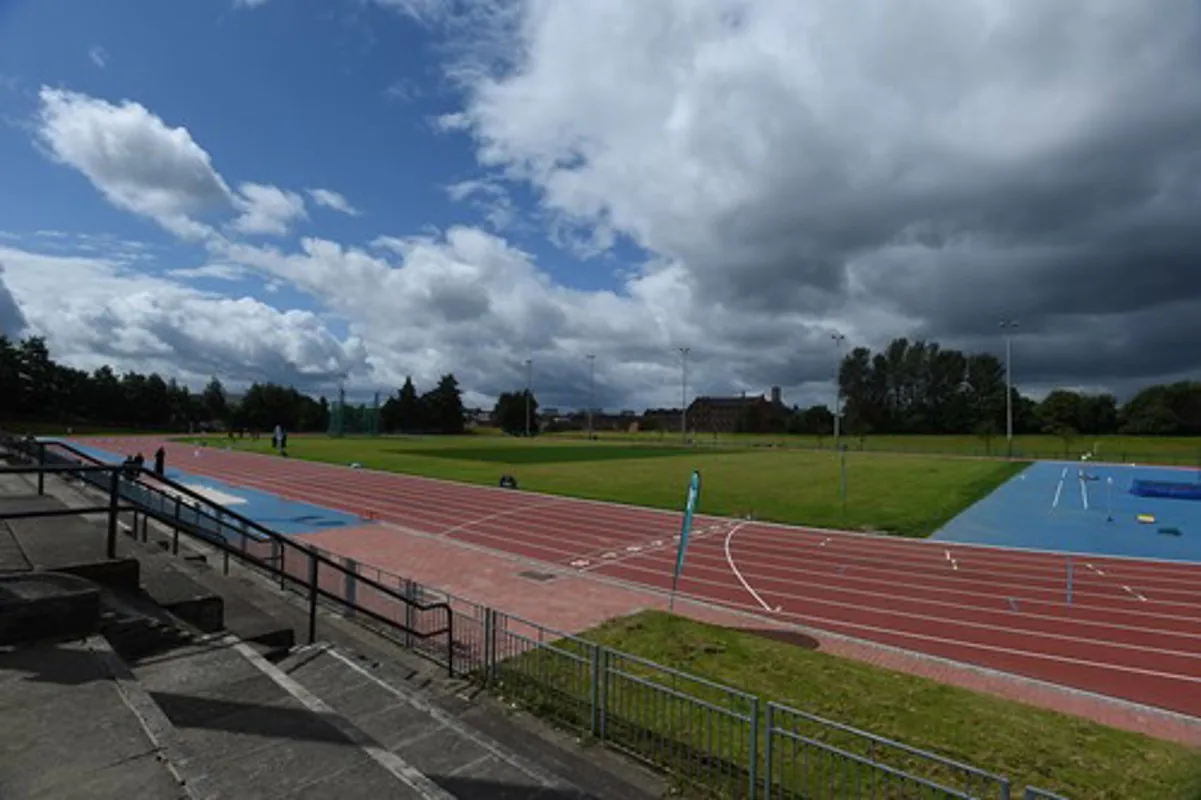
Glasgow Club Crownpoint
Glasgow · Pitch inside a track
FAQ
Why do the Laws not set one pitch size?
Football is played on every kind of ground, from parks to stadiums. A range lets existing pitches stay legal while the goals, boxes and circles stay the same everywhere.
Are all Premier League pitches the same size?
Almost. The standard is 105 by 68 m, and the league can approve a slightly smaller pitch where a ground has no room to extend.
Does a bigger pitch favour the better team?
More space usually suits teams who keep the ball and use the width. A smaller, narrower pitch makes it easier for a defending side to stay compact.
Can a club change its pitch size?
Yes, within the legal range and its competition rules. In the Premier League changes need approval and cannot be made during a season.