How big is a Premier League pitch?
 By the Find My Football Pitch team·
Updated ·
5 min read
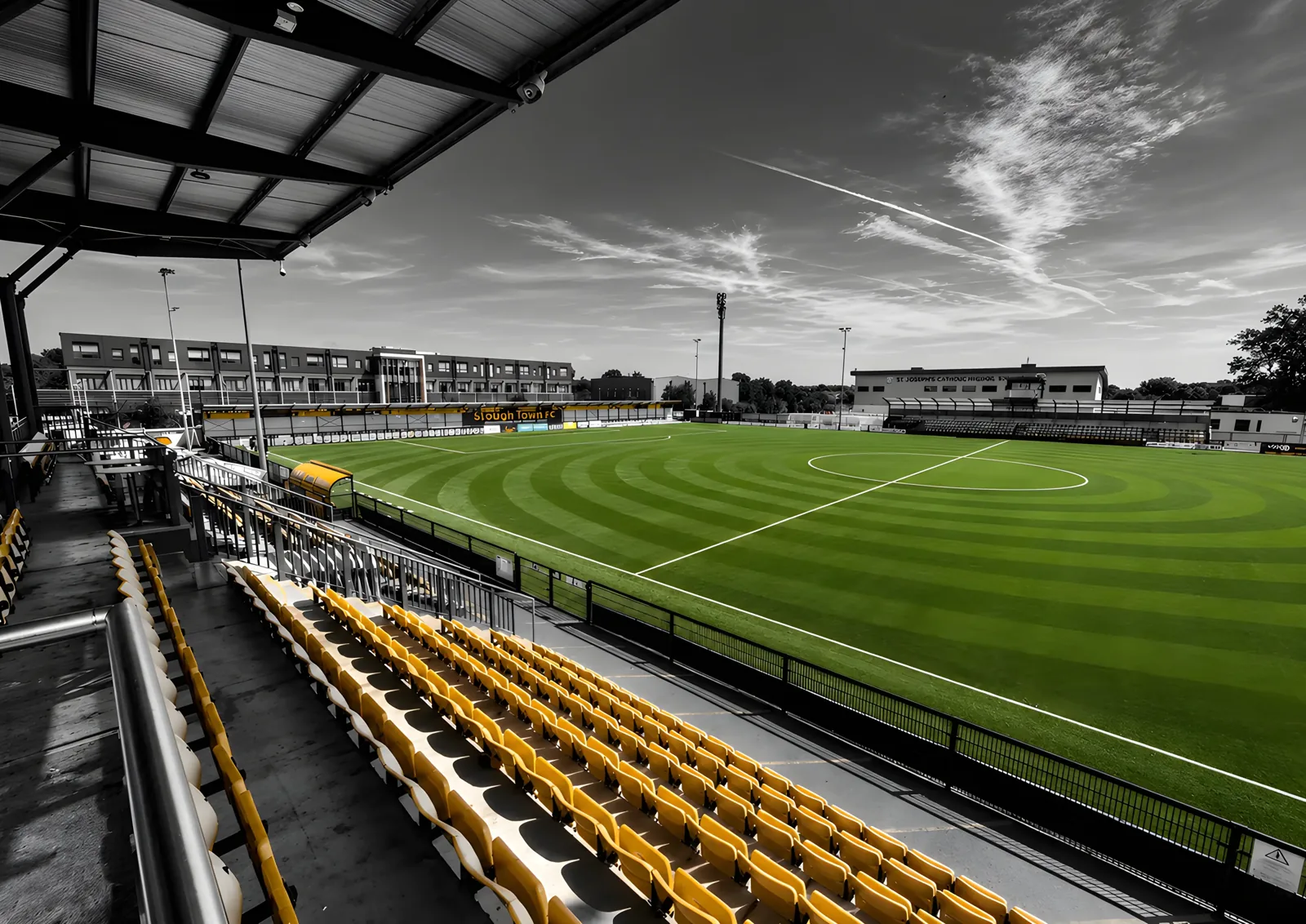
Premier League pitches look identical on television, and these days most of them nearly are. Almost all of them use the size FIFA recommends, and the few exceptions tend to be older grounds with no room to grow.
The short answer
A Premier League pitch is 105 metres long and 68 metres wide, about 115 by 74 yards. That is the size FIFA recommends for top-level football, and most top-flight pitches now follow it, though a few older stadiums with no room to grow have been smaller. The area is about 7,140 square metres, or 1.76 acres. The markings and goals are the same as on any full-size pitch.
The 105 by 68 metre standard
The Laws of the Game allow a full-size pitch to be anywhere from 90 to 120 m long and 45 to 90 m wide, and from 100 to 110 m by 64 to 75 m for international matches. Competitions are free to set a narrower rule within that range. FIFA recommends exactly 105 by 68 m for top-level football, and that is the size you will find at most Premier League grounds.
That size was not picked at random. It is a convenient fit inside the Laws' international range of 100 to 110 m by 64 to 75 m, and a club that builds to it can host European and international matches without changing its pitch.
When grounds varied more, pitch size was one of the few things a manager could tune. A team built on crossing might want a wide pitch, while a side that defended deep might prefer it narrow. A common size takes that out of the game, although grass length and how much the pitch is watered still vary within the rules.
Grounds that are smaller
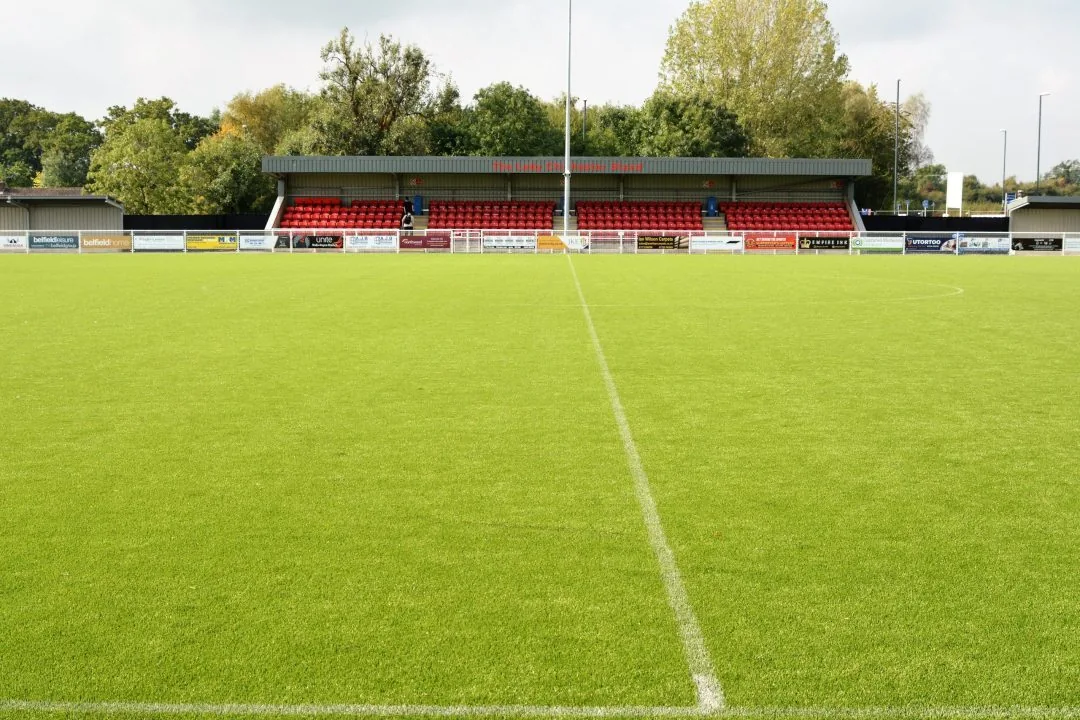
Not every ground could be stretched to 105 by 68 m. City-centre stadiums hemmed in by streets, stands and houses sometimes cannot fit the extra metres without rebuilding a stand. Those clubs have played on smaller pitches, within the Laws' limits.
West Ham's old ground is an example. The club listed the Boleyn Ground pitch at 110 by 70 yards, about 100.6 by 64 m. Clubs that build a new stadium now plan for 105 by 68 m from the start.
If your club's pitch size matters for a ground move or promotion, the competition's own rulebook is the place to check.
Why lists online disagree. Fan sites often publish tables of every club's pitch size, copied from year to year and often out of date. Clubs rebuild stands, move grounds and get promoted or relegated. If a figure matters to you, look for what the club itself says.
How it compares with other pitches
| Pitch | Size | Area |
|---|---|---|
| FIFA recommended, most Premier League grounds | 105 x 68 m | 7,140 m², 1.76 acres |
| FA recommended adult grassroots | 110 x 70 yd (about 100.6 x 64 m) | about 6,440 m², 1.59 acres |
| Largest allowed by the Laws | 120 x 90 m | 10,800 m², 2.67 acres |
| Smallest allowed by the Laws | 90 x 45 m | 4,050 m², 1.0 acre |
| FA 9v9 youth pitch | 80 x 50 yd (about 73 x 46 m) | about 3,340 m², 0.83 acres |
A Premier League pitch is roughly 11 per cent bigger in area than the FA's recommended adult grassroots pitch. In practice that means about 4 m more in each direction, which players stepping up from non-league football do notice.
For the full set of legal sizes, see football pitch dimensions. For comparisons with tennis courts and other sports grounds, see how big is a football pitch, and for why lower-league pitches still vary, why football pitches are different sizes.
Other Premier League pitch rules
Size is one of several rules that shape top-flight pitches:
- Natural grass only. Artificial pitches were banned from the top flight in 1991. Hybrid pitches, which are natural grass stitched with a small share of synthetic fibres, count as grass and are now common at top-flight grounds.
- Grass length. For UEFA matches the grass must not be longer than 30 mm, cut to the same height across the whole pitch, so clubs in Europe keep it short.
- Undersoil heating. The league's handbook requires every club to provide and maintain it, so frozen pitches rarely cause postponements at the top level.
- Markings and goals. These follow the Laws exactly: 7.32 by 2.44 m goals, a 16.5 m penalty area and a penalty spot 11 m out. The details are in football pitch markings explained.
If you want to play on a pitch close to stadium size, a full-size 3G at a community stadium or sports park is the nearest you will get. Many are built at 100 by 64 m or larger and can be booked by the hour.
FAQ
How big is a Premier League pitch in yards?
About 115 yards long and 74 yards wide, if the pitch is the usual 105 by 68 metres.
Are all Premier League pitches the same size?
Nearly all are 105 by 68 m. A few older grounds with no room to extend have been smaller.
How many acres is a Premier League pitch?
About 1.76 acres, or 0.71 hectares, not counting the grass run-off around the edge.
Can Premier League clubs play on artificial grass?
No. Artificial pitches have been banned from the top flight since 1991. Hybrid grass reinforced with synthetic fibres is allowed.