How much does a 3G pitch cost to build?
 By the Find My Football Pitch team·
Updated ·
5 min read
Clubs, schools and councils asking about a new 3G pitch usually want one number. There isn't one, but the published figures from UK councils and the Football Foundation give a clear idea of the range, and of the yearly bill that comes after the build.
The short answer
In the UK in 2026, a new full-size floodlit 3G pitch costs roughly £1.3 million to £1.4 million once fencing, floodlights, drainage, fees and a contingency are included. Huntingdonshire District Council, for example, budgeted £1.4 million for one in January 2026. Replacing the carpet on an existing full-size pitch costs about £212,000 to £250,000, according to the Football Foundation. Smaller pitches cost less to resurface, from about £70,000 for a 5v5. Owners should also set aside around £21,000 to £25,000 a year for the next carpet.
Cost of a new full-size pitch
Council reports are the best public source because they publish their budgets. In January 2026 Huntingdonshire District Council approved a full-size floodlit 3G pitch at One Leisure St Ives. The estimate was about £1.333 million, or about £1.4 million with a 5% contingency. The funding plan was up to £800,000 from the Football Foundation, with the rest from the council's leisure budget and developer contributions.
Older and lower estimates, some well under £1 million, still circulate online. Treat any figure more than two or three years old with care: construction prices in the UK rose sharply after 2021, and floodlights, steel fencing and drainage all cost more than they did.
The final price depends on the site. A flat, well-drained field next to a car park with power nearby is much cheaper to build on than a sloping, waterlogged one at the far end of a school site.
Where the money goes
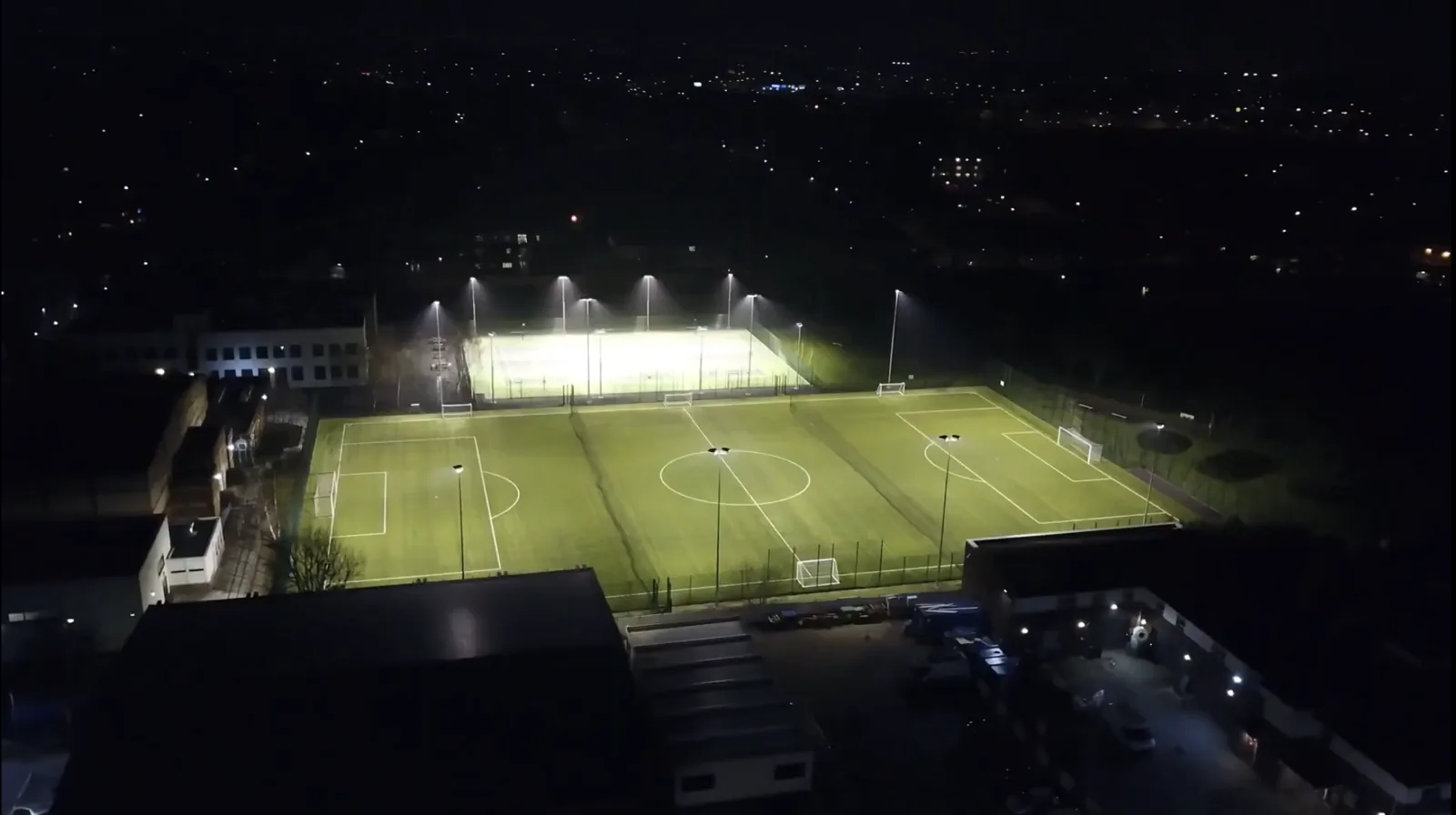
The carpet you play on is a minority of the bill. A full-size build typically includes:
- Groundworks and drainage. Stripping topsoil, levelling, laying drains and building the stone base. This is the most variable part and often the largest.
- Shock pad, carpet and infill. The visible surface and the cushioning under it.
- Floodlights. Columns, LED lamps and a power supply. A new electricity connection can add a lot on a remote site.
- Fencing, gates and kickboards. High weldmesh fencing around the whole pitch.
- Paths, hardstanding and a storage container for goals and maintenance kit.
- Equipment. Goals of several sizes, and a brush and tractor or a maintenance contract.
- Fees. Design, surveys, planning, testing and project management.
- Contingency. Councils commonly add 5% to 10%.
Changing rooms and toilets are usually a separate project and can cost as much again. For the layers under the surface, see how an artificial pitch is built.
Cost of replacing the carpet
The Football Foundation publishes replacement estimates for the 3G pitches it funds. These cover a new carpet and infill on an existing base, not a new build.
| Pitch size | Replacement estimate | Yearly replacement fund |
|---|---|---|
| 5v5 (43 m x 33 m) | £70,000 | £7,000 |
| 7v7 (61 m x 43 m) | £120,000 | £12,000 |
| 9v9 (79 m x 52 m) | £150,000 | £15,000 |
| 11v11 (97 m x 61 m) | £212,000 | £21,000 |
| 11v11 (106 m x 70 m) | £250,000 | £25,000 |
| Rugby-compliant 3G (120 m x 80 m) | £330,000 | £33,000 |
Source: Football Foundation pitch replacement guidance, checked November 2026. The Foundation has also published higher alternative figures for newer pitches, so expect these to rise.
A carpet usually lasts about 10 to 12 years with good maintenance. See how long a 3G pitch lasts.
Yearly running costs
Building the pitch is the start. Each year the owner pays for:
- The replacement fund, as in the table above. Pitches funded by the Football Foundation must pay into a protected account it holds.
- Maintenance: weekly brushing by staff, plus at least one visit a year from a specialist for deeper work.
- Electricity for floodlights, which is lower with LEDs.
- Testing to stay on the FA's register of football turf pitches, every three years.
- Insurance, staffing and bookings.
Hire income pays for all of this. That is why a 3G pitch costs more per hour to book than a council grass pitch. Our guide to how much it costs to hire a football pitch has typical hire prices.
Outside the UK. We have not found comparable published figures for Ireland, Australia, New Zealand or Canada. Local councils there publish project budgets in the same way, and those are the best guide for your area.
Who pays for community pitches
In England most new community 3G pitches are part-funded by the Football Foundation, which is backed by the Premier League, The FA and the government. Grants usually cover part of the build, and the rest comes from councils, schools, clubs and developer contributions. Successful projects must show demand, a booking plan and money set aside for replacement. Wales, Scotland and Northern Ireland have their own funding routes. Our guide to pitch funding goes through the options.
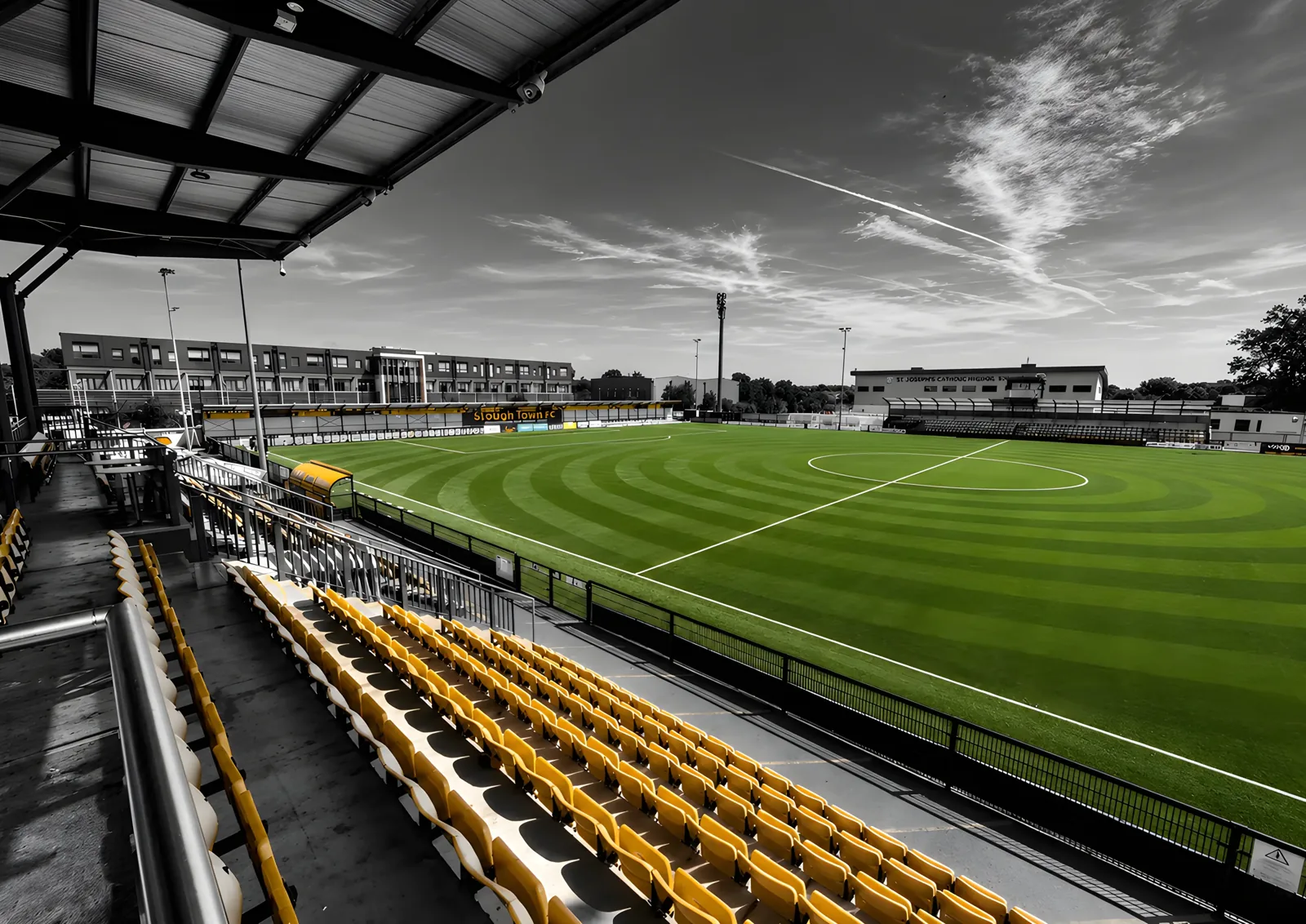
Arbour Park Community Sports Stadium
Slough · FA-accredited 3G
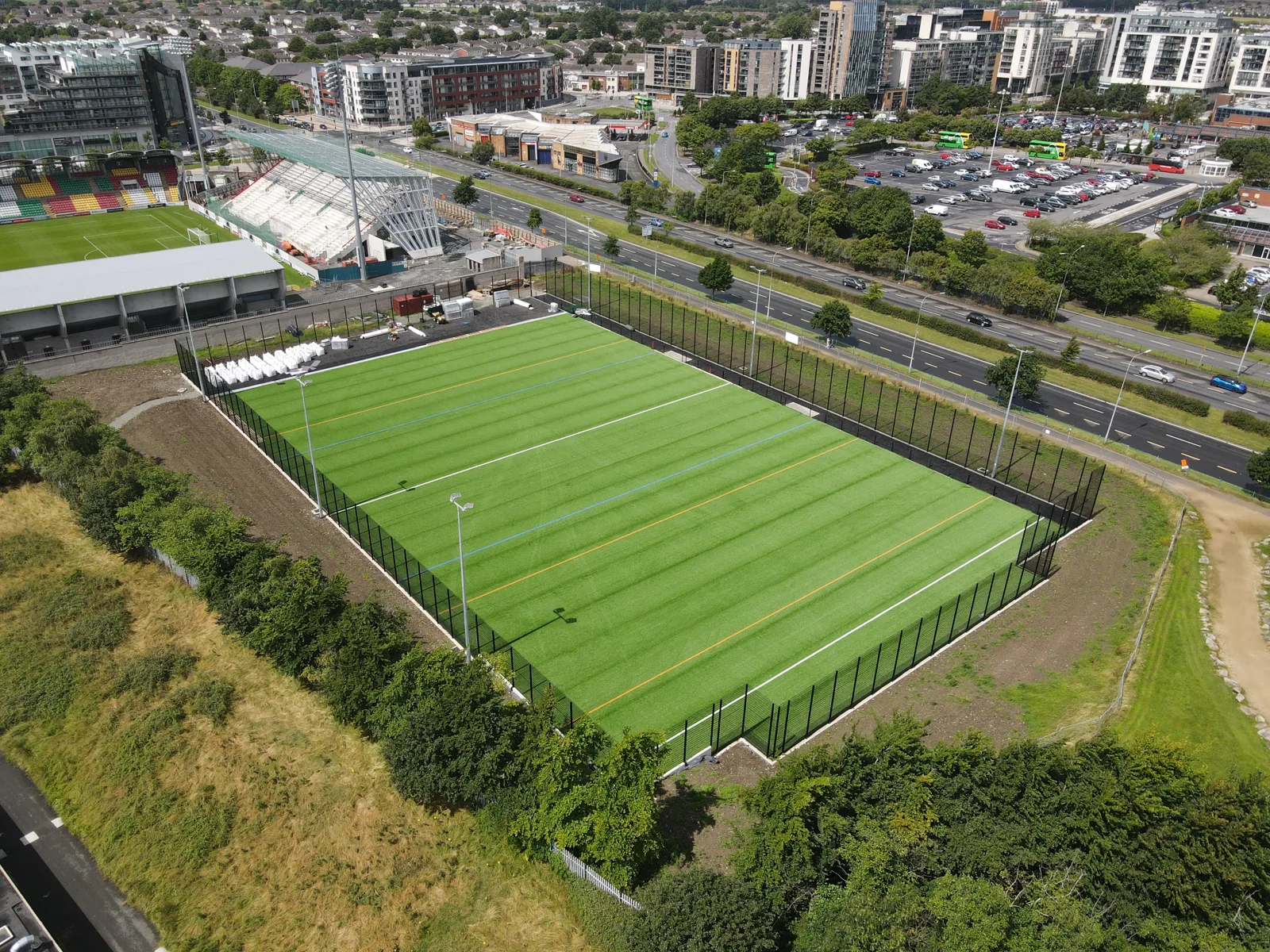
Sean Walsh Park 3G Pitch
Dublin · Floodlit council 3G
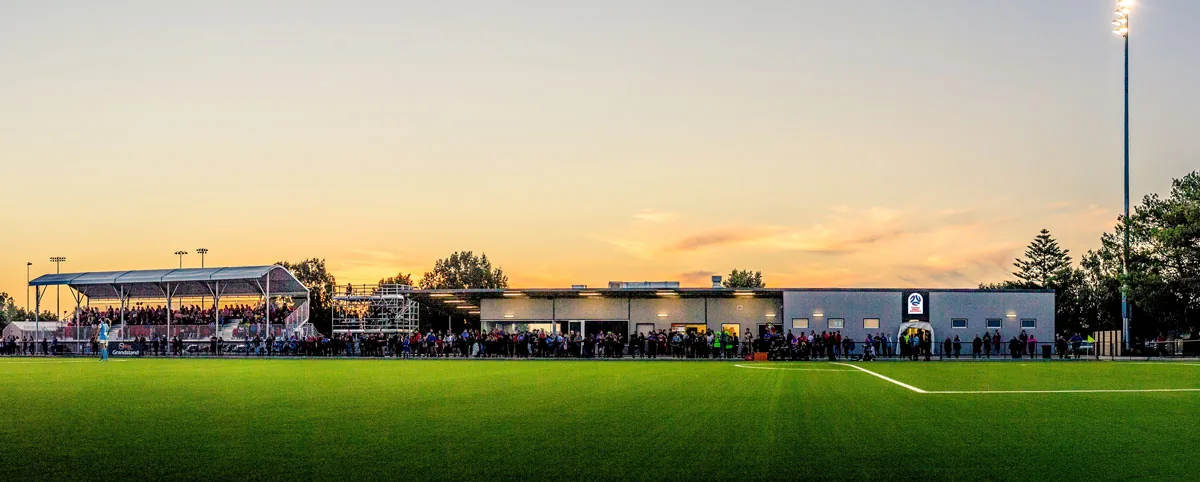
West Beach Parks Football Centre
Adelaide · Full-size synthetic
FAQ
How much does a full-size 3G pitch cost?
In the UK in 2026, about £1.3 million to £1.4 million with floodlights, fencing, fees and a contingency. Site conditions can push it higher.
How much does it cost to resurface a 3G pitch?
The Football Foundation estimates £212,000 to £250,000 for a full-size 11v11 pitch and about £70,000 for a 5v5.
How much should be saved each year for a new carpet?
Football Foundation figures range from £7,000 a year for a 5v5 to £25,000 a year for a 106 m by 70 m pitch.
Is a 3G pitch cheaper than a grass pitch?
No, a 3G pitch costs far more to build. It can host many more hours of football each week, so the cost per hour of play can work out lower.